John Green and The Art of Lying

“And now that she was doing something difficult
and familiar and never quite predictable,
namely lying, she felt a sort of mastery again,
the same sense of complexity and control
that the alethiometer gave her.”
—Phillip Pullman The Golden Compass

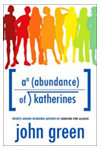
John Green, whose latest book, An Abundance of Katherines, is out this week is stopping by my blog today to be interrogated interviewed by me about lying, on account of how he is somewhat partial to spouting the tall ones.

John’s partialness is by no means unique amongst writers. (Truman Capote, anyone?) In the interview we ponder the connection between the telling of lies and the writing of stories. Do you have to be a good liar to be a good storyteller?

Justine: So, John, were you always a liar?

John: Presumably there was a time before I could talk when I was honest, but I’ve been a liar since at least the age of four, when I convinced my preschool teacher my home had been burglarized, and that the burglars had stolen our television. How about you?

Justine: My memories are hazy, but I do remember trying to convince my younger sister that she was adopted, but even though she was very little at the time she wasn’t buying it—we look a lot like each other.

Do you think that lying and being a writer go together?

John: One time I was on a panel with Markus Zusak, and I made some joke about how when I was a kid I figured that the only things I was good at were sitting and telling lies, so I decided to become a writer. And then someone was blogging about this event later and said something like, “Shame on John Green for claiming that fiction writing is lying.” Shame on me? Am I wrong? Is it NOT lying?

Justine: I think so. The kind of creativity you need to get away with an elaborate lie is very close to what you need for writing fiction. But at the same time if a book’s labelled as being fiction then it’s not actually lying. I can see the point, just not why people get so upset about it.

Why do you think people get hot under the collar about calling fiction writing lying?

John: I have no idea. People can be very persnickety about what writing is, and how to do it, and what writing ought to do.

I will acknowledge that the mere ability to lie well is not the same thing as being able to write good fiction, but they are surely related talents.

Justine: Indeed. I’ve heard people from certain religious backgrounds say they weren’t allowed to read novels on the grounds that they are nothing but a pack of lies. Jane Austen makes reference to the supposed moral laxity of novels in her books. Maybe people are still angry that used to happen?

Or perhaps it’s because some people agree that lying is a terrible sin and believe that liars can’t be trusted. If you lie, they believe, you’ll also cheat and steal and murder.

But I think there’s a big difference between kinds of lies. Lying for gain or to cheat are bad, bad, bad things. But lots of lies are completely necessary and good. If people are coming to kill your family and friends and you know where they are hidden, saying you don’t know is the only honourable, good thing you can do. Telling the truth in that situation would be reprehensible.

Also sometimes telling someone the truth can really, really hurt them. I once told a friend that her boyfriend was cheating on her. She hated me for it and we’re still not friends. I have never done that again. There are some things people don’t need to know or need to find out for themselves.

Is there anyone you would never lie to?

John: The true answer is no, although I’d like to say yes. I very rarely lie to my wife, and never about issues of substance. But I’m with you on the nobility of some lies. I am WILLING to lie to anyone, if the situation arises. I’ve always felt that lying can be perfectly noble: Say, for instance, that Sarah (my wife) got into a duel, and her opponent cut off her nose (as happened to the astronomer Tycho Brahe). Okay, so if a half-conscious and noseless Sarah said to me, “Am I losing a lot of blood?” And I would say, “No,” because I’d want her to stay calm and wait for help to arrive. That’s an ethical lie, I think.

Justine: I’m adding that to my list of folks it’s okay to lie to: semi-conscious, noseless people. I don’t lie to Scott or my parents or sister. Well, not unless I confess instantly in a ha-ha tricked-you way.

Is there anything you would never lie about?

John: Oddly, I don’t think I would ever lie about my lying. Does that make sense? Like, I am perfectly happy to answer these questions honestly. I don’t think we, as liars, should be ashamed. There are shameful lies, certainly, but I don’t think the enterprise is in and of itself bad. Lying is like the Force: It can be used for good or evil.

Justine: Absolutely! I don’t lie for gain. I could never be a confidence trickster because I find parting fools from their money deeply wrong. We’re all of us foolish about something, so we can all be tricked. The conman believes that they’re better than everyone else. They’re grifters; we exist only to be their marks. That’s psycho thinking.

Did you make a distinction between the different kinds of lies you tell? (I have many categories for different kinds of lies.)

John: Oh, yeah. What are your categories?

Justine: Reinventing-Yourself lies, Making-a-Better-Story lies, White lies, Getting-Out-of-Trouble lies, Exaggeration.

When I was young Reinventing-Myself lies were my favourites. I moved around a lot as a kid, so every time I was the new kid in school I had a new opportunity to reinvent myself and my family. A lot of the lies were wish-fulfillment lies. I would say that I was on the verge of selling a novel, that I’d been asked to become a model/actor/singer/trapeze artist/DJ but turned them down because it seemed like too much work. Stuff like that. My parents weren’t too worried about it cause the lies were mostly so outrageous no one believed them for long. (They were a bit miffed though when I said they’d met fighting for the Republicans in the Spanish Civil War on account of they’re not nearly old enough to have done it. Not really born enough, either.)

John: Reinventing-Myself lies were also very popular with me, and I still occasionally find myself telling a Reinventing-Myself lie when I feel nervous or uncomfortable. A few years ago, for instance, I was having dinner with a woman I’d just started dating, and before I could even stop myself, I started talking about the two weeks I’d spent in Uzbekistan just after graduating from college. In fact, I’ve never even been to England, let alone Uzbekistan. To me, the Reinventing Myself lie is the surest sign of adolescence and/or immaturity.

Justine: Also of boredom. Me and my sister being on the run from an evil cult of nuns who killed our family and ate our family cat and now being in witness protection with our fake parents was way more exciting than my actual life. But now I think my actual life does not need to be improved by adding evil nun cults.

I also used to tell a lot of Making-a-Better-Story lies. When retelling a story I smooth things, leave the boring bits out, add more interesting bits in order to make the story more story-like. Real life is irritatingly messy and usually does not translate well into a story unless you bend things.

John: I am also quite fond of the Making-Better-Story lie. I’m sure that all of my stories contain them, although I’ve been telling some of those stories so long I don’t even know what’s false memory and what isn’t. The narrator of The Great Gatsby notwithstanding, very honest people rarely tell good stories, in my experience.

Justine: My next category is White lies. Even though I don’t lie nearly as much now as I did as a kid, I still sometimes tell social lies to people I don’t know that well. “Your dress is beautiful.” “I loved your book.” “Sorry we couldn’t make it to your party—we were both a bit under the weather.” Etc. etc.

John: Yeah. With my closest friends, the white lie is unnecessary, because I can just say something like, “I want to go home now,” and that’s fine. But with acquaintances, the white lie is a great blessing.

Justine: Getting-Out-of-Trouble lies are the kind I always felt the guiltiest about. I usually wound up confessing to my misdeeds later.

John: I rarely tell these anymore, because I’ve become such a boring homebody that on those rare occasions when I get myself into trouble, I sort of enjoy it.

Justine: Me neither. When I was a kid, getting in trouble was the worst thing in the world. I’m completely inured to it now and will own my bad deeds. Mostly because I try hard not to commit any.

Exaggeration’s the last kind of lie on my list. Most of my lies are of the poetic kind, embellishing stuff to make it cooler variety. The ceilings were twenty metres high! The walls painted such an intense gold your eyes watered just looking at it! Though it prolly belongs in the Making-Better-Story category.

John: Yes, I’m also given over to these.

Justine: Do you have any categories of your own?

John: Well, I would add the Compassionate Lie (outlined above, in the example where Sarah gets her nose cut off during a duel). I’m a big fan of the Compassionate Lie, although it can be a bit of a slippery slope. It’s easy to convince yourself you’re telling a Compassionate Lie when you’re really just telling a regular old self-interested lie. Here’s an example: Say I killed your pet llama by accident. Now, I can tell you that your pet llama ran away, or that it went to go live on a farm. And that’s kind of a compassionate lie. But mostly, I just don’t want you to be mad at me about killing your llama.

Justine: Oh, yes. I used to tell people what I thought they wanted to hear when they asked me if they looked okay. But now if there’s something correctably wrong I will tell them: “Your tag’s sticking up.” ‘There’s schmutz on your face.” “Your pimple is glowing red.”

John: I’d also say that for me, Telling-Better-Stories lies and Reinventing-Myself lies are subcategories of Trying-to-Make-People-Like-Me lies. Basically, all of my lies were Trying-to-Make-People-Like-Me lies.

Justine: Once again we are in complete agreement.

Do you lie as much now as when you were kid?

John: Oh God, no. It would be impossible to lie as much now as when I was a kid. When I was younger, I was able to devote all of my resources to lying. Entire days could be spent on the construction and telling of lies. Now I have to, like, do the dishes and go to the grocery store. But also, as I get older, I feel less compelled to lie. Partly, this is because I’m happier. I have friends now who like me, which is most of what I wanted to get out of lying. The Trying-to-Make-People-Like-Me lie just doesn’t appeal to me like it used to. I’ve discovered, belatedly, that pretending to have spent two weeks in Uzbekistan does not actually make people like you.

Justine: Me neither. For much the same reasons. In fact I don’t tell anything other than white lies and exaggerations these days. Of course I’m stuck with the legacy of my lying past. No one in my family believes a word I say. I am the family’s unreliable witness and even though I’m almost entirely lie-free and have been for years—they will always doubt me. That’s my warning to the kids who read this: The tale of the Boy Who Cried Wolf is absolutely true.

Do you have that reputation within your family?

John: To an extent. None of my complaints are ever taken seriously, because they’re counted upon to be exaggerations. But they’ve learned to trust my stories. Or at least they pretend they do.

Justine: Do you think part of why you lie less now is because the lying part of you gets enough exercise from writing novels?

John: That’s a good observation, and I think writing has lessened my desire to lie. I can now get immersed in a fictional world without having to deceive my friends, and you never have to feel guilty about making things up in a novel. When I’m working on a book, during those periods where I’m just working day and night, I get to spin whatever lies I want about those characters. Reinventing-Yourself lies and Exaggerations and Making-a-Better-Story lies and lies that help me get the characters out of trouble. Not all the lies go into the book, of course, but it’s fun regardless.

Justine: Yup. I got a huge kick out of some of the more elaborate stories I used to tell, the friends I invented and their stories. I get to use all those skills when I write novels but this way I don’t get in trouble for it, I don’t lose friends, and I get paid!

What’s the worst trouble you’ve ever gotten into for lying?

John: Well, my fourth grade girlfriend Julie Baskin broke up with me because of my lying, which sucked. But I think the worst consequences for lying are emotional: If you tell the wrong kind of lies, it prevents intimacy; it makes it impossible for you to be a whole person in communion with others; it poisons your relationships. That hasn’t been an issue for me in adulthood, thank God, but it’s something I think liars must always stay mindful of.

Justine: Yes, indeed, the erosion of trust is a biggie. It’s why I don’t lie to the people I care about. Or not about anything important.

Who is your favourite fictional liar? Mine’s Lyra Silvertongue from Phillip Pullman’s His Dark Materials trilogy. She is brave and courageous and true and totally understands the difference between good and bad lies. I adore her.

John: I can see the case for Lyra Silvertongue, but of course I can’t pick her because fantasy isn’t really literature. Oh, God! I’m kidding! Stop hitting me! I have to go with Huck Finn. And then maybe Jay Gatsby, but Huck Finn stands out to me as the best liar, real or fake, in all of history.

Justine: Who is your favourite real person liar?

John: Well, I’m quite fond of you. And Sarah knows how to tell a tale, certainly. Sometimes, I’ll see a flicker in her eyes when one of her stories takes a turn, and I’ll know, but even when you know, it is a sweet pleasure to watch a master work.

Justine: Yes, indeed! Watching Scott telling stories is prolly one of my favourite things in the universe. Even though I’ve heard all his stories a gazillion times he changes them depending on who he’s telling them to and what the context is. I loves it. (And, natch, I too am fond of you.)

Disclaimer: This entire conversation is, itself, a pack of lies.

Cape gooseberries/husk cherries

Am I the only person in the US who knows what these are? Every time I buy them at a farmers’ market I become the husk cherries go-to girl, explaining to folks how you eat them, when they’re in season, and what they taste like. If there’s a husk cherries grower’s association I want my spruiker’s fee.

They are in season here in the US right now. If they’ve got them at your local farmers’ market get ’em! They are delicious eaten on on their own or thrown into a salad.

Here’s what they look like.

yummy

You just tear the papery husk away and inside is what looks like a teeny tiny tomato. (They’re prolly related, but like I could be arsed looking it up.) The more golden they are the sweeter they are, but you can eat ’em green—they’re just tarter that way.

Have any of you yanquis heard of ’em? Do youse love ’em like I do?

Writer’s looks

For some reason the question of writers’ good looks (or lack thereof) comes up over and over again. Far more often, for instance, than the question of whether a writer’s class or connections are assets. How come?

While a writer’s good looks might be used for marketing, it has very little to do with which books get published. I know lots of drop-dead gorgeous folks whose novels have been rejected all over the shop. And lots of plain ones who are published.1 Very few submissions come with attached author’s photo.

The rule in marketing a book is that they use what will give a book or an author an edge. Sometimes an author’s looks are considered an edge. (Anyone ever seen the full page author photo on the back of Perfect Storm?) And yet I’ve seen plenty of books by absolutely gorgeous writers that don’t even have an author photo. Holly Black is stunning. I don’t think any of her books have her photo on them.

Sure looks makes a difference. But lots of things make a difference to a writer’s career—knowing about publishing before you sell your first book, living in NYC, having a good agent. More important than any of them is being a talented and determined writer.

I’ve seen less-than-gorgeous writers promoted to the skies and have huge best-selling novels. I’ve seen pulchritudinous writers get the same treatment and have their books die. In the end it really is about whether a book connects or not. If not enough people like your book it’s sunk no matter what you look like.

Good looks don’t make any more of a difference in publishing (and prolly a bit less, actually) than they do in the rest of the world. There are lots of important things to angst about as you try to sell your first book, or promote it after publication, or continue an existing career, but how your looks are or aren’t affecting your career is not one of them. Forget about it already!

  1. Of course “ugly” and “beautiful” are not exactly universally agreed upon. My idea of who’s good looking and who’s not may differ from yours more than somewhat. I will never get the appeal of Leonardo diCaprio or Gwyneth Paltrow, for example. []

Bad bad bad writing advice

Holly Black wisely points out that all writing advice can be bad. And Sherwood Smith writes some excellently out-and-out bad writing advice: “Write it in a week and send it instantly because professionals don’t revise. They get it right the first time.”

That’s like the worst advice ever. Can anyone top that?

The worst I can come up with are all variations on Sherwood’s: “Your first drafts are genius. Don’t change a thing!” Though how about, “It’s always best to invent your own system of spelling. It makes you stand out as a writer.”

I can think of lots of post-publication advice that would lead to career suicide:

  • Make sure to email your publicist every day to make helpful suggestions for selling your book.
  • Your editor and copyeditor are always wrong. Feel free to entirely ignore their edits.
  • Call your agent often demanding to know why they haven’t gotten you on Oprah yet.
  • If you are on a panel at a convention make sure you stay on message and steer all conversation back to you and your book. Make sure you bring a great big stack of them to show everyone.
  • If your local bookseller doesn’t have your book. Demand to know why. Do they not know who you are?!

I will stop now. This is making my brain hurt. But feel free to suggest more.

Brooklyn Book Festival

I spent Saturday over at in Brooklyn at the inaugural Book Festival hanging out with my fave Young Adult writer types. We read, we argued, we gossiped and all was good with the world.

The turn out was amazing and while the running wasn’t always as smooth as it could have been—some authors had last minute changes to their schedules they were not informed of—it was more than acceptable for a first-time event. All the on-the-ground volunteers were charming and did their jobs excellently well.

Here are my suggestions for improvements:

    Bigger tents. Or more indoor venues. The Youth Pavillion and the Children’s Pavillion were way too small and were originally set up so the audience baked in the sun. There was nowhere near enough shade or chairs for everyone.

    Green rooms are always much improved by having buckets of grand cru champagne. I was stunned by its absence. (This is writ ironical.)

    I wish there’d been more panel discussions and less readings. I find it very hard to follow a reading when it’s outdoors and there are competing readings in nearby tents, not to mention all the other ambient sound.

    A break between sessions would have been nice, too. That way we could have signed right there in the Youth Pavillion instead of being sent off into exile where no one could find us.

    The Brooklyn Book Festival website identifies writers with an asterix next to their name as “Brooklyn’s own”. There needs to be a half-asterix for folks like me who’ve lived in Brooklyn for six months or more. We can be “slightly Brooklyn’s own”. And then you could have a quarter-asterix for folks who’ve at least visited—they can be “barely Brooklyn’s own”.

I had a blast and would love to do it again next year with a proud half-asterix beside my name.

Good writing, bad writing

This whole defying Margo thing has led to much thought (which I usually try to avoid) and several long excellent convos about writing—especially the one I had yesterday with the glorious Holly Black1—about the ins and outs of writing advice, the different aesthetics of writing, etc. etc. So I decided to write a long and elaborate post, but, today I am tired and lazy. So instead I offer my quick and dirty method of becoming a fine writer.

    1. Look at writing you admire. Figure out what exactly is being done that you like so much. Is it the deployment of $100 words? Of adjectives? The way the rhythm of the writing reflects what’s happening? Employ said techniques in your own writing.

    2. Looks at writing you despise. What exactly about it is shitting you? Is it the deployment of $100 words? Of adjectives? The way the rhythm of the writing doesn’t reflect what’s happening? Avoid such techniques in your own writing.

    3. 2 is easier than 1.

Let me know how it goes!

Anyone else got any quick-and-dirty advice?

  1. How come talking about writing is always so much more fun than actually writing? []

Dingbat heaven

One of the many glorious things about working with the Razorbill team at Penguin is that they got Chris Grassi to design special dingbats just for the Magic or Madness trilogy. Cute little suns for the Sydney parts:

and snowflakes

for the New York City sections.

Don’t they make you happy? They make me happy!

And I love that you can tell where the action takes place just by looking at the dingbats. Little sun? Summery Sydney. Snowflake? Wintry New York.

And that is why I write books, so I can have cool dingbats. And so I can spend a morning preparing a list for Chris Grassi of which chapters in Magic’s Child have which dingbats.

Sometimes I love my job so much I could explode in a puff of iridescent, nacreous, jasmine-fragrant rainbows.

Defying Margo Lanagan (updated)

Because Margo Lanagan is one of the best writers I know, and is wonderful in every way, and has written two of the best short story collections ever published (White Time and Black Juice)—I should probably follow her rules of writing to the letter.

But, see, she has this list of banned words and every one of those words sings to me:

    accretion
    amidst
    amongst
    atop*
    corruscating
    crepuscular*
    effulgence
    enervating
    iridescent*
    jasmine
    maelstrom
    obsidian* (Margo says, “only okay when used to describe arrowheads”.)
    pellucid*
    roiling* (Margo says, “must be used with care”.)
    silken*
    ululate*
    whilst

There are heaps more but I can’t remember the rest. Help me out, Margo? Margo’s Clarion students?

Update: *Are Margo Lanagan additions to the list.

Ever since I heard of the existence of Margo’s banned words list it has become my goal in life to use every single one of them whenever possible. (I’m proud to say that one of the chapter titles in Magic or Madness is “Maelstrom”.) I can’t tell you what a difference it makes to have such a noble purpose. It was like being reborn.

Thank you, Margo! You’ve not only given me wonderful works to read, but a purpose in life.

And maybe I can inspire all of you in turn to start accreting wondrous corruscating volumes of words whilst smelling the sweet sweet sweet jasmine that is succour to all us arty writer types . . .

Write well, little angels, write well!

Naming

Someone was telling me recently about a writer who gets astrological charts done for all their characters and picks their names on the basis of that. So they know what year and date their character is born but not what their name is? Huh. Whatever works, I guess.

Me, I just grab the first one that comes to mind. So far this method has worked fine. Reason got her name instantly. It just made sense. Jay-Tee I picked cause it sounded American. I mean who other than Americans call people by their initials? And Tom, well, c’mon, it’s not exactly the world’s most unusual name, is it?

Surnames are marginally trickier. If I can’t think of one I’ll look at my bookshelf and pick whichever surname fits. Sometimes I’ll look through newspapers online and grab ’em that way. I’m dead against having to get out of my chair to find names. (Reason’s family name was stolen from Rita Hayworth.)

I reckon people spend way too much time angsting about names (check out Scott’s latest book for lots of bandname angst). Nine times out of ten whatever name you randomly pick will end up working. This applies to babies, boats and pets as well as characters.

How many times have you thought a band name sounded really stupid? But the more you hear it, the more you get used to it, and the more natural it sounds. Scott always gives the example of the Beatles, which is a pretty dumb name when you think about it. Beetles spelt Beat-les as in musical beat. That’s so cutesie it winds up being completely lame. Or it would except that we’ve all heard it so many times the lameness is now invisible.

So it is with characters’ names. The only important rule (which is frequently ignored) is that if you’re writing a book with lots of names that aren’t going to be familiar to your readers make sure they begin with different letters. Cause you just know that readers are going to think of them as J unpronouncable, K likewise, L even worse and X are-you-insane. If they all begin with J—Jaquanatsuaa, Jatarganta, Juypghert and Jioplikaz, for example—your readers are not only going to be confused, they’ll want to kill you.

How do youse lot pick names for your characters? Or are you lot all as lazy as I am?

Schoolgirl days

Maureen Johnson’s latest post is about her Catholic schoolgirl days, which inspired her latest book, Devilish. (Out now! Run don’t walk to get your copy!) Like all her posts (and books for that matter) it’s dead funny and includes the following line, which’ll have me giggling for days:

“Maureen’s my freshman now. Get a new one.”

The post got me thinking about my (not Catholic) school girl days. And, well, gah! I do not get teary when I think about them. Quite frankly, I think anyone who tells folks under eighteen that their school days will be the best days of their lives should be shot, or at least told to shut up.

I remember adults saying that to me when I was a teenager. Every single time I heard those words it plunged me into the kind of deep dark depression that only a fourteen year old can experience. Really? I thought, if this is as good as it gets then what on earth is the point?

Fortunately, I have sane parents who assured me that it’s total lies. They were right. Primary school was not the best time of my life, nor was high school. A quick survey of every one I know confirms that they weren’t the best days of their lives either.

There were occasional worthwhile moments in my education. A handful of my teachers were awesome and some of my fellow inmates classmates remain friends to this day: Hello George! Hello Jeannie!

But mostly it was completely foul. Yes, you’ll learn a lot (I learned how to put a whole box of lit matches in my mouth without any first-degree burns—don’t try this one at home—I did recently, and, um apparently I have forgotten the trick—Ow!) and you’ll really, really, really earn that high school certificate or diploma (or whatever it’s called where you come from), but, trust me, things will start looking up the minute you graduate.

Or at least by your twenties. Definitely by your thirties . . .

So how about you lot? Any school tales of horror to share? What did youse lot learn? Was anyone else adopted by an older crazy student or do things like that only happen to the Maureen Johnsons of the world?

La la la . . .

I’ve added a new thingie to the side bar: By Popular Demand is a quick and easy link to my most popular posts. If there any other posts you think should be there let me know.

I mainly did this to help keep the Good News Only thread alive. In dribs and drabs people are still adding news. I encourage you alll to keep doing so. Whenever I’m feeling a wee bit down I reread it and it cheers me instantly. So, yeah, I’m trying to keep it alive for purely selfish reasons.

Have you all read Sara Gran’s muy amusing piece on what utter utter hell it is to be a writer in the horrifically writer-infested Brooklyn? If not do so immediately. It is to giggle. (For a login go to bugmenot.com.)

I’m so relieved my NYC time is spent in Manhattan. I wonder what the most writer-infested part of Sydney is? I hope it’s not Newtown, Chippendale or Surry Hills. But I have grave fears . . . Feel free to reassure me that it’s Ashfield, Balmain, Paddington, Chatswood or any other place I’ve no intention of living in. (No offence intended. Well, only a little bit. The teeniest of little bits. Honest.)

Easy writing

A while back Carbonelle argued that writing the kinds of books Meg Cabot writes is easier than writing Scott Westerfeld books. That is, that books set in the “real” world that are more-or-less formulaic are easier to write than ones that require scads of world building. (Carbonelle, please jump in if I’m mangling your argument!)

I disagreed and facetiously said that world building is a piece of piss. And then an annonymous commenter wanted to know if I was serious. And I never got around to answering on account of having to finish my latest book. (So annoying when my job gets in the way of blogging. Grr.)

So now that you’ve all forgotten about it I respond:

Yes and no. On the one hand, I think many people wrongly assume writing formulaic fiction is dead easy. Personally I find it heaps easier to write a world buildery sf or fantasy novel than a Meg Cabot kind of book.

And I know this for a fact. When I was fifteen I heard that someone’s mum’s best friend’s sister had written a Mills & Boon romance in about fifteen minutes and been paid zillions for it. I could do that, I thought. I’d read a couple and not been that impressed. How hard coud it be?

So I wrote off to Mills & Boon for their guidelines and started typing. After a week in which I manage to type a few pages (which mercifully have been destroyed) I gave up. It was too hard. I didn’t understand the genre. Afterall I’d only read a few. I couldn’t do what I’d been so dissmissive of. Writing a romance that works for the very knowledgable romance audience is really hard.

Agents and editors get reams of romances, chick lit, crime, sf, fantasy and other genre mss. across their desks all the time. They pass on the vast majority because it’s really hard to nail (tee hee) even the seemingly simplest formula (girl meets boy–what could be easier?). Some of the most seamlessly entertaining books are the hardest to write. I can’t think of anything I’d find harder than writing a book that is meant to be a comedy. Unintentional humour? Easy. On purpose? Oh oh.

The problem with writing realist books (and I mean that in the broadest sense from most of Meg Cabot through to Alice Munro et al) is that at least some of your audience knows the instant you get it wrong. They’ve been to New York/high school/McDonalds; if you describe it wrong they’ll be closing your book.

When you invent your own world you can’t be faulted that way. You can just make it all up. Do no research at all, not even sticking your head out the window to see if the light really does shine off the street like you just described. You can totally wing it! Easy as pie. (Of course I know heaps of fantasy and sf writers who do all sorts of research. The fools!)

There isn’t a genre or type of writing that’s inherently easy. I can’t write short stories despite endless attempts at the form. I find writing novels much, much, much easier. When I say that to short story writer friends they don’t believe me. And who knows? Maybe it’s not true for them. (Though secretly I think they’re lying.)

As various people have said all over the place and particularly in that comment thread, some books come fast, some books come slow. Some are easy to write, some a nightmare. I doubt that Meg Cabot finds every single one of her books a breeze; I know that Scott doesn’t.

Publishing is not a zero-sum game

Okay, fellow writers, I know you know this, but bugger it, I’ll say it again:

Publishing is not a competitive sport. If another writer is unbelievably successful that does not take away your chance of success. If it has any effect on you at all it’s a positive one. Super sccessful writers create more readers. J. K. Rowling has single-handedly made young adult publishing more profitable and better paying. Every YA writer should fall down on their knees in gratitude. (I have my own J. K. Rowling shrine that I worship at every day. Bless, J. K., bless!)

If we’re defining success as making loads of dosh, then most writers are not super successful, or even mildly successful. I’m certainly not. The majority of published writers cannot make a living from their writing. Does that mean their writing is not as good as those who can? No, it does not. I know fabulous writers who are still unpublished (and, yes, Jeannie, I mean you). Writing good books (however you define “good”) and making money from books are two different things. Sometimes they co-incide—sometimes not.

There are lots of ways to measure success as a writer: good reviews, respect of your peers, winning prizes, or best of all—knowing that you’ve written a book that you’re really proud of. The last one is best of all because all the others will do your head in. What happens if you stop getting good reviews or winning prizes? Does that mean you’re no longer a good writer? That path leads to madness.

In my genre lots of books I don’t like sell better than mine, and lots I adore sell worse. Neither state of things has anything to do with how my books sell. If you start thinking that other books published are stealing sales from your books, and that other writers are “the competition”, you will become bitter and twisted. I’m hear to tell you that bitter & twisted clashes with every single thing you’ve got in your wardrobe.

Trust me on this.

Thus endeth the rant.

How to write a novel*

Ever wanted to write a novel but had no clue how? Having just finished my fifth novel, I am now ready to pass on my accummulated novel-writing wisdom to those what have never writ one but wants to.

Here is the complete, full and unexpurgated guide:

First of all you need a computer. (Yeah, yeah, I know in the olden days they made do with quill, ink and paper, and typewriters—aargh! don’t get me started on how creepy and scary typewriters are—plus, whatever, this is not the olden days.) …

Fan art, my next novel, & reading

I got my very first fan art by the lovely Kate of Refrigerate Kate. Here are her sketches of Jay-Tee:


Isn’t that fabulous? (Though for the record Jay-Tee doesn’t smoke.)

There are also sketches of Tom on her site. I’m dead chuffed! I have fan art! Really good fan art! Thank you, Kate.

I’ve also neglected to mention what novel I decided to write next. On account of it was youse lot’s overwhelming favourite (and me having already written 25 thou words of it) I will now be turning my attention to finishing the Great Australian feminist monkey-knife fighting Elvis mangosteen cricket fairy young adult novel.

Anyone who’d like a sneak preview—I’ll be reading the first three chapters later today:

NYRSF Reading Series
Tuesday, September 5, 2006
7PM (doors open at 6:30PM)
Scott and me
Melville Gallery
213 Water Street
New York, NY

Hope to see some of you there. Now it’s past my bedtime . . .

To belong or not to belong

I’m a big believer in community. I’m convinced that it’s very very very difficult to produce good art without some kind of a community behind you. I can date the turnaround in my own writing to my first showing it to other writers. Their critiques hurt like hell, but my writing got better in ways it never would have otherwise.

The communities of writers and other publishing folks I’m involved with share a wealth of information with each other. We tell each other about which editors we enjoy working with and why, which houses have the best publicity/sales/marketing departments. Who got paid what by which house. When third person is a better fit than first. What the differences are between writing middle grade and young adult books. What Amazon numbers mean (bugger all). How to survive writing the third book in a trilogy and so on and so forth.

I honestly don’t know how I’d cope in this industry if I didn’t have all my publishing friends to turn to. I’ve also been enjoying passing on what I’ve learned to others via my musings, this blog, at various appearances, and by other means, most enjoyably in person over a yummy meal. Helping other folks is even better than being helped. Who knew?

And yet I’m also extremely reluctant to join organisations.

I’m currently a member of SCBWI because I taught at one of the SCBWI workshops and was comped a year’s membership. I doubt I would have joined otherwise. I’m also a member of ASIF! because censorship makes my blood boil and also it’s not a formal organisation in the way that SCBWI is—it’s more of an activist mailing list based around one particular issue. Mailing lists I can do. I’m also not a member of SFWA which is the premier organisation of science fiction and fantasy professionals.

That’s weird because although I made my fiction debut as a young adult writer, I’ve been a part of the sf and fantasy community for more than fifteen years now, dating back to when I was researching my PhD (which became The Battle of the Sexes in Science Fiction).

I think it might be because I know too much about SFWA. As part of my doctoral and post-doctoral research I read a vast deal of correspondence about SFWA and a great many back issues of their SFWA Forum. The result is that I feel completely burned out by the organisation without ever having been part of it.

This is not to say that SFWA is any more dysfunctional than any other organisation. Show me an organisation whose members are all a hundred per cent gruntled and I’d want to know what drugs they’re on.

Professional organisations have a great deal going for them. The best of them provide vital services to their members like advocacy when professional disasters occur, cheap lawyers, cheap health insurance, and so forth. They’re also a good way to meet your peers, which (see above) is invaluable.

However, you can be part of a community but not of any its professional bodies. There are some who’d say you’re not being a good citizen in doing so, but, well, I seem to disagree. Thing is I’m not entirely sure why.

It may be a touch of the Groucho Marxes (“I refuse to join any club that would have me as a member”), or it could be that I worry about being associated with an organisation that is on the record as supporting causes I don’t support. Or not on the record for supporting causes I do. I guess I would much rather keep my solo voice as part of broader and more disparate communities.

Or maybe it’s because I didn’t enjoy playground politics in high school. Nor did I enjoy the university version—either as a student or as a staff member. It could be that I’m just not comfortable with the politics of any formal organisations. I guess there’s a reason that the happiest I’ve ever been is as a work-at-home freelancer.

Could also be that I’m just lazy.

Or something. Those of you who are members of these kind of organisations—what do you get out of it? How do you cope with the politics?

Flowers in the Attic

There’s a very popular book1 out there that’s badly written and has a dumb plot and a central character without a particle of gumption. Almost eveyone I know has read it and they either adore it or feel the same way I feel about it.

I admit that the people who love this book have kind of been driving me crazy. How could they think it’s well-written when it’s riddled with cliches and purple prose? How could they relate to the most passive protag of all time? How could they reread this godawful book over and over again? Have they all gone mad?

Then I cast my mind back to my first year of high school2 and the book me and all my mates were obsessed with: Flowers in the Attic by the prolific-even-when-dead V. C. Andrews.

Let’s see:

  • Riddled with cliche? Check.
  • Purple prose i.e. why use one adjective when you could use many? “Long, grim, dreary, nightmarish days”? Check.
  • Passive protag? They do remain in the attic an awfully long time without making a break for it . . .
  • Stupid plot? Do I even need to type check?

And yet I loved that book and read it over and over again and talked about it with all my friends. At the time I thought V. C. Andrews was one of the best writers ever. I knew many adults didn’t think so, but what would they know?

Flowers in the Attic has coloured how I think about plot, characterisation and story for many years now. I don’t think it would be overstating it to say that without Flowers I would not be the writer I am today. (Yeah, I know, for better and for worse.)

I often say that you can learn as much—if not more—from bad writing than from good. It’s much easier to see what’s going on when something is badly written, and to figure out how not to do that. Bad writing pulls you out of the text over and over again.

But when I was compulsively reading Flowers I thought it was a work of genius. Nothing short of being shaken would’ve pulled me out of that book. I wasn’t learning the what-not-to-do lessons; I was learning about how to use melodrama, suspense and betrayal. Lessons that have come in mucho handy while writing the Magic or Madness trilogy.

If I could go back in time I would not tell the twelve-year-old me to put Flowers in the Attic down and back away from the table. So why do I feel compelled to tell people how bad this other book is every time it comes up? Who’s to say they aren’t learning a whole bunch of cool things about story telling from it? Or seeing other stuff that I’m completely blind to?

On the other hand, I haven’t reread Flowers since I was fifteen maybe it’s not as bad as I suspect it is . . .

  1. Do not try to guess the name of the book. I will not tell you. The point of this post is not to trash a fellow writer. []
  2. In Australia high school starts in year 7 so I was twelve when afflicted with V. C. Andrews love. []

Brooklyn Book Festival

It’s just been confirmed that me and Scott and the fabulous and witty Maureen Johnson will be doing the following event at the brand new Brooklyn Book Festival on Saturday the 16th of September:

    YOUTH PAVILION 2:00—3:00 p.m.
    The World Beyond: Award Winning Sci-Fi and Fantasy for Teens.

    Readings by three of the most accomplished young adult authors of 2006: Scott Westerfeld (Uglies/Pretties), Justine Larbalestier (Magic Lessons) and Maureen Johnson (Devilish). Q&A to follow.

I’m dead excited. Not only am I reading (or gossiping, or revealing all the dread secrets of young adult publishing, or whatever the three of us decide to do) with two of the best writers in the biz, but it’s in Brooklyn where I used to live. Lovely, blessed Brooklyn. Oh, how fondly I think of Sahadi’s, and the Waterfront Tavern, and all the cool little shops on State St, not to mention BAM, and, well, why did I ever leave Brooklyn?

The privilege of knowing Ellen Kushner

This seems to be the year of books being published what I have a vested interest in of such proportions that the fact of them being in print makes me all teary.

First there was Julie Phillips‘ long-awaited Tiptree bio, later there will be Yvette Christianse’s just-as-long-awaited debut novel Unconfessed, and right now there is Ellen Kushner‘s The Privilege of the Sword.

I’ve been a Kushner fan since 1988 when her first book, the unspeakably wonderful Swordspoint, helped get me through a tedious illness. My friend, Jane Pritchard (bless you, Jane!), loaned it to me along with a whole stack of other excellent books, but Swordspoint was the only one that I reread instantly. It’s been a touchstone ever since.

At the time it never occurred to me that one day I would meet Ellen and we’d become friends and I’d wind up staying in her and Delia Sherman‘s home in Boston. Which I did for the first time in 1999 and was instantly hit with women’s troubles. Gah!

When I’m miserable one of the things that cheers me up most is being read to. It’s a sign of just how at home Ellen & Delia made me feel that I demanded they read to me. Ellen dug out her abandoned sequel to Swordspoint and started reading me the adventures of Katherine whose uncle the Mad Duke Alec (one of the heroes of Swordspoint) forces her to learn swordfighting just because it amuses him to do so.

I was spellbound, completely lost in her story, and forgot all pain. Ellen kept reading until her voice was hoarse and there was nothing left to read. It was magical.

Here we are in 2006 and that book has finally been published. In its finished form The Privilege of the Sword is even wittier, more adventure packed, and exhilarating than I remember (which is saying something because that early draft was damned fine). I want to be Katherine when I grow up. Or possibly her uncle. Or maybe both.

Do yourself a favour and hie thee to your nearest book shop or library and grab a copy for yourself. You’ll love it. I promise!

Off to copyediting

Blessed release: Magic’s Child is now on its way into Polly Watson’s genius copyediting hands. Thank Elvis!

I confess I was worried. Especially when Penguin’s spring catalogue arrived with Magic’s Child listed as if it was an actual finished book. Gah! I thought. Booksellers will be ordering a non-existent book!

Well, it exists now—in finished form even! And, if you don’t object to a moment of skiting, it’s not too foul, not too foul at all. Phew!

Rather than thanking all the peoples what helped (their moment of glory is in the book’s acks) I’m gunna list the music what got me through the last few gruelling weeks:

  • Benny Goodman Sextet (with Charlie Christian prominently featured)
  • Billie Holiday
  • Blur (Think Tank—thanks Andrew)
  • Cat Power (Moon Pix—thanks Richard)
  • DJ Dangermouse (The Grey Album)
  • Fairuz (Zikrayat—thanks Tina)
  • Gorecki: Symphony No. 3 Sad and Sorrowful Songs (Gritton, Simonov)
  • In The Mood For Love soundtrack (Michael Galasso—thanks, Adrian)
  • Missy Elliott (The Cookbook)
  • Piazzolla (Yo-Yo Ma)
  • Ray Charles (Modern Sounds In Country and Western Music and The Very Best Of Ray Charles)
  • Sarband (Sepharad)
  • The Shangri Las (“Past Present Future” cracks me up every single time. Genius! Thanks Ray for telling me about the Myrmidons Of Melodrama compilation)
  • Shuggie Otis (Inspiration Information)
  • The Streets (Original Pirate Material—thanks Rob)
  • Sufjan Stevens (Come On Feel The Illinoise!—thanks Mike)

I wonder if the resulting book is at all influenced by any of that music? Looking at the list also makes me realise it’s time for some new music. Should at least get the new Cat Powers . . .

Reading things like this and all your encouraging comments here and in email also helped me get through my toughest novel writing experience thus far. Who knew that wrapping up a trilogy would be such a bugger?

I’m so happy it’s finished. Doesn’t the complete trilogy look fine? Imagine it sitting all together on the bookshelf!

And now I sleep for a week or more. (Scott, wake me up when the copyedits arrive.)

PS Today is the official pub date for the Australian Magic Lessons and is currently featured on the front page of Penguin Australia’s kids’ books. Spread the word!

Stoush! Stoush! Stoush!

The elegant variation—with what appears to be a straight face—says that adults reading teen books is yet another sign of the end of times, or to quote him, that “yet another stone of the great edifice of Grownupland has been gleefully kicked out from underneath us”.

A most entertaining stoush results. I’d love to jump in but I gotta finish my latest contribution to the destruction of adulthood. But you lot feel free. Just play nice: no glassing or brass knuckles and keep it above the belt.

Via the stoushly Gwenda Bond and Cecil Castellucci.

Larbfeld report (updated)

In case you’ve been wondering what we’ve been up to lately Maureen Johnson has kindly provided a report. I can neither confirm nor deny any of its contents. Except to say that Maureen is way more famous than I am. And, um, no, Magic’s Child is not entirely finished yet. But it’s close. So very, very close. (Update: if you want to comment on Maureen’s post do it here. We’re going to shame her into turning the comments on.)

Turns out me and Scott are going to WorldCon in Ananheim on account of he won a prize and his publishers are flying him down. Cool, eh?

Since starting Magic’s Child a year ago (aarggh!) I have now written the beginnings of (and notes on) eight other novels. Which one should I write next?

  • The great Australian feminist monkey knife-fighting cricket Elvis mangosteen fairy novel (update: will include most, but possibly not all of these things.)
  • The compulsive liar book (update: yes the liar is the narrator)
  • The beginnings of cricket historical romance
  • The baby killing ghost novel (update: the ghost does not kill babies nor do babies kill ghosts)
  • The plastic surgery running away from Hollywood novel
  • Werewolf snowboarding epic
  • Kid who grows up in a Vintage Clothes Shop which her mum runs who can pick the best buys at fifty paces (much more interesting than this description makes it sound—honest!)

Let me know which one you reckon I should write next in the comments. (At a future date when MC is truly done I will figure out how to make a proper poll with ticky boxes and stuff. All you ljers have given me a major case of ticky box envy.)

Oh, and I’d be curious to hear reasons for your choices.

I’m hoping to be able to resume normal blogging, as well as actually responding to comments and emails in the next week or so. Really, really hoping . . .

Vetoes

Last night after a hard day’s work we thought we’d order up a movie. As you do. And we’re trying to pick one, but the movies we know anything about we’ve already seen or would rather die than see. So we’re reading descriptions of movies and we both start exercising the veto like you wouldn’t believe:

Scott: not watching any movie that has the word “cop” in the description.

Justine: or “battered” or “gruelling” or “genocide”.

Scott: not “lawyer” either or “detective”.

Justine: Isn’t that covered by “cop”?

Scott: No. Look “private detective”.

Justine: I rule out “bleak”, “heart-warming”, and “family-oriented”.

Scott: Also “doctor”.

Justine: Not to mention “life-threatening” and “disease”, especially if they’re the one phrase.

Scott: Aren’t those ruled out on account of my previous anti-“doctor” call?

Justine: Not necessarily. See this description of Love Story? Do you see the word “doctor”?

Scott: Point.

Justine: I nix “eternal” unless in relationship to the undead.

Scott: And “Zombie” is an automatic yes.

Justine: Der. So is “Robert Mitchum”.

Scott: Is there a Robert Mitchum zombie movie? Cause that would rock.

Justine: Funny you should say that cause look—here is Rachel and the Stranger (1948) with Robert Mitchum, Loretta Young and William “Tedious” Holden. Let me read you the description:

    A widowed pioneer needs someone to clean the house and help raise his child. So, he purchases a zombie to be his wife. But the forlorn frontiersman misses his first spouse so much that he’s barely aware of his new zombie bride. He changes his tune, however, when a buddy of his shows a romantic interest in her.
    (Synopsis swiped from Rotten Tomatoes.)

Scott: How could you marry a zombie? They would eat you.

Justine: These are pre-Romero zombies of the Caribbean voudoun kind. More soul-missing, sleepwalking, than “mmm, brains”. Plus it is based on a story by Howard Fast who is my personal god of popular fiction.

Scott: Okay, call it up.

Justine: [rubs hands together in the approved evil-genius manner] Mwahahaha!

No Control

A recent post on Miss Snark reveals the horrible truth that often writers have no control over what their books are called. That’s right, folks, your publisher can change the title to something they deem more commercial.

There was much debate over the title of the first book in my trilogy. I’d always imagined Magic or Madness as the series title with the actual books being called Reason and the Two Cities, Reason and Margarita, and Reason defeats the Evil Monster Marauding Zombies from Hell. Marketing intervened and the series title became the title of the first book, leaving me and my editors to come up with new titles for books two and three and thus the whole working title thing of Magic! Magic! Magic! Oi! Oi! Oi!.

In addition to not having final say about the title. Writers also usually have no control over the following:

  • The cover
  • The jacket copy
  • What font it’s typeset in
  • Whether there’s an author photo or not
  • When the book is published
  • What format the book is published in (that’s right, Scott did not decide that the third book of his paperback trilogy, Uglies, should be printed in hardcover)
  • Whether there’s a signing in your town or not (when I do a signing it’s usually because a bookshop has requested that I do one or because my publicist at Penguin has arranged one or because I’ve set it up myself—though I’m getting too jaded to do that anymore)
  • The cost of the book
  • Whether it’s available in your country
  • Whether it’s available as an audio book

Am I missing any? Feel free to add more in the comments.

What writers (mostly) have control over is the words within the covers of the book. (You know, excepting the copyright page etc.) That’s pretty much it.

P.S. I was so cheered up by the good news comments that I’d like to invite you to all to keep sharing your good news. I’m contemplating renaming my blog the Pollyanna blog. Or the Gladblog. The glad game rocks!

P.P.S. Congratulations to all of you for your good days and publishing triumphs and award nominations and absence of cancer and every other thing. So wonderful!

P.P.P.S. And do keep us all posted on the outcomes of all that good news. Orangedragonfly, that means you have to let us know when your husband gets home. (If you’re allowed to, I mean.)

P.P.P.P.S. Sadly Ellen Kushner jumped the gun in the good news comments: Magic’s Child is not yet finished. But as soon as it is I’ll be announcing it right here. (That is when I recover from the over-the-top celebrations!). In the meantime, good luck with your books. May they all be reprinted often and wind up on bestseller lists! May your days be beautiful, your health excellent, and your loved ones close by! (That’s right, I am Pollyanna the Glad Girl. Just got my hair bleached blonde yesterday.)

P.P.P.P.P.S If none of this makes any sense it’s because I’m working too hard and as an Australian I find that I’m deeply allergic to it.

P.P.P.P.P.P.S. Don’t forget to add more stuff writers have no control over to the comments.

P.P.P.P.P.P.P.S. I go sleep now . . .

Good news only

Sometimes I think the only people I know are writers and right now every single one of them (including me) is having a shit time with their work.1 Deadlines are flying by faster than hummingbirds, the blocks are bigger and wider than Uluru, and the reviews are full of snark.

I don’t want to hear about it! Not a single word. If you’re a writer and you’ve got good news—only good news—I beg of you to share it with me in the comments. Hell, even if you’re not a writer I want to hear your good news.

Sing it, people! Loudly and long.

  1. Truth be told there’s rarely a time we writers aren’t bitching about writing. []

Answers

While I’ve been buried in my book and/or in Kyoto (will tell all about it when my sister sends me photos) you lot asked a bunch of interesting quessies. Here are my answers:

    Quessies from Ken Kugler: I was wondering if the deadline given to you pushes you to complete a book before you are really ready to give it to the editor? It seems that if that is the case, writing the book first and being satisfied with the final results before handing it in would be the way to go if you can hold out for money. Also there is the question of payment. Are there financial incentives to consider such as preselling a series at a lower price?
    A: Sure, that definitely happens. So far it hasn’t happened to me. I’m blessed with editors who won’t publish anything from me unless they’re sure it’s the best I can do. I’m running late on the current book and rather than publish prematurely we’ve chosen to skip doing arcs (advance readers’ copies). If this were a standalone book or the first in a series that would be a disaster. Fortunately it’s the third book in a trilogy so it should be okay. I’d much rather be late and unreviewed than publish a sub-par book.
    Typically a starting writer will get more money for a finished book than for a partial (usually a first-time writer can’t sell from a partial at all). There are exceptions obviously. As you get more established and particularly if you become a New York Times bestselling author like Libba Bray or my old man or other exalted folk you can prolly sell a rough idea scribbled down on a napkin for scads of dosh. In my case I imagine I’ll get more money for a finished book (depends on the book, natch). If an agent or editor wants to step in and answer this one I’d love to hear it.
    Now a bunch from Amanda Coppedge to help flesh out my wikipedia entry:What is your favourite book? Er, um. So hard! It used to be The Master and Margarita. Some days it still is.

    Food: mangosteens.

    Colour: Um again. I am tempted to say puce. Easier to tell you what colour I don’t like: yellow. But that’s only cause I look crap in it.

    Animal: my husband.

    Toothpaste: people have a favourite toothpaste?

    Did you always want to be a writer, or did you have other career aspirations as a youngster? I never wanted to be anything else, but I did work on having a main job so that I could support myself. For the longest time that job was being an academic.

    Any awards, degrees, etc. that should really be up there? Not that I can think of. I am award-less. Though I do have a Ph.D so you must all bow down and call me Dr Justine.

    Anything else that just screams “essential Justine bio factoid”? That my religion is the noble sport of cricket.

    Quessie from Marrije: I wonder what stories the taxi drivers in New York tell themselves and each other about black people.

    A: Here are some theories I’ve heard: Cab drivers don’t stop for black men because they think they are more likely to be robbed and/or assaulted by black men then by anyone else. And they don’t stop for black women because they think they are accompanied by hidden black men who are just waiting for the cab to stop so that they can jump out and assault and/or rob them. And even if there is no assault the black passenger will make the cab driver go to an “unsafe” neighbourhood where they will be assaulted and/or robbed.

    Q from Kristine Smith: Have you run this [the idea of writing a book on spec] past your agent?

    A: Yup. She thought it was an excellent idea.

    In response to those (few) folks wanting to read the Cambodian novel: I may well make it available online some day, but only when all possibilities of traditional publication are totally exhausted.

If anyone else has any further theories, answers or questions fire away.

And thanks again for all the fab comments on the writing on spec post. I feel very encouraged by your responses. My loins are now girded. I shall do this thing!

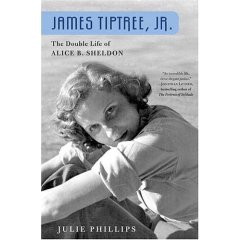
James Tiptree, Jr.: The Double Life of Alice B. Sheldon

At long last Julie Phillips‘ superlatively brilliant biography of Alice Hastings Bradley Davies Sheldon/James Tiptree, Jr./Raccoona Sheldon is out. Alli (as Alice was known) was endlessly fascinating. She was the child of adventurers who waltzed her around Africa and India as a child. She grew up to be an artist (before quitting cause she didn’t think she was good enough), joined the military during World War 2, worked for the CIA, ran a chicken farm, became a Ph.d in psychology, as well as two different science fiction writers: James Tiptree, Jr. and Raccoona Sheldon. Quite the cv.

Julie’s biography more than does justice to Alli Sheldon. It’s beautifully written and exhaustively researched. There’s not a false note anywhere. Julie’s written the book I wanted to write. Literally.

Back in 1996 I’d almost finished my Ph.D. thesis (The Battle of the Sexes in Science Fiction). I’d also already figured out what my next project would be: a bio of Tiptree. I had the seed for it in the chapter on Tiptree from Battle. I wrote to my friend, Gordon Van Gelder, who was then an editor at St Martin’s Press, and asked if he thought there’d be any interest. He replied instantly to say not only was there interest but he’d just signed up such a book that very week. A journalist named Julie Phillips was going to write it.

I cried.

And then I weasled info about Julie out of Gordon. He sent me her Tiptree article from the Village Voice. It was excellent, which was a relief (Alli’s in good hands), and a bit of a bummer (she’s not going to drop the ball so that I can step in and take over). We started corresponding and wound up sending each other all the Tiptree material the other one didn’t have. My chapter on Tiptree got a whole lot better; Julie went on to spend a total of ten years researching and writing the Tiptree biography. And we became friends.

I could not have produced the book that Julie did. For starters I don’t have that kind of stamina: ten years exclusively on the one book! I’d die. Nor do I have her awesome research skills. (I’m good at archival material, not so good at getting reluctant folks to agree to interviews, let alone drawing them out.) Plus it turns out that I’m much happier writing fiction than non-fiction. (Making things up is so much easier than researching them.)

Julie’s also a gorgeous writer who knows how to stand back from her material. Julie lets Alli speak for herself. Her commentary about Alli’s life are more musings than conclusions. She gives the reader space to draw their own. (I can think of several biographers I wish would do the same!)

I’ve read The Double Life through various different drafts, each better than the last. The final version is one of the best biographies I’ve ever read. Do yourself and favour and get hold of a copy immediately.

silence

Wow, thanks so much for all the fascinating responses to my last post. The reason I haven’t commented (or responded to anyone’s email) for the last five days was because I was in Kyoto with my family celebrating my mother’s birthday (more on that anon). My mum didn’t know me and my sister would be there so I could hardly blog about it before hand . . .

No time for a proper post so in the meantime can any of you help out Rachel Manija Brown? She’s looking for good non-fiction books about particular cities. She explains what she’s after here. Clearly, she needs to be told about ace books on Sydney!

An experiment

I’ve decided that I will sell my fourth book after I’ve finished writing it, rather than from a partial. I sold the Magic or Madness trilogy from an outline and the first three chapters of the first book. That is, I sold the idea of three books and then had to turn around and write them to pretty tight deadlines. Now I want to try writing one at my own pace and not try to sell it until it’s as good as I can get it.

I’ve done this before. My very first novel was written that way. I had a lot of fun writing it and I’m proud of it, too. But it hasn’t sold. That’s the huge risk, of course. Who’s to say that a novel of mine that hasn’t been sold from a sexy proposal will sell at all?

Having a contract— even though it comes with a big ole scary deadline—is comforting. You have proof that a publisher wants your work. You’re not floating in space hoping that one day you’ll sell a book again. You’re not thinking, I am contractless does that mean I am no longer a professional writer?

There are the economic factors, too. I’m halfway through the first draft of the great Australian feminist YA Elvis monkey-knife fighting mangosteen cricket fairy book. If I sell it from a proposal and the first few chapters now I’ll get money a lot sooner than if I wait until I’ve finished it. Bills do have to be paid . . .

Here’s my question: Do you prefer selling books before they’re finished or from an outline? In an idea world where money wasn’t a question which would you rather do?

And for those non-pros: How do you feel about the books you love being written to deadline? Do you think much about the writerly means of production?

Yvette Christiansë

A dear, dear friend of mine, Yvette Christiansë, will be publishing her first novel, Unconfessed, later this year. I just realised that I’ve known Yvette for more than fifteen years now and have been admiring her writing for even longer. (My first coming across her brilliant poetry is a long story that I’ll reserve for Unconfesed‘s official publication date.) Anyways, I’ve been waiting for her first novel for ages and now it’s almost here.

While we wait for November to roll around, the 1 August issue of Kirkus Reviews has a starred review of Unconfessed, which drips with praise, culminating in this fabulous pull quote:

    A gorgeous, devastating song of freedom that will inevitably be compared to Toni Morrison’s Beloved. But it deserves to stand on its own.

How amazing is that? I’ve known a lot of fine writers in my life, but Yvette is a genius on a whole other level. While you’re waiting for Unconfessed to come out treat yourself to her extraordinary collection of narrative poems, Castaway. You won’t regret it.

Misc.

Cheryl Morgan has reviewed Daughters of Earth at Emerald City. I think she likes it.

Amanda Coppedge has kindly started a Wikipedia entry on me. Thank you! One of the many smart things about Wikipedia is that you’re not allowed to write entries about yourself—that’s right, isn’t it?—or you know I woulda done it already.

Anyways if any of you feel like adding to the stub she has created, don’t forget to add my nobel peace prize, valiant service during the Spanish civil war, cricketing prowess, and invention of the mangosteen. You also might want to mention my previous marriages to Alida Valli, Cab Calloway, Gerard Phillipe (yeah, I know it only lasted two days, whatever) and Dorothy Dandridge.

So I’m thinking instead of the Great Australian cricket, Elvis, mangosteen fairy novel I might write one about a pathological liar. Whatcha reckon?

IBARW: Moment of Clarity (updated)

A contribution to International Blog Against Racism Week:

One time white me was out on the town with a black friend. We were wearing our very bestest clothes and looking very fine indeed. Especially my friend who is gorgeous no matter what she wears.

We needed a cab. She, being the seasoned New Yorker, stepped out onto the street with her arm out while I futzed about with my bag. Several cabs with their lights on zoomed by.

I looked up wondering why there were so many off-duty cabs at a non-off-duty time of night. More empty cabs went by. Not one had off-duty lights on. What the hell? I thought.

“Okay,” my friend said. “You try.”

We switched places. Seconds later. I kid you not—seconds—a cab stopped.

“Noooo!” I said.

“Yes,” my friend replied.

“Is it always like this?”

“Not always, but often enough.”


Update: Lili has a wonderful story in the comments.

Secret Society Girl

I haven’t been reading much lately (on account of Magic’s Child eating my brain), but I had a quick squiz at my friend Diana Peterfreund‘s very first novel, Secret Society Girl, and before I knew it I’d read the whole thing. Oops! (And lost hours of valuable writing time! Curse you, Diana!)

SSG hits the stores today. It’s a read-in-one-gulp hoot. Perfect for summer. Enjoy!

Here’s the debut novelist and her new baby. Aren’t they adorable?

International Blog Against Racism Week

I’ve swiped the following announcement from Oyceter, coffeeandink and Rachelmaninja over in livejournal land. If you want to take part here’s what to do:

  1. Announce the week in your blog.
  2. If you have an livejournal account you can switch your default icon to either an official IBAS icon, or one which you feel is appropriate. To get an official IBAS icon, you can make up of your own or ask [info]oyceter to do so as she has agreed to be the Official Iconmaker of the Revolution, or hop over to her LJ and pick up one of the general-use ones she’s put up.
  3. Post about race and/or racism: in media, in life, in the news, personal experiences, writing characters of a race that isn’t yours, portrayals of race in fiction, review a book on the subject, etc.

Inaugural posts are here, here, and here. And they are all mighty fine.
I’m going to do my damnedest to do no. 3 some time this week–deadline allowing. In the meantime here’s hoping you lot take part as well.

Now, back down the coal mine goes me.

Tell me stuff (updated)

You are correct that I have not been blogging much or responding to comments like I usually do or even responding to email a whole lot.

The reason is that I’m on a deadline (yes, the same one, yes, it was moved again, yes I really have to meet this one) and am working my arse off. (Oh, how I miss my arse!)

In the meantime I think you lot should entertain me. Here are some questions:

  1. Does anyone have any recs for best brunch place in NYC?
  2. Who’s going to be the first Australian to win the Tour de France (no, it doesn’t have to be this year)?
  3. What’s the best book you’ve read lately?
  4. I just read Out by Natuso Kirino. Loved it. Can anyone recommend a recent crime novel that’s sort of like? I don’t like mysteries—that is I prefer crime books where you know who done it and it’s the whys that are the thing. So I want something all psychologicy. (My fave crime writers are Patricia Highsmith and Jim Thompson.)
  5. Where do I go to buy buttons in NYC? (Yes, that’s right I still haven’t gotten them.) (Oh, and by “buttons” I mean those things that can fasten clothes.)
  6. Is anyone else following the New York Liberty this year? Testing times, eh?
  7. Apparently I need some kind of formal wear, you know, like a dress. Anyone got any recs for cool interesting designery shops in NYC?
  8. What’s your favourite Elvis song and why?
  9. Without googling explain the difference between the Australian and New Zealand flags. Which is lamer?
  10. What new-to-DVD movie should I get to reward myself when I finally meet the deadline?

Thanks! Hope you’re all having a fab weekend (what’s left of it), that all your deadlines are being met and you don’t look at Monday morning with too much dread. As soon as my deadline is finished I promise to be a good blogger again.

Update: bonus question:

Riemannia‘s question here reminds me that I’ve been wondering what you call those metal door thingies that you see all the time here in the footpaths of NYC. You know, that when you open them reveal stairs that lead down into the basement of shops and restaurants and bars. Do they have a name? They aren’t grates so what are they?

Tiptree biography

Julie Phillips has a brand-spanking new gorgeous website to promote her forthcoming unbelievably brilliant biography of James Tiptree, Jr. Go check it out! And order that book. Seriously it’s one of the best biographies I’ve ever read.

She’ll also be reading here in NYC:

Date: Wednesday, July 26
Place: KGB, 85 E. 4th St., NYC.
Time: 7:00 – 9:00 pm

I’ll be there. Hope you all can come too.

Scott Write Fast

I get asked a lot about how Scott manages to write as fast as he does. I guess people are too frightened to ask him. Or something.

I wonder about how fast Scott writes, too. But then I look at how many books Meg Cabot has out every year (by my count around five) and I wonder how come he writes so slow.

Here’s the background on the nine books he’ll have published from March 2004 to September 2006:

He started the first Midnighters book in early 2002. He’s since written books 2 & 3 of the Midnighters trilogy, So Yesterday, the three Uglies books, Peeps, The Last Days (which is my fave) and is well on his way with the first Leviathan book. That’s nine plus books in four and a bit years. Not quite as fast as the publishing schedule makes it look, but still plenty fast.

For comparison: during that time I’ve written four books—Magic or Madness, Magic Lessons and Magic’s Child (and I’m still rewriting), plus another book that didn’t work out—I’m also halfway through another one, and I’ve edited Daughters of Earth. Many would say that’s a decent output, but in that time Scott’s written five more books than I have. Five! (And, no, I’m not going to figure out how many books Meg Cabot published during that time.)

But he’s also been sick more often than me. Lots more and lots worse (shingles, anyone?). Writing that fast and that diligently—Scott, like Meg Cabot, writes really good books—isn’t sustainable. It broke his brain and his body. He’s on the mend now, and has a much less gruelling schedule ahead: only one book a year.

The problem is that when you write three or more books a year you never have time for anything else. You turn in the draft of one book and immediately have to turn to rewrites on another, then to checking copyedits, or page proofs on yet another. There’s never ever a break and eventually your brain blows up. (I’d love to know how Meg Cabot does it. Maybe she has clones.)

On the other hand, he could be making a living doing—I don’t know—pretty much anything else. Writing, afterall, is (mostly, or at least, sometimes) fun. Not to mention that Scott’s previous gruelling schedule is how come he’s now able to afford to write just one book a year (and under his own name too). Lots of gruel first before you can live a life of non-gruel. (If you’re lucky, that is.)

Writing fast, it turns out, can be amazing for your career. Having all those books out so fast is what made Scott a name in Young Adult lit land so quickly. If you have a bunch of books out every year your name is less likely to disappear off the face of the earth.

It’s why I plan to up my own productivity to two novels a year. You know, if I can actually write that fast and still produce words that hang together okay, which, obviously, remains to be seen. Not many people can. Writing fast isn’t a necessary ingredient for being a good writer. But it can help if you want to make a living as a writer.

Wish me luck!

Slave economies

In New Orleans I saw men in orange jumpsuits being watched over as they worked by a man wearing a blue coat with the word Sheriff on the back.

Today’s New York Times explains what I saw. Turns out that Louisiana is the one state in the United States that allows private citizens to use prison labour:

    At barbecues, ballgames and funerals, cotton gins, service stations, the First Baptist Church, the pepper-sauce factory and the local private school—the men in orange are everywhere.Many people here in East Carroll Parish . . . say they could not get by without their inmates, who make up more than 10 percent of its population and most of its labor force. They are dirt-cheap, sometimes free, always compliant, ever-ready and disposable.
    . . .
    The churches, too, are grateful beneficiaries. “They sent me prisoners for a month” for menial chores at the First Baptist Church, said Reynold Minsky, also chairman of the local levee board. “All completely free,” Mr. Minsky added. “It’s a real good deal. Everybody is tickled.”

They’re also used at a local private school where the school’s principal, Morris Richardson, said, “We try to provide their lunch for them.” Makes you wonder what the prisoners are eating at their other jobs.

How is this economy sustainable? The unskilled work is being done by prisoners for free. The poor people who aren’t in gaol can’t find any work. How are they able to support themselves and their families?

Some would have to steal to survive, and then if they’re busted, they’re sent to gaol to join the ever-expanding pool of free and/or dirt cheap labour that so tickles Reynold Minsky. And repeat.

Them that’s got shall have . . .


If you don’t have a login for the Times go to bugmenot.com and get one.

Daughters reviewed

Remember the anthology I published a couple of months ago? Daughters of Earth?

Well, at long last, it’s been reviewed and the review’s a lovely one.

Here’s what Nancy Jane Moore at sfrevu has to say about Daughters:

    In Daughters of Earth, eleven feminist science fiction scholars look at eleven feminist science fiction stories. Given that the field of science fiction scholarship is a small one, it is a joy to find eleven very good feminist scholars among them. Combining the microcosm of each story with the macrocosm of the Twentieth Century, these scholars provide us with a depth of experience we can’t get just reading the stories themselves.

A ridiculous amount of work (tracking down copyright holders, arguing with agents, wrangling stories out of the essayists and etc.) went into Daughters and I’m crazy proud of the end result: from the gorgeous cover by Cat Sparks to the awesome essays. If you’re at all interested in science fiction you should really check it out.

Italy through to the finals

Okay, so Italy beats the Ukraine 3 nil, then Germany 2 nil to make it to the finals. Makes us Aussies look pretty good, eh? We kept them to 1 nil. Plus that one goal was from a penalty kick awarded for a flop.

I’m just saying . . .

Ignore your critics

A friend has a new book coming out soon and is dealing with being reviewed for the first time. She’s swinging from high to low and back again and trying to make sense of the contradictory takes on her words. Been there! So here’s my advice (which I wish I’d taken myself): ignore it.

I’ve had people tell me (repeatedly) that the MorM books are way too short, way too long, overwritten, underwritten, pretentious, condescending, annoyingly confusing, deliciously ambigious, beautifully written, badly written. That the Australian slang is confusing and distracting, that the slang is the best thing about the books. That Magic Lessons is crap compared to Magic or Madness, that Magic Lessons is heaps better than MorM. That the Reason/Jay-Tee/Tom bits are boring/the best part of the books. That Reason Cansino is way too sophisticated/too young for a fifteen year old.

What’s a gal sposed to do in the face of all of that?

Me, I’m slowly learning to only pay attention to the stuff that touches on what I was already concerned about. For example, the complaints from readers who bought Magic or Madness not knowing it was the first book of a trilogy and were then pissed when it didn’t resolve satisfactorily for them. Been there and experienced that.

Yup, the signal that MorM was first of a trilogy was very discretely hidden on the hardcover. It bugged the hell out of me. I wanted a big ole number one on the spine and “first book of the Magic or Madness Trilogy” emblazoned on the front cover. I was overruled by my publishers. Apparently when the first book of a trilogy by an unknown comes out with its triloginess prominently proclaimed it doesn’t sell as well as if you hide it. Selling stuff, apparently, is all about tricking people.

I’m determined that if I ever write another trilogy—which I’ve taken a vow not to do (hey, Libba, let’s keep the faith)—it will clearly be marked as such. But, who knows, I’ll probably get overruled by my publishers again. Sigh.

The writer can only control (most of the time) the words between the covers. We rarely control the way the book looks, how it’s marketed (or not), and we have absolutely no control over what people think of it.

Scott gets fan mail all the time saying how wonderful X book is, but that they hated the bit where their favourite character had something bad happen to them. Could he write another book where bad stuff doesn’t happen?

Um, yes, he could, but reading it would bore you into a coma.

Praise is nice, criticism can be helpful, but sometimes the best thing you can do is stop your ears and keep on writing.

Someone hand me the ear plugs!

Noooooooo!!!!! (updated)

Okay, I got nothing against France. They publish my books after all, and it’s where some of my ancestors are from, but I love the Brazilian football team, have done for ages, and I really, really, really wanted to see them in the final.

I’m bummed.

Yeah, yeah, France played better. Yeah, yeah, I have the consolation of England being knocked out. But it’s depressing knowing it’s going to be an all-European final with not one team from the rest of the world.

Poo!

Oh, well, maybe we’ll be able to take the Tour de France. Are there any Brazilians in the Tour? Ghanaians? Japanese? With all those drug expulsions surely my Aussie boys Cadel Evans and Michael Rogers are a shot?

Right then, that’s out of my system, back to Magic’s Child . . .

Update: Here’s a haiku I swiped from Scott’s blog:

yes, brazil lost it
yellow shirts not so sunny
rain falls on the field

—orangedragonfly

New Orleans (updated)

The American Library Association Conference was the first to be held in New Orleans since Katrina. Everywhere we went people thanked us for being there, for spending our money at their hotels, restaurants, bars, cafes and shops, for riding in their cabs and dancing in their clubs. For the first few days that was the most frequent sign of what Katrina had wrought: intense gratitude that 18 thousand librarians (and hangers on such as, you know, writers and other publishing types) were in town.

The French quarter is on higher ground and largely looks like nothing happened. Gorgeous wrought iron lace work terraces (looking not unlike Sydney ones) line the narrow streets, and the restaurants and cafes and bars all seem to be open even if they are festooned with Help Wanted signs. It was easy to stroll around in the delicious heat and imagine taking a writing holiday there, spending four or six weeks writing every day in one of those gorgeous terraces, going out every night to gorge on the fabulous creole cooking, and get to know the place the place better; it was hard to keep in mind that this was the city that had been completely devastated last year.

I didn’t recognise the first sign of devestation I’d seen: when we flew in we were treated to a lovely view of the city, dotted with lots of bright blue, which I later learned was FEMA-supplied canvas.

The driver who picked us up and took us to our hotel was living in a FEMA trailer parked in front of his slowly being rebuilt house. The driver who picked us up on our way back home took us on an impromptu tour of a tiny part of the devestated parts of town. He told us 80% of the city is still waiting to be repaired (over the five days I heard estimates running from 60% to 85%). All the houses had clearly visible high water marks almost three metres above the ground and on each house someone had leaned out from a boat to make an X and mark how many dead people and animals were found inside. There were no cars parked outside, no people walking along the foot paths. It was a ghost town.

The same driver told us that the official death toll for the Convention Centre was 1. He had a firemen friend who’d seen a room inside the Centre piled high with what he reckoned was at least 150 bodies.

After 9/11 the newspapers round the world (or at least in Australia and the US of A) carried the death toll in their pages which was updated every day for weeks and weeks after the attack. I saw no equivalent after Katrina.

Why is there so little coverage of the fact that around 1,000 people are still unaccounted for? Or of the long, slow recovery? The local New Orleans paper, The Times Picayune, has stories every single day. The New York Times has had one in the last month or so. It was about the huge increase in the suicide rate in New Orleans. [Update: this is not true the Times has run lots of articles.]

Reading about New Orleans from New York City I honestly though I’d be visiting a city well on its way to recovery. A city being rebuilt. That’s not what I found there. [Update: this just shows that I’m a careless reader of the Times.]

If you can visit, do. If you can’t how about donating a book here which will help some of the devestated libraries in the area.

P.S. Yes, Cecil, I will be posting an account of the actual conference, too. Short version: twas a blast and Margo Lanagan is awesome beyond words.

Update: Monica Edinger points out in the comments that a simple search of the New York Times archive would’ve shown me that I was being not only unfair to the Times but completely wrong. That’s what I get for writing what felt true without checking. Always check your facts, folks!

Thus far survival

Football is a brutal tying-my-stomach-in-knots game. Aaarggh!!! Especially right now as Australia plays Italy. They’re better than us on paper and having watched the first half I can see they’re better than us on the field too. But they haven’t scored yet . . . on account of two incredible saves from our fab keeper, Mark Schwarzer.

Just forty-five more minutes to endure . . .

P.S. Sorry, Marrije, that was a tough, horrible game with awful ref’ing.

P.P.S. Yes, I should be off at the conference, but you guys didn’t think I’d miss this match did you?

P.P.P.S. Sorry about being behind with responding to comments and emails. This conference is crazy frantic.

in New Orleans

American Library Association conference highlights thus far:

  • Shaking hands with New Orleans mayor Ray Nagin
  • Meeting many wonderful librarians, especially you, Dawn!
  • Walking along Bourbon Street and realising that I’m walking along Bourbon Street
  • Randomly running into Margo Lanagan and her son Jack
  • Picking up lots of free books, including John Green’s latest. Mmmm free books . . .
  • Meeting someone who’s actually talked to Elvis Presley!!!!!

Running out of time so now I go.

Oh my elvis!!!

We’re through!! We made it to the second round!!

AUSSIE! AUSSIE! AUSSIE! OI! OI! OI!

That is all.

A Whole World of NO

I just saw the line “Sometimes published writers get rejected too” in a comment thread on Miss Snark. I nodded at the screen because yes, indeed, we certainly do.

That glorious day when you finally get accepted does not mean that from then on it’s all yes, yes, yes, yes, yes. I wish! I don’t know a single published author who hasn’t had rejections after their initial sale. Mate, I know New York Times Bestselling Authors who’ve had work commissioned for an anthology and still been rejected:

    “You are a writer of great genius, we love your work, write us a story set in a world with butterfly-based technology!” The writer does. The response: “Your story does not quite fit our anthology. Sorry.”

The writer is then stuck having to find someone who wants a story about butterfly-based technology. Blerk.

Happens all the time. Being a writer—published or not—is all about being rejected.

Editors say no, book clubs say no, prominent magazines or newspapers or journals say no to reviewing you, Hollywood says no, whole countries say no (why, Lichtenstien, why?), school boards say no when they ban you: It’s a whole world of no. I bet if most pub’d writers sat down and figured out the percentage of yeses in their life compared to the nos it would be rather teeny.

One of the best things about having an agent is that they can shield you from a fair number of nos. The ones I’m not aware of are fine by me. (Though I have seen a punter in a bookshop pick up Magic or Madness, read the back, read the first few pages, then put it back down again. No!!!)

So, sadly it takes a lot more than just one yes to make a career as a writer. You need many yeses and the ability to cope with an ocean of nos.

Writer Anxieties

It’s now more than a year since Magic or Madness was first published which means I’ve been a published novelist for more than a year—something I’ve wanted since I was a littlie. All sorts of things have happened since then that I hadn’t anticipated, and trust me, I anticipated a lot: bestseller status, a multi-million dollar film option, the nobel prize. (Clearly, that’s all being saved for later.) I’m not entirely delusional, I also imagined less over-the-top stuff: good reviews, selling well enough that my publisher wouldn’t drop me. So far so good: there’s a tick beside both of those boxes.

What I didn’t anticipate was how having a book out can mess with your writing other books. Once Magic or Madness was published I began to scan the subject headers of my email looking for reviews, a hint of a foreign sale, a conference invite, any kind of recognition and/or praise. I started googling, technorating, blogpulsing, icerocketing myself and my book with unseemly regularity as well as engaging in a ludicrous amount of amazonomancy.

I was exhibiting all the signs of praise addiction.

A week without a good review, discussion of MorM on someone’s blog, a fan letter, a foreign sale, being named to a best-of-the-year list, or being shortlisted for an award was a hideously naff week. And a week with BAD reviews? And the many weeks my books continue to NOT be banned? Well, let us not speak of it.

I was not heeding the wise words of a much-published and much-lauded writer who told me I shouldn’t take any of that stuff seriously. “You should write the very best books you can,” she told me, “and forget about the rest. If your book doesn’t sell in multiple markets, doesn’t get good reviews, or any award nominations does that mean that you and your book are worthless? There are many fabulous books that are poorly reviewed and win no awards. If you listen to the negativity it will mess with your writing; if you become addicted to the praise it will mess with your writing. Best to forget it all and concentrate on writing.”

At the time I thought she was just being a killjoy. Now I know she was right.

As I wrote the first draft of Magic’s Child I thought about fan/reviewer/award judge/foreign publisher responses to Magic or Madness and Magic Lessons. I imagined their responses to Magic’s Child, and worse, started figuring out how to circumvent these wholly imaginary criticisms. In other words I panicked all over the page.

Magic’s Child is the first book I’ve written knowing who the audience is. (Fortunately, Magic Lessons was already written before Magic or Madness came out.) I have had letters from readers, comments about the books on my blog. Teachers, librarians and booksellers have also passed on comments. There have been reviews (in journals, magazines, newspapers, blogs and on sites like amazon.com and barnesandnoble.com) as well as comments and discussion on other people’s blogs.

I’ve heard from a bunch of folk how they want the trilogy to end, who it’s okay for me to kill (Esmeralda, Danny), and who it mostly definitely is not (Reason, Tom and Jay-Tee); who should be a couple (Reason and Tom) and who shouldn’t (Reason and Danny). All the praise, suggestions, and criticism echos in my head as I rewrite Magic’s Child: What if this book isn’t as good as the first two? What if I can’t wrap up everything in a way that pleases my existing readers? What if there are no readers by the time the third book comes out?

These are not thoughts that are conducive to happy writing. For me the only way to cope has been to stop reading any of it. Sadly I’m not very strong, so the only way I can do that is to turn the internet off, which is why I’m behind with emails, and am not blogging as much as I’d like.

How do you other writers cope? How do you manage not to think about bad (and good) reviews? Do any of you not read them? Is this just a sign of my newbieness? Will this phase pass as I write and publish more books? Or is this just part of being a writer?

Or is it that writing the third book of a trilogy is ridiculously difficult? I’m leaning that way on account of writing the Great Australian Elvis Mangosteen Cricket Fairy YA Novel has been (relatively) dead easy. Sigh.

Or am I merely learning that one of the central tenets of post-structuralist theory is dead on: a writer has no control over how their text is received. A reader may love your book for the moving romance even though you delibarately wrote it to be romance free; another reader may hate it because it is romance free.

There’s nothing you can do about it except be grateful that you are being read at all.