Category Archives: Praising

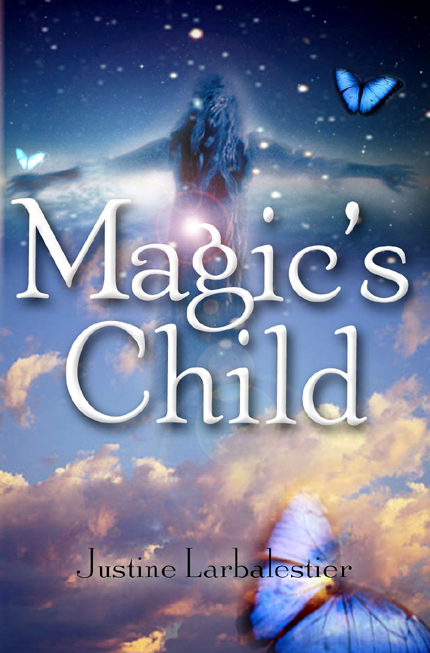
Magic’s Child Screensavers + manga

Now available for your delectation: gorgeous Magic’s Child screensavers complete with animated butterflies. I just tested it and it made me squeal with happiness. It comes in mac and pc flavours. Happy sigh. Thank you, Courtney Wood, for all your hard work!

What better way to celebrate the final book in the Magic or Madness trilogy’s arrival (just eleven more days) then to have pretty butterflies flutter across your computer screen?

And now I will return to my manga binge. I gave myself a much deserved (truly!) holiday: I went out and gathered up armloads of delicious manga and now I’m reading it. Why, oh why, did I only get the first four volumes of Monster?! What was I thinking? Everyone told me it was awesome! I need more. I must have more.

Heh hem. Don’t mind me. I’m off to read more of Her Majesty’s Dog. Mmmmm, manga!

Why?

Why do I keep writing novels that involve numbers? I am spending today going through the Great Australian Cricket Mangosteen Fairy Monkey Knife Fight Elvis YA novel and counting things, many different things, because sadly it is a vital part of my plot.

Why?

Why do I keep doing this to myself? I am borderline inumerate (and deeply ashamed of it). Hmmm . . . Maybe that’s why? My shame keeps prodding me towards numeracy. Stupid shame. Stupid numbers.

Let this be a warning to anyone still in school and inclined to slack off in maths class. It will bite you in the bum later. Study hard! Pay attention! This stuff is important.

In other news Maureen is handing out the best advice ever on dealing with a crappy Amazon review. It’s official: Maureen is my favourite comic writer of all time.

One of my favourite Amazon activities is to go to my fave books and order the reviews from lowest stars to highest. I then go through hitting the “no” button. “No, your stupid review is not remotely useful! No! I say, No!” It’s remarkably cathartic.

Speaking of comic, scary brilliance. You should all go see The Host. It’s so fabulous that even the New York Times noticed. Best monster movie ever.

Also Diana seems to agree that the relaxation poses in yoga are excellent for solving plot holes and other problems with your novel. Meditation? What’s that?

Okay, I have procrastinated enough. I must return to counting. (Stupid novel!)

Magic’s Child & Other stuff

The first offline review of Magic’s Child has appeared in Kirkus Reviews. They seem to like it. The entire review is riddled with spoilers so here are the highlights:

In this sizzling conclusion to a mordant fantasy trilogy, magic is more curse than blessing for 15-year-old Reason. . . . Alternating chapters by Reason, Jay-Tee and their friend Tom recount this crackling blend of fantastic adventure and soap-opera angst with vivid splashes of Aussie and American slang. . . . [A]dolescent readers will be left pondering their own hard choices. Not a stand-alone story, but the entire trilogy is a worthwhile purchase.

Not bad, eh? A number of pullquotes. Thank you, Kirkus!

In other news scifi.com’s Scifiwire is interviewing various award shorlistees, like, um, me for the Norton Award. I hear there’ll be interviews soon with Maureen Johnson and Scott Westerfeld. I assume they’ll also talk to Susan Beth Pfeffer and Megan Whalen Turner. Hope so!

In other news Rebecca designed this T-shirt in honour of Scott and mine’s visit to Houston. Isn’t it awesome?

Is that not the coolest Magic or Madness/Midnighters combination you ever saw? There are even butterflies! I love it!

Two excellent things

1. I am now officially an award-winning author. Sort of.

Daughters of Earth just won the Susan Koppelman Award for Best Anthology, Multi-Authored, or Edited book in Feminist Studies in Popular Culture which is given by the Popular Culture Association. How cool is that? No book of mine has ever won an award before.

As I didn’t write Daughters—other than the introduction anyways—I’m not sure this qualifies me as an award-winning author. I guess what I am is the editor of an award-winning book. I sure did put a lot of work into it and so did all the contributors. We’re very proud and thrilled that someone else likes it well enough to give it a prize. Woo hoo!

Thank you so much Brian Attebery, Joan Donawerth, L Timmel Duchamp, Andrea Hairston, Joan Haran, Cathy Hawkins, Veronica Hollinger, Josh Lukin, Mary E. Papke, Wendy Pearson, and Lisa Yaszek for writing such fabulous essays. What a fabulous bunch1 of scholars!

2. A bunch of us Young Adult writer types will be doing a reading next Wednesday:

Eireann Corrigan (Ordinary Ghosts)
Erin Downing (Prom Crashers)
Justine Larbalestier (Magic’s Child)
Leslie Margolis (Price of Admission)
Maryrose Wood (Why I Let My Hair Grow Out)
Daniel Ehrenhaft and Adrienne Maria Vrettos (reading from the 21 Proms anthology)
Wednesday, 7 March, 6-8PM
Tompkins Square branch
New York Public Library
331 E. 10th Street (cnr of Ave B)

Hope you New York types will be able to join us. Tis quite the lineup.

  1. What should the collective noun for a group of scholars be? A folio of scholars? A vellum? Footnote? A tenure? (Though that’s harsh on those without and the independent scholars.) A reference? [↩]

Ode to Kirihito

I’ve been dipping my toe in the worlds of manga and graphic novels over the past year or so. Allow me to express some neophyte enthusiasm: WOW!!! Seriously, I’ve loved the majority of what I’ve read and the stuff I haven’t like that much in the early volumes (I’m looking at you, Saiyuki) has become fabulous later on.

I’m pretty sure the 90% rule1 still applies, I just happen to have very excellent guides (thank you, Micole, Rachel, and Doselle). And Anne Ishii of Vertical Books who led me to Osamu Tezuka‘s Ode to Kirihito, which I loved so much I feel compelled to rave about it here.

Ode to Kirihito is like nothing I’ve ever read before. So much so that I don’t even know how to describe it. It’s a medical thriller, it’s a philosophic musing about what it is to be human, it’s completely unputdownable. That’s saying something because it is a very big book. There are depraved sideshow performers, corrupt doctors, scary small town locals, depraved and corrupt crime lords, nuns, as well as racist mine overseers.

From page to page I had no idea what was going to happen next, but when it did, it made sense. It all worked. More than worked, it sang.

And that’s just the story. The art is something else again.2 Although Ode was first published in the early 1970s if I hadn’t known that I couldn’t have guessed it. The art looks contemporary. More than that it looks cutting edge contemporary. It’s so beautiful that I would stop to just stare at many of the pages. And, trust me, I’m not someone who will stop to smell the roses when I’m as caught up in a story as I was with Ode to Kirihito. It was just so gorgeous I could not soak it up.

You all have to read this book. It is gobsmackingly awesome. And weird. Very very very weird.

I am now going to read the first volume of Tezuka’s Buddha. I must now read everything he has ever written. He is a genius and I am smitten.

  1. Otherwise known as Sturgeon’s Law: “Ninety per cent of everything is crap”. [↩]
  2. Not that they’re separable. I know that. I’m just new to this, remember. [↩]

What I did over the weekend

The short version of the past three days:

  • The Humble Teen Lit Festival was unbelievably wonderful and run by the awesomest group of librarians and teachers ever. Thanks for taking such great care of me, Dawn!
  • The Humble students and the other folks who showed up were smart and receptive and asked lots of questions I hadn’t been asked before. Fabulous!
  • My old man is insanely popular. I mean I knew he was popular, but I didn’t realise he was that popular. I thought I was going to burst I was so proud of him. You shoulda seen his signing queue! Around the block! Mental!
  • Scott’s family are lovely. Catching up with Uncle Ronnie the principal (and wow do his students love him) and Jackie and Ken would have made the trip totally worthwhile without the added bonus of Teen Lit Festival.
  • All writers obsess about their character’s shrugging or smiling or raising eyebrows too much.
  • Apparently there are two airports in Houston. Ooops.
  • Getting from one to the other is a seventy dollar cab ride.
  • Way too many of you lot are deeply deluded about vampires. It saddens me.
  • None of you knows about Scott Pilgrim?! This causes me great pain. Go out and read the three volumes immediately! That’s an order.
  • Although I feared three days without my computer it turned out to be way more of a blessing than a curse. I may now take a couple of days off from its evil thrall once a week. Or monthly. Or possibly every six months . . .
  • It was still lovely to come home to all your mail and comments here. Bless!

And now I go pass out. While being other places is wondrousness, getting to and from them is increasingly horrible. It took us fourteen hours to get from Houston to NYC. That’s how long it takes to get from LA to Sydney . . . That ain’t right.

Fan art and librarians

Writer and artist, Chris Howard, was so inspired by reading Magic or Madness he painted a portrait of Reason:

It amazes me that my books have inspired some folks to commit art. Makes me all teary!

I’m also made teary1 by the awesomeness of the vast majority of librarians. The recent kerfuffle over a dog’s scrotum has led many to think that librarians in the US of A are all for banning books over a single word. This is emphatically not the case. The American Library Association has a whole division that goes to battle to protect intellectual freedom in the US of A. They’re the ones who bring us banned books week. They fight the good fight! They are all godesses. (Even the boy librarians.)

Teariness also comes over me as I contemplate all the kids’ books that have the word “scrotum” in them. (Mostly because if I had one I would cry if these things were done to said body part. I mean, OW!) Via Read Alert.

  1. Best segue ever, eh? [↩]

Zombies, unicorns, scrotum (updated)

What have I started? Arguments about the relative merits of zombies and unicorns rage across the intramanets. And on each thread someone suggests the zombie-unicorn hybrid. Great minds think alike? Or fools seldom differ?

I was greatly distressed that lovely friends of mine like Holly Black, Cecil Castellucci, Meg McCarron and Literaticat have fallen pray to the false glittery charms of unicorns despite the fact that being virgin fascists unicorns would have nothing to do with them. I guess it falls into the whole desiring-what-you-can’t-have camp. Perhaps to resolve our issues Holly and I should collaborate on a Zombies vesus Unicorns novel? I will write the zombies and she can have the unicorns. Though I’m not sure how well that will work given that she won’t read about zombies and I won’t read about unicorns.

Some school librarians are saying that they won’t have Susan Patron’s Newbery Award-winning novel, THE HIGHER POWER OF LUCKY, in their library because it contains the word “scrotum” (in reference to a dog). Apparently “scrotum” is an offensive word. I had no idea. I thought it was an anatomical term for a part of the male body. I’ve never heard anyone use it as a swear word and I come from a swearing people.

The New York Times also covers the story but seems to think that authors sneak words like “scrotum” into their novels solely to offend.1 Um, what now? Rosemary Graham responds eloquently to the extremely unbalanced Times coverage. The best reporting on the whole story can be found at Publishers Weekly which points out the role Jordan Sonnenblick and Asif! had in drawing attention to it.

I write novels to tell the best stories I can for teenagers. I try very hard to write characters who are believeable and I choose the language they use accordingly. I do not set out to offend anyone. I’m sorry when that happens, but I’m not going to write less believable stories in order not to offend people. That leads to the worst possible kind of censorship: When you start second-guessing yourself. Can I use the word “pom”? No, that will offend English people. Can I use the word “pink”? No, that will offend pink-haters (and possibly also pink-lovers). How about “jasmine”? No, Margo Lanagan will come gunning for me. When does it end?

Librarians and school librarians in particular have an incredibly hard job. I admire them tremendously. I just wish we were living in a world where people’s response to being offended was to talk about why, to explain the history and context of the word, and how that has made it offensive to them, rather than trying to wipe the books that contain the word off the face of the earth. I mean I am not advocating banning books about unicorns. I just won’t blurb them.

As soon as it is warm enough to go outside I’m off to buy a copy of The Higher Power of Lucky from my local children’s bookshop.

Update: Scott adds his two cents’ worth.

  1. For the record, if concerned adults can find the naughty words we wicked authors sneak into our books then we clearly haven’t been sneaky enough. [↩]

Important matters

1. I have been accused in certain circles (okay, in certain emails) of deliberately not mentioning the English win in the recent ODIs against Australia in New Zealand. So here you go, you whingeing poms:

    Yay, England for finally stringing together three wins in a row! Way to peak at the right time. Yes, you are now contenders for the World Cup next month. Go forth and be happy!

    It’s still only One-day cricket, but.

2. I’ve also been meaning to remonstrate with one Maureen Johnson who has let down her fellow pro writers by revealing one of the most closely guarded secrets of our trade. First it was Matthew Cheney, and now Maureen. When is this going to stop, people? Are you going to start selling your secret decoder rings to the punters? I hope you remember the sacred oathes you swore. Don’t forget that there will be repercussions!

3. I’ve also been asked why I think it’s okay to hurt Maureen Dowd’s feelings when I’m so precious about novelists’ feelings. To which I can only respond: Well, der. I am a novelist. Of course I’m more worried about our feelings. Besides it’s well known that columnists are made of much sterner stuff than thin-skinned novelists. They are mocked all the time and are well used to it. But every time a novelist is mocked a little piece of the world’s communal imagination disappears in a tiny puff of smoke. It’s on your own heads if you mock us.

The one exception is John Scalzi who has managed to maintain the thick hide of a columnist despite becoming a novelist. You can mock him as much as you want. He loves it!

4. Over in the magical land of livejournal, there’s some really fascinating discussions going on about urban fantasy and the demonisation of “normal”. I have much to say on this subject and am struggling to get them together in a way that makes sense to anyone but me. But they involve lots of thoughts about Pan’s Labyrinth and fairy tales.

5. I have discovered a good thing about the cold. When you fall over in the street, you’re so padded with gloves and coats and scarves and etc etc, that it doesn’t hurt!

6. Feel free to share some matters you consider important.

Reviews

The ethics of accepting free things for review is being debated amongst comic reviewers. Can you give an unbiased opinion about a book or comic or DVD or whatever if it’s a freebie? Etc etc blah blah blah.

Please! Of course, you can.

I have to admit I find this debate a bit yawn-worthy. Reviewers and critics have been getting stuff for free and then completely slamming the stuff they don’t like since the dawn of the printed word. If someone out there is giving only good reviews to the free stuff then they’re not worthy of the name “reviewer” or “critic”. They’re poorly paid advertising. Readers can tell the difference.

Colleen Mondor agrees the debate is pretty silly. She also makes a really excellent point over at Comics Worth Reading:

I am sure it is frustrating for creators to know their books (or comics) are being sent out there and then not hear anything from reviewers, but it is just one more step in the long frustrating game of publication. Honestly, I think writers should be glad that there are so many more venues for their books to be reviewed now then in the past —at least with the web you can get your work reviewed by literally hundreds of places, rather than relying on a very few the way it was twenty years ago. At least you have a decent shot to get some publicity.

This is so very true. In the last six months or so I’ve been finding accidentally stumbling across roughly a review a week of one of my books somewhere on the intramanets. Some are just a line or two, others are much longer. That’s a lot of talk about my books that would not have existed ten years ago. Or even five. Not all are positive, not all sites have a tonne of traffic. So they’re not generating oodles of sales. Doesn’t matter. It’s absolutely delicious to be able to read what my audience thinks. To have tangible proof that I have an audience. No matter how small.

I remember way back in 1993, at my very first science fiction convention, meeting a published writer who had already published five or six books. She told me one of the things she liked best about cons was getting to meet people who’d read her books. “Otherwise, I’d just be writing in a vacuum. Most of my books haven’t been reviewed anywhere.”

My eyes bugged out. It had never occurred to me that you could be a published author and not be reviewed. (It had never occurred to me that you could be a published writer and not be living on champagne, mangosteens, and caviar with rainbows of happiness cascading all around you.) Now, of course, I know better.

I’ve just finished a trilogy. The first book was widely reviewed in the offline press, the second book—not so much. I’ll be interested to see what happens with the third. I’ve heard that the longer a series goes on, the less you get reviewed. (You know, unless you’re J. K. Rowling.)

But I do know that even if I get no “official” reviews at all. There’ll still be online ones. There have already been a few. I came across the lastest one today. It’s from one of the regular commenters here, Rebecca, and it’s her very first book review. I think it’s excellent, but I’m incredibly biased. She says

Magic’s Child does everything I could have hoped for and more. If you aren’t already reading it, or on the waiting list to borrow my copy of Magic or Madness (hehe, I have a waiting list), then you should go out and get the books RIGHT NOW. Plus, Magic Lessons just came out in paperback. And so I must conclude that Magic’s Child is awesome and was an excellent, surprising, and exciting end to the trilogy (which, incidentally, I pulled an all-nighter to read. Yes–it’s that good 😀 ). Read it. Everyone. Now. 🙂

So, yeah, what Colleen said. This writer is very glad indeed that the intramawebbies has produced so many more venues for reviewing and talking about the things we love. Yay intramanets!

RW6: Sydney and New York

Orangedragonfly wants to know

When you are in sydney, what do you miss most about new york?

and (of course) when you are in new york, what do you miss most about sydney?

My answer is much the same for both questions: above everything else I miss my family and my friends. My parents live in Sydney so when I’m there I don’t miss them, but I do miss my sister who lives in Los Angeles. So I miss her and my parents when I’m in New York.

I mentioned in an earlier post that no matter where I am I’m always missing someone. That’s pretty much a definition of what it is to be human. Even the most stay-at-home types have friends and family who have moved away. And people we love die. We’re always missing them as well.

I’ve yet to get truly homesick for New York City, the way I do for Sydney. When I’m not in the big apple it’s pretty much out of sight, out of mind (except my friends, natch!). But sometimes my homesickness for Sydney is a physical ache. I long for the smell of it. Truly, Sydney is one of the best smelling cities I’ve ever known. I miss the light and the big skies. I miss the easiness of it. It’s where I’ve spent the majority of my life. I know how Sydney works; I’m not sure I’ll ever really know NYC so intimately.

Which is not to say that NYC isn’t wonderful. It is in many many ways. Almost four years back I wrote a Sydney/New York City comparison. Most of it is still holds true. There are many, many things that NYC does a lot better than Sydney. But Sydney is my heart, NYC isn’t.

Magic’s Child anxiety

Tansy Rayner Roberts has reviewed Magic’s Child for As If: Australian Speculative Fiction in Focus. Be warned: it’s deeply spoilerific.

Roberts enjoyed Magic’s Child as much as Mr Doctorow of boingboing did:

Magic’s Child, like the other two books in Larbalestier’s Magic or Madness trilogy, is one of those clever novels that, because it is so easy and enjoyable to read, might fool you into thinking it is slight when it is actually rich with dark ideas and chewy themes. The series is also great entry level speculative fiction, heartily recommended as a way to introduce non-fantasy readers into the genre.

My books are gateway drugs! Woo hoo!

I’m as chuffed by this review as I was by Roberts’ review of Magic Lessons and for similar reasons. Once again she’s pointed out a few things about the book and the trilogy that I hadn’t noticed. Cool, eh? But I can’t discuss ’em on account of most people haven’t read it yet. Remind me in a few weeks!

Because it was such a difficult book to write, it’s not only a relief to be getting positive responses, but a bit of a shock. I have no perspective on Magic’s Child. None at all. I’m not sure I’ll be able to read it again.1 The writing and rewriting of it (especially the ending—how many endings were there? Do not ask!) was fraught and ugly and brain destroying.

That folks are enjoying it is huge compensation for those dismal days. It’s even more pleasing that no one (so far) has accused me of doing a Pullman ripping them off with a crappy unsatisfying ending.

Because that’s the other big fear: Does the ending work? The biggest complaints about series and trilogies is that the ending ends more whimpery than bang-y, or goes off somewhere new and unprepared for, that it does not resolve all that was set up in the earlier books. I’ve been that ripped-off reader; I did not like the idea of perpetrating the rip off.

Of course it’s all early days. Magic’s Child isn’t out till March. Plenty of time for readers to hate it!

We writers are hopeless. Sensitive and crazy overprotective about our books. Melina Marchetta expresses it perfectly. When a new book comes out:

  1. You want to be very cool and say that you love your novel and are very proud of it, and if your readers don’t feel the same way, that’s fine. First big lie. You want everyone to love it.
  2. You tell everyone that a bad review doesn’t affect you because you know other people (your mum) loved the story. Second big lie. I received a really bad Jellicoe review and I spoke about the fact that I wasn’t going to speak about it for days and days (but it was a very very mean spirited review).
  3. You tell a friend that it’s okay that they’ve never read any of your novels. Third big lie. When they’ve read that mumbo jumbo Ulysees and forced you to read Camus, then the least they can do is get the DVD out and pretend they’ve read one of your novels.

And as I said I’m particularly nervous about the reception of Magic’s Child. If me the author don’t know how I feels about it, then how can others love the poor wee thing? (Yes, I am aware of the many logical fallacies here. Not least that how I feel about the book is entirely immaterial to how anyone else feels about it. I did say we writers are hopeless, didn’t I?)

Well, these people seem to like it. Phew!

  1. Except the epilogue. I’m dead fond of the epilogue. The glossary and acknowledgments aren’t bad neither. Though I’m ashamed I forgot to thank all my English teachers from primary and high school. What was I thinking? [↩]

RW5: aaargh, finishing stuff, and Jones and Mahy

Request Week is now over and the comments are closed, but I’ll continue working through the rest of the requests. Cause I’m honorable that way.

Marrije wants to know about

the pluses and minuses of living in several places (i.e. nyc and sydney) and how you do that logistically.

I hope you understand, Marrije, that a question like that is a license for me to whinge. You have been warned.

My answer in short: Aaaaaarrrrrrggggggghhh!!!!!!!

We’ve been saying for a while that we live half the year in Sydney and half in NYC. But it’s not true. It never has been.

We haven’t lived anywhere for six months straight since we lived in Sydney for almost two years way back in the olden days. The last time we were three months anywhere was San Miguel de Allende. In 2006 I spent time in Sydney, Brisbane, Melbourne, San Francisco, Bologna, Madison, New York City, Kyoto, LA, Seattle, Lexington, London and Bangkok.

I have no idea how we do it logistically. Every time I think about it my head explodes. I long to live somewhere for a year without packing and unpacking my bags at least once a month. (I’d prefer that somewhere to be Sydney.)

Pluses: Lots of different friends in lots of different places. Seriously, the list of cities I could happily live in just grows and grows. Seeing more of the world is wonderful. (The whole airplane/airport thing I could live without.) There are still so many more cities I’d love to see: I’ve never been to Istanbul or Paris or Rio de Janeiro or Dublin or Capetown or Amsterdam or Tokyo or Moscow or Kinshasa.

Minuses: Too much jetlag and travel (seriously I think we lose at least two months every year to travel and dealing with jetlag. Not good.), getting sick A LOT, being desperately homesick for at least one month of the year (I know, I’m a big baby), never knowing where my favourite coat is, the book(s) I need are always in the other city, doing my taxes is a nightmare, feeling like I’m missing all the important moments in my family and friends’ lives, missing my family and friends (doesn’t matter where I am, I’m always missing someone), whingeing about it all way too much.

A lurker asks:

what if (hypothetically of course) one is an adolescent writer, who writes sporadically – poems, first pages, occasionally a whole short story! – but never finishes? should i (or one . . . or . . . never mind) push myself to finish a novel if i hope to be a writer someday, even if the process starts to feel stressful and rushed? and any tips to how to reach the end? or should i take my time and enjoy the ride? i’ve never been able to stick with a story more than a couple months MAX on my own. i’ve tried several times to write a nano-novel or similar timed bits but always give it up as more hopeless than usual. i love starting to write novels—just never finish them. thoughts?

Scott has written about this one in detail. Read him! There’s gold in that there advice.

Like he said the only way to learn how to finish a story is to, you know, finish a story. Circular but true. Personally, I don’t reckon writing’s much fun until I have a complete draft to mess around with. You’re denying yourself the best part!

That said I didn’t feel that way when I was a beginning writer. I wrote more fragments than finished stories and novels, and I almost never wrote more than one draft. Finishing and redrafting were skills I learned (to love) later.

My biggest advice to beginning writers is to have fun, enjoy yourself! I have more to say on the subject of beginning writers getting overly obsessed with the publishing rather than the writing part here. Which is not what a lurker was asking about, but is a tiny bit a propos.

Orangedragonfly asks:

if you could sit down and have lunch with any person who ever lived, who would you choose and why? (this is a standard question for me. i ask everyone. i love to hear the responses.)

Diana Wynne Jones and Margaret Mahy. Because they are the two geniuses of my field. I would love to sit down and talk writing with them. Or anything else really. They are goddesses.

What authors owe their readers

There’s been much debate about what authors owe their readers out there in bloggyland. I think the whole thing is really rather simple:

When I’ve got my writing hat on then it’s very clear that authors owe their readers absolutely nothing. Do you hear me readers? I owe you nothing!

I can write about what I want, when I want, and how I want. If I want to set fire to your favourite character’s hair, push them off a cliff, and then jump on them, I can and I will, and there’s nothing you can do to stop me. So nyer!

When I’ve got my reading hat on, then it’s very very clear that authors owe me exactly the book I was expecting. And Mr Pullman in particular owes me big time for the rubbish third book in the Dark Materials trilogy.1 Do you hear me writers? You owe me everything!

You owe me more books in my favourite series even if you’re bored with them. You owe me unharmed favourite characters, or at least not in a fatal way. And if you do kill them then you have to bring them back as a zombie or a ghost and they have to be sexy zombie-ghosts. Also you have to make sure you visit wherever I happen to be, and sign my books, and read to me when I want you to. You are my slave. Get cracking! I want more books and I want them NOW!

There, I’m glad that one’s sorted.

  1. Mr Pullman, sir? I didn’t mean it. Honest. The first two books are so unbelievably good that I forgive you for the, um, less than brilliance of the third. Okay, not less than brilliant. It’s more like it’s differently brilliant. You are a genius and I am not worthy. I tug my forelock.

    Okay, shutting up now . . . [↩]

delurking

I just learned from Scalzi that last week was delurking week. And around the blogosphere folks stepped up and introduced themselves and declared, “Hey, I read your blog and enjoy it. But usually I’m just not the commenting kind.”

There are heaps of blogs I read and don’t comment on. I’m not sure why. Perhaps it’s because I feel more comfortable commenting on the blogs of people I know in real life. But I know Patrick and Teresa, and yet I rarely comment on Making Light, even though I particularly enjoy the comment threads there.

Sometimes I find myself talking with friends and I realise that for the past few hours we’ve been talking solely about blogs and blogging, about a whole string of people we’ve never met that we feel like we know well. And it doesn’t really strike me as weird.

Ten years ago I was not having such conversations. Ten years ago I didn’t know the words “blog” or “delurk” for that matter.

I have no idea where I’m going with this. Just that I like the blogosphere and all my imaginary friends and even if I’ve never commented it doesn’t mean I don’t love them. After all they still get my hits, right?

And by the same token, feel free to lurk here. I can tell you’re there without you saying a word. It’s magic, innit?

Happiness is . . .

This post is dedicated to
my beloved father, John Bern,
because the novel I dedicated to him
has not found a publisher yet
and because
I think it will make him gag

Happiness is . . .

  • Finishing the first draft of a novel that was tonnes of fun to write, which means the rewrites are going to be even more fun.
  • Celebrating said finish by going out to see fabulous theatre (Keating at the Belvoir) with my parents, sister and husband.
  • Continuing the celebration with a wonderful meal at Tabou (best mussels ever!), drinking loads of champagne, and filling Scott in on all the stuff he missed in Keating: Gareth Evans, Eddie Mabo, Native Title and why Alexander Downer was in drag with fishnet stockings.
  • Coming home to discover that Bertelsmann Verlag has bought the German rights to Magic’s Child and will be publishing the whole trilogy in 2008 with two month gaps between each title. No annnoying waiting for the German readers.
  • Trying to decide whether to have a bit of a holiday in Ireland or Spain. Such a dilemma!

What all is making you lot happy? We happy peoples love company!

Last Day of 2006

It’s been another good year for me professionally and I will now skite about it: My second and third books, Magic Lessons and Daughters of Earth, were both published to some very nice reviews and reader responses. The whole Magic or Madness trilogy sold to Editora Record in Brazil, Magic or Madness and Magic Lessons sold to Mondadori in Italy, while Magic Lessons and Magic’s Chld sold to Amarin in Thailand. And then there was the recent sale of the trilogy to the Science Fiction Book Club for a 3-in-1. Not to mention Magic Lessons being on the shortlist for the Aurealis.

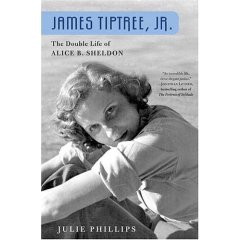
It was a great year for Scott who hit the New York Times bestseller list not once, not twice, but three times! Woo hoo! Twice for Specials and once for Pretties. Also my friends Yvette Christianse’s (Unconfessed), Kate Crawford (Adult Themes), Ellen Kushner (Privilege of the Sword), Julie Phillips (James Tiptree Jr.: The Double Life of Alice B. Sheldon) and Delia Sherman (Changeling) all published wonderful books that were well-received. If you haven’t already read them—do so immediately!

Other dear friends also published fabby books, but these are the ones that I saw through gestation. In the same way I’m very excited to see how Holly Black’s Ironside and Cassandra Clare’s City of Bones fare next year. Do yourself a favour and get hold of copies as soon as you can!

Next year I have three English-language publications on the horizon:

  • Magic Lessons will appear in paperback in February.
  • The final book of the trilogy, Magic’s Child, will be out in hardcover in March.
  • Also in March—the SFBC’s 3-in-1 edition of the trilogy.

As you can imagine I’m dead excited to find out what my readers think of the complete trilogy. Do not hold back! (Unless what you have to say might harm a writer’s delicate sensibilities. Always remember: praise is good!)

This year has also been a great one for me blog. Readers way more than doubled this year, which is just lovely. I’m particularly excited to have picked up so many more readers here in Australia. Especially the ones I don’t know and am not related to. (Not that there’s anything wrong with my friends and relatives, mind. Well, not that much wrong.) Thank you so much everyone for hanging out and commenting. Your comments are more than half the fun. Without you there wouldn’t be much point. Much appreciated.

Last year on this day I set out my goals for 2006:

I’m aiming to write two books (both of which I’ve already started) in 2006 and sell one (two would be nice, but I don’t want to jinx myself). I also plan to spend the majority of the year in Sydney, cause now that I’m home I just want to stay. And I really, really, really want to get tickets for the Sydney Ashes test. Ideally for every day of play.

How did that work out?

I finished one book: Magic’s Child, but it wasn’t one of the books I was talking about above. So I didn’t finish either of the books I aimed to. Though I got awfully close to finishing the first draft of the great Australian feminist monkey knife-fighting mangosteen cricket fairy young adult novel. (So close I can smell it! Oh the frustration!)

This year I have the same goal: to finish two novels. My odds are much better given that I’m mere days away from finishing the fairy book . . . And I’ve made good starts on six other novels. Dunno which one I’ll write next. What fun not to know!

I didn’t sell any books on account of not finishing any to give to my agent for said selling. I won’t be declaring my intent on sales again because it’s pointless. I have some control over how many books I write; but none over how many I sell.

The big change this year was my decision not to sell any books until I’ve finished them. (Another explanations for no sales this year.) It’s also why I’m finishing this year without any dread deadlines over me. Much less stressful!

I spent only five months in Sydney and even though that’s more time than I spent anywhere else I still did not see nearly as much of my family and friends here as I’d like. Sigh.

There was way too much travelling this year. And while I loved all the places I visited—Bologna and Kyoto especially—I haven’t stayed anywhere for more than three months since 2003. I’m sick of it. I’d love to travel less, but already 07 is shaping up to be very travelly. Come June though and I believe we’ll be applying the breaks. Aside from it being exhausting and conducive to the contracting of viruses, travelling that much in aeroplanes and staying in hotels is terrible for the environment and no amount of offsets makes up for that.

I did get tickets to the Sydney test. Fourth day. Can’t wait. And we Aussies reclaimed the ashes what should always be ours. Bliss. Now I have to figure out how to get coverage of the world cup while we’re in the US of A. We may even cough up for satellite coverage. Would be fabulous to get over to the West Indies, but see above on wanting to travel less.

To sum up: Life is good. I hope yours is too.

I have a very good feeling about 2007, not just for me, but for the wider world.

Happy new year!

Summer in Australia

I just came across a lovely piece by Mark Lawrence about the outsiderness of living through Australian summers while knowing very little about cricket:

What [being a migrant] means is that I have very little understanding of the finer points of cricket, and don’t play it at all well. I can’t tell the difference between ‘long leg’ and ‘short leg’, and I have absolutely no idea where ‘mid-on’ is. After over a decade living in Australia, I do have an idea of how the game is played, but only a middling understanding of how it is scored or how a test proceeds. Strategy? Not a scratch. So much so that during the recent Ashes test in Adelaide, I had trouble keeping up with what was going on, while my colleagues could assess exactly how the day’s play had progressed and what the scores meant in an instant. I was left going, ‘What happened? What happened?’.

Of course, as he points out, there are lots of Australians who don’t give a damn about cricket, actively hate it even. Sadly many of them are friends of mine. At dinner last night as I was trying to talk with another cricket-loving friend about Shane Warne’s retirement, the rest of the table stuck their fingers in their ears and starting humming. It is to sigh.

But, yes, during an Australian summer cricket is everywhere. It’s the main headline on the sports page and quite often the front page too. You see it played on television (free-to-air and cable), on the various cricket grounds around the country, in parks, on beaches and in backyards. It’s played at all levels: from muck around family games where the stumps are an esky, through school competitions, grade and state levels, all the way up to international test series.

For me, even more than cicadas, the voices of Alan McGilvray, James Maxwell, Geoff Lawson and the rest of the ABC’s radio commentary team past and present has long been the sound of summer. Cricket discussions with my family, my (non-insane) friends, cab drivers, wait staff, people in queues for the bus are as much a part of summer as mangoes and passionfruit.

What will our side be without Shane Warne? Is Langer going to retire too? What about Hayden and Gilchrist? Is this the end of Australian cricket supremacy? How long before Murali takes Warne’s world record?

Lawrence worries that his cricket ignorance will affect his son’s progress in the game:

To an extent, my concern is whether my son will lack the necessary cricket skills, as I don’t want him to miss out on learning the game and being included in the matches that will invariably spring up at school, or at the beach or park with friends and family as the summer progresses.

But I recognise there is more to it: some of these concerns stem from my anxieties about what it means to be a migrant in Australia and, by extension, being an outsider. It is also an anxiety about whether I can truly prepare my son to be at home in Australian culture – to not be an outsider through no choice or fault of his own.

My father is the son of migrants from a non-cricket playing country (Poland/Ukraine) who knew nothing about the game and cared less. But he grew up loving and playing cricket and passed that love onto me and my sister. (As did my fourth or fifth generation Australian mother.) I grew up listening to, watching, talking about and (very) occasionally playing cricket in the backyard.

In my teens, inspired by the Bodyline mini-series, I started to read about the history of cricket. The first book I read was a very poorly written biography of Donald Bradman. The first book I enjoyed was Sid Barnes’ autobiography, which confirmed my admiration of Bradman the batsman and dislike for Bradman the man. I also discovered Keith Miller and fell in love.

The history of cricket is the history of English colonialism; they brought cricket with them wherever they went. In some place it died out: For my birthday this year Scott bought me two gorgeous American prints from the 1870s. One of them shows international cricket being played in New England. The other shows a game of baseball looking remarkably like a game of cricket.

In some places it did not: A quarter of the world’s population lives in cricket-playing nations. Just read C. L. R. James’ Beyond a Boundary on cricket in the West Indies and Ramachandra Guha’s Corner of a Foreign Field on cricket in India and Pakistan. They are not only extraordinary books on cricket, they are amongst the best non-fiction books I’ve ever read, bringing the complexity of the game and its history alive. They are about race, class, caste, gender, nationhood, politics and colonialism, because it’s impossible to write a good book about cricket without touching on those issues.

The books of Gideon Haigh are also remarkable and have taught me a great deal about the history of cricket in my own country. And thus a great deal about Australia. You don’t have to like, or give a rat’s arse about cricket to be Australian. But knowing a little of the game’s history teaches you a little more about Australia’s. For example, our first team to tour England was Aboriginal, and yet the official Australian team has had almost no representatives of Aboriginal ancestory.

I didn’t start loving cricket because of its happy history of illuminating colonial relationships, but reading its history has made an already rich and complicated sport irresistably fascinating to me. There are few sports with as long and rich a history. And I can’t help but want to share that fascination with other people, Australian or not.

I hope that Mark Lawrence is curious enough to read some of those books. It is truly not necessary to know the difference between “long leg” and “short leg” to enjoy them (or cricket for that matter). Though if he does want to know there’s a rather helpful *cough* *cough* guide right here.

How to write a fantasy novel (Updated)

So I was going to write a sequel to my earlier post on how to write a novel specifically about how to write a fantasy novel. There was going to be lots of stuff on world building, on inventing your own languages, not to mention how to build a robust magic system. It would have had all that jazz, but it turns out that such a text already exists.

That’s right, to save me lots of time, effort and typing Diana Wynne Jones has helpfully written the one true guide to writing fantasy novels. That book is called The Tough Guide to Fantasyland and it is a work of unsurpassed genius.

It first came out in 1996, but the recently revised and updated edition published by Firebird books in the US of A is the one you want because it is thing of beauty and surpasses the usefulnesss of the first one a hundredfold.

If you love fantasy you need this book. Because it’s really really really funny. You will recognise every single thing she makes mock of.

If you hate fantasy you need this book. Because it makes mock of everything you’ve ever hated about the genre. You will laugh and laugh and laugh.

If you’ve ever contemplated writing a fantasy novel you need this book. It covers every possible cliche of the genre in long and mocking detail. Once read you will never use any of those cliches. Or if you do you will breathe new life into them. For if you do not Diana Wynne Jones’ mocking voice will leak into your dreams and you will never sleep well again. Trust me, you don’t want that.

And if you’ve never read any of Diana Wynne Jones’ novels then on your bike! I recommend Fire and Hemlock or Archer’s Goon or Howl’s Moving Castle or, you know, pretty much all of them.

She’s one of the best fantasy writers working today and in Tough Guide to Fantasyland she shares all the tricks of the trade. What more could you ask for?

Update: Sharyn November, who edited this edition, reminds me that the original was a Hugo finalist (which means I have something in commone with Diana Wynne Jones! We were both shortlisted in the same category of the Hugos! Woo hoo!) and a World Fantasy award finalist. Sharyn says that the Firebird edition is completely redesigned, has a new map, and Wynne Jones has written additional material.

I’d also add that the Firebird edition is not littered with typoes like the original was. I don’t often notice typoes, but, wow, were there a lot in the original edition.

Best of the year list

Magic Lessons just made a best book of the year list. The insideadog (inky) favourites of 2006. Woo hoo! I’m particularly gratified because poor wee little Magic Lessons has not been getting the critical love that Magic or Madness did. Despite it being the better book. At least I think it is. And I wrote so I should know, right? (Oh, hush!)

What’s more the insideadog list is fabulous! (Not surprising given what a fabbie site it is.) Of the fourteen books on it I’ve read and adored eight* (obviously not counting Magic Lessons). I can’t remember the last time I saw a list I was so simpatico with. I am now going to run out and get the books on it I’ve not already read. You should too.

What young adult books do you think have been overlooked this year? Or not just YA—what were your favourite critically and/or popularly unappreciated books of 2006? Is there a book you’ve been going on and on about that seems to be flying under everyone’s radar? Speak up!


Nick & Norah’s Infinite Playlist by Rachel Cohn & David Levithan
Looking for Alaska by John Green
We Are the Weather Makers by Tim Flannery
Notes from the Teenage Underground by Simmone Howell
The Betrayal of Bindy Mackenzie by Jaclyn Moriarty
Dairy Queen by Catherine Gilbert Murdock
Temeraire by Naomi Novik
Peeps by Scott Westerfeld

Little things

For Scott Bangkok has been all about the tuk-tuks. I wish I could be all spousely and say, “Yes, darling, tuk-tuks are wonderful.” But I can’t. They’re just mutated cars. I’d much rather walk, or take the sky train, or bicycle, or ride on the river boats than get in a tuk-tuk. The rides that Scott has found so exhilarating and fun I found uncomfortable and stinky. Call me weird, but the smell of petrol? Not my favourite perfume.

Aside from the tuk-tuks and cars and trucks and other yukky smelly mobile pollution devices, I’m really enjoying Thailand. I love the sound of the language which makes English sound flat as a tack. I order a dish, “Som tum, please.” And the waiter repeats my order back at me and some how som tum has transformed. The way he says it the words soar and swoop. Tonal languages make the non-tonal languages sound dead. I am trying to do what I can to make my ENGlish souND much MORE tonAL.

The food here is wonderful too. Almost everything wobbles. Especially the desserts.

We took a break from working and went to the National Museum today. Once we were inside the main building it started bucketing down so hard the rain drops bounced back up five to ten centimetres. We waited it out in the Old Weapons Room (as you do), sitting at the top of the steps leading into the Ivory Room. A gaggle of school girls, one school boy, and their teacher waited it out at the bottom of the steps. They started singing. Something strange and almost atonal that swelled and filled up the entire cavernous room and somehow melded in with the thunderous sound of the rain.

It was beautiful.

Did I mention that the steps were directly in front of a life-size model of a military elephant? The elephant seemed to be entirely down with the singing. It had a lump on its head and very large pointy tusks. Two life-sized fake soldiers sat on top in a howdah. One was holding peacock feathers and the other had a long pike-looking implement. If the elephant had decided to charge, we’d all have been dead.

When the rain slowed the teacher opened the nearest doors a crack, and declared it possible to make the mad dash to the next building (about ten metres away). The schoolkids swarmed around her and started ferrying each other across with the few umbrellas they had. When they were all over into the land of Textiles and Costumes, one girl came back. I glanced behind to see if there was some stray school kid I hadn’t noticed. But, no, she had come back for us. What a sweetie.

I pressed my hands into prayer position and kop kun kah’d1 her.

  1. “Thank you.” Sadly it is the only phrase I know in Thai. I am a bad slack tourist. I’ve been sick, okay? [↩]

The Year of Little Reading

Due to lots of very boring reasons, this year I read fewer books than I ever have before. Horrifying but true. I was even worse than I usually am at critiquing friends’ manuscripts, for which I am truly and abjectly sorry. I regret, too, all the books people sent me that I didn’t read. I suck. And, yes, I was also a horrible, horrible, horrible correspondent this year. I really hope next year will be better.

So here are some of the books I did read this year and highly recommend (you’ll notice I don’t give away much in the way of plot—that’s because I hate knowing too much about books before I read them. I like surprises, me, and I’m assuming you do, too!):

M. T. Anderson‘s The Astonishing Life of Octavian Nothing, Traitor to the Nation, Vol. 1: The Pox Party. I’m not sure I can add anything to what everyone else has said. This book is unbelievably good. Astonishingly so.

March by Geraldine Brooks is another book that’s been hyped so much I became deathly afraid of actually reading it. Not to worry. Believe the hype!

Ursula Dubosarsky‘s The Red Shoe and Theodora’s Gift have been winning every award going in Australia this year. Deservedly. Dubosarsky is the author of more than twenty books for children and young adults. She is a flawless writer whose mastery of storytelling leaves me breathless. I wish I could write like that! She’s not nearly as well-known outside Australia as she deserves to be. You must track down her books. I also particularly recommend The First Book of Samuel to which Theodora’s Gift is a completely standalone sequel.

Xavier Herbert Capricornia. Kind of embarrassing that I’d never read this Australian classic before. Maybe because the words “Australian classic” fill my heart with fear—despite having loved so many of them (My Brilliant Career, anyone? Or The Getting of Wisdom? Or Ride on Stranger? Not to mention Come in Spinner). Capricornia is a wild and unruly mess. It’s bleak and depressing and funny and searing and one of the most compelling examinations of race relations in Australia (or anywhere else for that matter) that I’ve ever read. I may even be brave enough to tackle the 40 million page Poor Fellow My Country now. Or maybe not. Four bazillion million pages is an awful lot!

It’s hard to believe that Notes from the Teenage Underground by Simmone Howell is a debut novel. The voice is so assured, the plotting flawless. It has none of the usual first novel lumps and bumps. I felt like I was reading an account of my school days even though the book is set in Melbourne, not Sydney. I’ve since talked to other readers and they said the same thing even though they went to school in Montreal and Los Angeles. Me thinks Howell has hit some universals in a very readable local way.

The Murder of Bindy Mackenzie by Jaclyn Moriarty. Moriarty is a genius. Pure and simple. She writes fast-paced, hilarious, heart-breaking and shudder-inducing books that are entirely made up of letters, dairy entries, legal depositions, shopping lists. You name it—she throws it into the mix. I don’t know how she does it. Bindy Mackenzie is her most recent and best book to date. Awesome.

The Ghost with Trembling Wings: Science, Wishful Thinking and the Search for Lost Species by Scott Weidensaul is one of the most beautifully written and compellingly readable natural history books I’ve ever read. Every single page gave me a new idea for a novel, but I couldn’t pause to jot my ideas down because I was too desperate to see what would happen, to follow his arguments, and get lost in the wilds of Tasmania trying to find evidence of the continuing existence of Thylacines.

I strongly recommend every single one of these books. Have any of you read them? What did you think?

Also if you have any recommendations for excellent and idea-giving non-fiction books, please do share. No fiction recommendations, though. I got way too many novels and short story collections to catch up on. And frankly all I want to do is read Georgette Heyer.

Adulthood (Updated)

What is an adult?

I mean I’m way over 13 or 18 or 21 or any of the other arbitrary points at which you magically become one. But I know that by certain standards I’m not an adult.

I have no children. I don’t own a house or a flat or any other kind of property. Nor do I own a car. And I’ve never been through any initiation-to-adulthood ceremonies. Or killed any enemies of my tribe.

I have had sex and been drunk though. I’m married. I also have a job. Or at least am self-employed. So I’ve got some claims to adulthood other than my chronological age. But for some that’s not enough.

Those people for whom you have to leap a bunch of arbitrary hurdles in order to be a “real” adult have been around since the very dawn of time.1 They reckon the childless, property-less youngies are layabouts what don’t hold up the previous generation’s standards and know bugger all about responsibility and blah blah blah.

Generations have been bagging the generation that came after them since forever. There’s a famous quote from Thucydides or Herodutus or someone bagging the young uns, but I’m not in the mood to go hunt it down. It sounds exactly like Bill O’Reilly insisting that America is about to be destroyed because of all those young uns and their devil video games.

Utter, uttter, utter rubbish. Chariot racing didn’t destroy the fabric of society and neither has the charleston, television, or the humble ipod.

My dear friend, the multi-talented Kate Crawford, has recently published a book on this very topic. Adult Themes in which she examines how this debate evolved and how very stupid it is. Why aren’t the folks under forty getting married, having babies and buying houses as quickly and as often as their parents did? Because houses are way more expensive, as is raising a kid. Der.

Adult Themes is awesome. Funny, smart and wicked to the point. You should all read it.

Update: and if you wish to buy it go here. As far as I know the book has only been published in Australia so far.

In the meantime. Those of you who are adults—do you feel like one? What is it that makes you feel like a grown up? Or do you feel like an imposter?

And for those you aren’t adults yet—whatcha reckon you’ll need to do to become one?

Update: Sherwood Smith has now written very eloquently and movingly on this subject.

  1. Or, you know, that time when humans were evolved enough to start bitching at one another. [↩]

How to talk to authors

A while back I wrote a wee little etiquette thingie for authors on how to talk to booksellers. It has recently been suggested by a remainder1 of authors that the non-authors of the world also need such a guide. So without further ado here is how to talk to an author:

  • Never tell us that you don’t read or like books. Or that you only read non-fiction or John Grisham. Unless we write non-fiction or are John Grisham we don’t want to know.
  • Never tell us you haven’t read our books even if you genuinely intend to. Such information will only cause us pain as we try to figure out what it is about our books that has not lured you into reading them. Is it the covers? The titles? Our name? Is it because our ranking on Amazon is too low? Our not having won the Pulitzer? Why?
  • Don’t tell us you have read our books and then say nothing. We’ll assume you hated them and us.
  • Don’t tell us you hate our books. Most authors were born with a rare condition that makes our skin much thinner than that of a normal human being. Any hint of disapproval or criticism causes us to lose even more layers.
  • Don’t be too embarrassed to praise us. Praise from our readers is the one bright moment in our otherwise blighted lives. (You try existing with hardly any skin!). Writers live in dark squalorous warrens where editors visit from time to time for the sole purpose of beating us and telling us what is wrong with our books. For a brief moment praise makes us forget these horrors.
  • Thirty minutes is considered an adequate amount of time to spend praising an author’s work. Though an hour is better. And a day or more is best of all.
  • While it is not necessary to tug your forelock, bow or curtsy, it is very much appreciated.

Feel free to share any further advice on how best to treat us poor benighted skinless authors. But not if you are an editor. Or a bookseller or agent or publicist . . .

  1. A “remainder” is the official term for a group of authors. [↩]

Los Angeles

I ain’t never going to love Los Angeles. Not going to happen. The car thing makes it so difficult. In the last few days I’ve spent more time in cars than the preceding few months! Aaarggh!

But on this—my longest trip to the city—I’ve been eating fabulous food, walking along the beach, visiting amazing cool places like the Getty Centre, and getting to hang out with my sister and my other fabulous friends here like Doselle and Janine Young, Cecil Castellucci (at last we meet!), Alice Taylor, and Rachel Cohn. If only our insanely jampacked scheduled had allowed us to see all our friends here . . .

And you know what? If LA had footpaths and decent public transport it would be awesome! Just fix the car thing and I’m a total convert.

And tonight I get to go the cast and crew screening of Flags of our Fathers thanks to my fabulous sister, Niki.


Yes, the being-in-Los Angeles thing is why I’m behind on email and responding to comments and all of that. In the next few weeks we’ll be in Seattle, Kentucky, Indiana in the US of A, as well as London and Birmingham in the UK. Normal service is not going to be resumed any time soon. Sorry!

Shopping with the Shoe Goddess (updated)

I have shoe issues. Or rather recalcitrant ankle issues. High heels are forbidden me. It’s not like I ever wore high heels that much, but that’s not the point! I have been condemned to a life of boring, not-fun shoes in the hopes of preventing further ankle injury and thus averting surgery. I know, I know. It’s all too tedious for words. And makes shoe shopping a chore where I look at all the flats and low-heeled boots and my heart sinks. Gah! I hates them all.

Unfortunately, I cannot get about in sneakers, blunnies or kleenex boxes all the time on account of the increasing number of appearances and other formalish events I do. These require that I dress up in outfits that are not typically improved by said sneakers, blunnies and kleenex boxes.
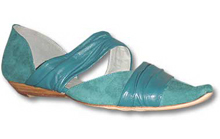
The lovely Anne Ishii came to my rescue by telling me about her fabulous friend Meghan Cleary, the shoe goddess. Miss Meghan has written a book about shoes, The Perfect Fit, does appearances all over the US of A advising women about shoes as well as going on a million and one TV shows talking about the same. I defy you to find someone who knows more about shoes than Meghan.

On Friday Meghan took me shopping. She showed up in fabulous pale python cowboy boots (want!), jeans and a gorgeous deep green top that looked like she’d stolen it from a very hip elf (double want!). We liked each other instantly and started gas bagging, joshing, and generally having the best time in the world, gossiping happily about all the people we know in common, as well as those we don’t (poor Gwyneth and Tom—their ears musta been aburnin’).
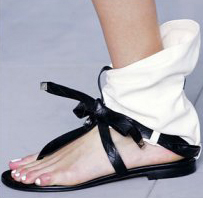
Then she gave me a divine little show bag1 full of natty things that make your shoes more comfortable and stop them from giving you blisters. Today I put the insoles with gel shock absorbers into my years-old blunnies and they became even more comfie than they already were. It’s like magic. Why did no one tell me about comfie insoles before? Do you all want my feet to fall off?

Did you know that jewellery for shoes exists? They’re called shoe clips. I had no idea! Again, people, what’s with the holding out on me? Meghan had these gorgeous little diamante ones that she put on a pair of simple black pointy-toed flats and whooosh! they became a whole other pair of shoes. Admittedly, shoes that my sister would mock me for wearing, but I defy her! I can be girlie if I want to!

Check out the shoe clips at Aliza Dark. Her range pushes me very close to considering bows despite having alway hated them, but I suspect I will probably try one of the stone shoe clips first. I especially like the tiger’s eye. Absolutely Audrey also has a fabbie range. I am covetting quite a few of the antique clips.

Meghan took me into big department stores and walked around pulling shoes off shelves and describing them as she presented them to me. “Would you do lavender metallic pointy-toed ballet flats fit for a science fiction princess? Soft brown leather polo boots? How about these cute little mary-janes? No, I’ve changed my mind. Too mumsie.”

The vast majority of shoes I’ve owned in my life have been black or brown, but Meghan made me try on shoes I would never in a million years have considered if she weren’t there. Purply glittery shoes with tiny bows that looked almost exactly like Dorothy’s no-place-like-home shoes! And yet they looked really cute on and I almost bought them. Dark green alligator skin past-your-knees boots! Ditto. Maroon and black Manolo Blahniks! I swore I would never ever try a pair of Manolos on. Fortunately a) they were uncomfortable and b) they looked bad on me. Phew!
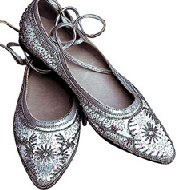
The shoe goddess showed me all sorts of divine shoes, but tragically too many times the salesperson would shake their heads and smile sadly. “I’m sorry. They’re all sold out.” Apparently if you are between size 7 and 10 and you do not go shoe shopping the first week the cool shoes appear, you’re doomed. They’re all gone. If you want winter shoes in NYC you have to hit the shops in July. If you want spring shoes you need to be there in December. You have been told.

I wound up with two pairs of the same simple-but-elegant flats. One in brown and one in black. Yes, I know that doesn’t exactly push me out into startlingly new-and-different shoe territory, but they didn’t have those ones in my size or price range, okay?

Besides, the immediate spoils are not the point. Meghan calls what she does with folks like me “shoe therapy” and my several hours with here were mucho therapeutic. She taught me way more about figuring out if a shoe is comfortable or not, how to customise them to make them even more comfie, and how to turn an ordinary daytime shoe into something sparkling and fabbie for the night, not to mention giving me the courage to be considerably more adventerous in my choice of shoes.

Thank you, shoe goddess!

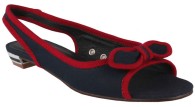
NOTE: All shoe pictures were swiped from shoewama.com.

UPDATE: They were swiped to show a variety of flats, NOT because I think they are fabulous. Some of them are hideous in the extreme.
  1. As a Sydney girl I have been permanently warped by the Royal Easter show into thinking show bags are the most desirable thing in the entire universe even if they’ve got nothing in them but yukky chocolate, coffee and licorice. [↩]

Brrrr

Wow, it’s cold here in NYC. Must be close to time for me to rack off back to Sydney where it’s heap big much warmerness. But of course I’m doing my usual thing of being completely besotted with the place I’m in and not wanting to leave.

So here’s a short list of things I love about NYC:

  • The crystalline light in Autumn (I’m betting Margo’s against crystalline)
  • Getting to wear a hat and coat and scarf
  • Hearing two perfectly civilised people come close to killing each over who has dibs on a cab
  • Being able to hang out with some of the best writers in the business pretty much any day of the week
  • Watching steam rise up through the street
  • Being able to order awesome food to come to my house any hour of the day or night

New York may be way too cold right now. But it’s also inhale-and-hold beautiful. Sometimes I wish I could stay just a little bit longer.

Arduous Research

So I have a genius idea for a book1 that requires me to watch lots of old American movies from the 1930s, 40s and 50s. It’s tough but someone has to do it. Plus Scott’s never seen a lot of these movies and I consider that to be criminal. Do you know before he met me he’d never even heard of Preston Sturges? What kind of a life is that?

So far we’ve worked our way through the films of (natch) Preston Sturges, George Cukor, and Douglas Sirk. As well as almost all the ones starring Rita Hayworth (Yay Gilda!).

Today we watched Mildred Pierce. Bless it. Bless Joan Crawford and Anne Blythe. The role of Veda is such a hoot. Has a greater bitch ever graced the silver screen? Sure, probably, there’s always Eve Harrington in All About Eve which we watched the day before. Scott had never seen it and is now smitten. Who wouldn’t be? Such a fabulous movie!

Yes, that's Fredi Washington again. Write a book about her already!Watching these more-than-fifty-year-old movies I’ve been struck by how many of them are written by women and how many of them are driven by women. They have not just genuine starring roles, but also lots of juicy supporting parts. There are women older than forty in these movies.

Last time I went to the movies I sat through the regulation ten minutes of shorts and did not see a single woman. Not one. The time before that there were two women and both seemed to be in the girlfriend role and were a long, long, long way off forty. What on Earth happened in the intervening years? How come most of the good roles for women are now on the tellie?

I’d love to hear your theories. Lauren, ex-Hollywood producer friend of mine?

And bonus question what are your favourite movies from the first three decades of talking pictures? (Doesn’t have to be American.) I’d tell you mine but it would take hours . . .

  1. Scott does not believe in the existence of this genius idea. He thinks I just like watching the same old movies over and over. I’ll show him! [↩]

Dope, proofs, hoops, words

Today is going to be insanely off-the-charts busy so instead of the long and thoughtful post on the meaning of the “sublime” that I’ve been working on I’ll

  • recommend Sara Gran‘s Dope what I recently read and loved. Imagine a noir 1950s novel if it was written much more spare, set in New York, and narrated by an ex-(teetering on the edge of non-exness) junkie prostitute who now makes a living boosting jewellery. Not going to tell you another thing about it. Just that it’s short, there’s not a word out of place, and it made me cry. (Mind you Qantas ads make me cry.) Read it immediately!

    Any of you read any read-immediately books you’d like to recommend? Dope was recommended by Marrije. Thank you!
  • and exhalt in the page proofs of Magic’s Child what arrived. It looks like a real book! All typeset and stuff! So purty! So far the proofer has spotted a minor plot oopsie (someone not having something and then somehow out of nowhere having it) and reminded me once again that I’m the world’s worst punctuater. All she does is shift my commas around and remove and add semi-colons. Bless her! And sigh on my inability to ever understand the simple comma.
  • boast of my squeaky wheelness. I wrote to one of my favourite blogs, women’s hoops—twas a mournful letter whingeing that they hadn’t blogged the Aussies winning the World Championships and here’s how they responded. Bless ’em!
  • The ABC has this fabulous wordmap project where they’re trying to map the regionalisms of Australian English. It doesn’t take a second to add regionalism of your own. My problem is I’m not at all sure where I picked up the words I used. I had no idea “grouse” was more of a Victorian word. I’ve never lived in Victoria. Only New South Wales, the ACT and Northern Territory. I reckon tellie, books, and radio must muddy the waters of pinning down regionalisms more than somewhat.

And now I roll up sleeves and get to work.

Chocolate proms

Maureen Johnson is being funny again—this time about her prom.

I did not have a prom. In Sydney1 they’re called school dances (or at least they were in my day) and they are nothing like the big deal they seem to be here in the US of A. And, no, I didn’t have a school dance either on account of going to a tiny hippy school with only about two hundred students. (We didn’t “date” either. Not in the American sense of the word. I don’t think I’ve ever gone on a bona fide “date”.)

Anyways my knowledge of proms is gleaned from Hollywood movies, YA novels, and my American friends. I find prom (and “date”) stories deeply fascinating in an anthropological way. And Maureen’s is a beaut. If you’ve got any fun stories of your own—spit ’em out! Bonus points if you can explain the whole cottilion/debutante ball thing.

In other news it turns out that chocolate is evil. Thus I’m a very very good person because I don’t like it. Don’t believe me? Then read this. Via Elizabeth Bear.

  1. I can’t speak for the whole of Australia—for all I know there may be some small town somewhere that does have proms. Or where school dances are a huge deal. I’ve already discovered that not everyone says “grouse”. Poor blighters. [↩]

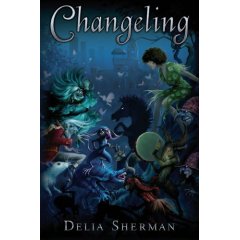
Changeling

Delia Sherman’s latest book, Changeling, is a middle grade fantasy that doesn’t resemble anything else I’ve ever read.1 It has many recogniseable elements: fairies, changelings, mermaids, dragons, New York City, but they’ve never been brought together like this before.

Delia Sherman's ChangelingSherman’s New York City is unlike any NYC I’ve read about.2 She’s transformed it into “New York City Between”—a wonderland populated by fairy folk and characters from well-known children’s stories like Eloise—and she’s done it in a way that keeps the city entirely recogniseable and yet utterly different. Central Park is just as easy to get lost in, Wall Street is just as crazy busy, but it’s run by the dragon of Wall Street. If you know NYC at all well you’ll be delighted, no matter how old you are, and if you don’t know the city it doesn’t matter. Changeling stands up on its own.

I hesitate to say it because the word has such a bad wrap, but Changeling is utterly charming. I was entranced by Neef and her New York Between from the very first page. I can’t wait to read more about both of them. Here’s to it becoming a series of many, many more books!

If you don’t believe me, check out these other folks who loved it as much as I did.

  1. Except her earlier short stories set in the same world. [↩]
  2. I would love to see the complete list of magical New Yorks. I bet it’s really really long. A truly complete version would have to list Dawn Powell’s New York as well as Eloise’s. [↩]

Bad bad bad writing advice

Holly Black wisely points out that all writing advice can be bad. And Sherwood Smith writes some excellently out-and-out bad writing advice: “Write it in a week and send it instantly because professionals don’t revise. They get it right the first time.”

That’s like the worst advice ever. Can anyone top that?

The worst I can come up with are all variations on Sherwood’s: “Your first drafts are genius. Don’t change a thing!” Though how about, “It’s always best to invent your own system of spelling. It makes you stand out as a writer.”

I can think of lots of post-publication advice that would lead to career suicide:

  • Make sure to email your publicist every day to make helpful suggestions for selling your book.
  • Your editor and copyeditor are always wrong. Feel free to entirely ignore their edits.
  • Call your agent often demanding to know why they haven’t gotten you on Oprah yet.
  • If you are on a panel at a convention make sure you stay on message and steer all conversation back to you and your book. Make sure you bring a great big stack of them to show everyone.
  • If your local bookseller doesn’t have your book. Demand to know why. Do they not know who you are?!

I will stop now. This is making my brain hurt. But feel free to suggest more.

Schoolgirl days

Maureen Johnson’s latest post is about her Catholic schoolgirl days, which inspired her latest book, Devilish. (Out now! Run don’t walk to get your copy!) Like all her posts (and books for that matter) it’s dead funny and includes the following line, which’ll have me giggling for days:

“Maureen’s my freshman now. Get a new one.”

The post got me thinking about my (not Catholic) school girl days. And, well, gah! I do not get teary when I think about them. Quite frankly, I think anyone who tells folks under eighteen that their school days will be the best days of their lives should be shot, or at least told to shut up.

I remember adults saying that to me when I was a teenager. Every single time I heard those words it plunged me into the kind of deep dark depression that only a fourteen year old can experience. Really? I thought, if this is as good as it gets then what on earth is the point?

Fortunately, I have sane parents who assured me that it’s total lies. They were right. Primary school was not the best time of my life, nor was high school. A quick survey of every one I know confirms that they weren’t the best days of their lives either.

There were occasional worthwhile moments in my education. A handful of my teachers were awesome and some of my fellow inmates classmates remain friends to this day: Hello George! Hello Jeannie!

But mostly it was completely foul. Yes, you’ll learn a lot (I learned how to put a whole box of lit matches in my mouth without any first-degree burns—don’t try this one at home—I did recently, and, um apparently I have forgotten the trick—Ow!) and you’ll really, really, really earn that high school certificate or diploma (or whatever it’s called where you come from), but, trust me, things will start looking up the minute you graduate.

Or at least by your twenties. Definitely by your thirties . . .

So how about you lot? Any school tales of horror to share? What did youse lot learn? Was anyone else adopted by an older crazy student or do things like that only happen to the Maureen Johnsons of the world?

La la la . . .

I’ve added a new thingie to the side bar: By Popular Demand is a quick and easy link to my most popular posts. If there any other posts you think should be there let me know.

I mainly did this to help keep the Good News Only thread alive. In dribs and drabs people are still adding news. I encourage you alll to keep doing so. Whenever I’m feeling a wee bit down I reread it and it cheers me instantly. So, yeah, I’m trying to keep it alive for purely selfish reasons.

Have you all read Sara Gran’s muy amusing piece on what utter utter hell it is to be a writer in the horrifically writer-infested Brooklyn? If not do so immediately. It is to giggle. (For a login go to bugmenot.com.)

I’m so relieved my NYC time is spent in Manhattan. I wonder what the most writer-infested part of Sydney is? I hope it’s not Newtown, Chippendale or Surry Hills. But I have grave fears . . . Feel free to reassure me that it’s Ashfield, Balmain, Paddington, Chatswood or any other place I’ve no intention of living in. (No offence intended. Well, only a little bit. The teeniest of little bits. Honest.)

Publishing is not a zero-sum game

Okay, fellow writers, I know you know this, but bugger it, I’ll say it again:

Publishing is not a competitive sport. If another writer is unbelievably successful that does not take away your chance of success. If it has any effect on you at all it’s a positive one. Super sccessful writers create more readers. J. K. Rowling has single-handedly made young adult publishing more profitable and better paying. Every YA writer should fall down on their knees in gratitude. (I have my own J. K. Rowling shrine that I worship at every day. Bless, J. K., bless!)

If we’re defining success as making loads of dosh, then most writers are not super successful, or even mildly successful. I’m certainly not. The majority of published writers cannot make a living from their writing. Does that mean their writing is not as good as those who can? No, it does not. I know fabulous writers who are still unpublished (and, yes, Jeannie, I mean you). Writing good books (however you define “good”) and making money from books are two different things. Sometimes they co-incide—sometimes not.

There are lots of ways to measure success as a writer: good reviews, respect of your peers, winning prizes, or best of all—knowing that you’ve written a book that you’re really proud of. The last one is best of all because all the others will do your head in. What happens if you stop getting good reviews or winning prizes? Does that mean you’re no longer a good writer? That path leads to madness.

In my genre lots of books I don’t like sell better than mine, and lots I adore sell worse. Neither state of things has anything to do with how my books sell. If you start thinking that other books published are stealing sales from your books, and that other writers are “the competition”, you will become bitter and twisted. I’m hear to tell you that bitter & twisted clashes with every single thing you’ve got in your wardrobe.

Trust me on this.

Thus endeth the rant.

Fan art, my next novel, & reading

I got my very first fan art by the lovely Kate of Refrigerate Kate. Here are her sketches of Jay-Tee:


Isn’t that fabulous? (Though for the record Jay-Tee doesn’t smoke.)

There are also sketches of Tom on her site. I’m dead chuffed! I have fan art! Really good fan art! Thank you, Kate.

I’ve also neglected to mention what novel I decided to write next. On account of it was youse lot’s overwhelming favourite (and me having already written 25 thou words of it) I will now be turning my attention to finishing the Great Australian feminist monkey-knife fighting Elvis mangosteen cricket fairy young adult novel.

Anyone who’d like a sneak preview—I’ll be reading the first three chapters later today:

NYRSF Reading Series
Tuesday, September 5, 2006
7PM (doors open at 6:30PM)
Scott and me
Melville Gallery
213 Water Street
New York, NY

Hope to see some of you there. Now it’s past my bedtime . . .

Flowers in the Attic

There’s a very popular book1 out there that’s badly written and has a dumb plot and a central character without a particle of gumption. Almost eveyone I know has read it and they either adore it or feel the same way I feel about it.

I admit that the people who love this book have kind of been driving me crazy. How could they think it’s well-written when it’s riddled with cliches and purple prose? How could they relate to the most passive protag of all time? How could they reread this godawful book over and over again? Have they all gone mad?

Then I cast my mind back to my first year of high school2 and the book me and all my mates were obsessed with: Flowers in the Attic by the prolific-even-when-dead V. C. Andrews.

Let’s see:

  • Riddled with cliche? Check.
  • Purple prose i.e. why use one adjective when you could use many? “Long, grim, dreary, nightmarish days”? Check.
  • Passive protag? They do remain in the attic an awfully long time without making a break for it . . .
  • Stupid plot? Do I even need to type check?

And yet I loved that book and read it over and over again and talked about it with all my friends. At the time I thought V. C. Andrews was one of the best writers ever. I knew many adults didn’t think so, but what would they know?

Flowers in the Attic has coloured how I think about plot, characterisation and story for many years now. I don’t think it would be overstating it to say that without Flowers I would not be the writer I am today. (Yeah, I know, for better and for worse.)

I often say that you can learn as much—if not more—from bad writing than from good. It’s much easier to see what’s going on when something is badly written, and to figure out how not to do that. Bad writing pulls you out of the text over and over again.

But when I was compulsively reading Flowers I thought it was a work of genius. Nothing short of being shaken would’ve pulled me out of that book. I wasn’t learning the what-not-to-do lessons; I was learning about how to use melodrama, suspense and betrayal. Lessons that have come in mucho handy while writing the Magic or Madness trilogy.

If I could go back in time I would not tell the twelve-year-old me to put Flowers in the Attic down and back away from the table. So why do I feel compelled to tell people how bad this other book is every time it comes up? Who’s to say they aren’t learning a whole bunch of cool things about story telling from it? Or seeing other stuff that I’m completely blind to?

On the other hand, I haven’t reread Flowers since I was fifteen maybe it’s not as bad as I suspect it is . . .

  1. Do not try to guess the name of the book. I will not tell you. The point of this post is not to trash a fellow writer. [↩]
  2. In Australia high school starts in year 7 so I was twelve when afflicted with V. C. Andrews love. [↩]

The privilege of knowing Ellen Kushner

This seems to be the year of books being published what I have a vested interest in of such proportions that the fact of them being in print makes me all teary.

First there was Julie Phillips‘ long-awaited Tiptree bio, later there will be Yvette Christianse’s just-as-long-awaited debut novel Unconfessed, and right now there is Ellen Kushner‘s The Privilege of the Sword.

I’ve been a Kushner fan since 1988 when her first book, the unspeakably wonderful Swordspoint, helped get me through a tedious illness. My friend, Jane Pritchard (bless you, Jane!), loaned it to me along with a whole stack of other excellent books, but Swordspoint was the only one that I reread instantly. It’s been a touchstone ever since.

At the time it never occurred to me that one day I would meet Ellen and we’d become friends and I’d wind up staying in her and Delia Sherman‘s home in Boston. Which I did for the first time in 1999 and was instantly hit with women’s troubles. Gah!

When I’m miserable one of the things that cheers me up most is being read to. It’s a sign of just how at home Ellen & Delia made me feel that I demanded they read to me. Ellen dug out her abandoned sequel to Swordspoint and started reading me the adventures of Katherine whose uncle the Mad Duke Alec (one of the heroes of Swordspoint) forces her to learn swordfighting just because it amuses him to do so.

I was spellbound, completely lost in her story, and forgot all pain. Ellen kept reading until her voice was hoarse and there was nothing left to read. It was magical.

Here we are in 2006 and that book has finally been published. In its finished form The Privilege of the Sword is even wittier, more adventure packed, and exhilarating than I remember (which is saying something because that early draft was damned fine). I want to be Katherine when I grow up. Or possibly her uncle. Or maybe both.

Do yourself a favour and hie thee to your nearest book shop or library and grab a copy for yourself. You’ll love it. I promise!

Off to copyediting

Blessed release: Magic’s Child is now on its way into Polly Watson’s genius copyediting hands. Thank Elvis!

I confess I was worried. Especially when Penguin’s spring catalogue arrived with Magic’s Child listed as if it was an actual finished book. Gah! I thought. Booksellers will be ordering a non-existent book!

Well, it exists now—in finished form even! And, if you don’t object to a moment of skiting, it’s not too foul, not too foul at all. Phew!

Rather than thanking all the peoples what helped (their moment of glory is in the book’s acks) I’m gunna list the music what got me through the last few gruelling weeks:

  • Benny Goodman Sextet (with Charlie Christian prominently featured)
  • Billie Holiday
  • Blur (Think Tank—thanks Andrew)
  • Cat Power (Moon Pix—thanks Richard)
  • DJ Dangermouse (The Grey Album)
  • Fairuz (Zikrayat—thanks Tina)
  • Gorecki: Symphony No. 3 Sad and Sorrowful Songs (Gritton, Simonov)
  • In The Mood For Love soundtrack (Michael Galasso—thanks, Adrian)
  • Missy Elliott (The Cookbook)
  • Piazzolla (Yo-Yo Ma)
  • Ray Charles (Modern Sounds In Country and Western Music and The Very Best Of Ray Charles)
  • Sarband (Sepharad)
  • The Shangri Las (“Past Present Future” cracks me up every single time. Genius! Thanks Ray for telling me about the Myrmidons Of Melodrama compilation)
  • Shuggie Otis (Inspiration Information)
  • The Streets (Original Pirate Material—thanks Rob)
  • Sufjan Stevens (Come On Feel The Illinoise!—thanks Mike)

I wonder if the resulting book is at all influenced by any of that music? Looking at the list also makes me realise it’s time for some new music. Should at least get the new Cat Powers . . .

Reading things like this and all your encouraging comments here and in email also helped me get through my toughest novel writing experience thus far. Who knew that wrapping up a trilogy would be such a bugger?

I’m so happy it’s finished. Doesn’t the complete trilogy look fine? Imagine it sitting all together on the bookshelf!

And now I sleep for a week or more. (Scott, wake me up when the copyedits arrive.)

PS Today is the official pub date for the Australian Magic Lessons and is currently featured on the front page of Penguin Australia’s kids’ books. Spread the word!

No Control

A recent post on Miss Snark reveals the horrible truth that often writers have no control over what their books are called. That’s right, folks, your publisher can change the title to something they deem more commercial.

There was much debate over the title of the first book in my trilogy. I’d always imagined Magic or Madness as the series title with the actual books being called Reason and the Two Cities, Reason and Margarita, and Reason defeats the Evil Monster Marauding Zombies from Hell. Marketing intervened and the series title became the title of the first book, leaving me and my editors to come up with new titles for books two and three and thus the whole working title thing of Magic! Magic! Magic! Oi! Oi! Oi!.

In addition to not having final say about the title. Writers also usually have no control over the following:

  • The cover
  • The jacket copy
  • What font it’s typeset in
  • Whether there’s an author photo or not
  • When the book is published
  • What format the book is published in (that’s right, Scott did not decide that the third book of his paperback trilogy, Uglies, should be printed in hardcover)
  • Whether there’s a signing in your town or not (when I do a signing it’s usually because a bookshop has requested that I do one or because my publicist at Penguin has arranged one or because I’ve set it up myself—though I’m getting too jaded to do that anymore)
  • The cost of the book
  • Whether it’s available in your country
  • Whether it’s available as an audio book

Am I missing any? Feel free to add more in the comments.

What writers (mostly) have control over is the words within the covers of the book. (You know, excepting the copyright page etc.) That’s pretty much it.

P.S. I was so cheered up by the good news comments that I’d like to invite you to all to keep sharing your good news. I’m contemplating renaming my blog the Pollyanna blog. Or the Gladblog. The glad game rocks!

P.P.S. Congratulations to all of you for your good days and publishing triumphs and award nominations and absence of cancer and every other thing. So wonderful!

P.P.P.S. And do keep us all posted on the outcomes of all that good news. Orangedragonfly, that means you have to let us know when your husband gets home. (If you’re allowed to, I mean.)

P.P.P.P.S. Sadly Ellen Kushner jumped the gun in the good news comments: Magic’s Child is not yet finished. But as soon as it is I’ll be announcing it right here. (That is when I recover from the over-the-top celebrations!). In the meantime, good luck with your books. May they all be reprinted often and wind up on bestseller lists! May your days be beautiful, your health excellent, and your loved ones close by! (That’s right, I am Pollyanna the Glad Girl. Just got my hair bleached blonde yesterday.)

P.P.P.P.P.S If none of this makes any sense it’s because I’m working too hard and as an Australian I find that I’m deeply allergic to it.

P.P.P.P.P.P.S. Don’t forget to add more stuff writers have no control over to the comments.

P.P.P.P.P.P.P.S. I go sleep now . . .

James Tiptree, Jr.: The Double Life of Alice B. Sheldon

At long last Julie Phillips‘ superlatively brilliant biography of Alice Hastings Bradley Davies Sheldon/James Tiptree, Jr./Raccoona Sheldon is out. Alli (as Alice was known) was endlessly fascinating. She was the child of adventurers who waltzed her around Africa and India as a child. She grew up to be an artist (before quitting cause she didn’t think she was good enough), joined the military during World War 2, worked for the CIA, ran a chicken farm, became a Ph.d in psychology, as well as two different science fiction writers: James Tiptree, Jr. and Raccoona Sheldon. Quite the cv.

Julie’s biography more than does justice to Alli Sheldon. It’s beautifully written and exhaustively researched. There’s not a false note anywhere. Julie’s written the book I wanted to write. Literally.

Back in 1996 I’d almost finished my Ph.D. thesis (The Battle of the Sexes in Science Fiction). I’d also already figured out what my next project would be: a bio of Tiptree. I had the seed for it in the chapter on Tiptree from Battle. I wrote to my friend, Gordon Van Gelder, who was then an editor at St Martin’s Press, and asked if he thought there’d be any interest. He replied instantly to say not only was there interest but he’d just signed up such a book that very week. A journalist named Julie Phillips was going to write it.

I cried.

And then I weasled info about Julie out of Gordon. He sent me her Tiptree article from the Village Voice. It was excellent, which was a relief (Alli’s in good hands), and a bit of a bummer (she’s not going to drop the ball so that I can step in and take over). We started corresponding and wound up sending each other all the Tiptree material the other one didn’t have. My chapter on Tiptree got a whole lot better; Julie went on to spend a total of ten years researching and writing the Tiptree biography. And we became friends.

I could not have produced the book that Julie did. For starters I don’t have that kind of stamina: ten years exclusively on the one book! I’d die. Nor do I have her awesome research skills. (I’m good at archival material, not so good at getting reluctant folks to agree to interviews, let alone drawing them out.) Plus it turns out that I’m much happier writing fiction than non-fiction. (Making things up is so much easier than researching them.)

Julie’s also a gorgeous writer who knows how to stand back from her material. Julie lets Alli speak for herself. Her commentary about Alli’s life are more musings than conclusions. She gives the reader space to draw their own. (I can think of several biographers I wish would do the same!)

I’ve read The Double Life through various different drafts, each better than the last. The final version is one of the best biographies I’ve ever read. Do yourself and favour and get hold of a copy immediately.

Yvette Christiansë

A dear, dear friend of mine, Yvette Christiansë, will be publishing her first novel, Unconfessed, later this year. I just realised that I’ve known Yvette for more than fifteen years now and have been admiring her writing for even longer. (My first coming across her brilliant poetry is a long story that I’ll reserve for Unconfesed‘s official publication date.) Anyways, I’ve been waiting for her first novel for ages and now it’s almost here.

While we wait for November to roll around, the 1 August issue of Kirkus Reviews has a starred review of Unconfessed, which drips with praise, culminating in this fabulous pull quote:

    A gorgeous, devastating song of freedom that will inevitably be compared to Toni Morrison’s Beloved. But it deserves to stand on its own.

How amazing is that? I’ve known a lot of fine writers in my life, but Yvette is a genius on a whole other level. While you’re waiting for Unconfessed to come out treat yourself to her extraordinary collection of narrative poems, Castaway. You won’t regret it.

Secret Society Girl

I haven’t been reading much lately (on account of Magic’s Child eating my brain), but I had a quick squiz at my friend Diana Peterfreund‘s very first novel, Secret Society Girl, and before I knew it I’d read the whole thing. Oops! (And lost hours of valuable writing time! Curse you, Diana!)

SSG hits the stores today. It’s a read-in-one-gulp hoot. Perfect for summer. Enjoy!

Here’s the debut novelist and her new baby. Aren’t they adorable?

International Blog Against Racism Week

I’ve swiped the following announcement from Oyceter, coffeeandink and Rachelmaninja over in livejournal land. If you want to take part here’s what to do:

  1. Announce the week in your blog.
  2. If you have an livejournal account you can switch your default icon to either an official IBAS icon, or one which you feel is appropriate. To get an official IBAS icon, you can make up of your own or ask [info]oyceter to do so as she has agreed to be the Official Iconmaker of the Revolution, or hop over to her LJ and pick up one of the general-use ones she’s put up.
  3. Post about race and/or racism: in media, in life, in the news, personal experiences, writing characters of a race that isn’t yours, portrayals of race in fiction, review a book on the subject, etc.

Inaugural posts are here, here, and here. And they are all mighty fine.
I’m going to do my damnedest to do no. 3 some time this week–deadline allowing. In the meantime here’s hoping you lot take part as well.

Now, back down the coal mine goes me.

Tell me stuff (updated)

You are correct that I have not been blogging much or responding to comments like I usually do or even responding to email a whole lot.

The reason is that I’m on a deadline (yes, the same one, yes, it was moved again, yes I really have to meet this one) and am working my arse off. (Oh, how I miss my arse!)

In the meantime I think you lot should entertain me. Here are some questions:

  1. Does anyone have any recs for best brunch place in NYC?
  2. Who’s going to be the first Australian to win the Tour de France (no, it doesn’t have to be this year)?
  3. What’s the best book you’ve read lately?
  4. I just read Out by Natuso Kirino. Loved it. Can anyone recommend a recent crime novel that’s sort of like? I don’t like mysteries—that is I prefer crime books where you know who done it and it’s the whys that are the thing. So I want something all psychologicy. (My fave crime writers are Patricia Highsmith and Jim Thompson.)
  5. Where do I go to buy buttons in NYC? (Yes, that’s right I still haven’t gotten them.) (Oh, and by “buttons” I mean those things that can fasten clothes.)
  6. Is anyone else following the New York Liberty this year? Testing times, eh?
  7. Apparently I need some kind of formal wear, you know, like a dress. Anyone got any recs for cool interesting designery shops in NYC?
  8. What’s your favourite Elvis song and why?
  9. Without googling explain the difference between the Australian and New Zealand flags. Which is lamer?
  10. What new-to-DVD movie should I get to reward myself when I finally meet the deadline?

Thanks! Hope you’re all having a fab weekend (what’s left of it), that all your deadlines are being met and you don’t look at Monday morning with too much dread. As soon as my deadline is finished I promise to be a good blogger again.

Update: bonus question:

Riemannia‘s question here reminds me that I’ve been wondering what you call those metal door thingies that you see all the time here in the footpaths of NYC. You know, that when you open them reveal stairs that lead down into the basement of shops and restaurants and bars. Do they have a name? They aren’t grates so what are they?

Tiptree biography

Julie Phillips has a brand-spanking new gorgeous website to promote her forthcoming unbelievably brilliant biography of James Tiptree, Jr. Go check it out! And order that book. Seriously it’s one of the best biographies I’ve ever read.

She’ll also be reading here in NYC:

Date: Wednesday, July 26
Place: KGB, 85 E. 4th St., NYC.
Time: 7:00 – 9:00 pm

I’ll be there. Hope you all can come too.

Happy?

Okay, I shouldn’t be writing this I have way too much work, but I’ve been getting quite a few emails this morning asking if I’m happy about Australia’s 3-1 defeat of Japan in their first match of the World Cup. Dunno if “happy” is the word. Let’s just say there has been much dancing and chanting of Aussie! Aussie! Aussie! Oi! Oi! Oi! all over the flat.

One more time: AUSSIE! AUSSIE! AUSSIE! OI! OI! OI!

And now I go work.

My hero

Scott just hit his tenth anniversary as a freelance writer. Congratulations, Mr Hardest-Working-Writer-I-Know.

He shares some cool statistics. Here’s two:

  • in that time he’s published well over one million words (gulp!),
  • and it took him eight years—that’s right—eight years (!) before he was earning enough from writing under his own name to support himself.

Eight years is a loooong time and yet most writers don’t ever earn enough to (comfortably) quit their day job. Scott has done very good indeed. I’m so proud.