A Writer’s Job (Updated)

A while back I wrote about self-promotion which elicited much commentary, but then was too sick and/or too travelly to respond. There was one comment from the fabulous Patrick Nielsen Hayden which I’ve been wanting to reply to for some time:

My only quibble is with this: “Promoting your books is part of a writer’s job.” No it’s not. Writing is a writer’s job. The rest of it is optional and depends on your personality, aptitude, and energy.

As the equally fabulous Ellen Kushner said in the following comment: “Would that it were so!”

I mean how fab would that be? If all a writer had to do was write their novels? My brain is exploding with the blissful joy of it.

In my experience the job of writer includes many things, some of which can be outsourced (there are writers who outsource the writing), some of which can not. And some of which can be avoided at least for some of the time:

  • research
  • writing
  • rewriting
  • more rewriting
  • checking copy edits, proofs, final copies (of hardcover, paperback, and various other editions)
  • negotiating deals (though, thank Elvis, you can get your agent to do this)
  • checking contracts (again all praise to your agent)
  • checking royalties (agent)
  • publicising your books (if you can afford it—and seriously how many writers can?—you can hire a PR person, but tragically they tend to just come up with more stuff that you have to do, you could hire an actor to do said stuff, but sadly actors are notorious for not reading, and not being that bright)
  • answering fan mail and etc.
  • blurbing other writers

(I’m sure there’s more that’s escaping me right now and I’m leaving out the stuff that goes with any job: taxes etc.)

Mr Nielsen Hayden says the publicity is optional. Tell that to the writers who get heavy pressure from their publishers to do book tours etc. Sure they can say no, and so can their publishers reduce the budget for promoting them.

The more common flipside of this is all the writers who are desperate for their publishers to send them on any kind of an appearance, who are willing, ready and able to do whatever they can to promote their books, but who find their publicists more than a little, shall we say, elusive. When your publisher isn’t behind your book then it’s even more important that you do what you can to draw attention to it, in a desperate attempt to postpone the journey into remainderdom (sad truth: being remaindered is inevitable).

Yes, there are writers who are shy or otherwise temprementally unsuited to going on the road to promote their books. There are writers that publicists don’t want to send on tour because of their talent for turning lifelong fans into mortal enemies (no, I’m not going to name any of them). Not good. Fortunately publicity encompasses a wide variety of activities, many of which don’t involve leaving your abode. You can sign books and bookplates to be posted, run your website, your blog, do online chats, email interviews and etc. Some argue that online promotion is more effective than offline.

But there are very few writers who can get away without doing any self promotion. Just as there are very few writers who can get away with hiring ghosts to do the writing for them.

Update: To be crystal clear—writing is absolutely the most important part of a writer’s job by a factor of a gazillion brazillian zooadillion.

Another whitewash

A HUNDRED demons were slain at the Wanderers as the Australian tail-enders took their side to the verge of victory and then completed the task.The wisdom of Peter Roebuck


Getty Images

We beat South Africa 3-zip in the greatest form of cricket. I got home just in time to catch the last days of the third test. Wow! It was fabulous, evenly poised throughout. Is there anything better than a test match when either side can win right down to the very last ball? No, there is not.

Some men don’t deserve to finish on the losing side. But that is the nature of sport. Indeed, it was the message of this match. Although sport has its heroes and its victims, both live to fight another day.further wisdom of Mr Roebuck

I’m all for Australia beating all comers and yet, it woulda been nice if South Africa had won this one; if Makhaya Ntini had won it. With ten wickets he so deserved this win. And it sure seemed like most of the dodgy decisions went against South Africa. On the other hand it was one of ours boys what got sconned.

Now no test cricket until we play Bangladesh. Call me cynical, but I doubt anything there’ll come within cooee of the test at the Wanderers. But at least Mr Roebuck will be able to drag out all his minnows and David and Goliath metaphors . . .

Magic or Madness is Boingled

I know you’ve all seen this already—cause, I mean, who doesn’t read boingboing?—but I was boingled. My very first! And what a blush-making boingle it was. And what an immediate impact it had. I woke up to my amazon numbers having zoomed from six figures to below 2,000 and my site getting hammered. Bless you, Cory Doctorow and bless you, boingboing. Here’s my fave thing Cory said about MorM:

Magic or Madness wonderfully mixes a genuinely creepy system of hereditary magic with Australian bush lore, sweet and canny details about New York’s East Village, daily life in Australia, fashion and mathematics, sneaking lectures into dialog and description so subtly you never know they’re there, only that you’re getting the charge of soaking up new knowledge about how the world works.

Tee hee. I am a sneaker of lectures (though not in a shoe way)! I have a major allergy to the infodump (unless it’s written by Kim Stanley Robinson who makes even infodumps sexy) and am always looking for ways to get the necessary info across without breaking the novel or the reader’s brain, so the above fills me with chuffage.

The last few weeks have been chock full of good news. I can’t tell you how bursting I am to tell you the embargoed stuff! Stupid embargo.

Bologna Book Fair

Just back from Bologna (now that was a long journey home via Frankfurt & Singapore—so long our luggage decided to stay iin Frankfurt. Sigh.) Had a wonderful time. Bologna is gorgeous and the food is extraordinary. Truffles! Fresh blood orange juice every morning! I now understand the appeal of fresh mozarella di Bufala . . .

But you all want to know about the book fair, right? It’s totally geared to business. Unlike Book Expo America where you’re overwhelmed by how many books there are—and more particularly how many free books there are—at Bologna I was overwhelmed by how many meetings were going on. Every single stall, no matter how small, was set up with lots of desks, at every single one two people sat across from each other earnestly waving books around, consulting their notes, doing everything they could to sell and/or buy rights to books.

It’s very very intense. I now feel like I know more about the business than ever before. I finally understand what it is that scouts do and how they’re paid! It’s amazing how many middle men there are out there. I also learned all about how they make pop-up books—it takes a whole village in China. I learned that the publishing wisdom that short story collections don’t sell holds everywhere, that everyone—even the French—reckon that French YA books are too preachy and boring, that hardbacks are big in Sweden and non-existent in Brazil. I am dizzy with everything I have learnt!

There were hardly any other authors. I met one the whole time I was there. (Hello, Isobel!) There’s not a lot for us to do at the Fair except be taken out by our publishers and agents. I was entertained by Penguin (who are my US and Oz publishers), and by my Brazilian and French ones. I also went along to dinner/lunch/drinks with some of Scott‘s publishers and thus got to hear about the UK, Finnish, Swedish, Italian, Thai, and German versions of the business. Fascinating.

As authors we weren’t invited to any of the parties and had to crash by trailing along on our publishers’ coat tails. I started to feel weirdly like authors aren’t that important in the publishing scheme things, which is crazy because aren’t we what they’re buying and selling?

On the other hand, there are lots of illustrators who run around with their portfolios ready to wow publishers from all over the world. The illustrator exhibition was breathtakingly good (though sadly there were no exhibitors from the US or Australia) as was the one focussed on Hungarian art. Oh my! Stunning. I’m now desperate—desperate, I tell you—to do an illustrated book.

So if you’re a published author is it worth going?

I think so, but I think it’s most valuable if you’ve had at least a couple of foreign sales so you have publishers to meet with. It also helps if your home publisher is there. I met one author whose publisher wasn’t at the fair and who’d had no foreign sales and they seemed kind of lost and overwlemed. It must be even more overwhelming if you’re not yet published.

As a result of going to Bologna I have a much clearer idea of how my publishers work and who to go to with questions. I now know some of the key people at my Brazilian and French publishers which makes the whole being published in other languages seem less remote and even more fun. I wish I’d been able to meet all my publishers!

I definitely plan to return.

Bologna Blues

Or, you know, Bologna Blisses. Truffle grated on top of everything—even the gelato. Blood orange juice with breakfast every morning. Lots of sexy, stylish people walking around ciaoing one another. Lots of vespas. And so far every one of our foreign publishers has turned out to be lovely. Just as well cause that’s the main thing we’re doing here: meeting and eating.

The Bologna Book Fair is all business all the time. No swags of free books which means it’s not really the place for authors! Each booth is full of tables where the rights people sit and conduct meeting after meeting after meeting til their eyes look ready to dribble out of their skulls. If anything the agents in their hall of agents look even more frazzled. How is it possible to have ten meetings in one day?

I have lots and lots of fabulous news but most of it is embargoed. But as soon as I’m allowed I will spill all.

Web access continues expensive and intermittent. I’ll respond to all the emails/comments etc. when we’re back in Sydney.

Ciao, amici!

Brazil!!

And I’m not talking about the World Cup, though I totally want them to win. Viva Brasil! I don’t even mind if they beat Australia in the finals. Now, that would be a World Cup! Nope, I’m talking publishing, as in:

I just got an offer from Editora Record, one of the biggest and best publishers in Brazil, to publish the entire Magic or Madness trilogy. Am I happy? Yes I am. Very very.

We are in Bologna with very dodgy internet access hence my non responding to email or comments on this blog. Okay, posting this before the connection blows up again!

Posted: Bologna 10:32AM, 27 March

Things I have Learned About the Publishing Biz

Here are some of the things I have learned about the publishing biz in the last few years:

  • Never quote song lyrics in your work. Organising permission is an expensive pain in the bottom. In fact, never quote anything that’s still copyrighted. Stick to public domain quoting.”My luve is like a red, red rose . . . ” Permissions, on the other hand, are like a deep, dark cesspit.
  • Assistants, be they in editorial, publicity, marketing or wherever almost always know more than you do.
  • A good agent is worth their weight in mangosteens.
  • Vampire books are sure fire winners. Especially when there’s love in ’em. Also monkey knife fights work well in any genre. And girl books with pink covers. Everyone should aspire to write a pink book—especially Lili Wilkinson.
  • Much of what I learned from researching the world of science fiction publishing does not apply to my new world of young adult publishing. (This is even truer of uni press publishing.) When I switch to writing adult historical romances I imagine I’ll have to go through another steep, steep learning curve.
  • Even when you’re published, you can’t get out of writing synopses.
  • The novel is not dying. (And, nor are panels, Gwenda!)
  • Librarians and booksellers are your friend. No matter how high or low they are in their profession, you need them. Besides they’re almost always fun to hang out with. Especially if they’re cricket fans.
  • Sometimes your editor has as little idea as you do of how various other departments of their company works. Particularly contracts and royalties.
  • Most of the people who work in publishing (especially in editorial) are there because they love books, not because they want to make money.
  • Nobody cares about your book as much as you do. Nobody.

I’m off to Bologna tomorrow for the SCBWI conference and then the Bologna Children’s Book Fair. I expect to learn many more publishing pearls of wisdom. In the meantime, do any of you lot have some to share? Or recommendations for monkey-knife-fighting books?

Posted: NYC, 22 March, 7:50PM.

Feeling Halfway Human

I am no longer a troll! The phlegm begins to depart! A brand new day!

I’m convinced it was the last few days of wall-to-wall YA author/librarian/bookseller-related activity that returned my health to me. See? Books are good for you and book people, too. Yay!

Today an HSBC courtesy cab zoomed me all the way from Otto’s to dropping my lunch companion off on the upper east side (but not the posh bit, honest) and then across to pick up samples of the new business cards—very fetching, indeed, they are—and then back to the East Village. All in a snug, warm cab, driven by a smart and loquacious driver who used to work for the Children’s Bookstore in Chicago and knew all about the Bologna book fair. Sometimes I adore New York City.

What else? I did a typing test via the lovely Dr E. I type 92 words per minute, though it drops to 56 words per if you want accuracy. Phooey on accuracy. (I believe that’s the first time I have ever used the word “phooey”. I’m proud. Very proud.)

My FAQ is updated as is my bio and various other bits and pieces of my website. Please do have a squiz and point out any problems. I have also added an essay from Daughters of Earth: Mary Papke‘s essay about Pamela Zoline’s story, “The Heat Death of the Universe”. Enjoy!

Posted: NYC, 22 March, 7:36PM.

Two More Good Books

The Misadventures of Maude March by Audrey Couloumbis is the best western I’ve read in years. I’d tell you stuff about the plot, but it’ll be a lot more fun if you just read it and don’t peek at the cover flaps. I will tell you that it involves (not always successful) cross dressing and bankrobbing, and that it made me giggle quite a lot, and I cried at the end. I should point out, however, that I cry easily. So my crying at the end of a book indicates that

a) the book had a sad ending, or

b) the book had a happy ending, and/or

c) the book was really, really good and I was bummed that it ended.

The Misadventures of Maude March was really, really, really good.

Following on from your excellent book recommendations I picked up the one rec’d book that was handy: A Certain Slant of Light by Laura Whitcomb. Thank you, Little Willow, for the suggestion. ACSL is one of the best ghost love stories ever—better even than The Ghost and Mrs Muir which I bonded with at a very early age and have never stopped adoring. This book also made me cry. It’s so beautiful and touching.

Also religious. The protag believes deeply in God and with reason: She’s dead and knows for a fact that heaven and hell and limbo exist. I love the worldbuilding in this book. I love the way Whitcomb makes it all work. Often ghost stories leave me wondering what the ghosts can and can’t do and why. Not this one. Beautiful, believable and, well, haunting. I loved it.

Posted: NYC 11:16PM, 19 March

Through a Brain Foggily

Thursday went to the Bronx Library Centre and got to hang out with some very smart, very interesting teenagers. Hey Melanie! Hey Elizabeth! Hey Rachely! Hey Rachell! Hey Melodie! And hey the girl with the lovely French name that I can’t remember! (Sorry.) And we talked books and writing and Midnighters and Uglies and it were fun.

And just as wonderful was the fact that Carol, who’s (I think) the head of Young Adult Services for the Bronx Library Center, is from Trinidad and loves cricket! So we got to talk about Brian Lara and Dwayne Bravo. A brief cricket moment in the midst of a desert of non-cricketness. Which is why I haven’t mentioned the highest scoring one-day match of all time in which Australia scored 434 and thus had the game in their pockets only to be outscored by South Africa. Holy crap! How is that possible? (And, you know, poor bloody bowlers—must’ve been the flatest, uncrackedest, giving-nothingest wicket of all time.)

But I digress, libraries wonderful, librarians wonderful, teenagers who come to library events wonderful.

That night we caught up with some of our YA novel writing compatriots and talked shop, gossiped, and decided whether trolls are human or not.

Today was the Books of Wonder reading. We read with newly minted superstar, Marcus Zusak, who courtesy of an appearance on Good Morning America, has been at number one or two on Amazon.com since Friday am. Oh my Elvis! He was charmingly overwhelmed by the fuss and the long queue of adult women wanting him to sign Book Thief for them.

Also appearing were Linzi Glass, author of The Year the Gypsies Came who I’d heard all about from Little Red School House librarian, Karyn Silverman, and Sarah Durkee whose middle grade book, The Fruit Bowl Project sounds utterly charming. We were on the girls table together and thus got to natter muchly about this and that. Very genial.

The event was a lot of fun. Always fab to meet new writers and the audience was fabby too. Lots of friends (thanks, guys, for the support!), not to mention all the folks I don’t know. Oh, and it was such a treat recognising these two brothers from Queens who were at our last Books of Wonder event and just as they did then asked smart cool questions. Yay, them.

Best of all, as usual, were the wonderful staff of Books of Wonder. Peter Glassman, the owner, is always fabulous. He’s so genuinely enthusiastic about books for kids and teenagers. It’s infectious. And it’s always a pleasure to hang out with Sara and Elena. Librarians and booksellers = the world’s best people.

So it’s as well we had to run from Books of Wonder to the New York Public Library for the 77th Annual Exhibition of Books for the Teen Age where Chris Crutcher gave the most wonderful speech about censorship and writing for young adults. He is my new hero.

And now I’m crawling into bed to sleep for many, many, many hours.

Posted: NYC, 9:30PM, 18 March

Magic Lessons has landed! (Updated)

Today is the day! The official publication date of my second novel: Magic Lessons the sequel to Magic or Madness! Yay!

And if that wasn’t enough it’s also the pub date for the paperback version of Magic or Madness. That’s right, MorM is now affordable.

Aren’t the covers of both books gorgeous? They were designed by Marc J. Cohen. Bless him.

I’ve mentioned before that both me and Scott have photo credits for the cover of Magic Lessons. The original photos we took are here. Scott talks about it here. Our first photo credits. Yay us!

Oh, and because people keep asking, here’s how I pronounce my surname: Lar-bal-est-ee-er. It can also be pronounced Lar-bal-est-ee-ay. Either way is fine by me. Friends at school used to pronounce it: Lavaworm. I have to really like you to let you get away with that one, but. I’ll be adding this to the faq.

Hope you all enjoy Magic Lessons. I had fun (mostly) writing it.

Update: Gwenda has some very kind words to say about it here. And, now, Mr Scalzi.

Posted: NYC 12:46PM, 16 March

Lots of Books

Rather than thinking about all the people I’m not seeing here in NYC because I’m home in bed, I’m focussing on the upside of this endless flu: reading. In the past few weeks I’ve read scads and oodles and many, many more books than I normally do. Here are the ones I most enjoyed:

    Wild Seed and Fledgling by Octavia ButlerWild Seed was one of the first Butlers I ever read. It made me a fan for life. I was little worried it wouldn’t stand up to my memories of it. Shouldn’t have. Doro is still the creepiest villian ever. Butler makes you understand why he does what he does. You almost want him to succeed. Ack! This book is about everything (power, slavery, gender, sex, race, colonialism) plus there’s a shapeshifter and a psychic vampire. Aside from monkey knife fights and airships, what more could you ask for?

    Fledgling is not one of Butler’s best, but it’s still one of the most compelling vampire novels I’ve read. My disappointment with it was that it ended too soon. It didn’t feel finished. Or, at least, it reads like it’s set up for a sequel that’s not going to come. I confess I cried thinking about that. (The shocking proofreading also made me want to cry. I lost count of how many missing articles and prepositions there were. There ought to be a law.)

    The Queen of Cool by Cecil Castellucci

    I read this on the plane from San Francisco to NYC. I finished before they started the movie. It’s a beautiful and elegant morality tale. There’s not a single word wasted. Libby the queen of cool learns to rethink just what cool is and what friendship can be. Hmmm, that makes it sound kind of preachy which it isn’t. I was dead impressed by the way Castellucci took a largely unsympathetic protag and made you love her. I loved the glorious Tina, too. (Can she have her own book, too, Cecil? Please?) I just wish it had been much, much longer.

    The Foundling by Georgette Heyer

    This has to be the least romantic of all Heyer’s romances. The romance plot probably doesn’t add up to even ten pages. I love that she got away with doing that! And that she has a hero who’s short, not particularly good-looking, and loves to please. I wish a film version of this had been made with a young Jayne Mansfield in the role of the foundling. Also best unrepentent villian ever.

    Fly on the Wall by E. Lockhart

    I believe this was just officially published yesterday so you can run out and get a copy immediately. (Or at least in the US you can.) A funny sharp examination of sexual politics in high school from the point of view of a girl who’s magically been transformed into a fly. Just gorgeous. Move over, Mr Kafka!

    The Thief, The Queen of Attolia and The King of Attolia by Megan Whalen Turner

    I thought on this reread of The Thief and The Queen of Attolia I’d be able to savour them, not rush to find out what was going to happen next on account of knowing what’s going to happen next. No such luck. Every single time I get caught up in the story and wind up reading until the book is finished and then greedily snatching up the next one. I was still shocked by every twist and turn. I still cried at a certain shocking event in the second book. Does The King of Attolia live up to its brilliant, genius, best-books-ever predecessors? Yes it does. There were less surprises because even a dumb reader like me has learnt after the first two that stuff will not be as it seems. Doesn’t matter, really. These are books that can be read and reread and they just get better. Sigh. Wish I could write like Turner. She is a goddess.

What books have youse lot been reading and loving of late? I’ll read pretty much anything (well, except cosies, can’t stand ’em). So fire away with recommendations.

Posted: NYC, 2:50AM

NYC appearances

No rest for the wicked. Here are the details of the NYC leg of the Justine & Scott world tour shamelessly promoting our latest books, Magic Lessons and the third Midnighters Book, Blue Noon. If you’re a teenager you can find us in the Bronx on Thursday. On Saturday we’ll be at Books of Wonder where teenagers and non-teenagers alike can attend.

Hope to see you there!

Thursday 16 March, 4:00 PM
Meet the Authors
Justine Larbalestier & Scott Westerfeld
Bronx Library Center Teen Advisory Group
Bronx Library Center
310 East Kingsbridge Road
The Bronx, New York

Saturday 18 March, Noon-2PM
Great Teen Reads!
Sarah Durkee, Linzi Glass, Justine Larbalestier,
Scott Westerfeld and Markus Zusak
Signing at Books of Wonder
18 W. 18th St
New York, NY

Posted: NYC, 12:12PM, 12 March

Apologies & Updates

Sorry for the silence. My excuses are many and covered in mucus and jetlag. Which led to my inadvertantly consigning a number of thoughtful posts to spam purgatory. My apologies. Please comment again. I hope to be non-mucus laden and competent any day now and am much less likely to nuke future comments.

While I lay sweating, coughing, swelling and dripping mucus, the wonderful Deborah Biancotti was making additons to my website to accommodate the imminent (and in San Francisco, at least, actual) arrival of my second novel, Magic Lessons the sequel to Magic or Madness. Feast your eyes here and here. You can even read the first two chapters. She’s also created a new section for the soon-to-arrive anthology, Daughters of Earth. Thank you, Deb! And thank you, Cat, for designing such a beautiful cover.

Do take a squiz at both and let me know what you think. The Daughters site still has some content to come, but all the design work is done.

The events in San Francisco at Borderlands and Books Inc went very well. Scott was a star (he even read for me!) and I coughed a lot. And Jude (Borderlands) and Jennifer (Books Inc) took wondrous care of us. Thank you! Thanks so much to everyone who came. I hope I didn’t give any of you my dread lurgy.

I go sleep now.

Posted: NYC, 2:30AM

First Magic Lessons Review

The clock is ticking down on the official release date for the sequel to Magic or Madness. The 16th of March is just around the corner. Yay!

While the book isn’t quite out yet, the first review is (be warned: if you haven’t read MorM this is loaded with spoilers):

    Magic Lessons Penguin/Razorbill
    Sequel to Magic or Madness (2005), this second in a proposed trilogy continues the story of 15-year old Reason, an Australian girl who has spent much of her life running away from the magic that dominates her family. She now understands that running won’t help her, it will only bring her closer to a terrible choice . . . use magic and die young, or stay away from magic and go mad. Her grandmother and friends in Australia want to help her, and her grandfather in New York City wants to steal her magic to lengthen his own lifespan. Transported between two physical worlds, and hung on the horns of the metaphysical, Reason must find her own path. In this installment, Reason makes some life-altering choices as she makes the transition from innocent child to young adult, and becomes more determined than ever to alter the direction of her life. Those who enjoyed the first installment will race through this second one and wait anxiously for the proposed end of the trilogy, in which one hopes for final clearer resolution for Reason and her friends.
    Kirkus Reviews, 1 March 2006

Kirkus is legendary for writing snarky reviews, which makes a positive review from them seem even sweeter. Neither Scott nor me has been on the receiving end of such a review, so we think Kirkus is just fine, thank you very much.

Despite what I said in this post about being more relaxed about this book coming out—you know, now that I’m a hoary-toothed old pro—I’ve been sweating it large waiting for the reviews. So many people’s second books—especially those in a series—are not as well reviewed as the first, even when they’re clearly better. While the first book in a series can be recognised for its originality, the second book, no matter how good, can’t possibly be as original or startling, because it’s set in the same world with the same characters. In that light (and in pretty much any light, really) this review makes me smile.

Ask Dr* Justine

I know I’m a teeny bit obsessed with search terms that lead to my website (especially when deadlines loom), but today’s list was a truly bumper crop. Here are my faves:

Q: does euphoria mean something bad?

Dr Justine says: It can. It really really can. Over-the-top happiness can lead to all sorts of injuries. I broke my toe that way once.

Q: where does andrew symonds lives 2006?

A: Ya know, I have a feeling it’s prolly better that you don’t find out. Leave the poor bastard alone. He’s injured and in South Africa. Stalk someone else!

Q: what genre do first time novelists publish easiest?

A: What now?! There is no answer to this question. There is no magic path to publication. Write the best book you can in the genre you know best. Even then publication is not guaranteed. (Though, actually, I hear mainstream domestic novels like The Ice Storm are a complete doddle to write. No research, don’t you know . . . And highbrow domestic novels are always in high demand.)

Q: similies and metaphors for counselling?

A: Umm. Kind as a sweet-tempered viper?

Q: justine in hippie goddess?

A: Not to my knowledge.


*Yes, I am a real doctor. No, not that kind of a doctor. The same kind of doctor as Dr Kim, Dr E and Dr Jenny.

Self Promotion

How’s about that for a post title to put everyone off?

I’ve been hearing some complaints about writers who are too self promotery, who go on panels at cons waving their book around, saying,”Look at me! Look at me! I’m a published writer! Buy my book!” There are also complaints about certain writers’ blogs which only talk about their books and their latest publishing news with links that only lead to places that sell their books. As well as whinges about the folks who relentlessly campaign for awards.

Accusations of being too self promotery make me a bit jittery. Promoting your books is part of a writer’s job. If no one knows the book exists how is it going to sell? A writer should be out there lining up bookshop appearances, sending out postcards/business cards/tshoshkas of some kind. You should be attending cons/trade shows/schools/libraries or whatever will help get the word out about your work. It may not have that much effect (no one really knows how to get word of mouth going1), but it might, and besides, for your own peace of mind it helps to know that you’re doing something. No one cares how well your book does as much you what wrote it. Not your agent, your editor or your publicist. It seems mighty unfair to complain about a writer doing what they can to secure their livelihood.

I’m sensitive about such accusations because I was accused of it. My promotion of my first book (a non-fiction tome) at WisCon some years back got up some people’s noses. But it was WisCon: the feminist science fiction convention, the only place in the world where my book on, yes, feminist science fiction had a real shot at selling lots of copies. So I kind of overdid the whole “look at me! I have a book” thing. Yes, I did wave around my book on panels and trumpet its availability in the dealers’ room. I’m still sort of embarrassed, but also defensive about it. It was my first book! I was excited! And you know what? Every copy of the book sold out and my publisher was pleased with me. I was doing my job. I’m pretty sure if I hadn’t done what I could to promote the book not as many copies would have sold.

On the other hand, I have seen writers relentlessly promoting themselves at various gatherings. (Hence my embarrassment when I think back on that WisCon.) Drowning out everyone else on their panels, continually using their own work as an example when it’s only tangentally relevant. On one occasion I was accosted by a writer at a party who interrupted my conversation with someone else to tell me all about his book, ply me with postcards of it, and information on how I could buy it. Not a good look.

Obviously a balance needs to be struck. Pissing people off is not actually very self promotery. Neither is being rude. (And really being polite should be the ground rule for all interactions.) But I wish the folks who complain about over-the-top self promotion would cut some slack to first- or second-time authors. You know, the way most of us make allowances for our friends with their brand new baby, who can’t shut up about it, and endlessly show you photos. Yes, it’s boring, but in most cases it will pass.

My third book is about to come out, but I’m too busy working on the fourth to put as much energy into promoting it as I did my first and second books. I’m no longer an enthusiastic first-time author. I’m dead proud of it and I’ll be doing signings and readings to promote it. But I will not be bouncing up and down, thrusting postcards into everyone’s hands, and talking it up at every opportunity. Been there, done that.

Do I not think this book is as good as my others? Magic Lessons is the best book I’ve published thus far. But I’m older and wiser and less energetic. I guess I’m well on my way to being a hardened old pro.

NYC, 12:12PM, 12 March 2006

  1. I’m convinced that the most useful thing you can do to promote your work is get copies into the hands of the opinion makers in your genre. The people who write the most read and discussed blogs, the librarians and booksellers who love to push their favourite titles. How to do that is a whole other question, but, obviously, writing the very best books you can is essential! Getting out and meeting said opinion makers comes in second. []

Off to the Aurealis Awards

Yup off to BrisVegas for Australian science fiction’s night of nights. Both Scott and me are up for an award—the same one. Wish us luck! (I hope Scott wins. If I win I’ll have to come up with a speech. Blerk!)

I’m not taking my computer with me. You’ll all have to suffer twenty-four hours without me. But keep the quessies coming! Will answer on my return.

Wanna ask me any quessies?

I’m in the middle of updating my website to accommodate the imminent arrival of my next two books, Magic Lessons, the sequel to Magic or Madness, and Daughters of Earth, an anthology of feminist science fiction stories and essays. The lovely Deborah Biancotti is making it all look pretty.

Claire Light’s brilliant FAQ has reminded me that I need to update my own. So anyone got any questions for me that aren’t there already? About the books? About the writing life? About whatever. Fire away!

Complex Character Magic or Madness

I’m in Chinese! Complex character Chinese, no less. The Taiwanese edition of Magic or Madness just arrived. Thank you, Whitney! The very first non-English edition of the book to appear anywhere in the world.

And yet another different cover for my first novel. While not as beautiful as the French cover, it does bear much more of a resemblance to the tale told within its covers. I adore seeing all these different versions of my book.

The other cool thing? It’s so skinny. What was almost 280 pages in the Oz and US editions is a mere 220 pages in this edition. Chinese complex characters are mighty efficient.

Ideas, like butterflies, are free

I was out doing errands t’other day (including a visit to the Tax Office to get my German contracts stamped—thank you, Niki). At one of my stops the fact of my being a writer came up and the bloke behind the counter said, “Really? You know, I have this great idea. If I give it to you, and you write the book, you can keep half the profits.”

My mouth opened. My mouth closed. See, I’ve heard other writers talk about non-writers making that offer, but I’ve never actually had it made to me so I didn’t have an answered prepared. I stammered something about being grateful for the offer, but that I have a tonne of ideas of my own, thanks all the same.

Ideas are no big deal. I have a gazillion ideas every day. Oodles of the little buggers. But without labour an idea is nothing. Unless I sit down and type for several months and turn a bunch of ideas into a book, those ideas are worthless. Their only value is in what’s done with them. Lots of people have ideas for books; not that many write them.

Scott and me were talking about the inflated value many people give ideas. And Scott wondered if that was partly behind the ever-growing insane obsession with copyright (like the Canadian Red Cross trying to copyright the Red Cross symbol). And the notion so many people have that ideas can be stolen. That rewriting an earlier story is somehow plagiarism (that’s right, Shakespeare was a plaigarist, and James Joyce, Jean Rhys, and just about any other writer you care to name).

Some are unable to make a distinction between riffing on something and stealing. If someone were to write a book about a girl who a finds a door that leads from Sydney and New York City and has adventures. I would not be bothered. Not unless the characters bore an uncanny resemblance to Magic or Madness and large chunks of the book were word-for-word the same as mine. Plagiarising means to take some one else’s work and pass it off as your own. Taking credit for someone else’s labour is wrong; riffing on someone else’s ideas is what writers/comedians/artists/musicians etc. etc. do. That’s their job.

Which leads me to Cory Doctorow’s fabulous post on BoingBoing about the publishing industries ludicrous efforts to stop Google’s fabulous Book Search which would make said riffing so much easier. What he said.

I am easily amused (Updated)

Top ten searches that led to my site over the last 24 hours:

Is there no topic on which I’m not an authority? Nope, not one.

Update: Just so as you know, I cheated and left out all the obvious searches like my name, books I’ve written, Elvis and mangosteens.

French cover of Magic or Madness

This is my first foreign language edition, published by Editions du Panama. I’m stoked! And don’t you think it looks like my name belongs there? With all those other French words? I’ve returned to my motherland! Or, okay, my great great great grandmother’s land (give or take a few greats).

Very different to the US cover, eh? I imagine the woman is meant to be Esmeralda, which fits with the title: In the Witch’s Claws.

The Value of Our Labour (updated)

I’m on a discussion list for people who write novels for young adults. Right now we’re talking about total strangers who ask authors to critique their unpublished novel without any sense that this is a big ask. One writer was asked to critique 25 short stories yet the person sending the stories admitted she’d never even read this writer’s work. Ah, excuse me? Another said they were “the future of young adult literature” and would you crit the novel attached? Again without a hint that they’d even read the author’s work. “You have published book, therefore you must want to read my unpublished book and make it published book, too.”

Ah, in a word, no.

Every year my writer friends (pub’d and unpub’d) send me about five early draft novels to read and critique. Not very many, is it? Just five a year. And yet, I’ve never managed to read all of them. Not once. And these are novels by dear friends whose writing I adore.

Just last week I critiqued a friend’s novel. It was only 55 thousand words long. Very short for a novel. It took me about fourteen hours. And that was a very clean, beautifully written novel. When they’re less clean it takes much, much longer.

Critiquing a novel is not at all the same thing as curling up in a comfy chair to read a book. You have to concentrate, make notes, and re-read many sections several times to figure out what the problems are. It’s hard work. Most of the people I critique for also do the same hard work for me.

Most writers don’t write full time. Their time for writing is precious to them and eked out in between their day job and looking after their families. Critiquing a stranger’s work eats into writing time. Hell, critquing your friends’ work eats into writing time. It’s a big commitment and not one that most of us are prepared to make for a stranger emailing out of the blue who doesn’t know our work and can’t spell our name right.

I’m lucky, writing is my full-time job but even so I struggle to make the time to read and crit my friends’ work. I have my own writing to do, and rewriting, and checking copyedits, proofs and the ARC. There’s all the subsidiary publicity work like doing interviews, keeping your website up to date, not to mention all the admin of contracts1 and the vast ocean of email. If I were to say yes to everyone who asked me to critique their work I would have no life.

I’m not saying you can’t ask your favourite author to critique your work. I’m saying that you have to understand exactly what it is you’re asking for, and why, nine times out of ten they will say no. I have writer friends who almost always tell me no when I ask. Or say yes and never get around to it. That’s cool. I do the exact same thing.

Put it this way: would you ask your friend the mechanic to fix your car for free? Maybe you would—I admire your chutzpa—but would you ask a total stranger mechanic the same thing? I didn’t think so.

Update: Following on from the comments on this post, Mely wants to know how you get better at taking criticism.

  1. I have German contracts mouldering away because they need to be stamped by the Australian Tax Office and I haven’t figured out how to find the address of the nearest ATO office. Maybe my inability to find this straight forward info is because the whole thing reminds me that I haven’t done my taxes yet . . . []

All Around the World . . .

Looks like 2006 is going to be the year of jetlag travelling for me and Mr Westerfeld. I just updated our appearances pages and it was quite a shock. Brisbane! Bologna! New Orleans! Barely two weeks goes by without us chooffing off somewhere and that’s with only the rock-solid confirmed events listed.

Not that I’m complaining, it’s fantabuloso being asked to do so many different events. And I’ve never been to New Orleans before. How fascinating is that going to be? Very.

In other news: I continue to be very very glad that I am in Sydney, not New York City.


Hiroko Masuike for The New York Times

And Australia thrashes Sri Lanka in the second final. Andrew Symonds gets his first ODI century in Australia and put a lock on his status as biggest Australian yob hero since Boonie. Well, except for Shane Warne, and, oh, never mind. We loves you, Symonds!

Here’s hoping the third final will be a lot closer and not merely a matter of who wins the toss and elects to bat. Oh, how I miss the test cricket . . .

The ODI series gets interesting

How about that Dilshan, eh? I love me some runout action.


Getty Images

And how fabbie is it that the ODI finals are turning into an actual contest? I’m so very relieved that the explosive Sri Lankans made it rather than the dour South Africans. Plus Bandara is the dead spit of Theo Black. It’s eerie. (Though the resemblance isn’t as clear from photos. If onlly I could get the Blacks to come to Sydney and see Bandara on the tellie. I swear he even moves like Theo.)


Swiped from here

Also, what Peter Roebuck said about Murali.

Oh, and how about that Tuffers? He funny. Ponting? Not so much. You should really worry, Mr Ponting, when our humourless prime minister is on your side on the question of whether something is funny or not.

So, who else has signed up to be part of the Australian Cricket Family? Me, I was there in a flash. There’s little I won’t do to get tickets to the Ashes and jeer noisily at the bloody Poms. Bless ’em!

A Request: Recent Feminist Stories (updated)

A few weeks back I was asking about who the feminist sf writers are now. I had an ulterior motive: I’d just been asked to put together a panel for Madison’s Centre for the Humanities “Rooted Cosmopolitans” lecture series (if like me, you are Australian, you will find that title rather amusing). That panel is now a go:

“A Feminist Utopia in Madison? Global Communities, Science Fiction and Women”
24 May, 2006, 7:30 pm
Wisconsin Historical Society Auditorium, 816 State Street.
Madison, Wisconsin, USA
Open to the public, free of charge
Panelists: Elizabeth Bear, Karen Joy Fowler, Nalo Hopkinson, Justine Larbalestier (moderator), Meghan McCarron

I hope some of you can come to cheer us on (or heckle, whatever you prefer).

We’d like to refer to two stories during the panel: one older and one more recent. And we’d like to let everyone know before the panel what those stories are so they’ll have time to read them. The older story will prolly be Joanna Russ’ “When It Changed”. But we’re not sure about a more recent story. So:

    What’s the best recent feminist short story you’ve read?

Recent as in published this century and preferably this year or last. Even more points if you come up with a story that’s available online, which will make it easier for more people to be able to read it. We’re not considering stories written by the esteemed panellists.

Update: There will be a long list of essential feminist sf reading that will be a hand out at the panel. So if you have suggestions for that, fire away. If you can think of less obvious ones that would be extra helpful. You can rest assured that Suzy McKee Charnas, Ursula Le Guin and Joanna Russ will all be on the list.

No More Change, Please.

I went to drop off my dry cleaning at the really excellent dry cleaner on Pitt St that has been there since before I was born, long before, and it was closed, windows boarded up, with a little notice telling you to pick up your clothes at the shop next door. Not long after I went into town to buy a button—just one little button—I went to Lincraft which had a really crappy range and then I remembered Home yardage. Good old Home Yardage what’s been in the city since the dawn of time. Home Yardage had no buttons. They had no nothing hardly because Saturday is their last day of trading. And just round the corner Gowings is about to close, too. Nooooo!!!

I don’t mind restaurants closing. That is their nature. One of the fun things to do whenever I come home is check out which of my fave places to eat survived my five or so months away. Of late a surprising number have and yay for them.

But Home Yardage? Gowings? The good dry cleaners? Next I’ll be finding my favourite pubs are closing and pubs never close.

Anyways, I don’t like it. No more change, please.

That is all.

Hating Cities

I will never understand all the Melbournites who despise Sydney, some of them folks who’ve never even been here. Seriously, I’ve met Melbournites who sneer with disdain at the mere thought of stepping foot in Sydney. The horror they say!

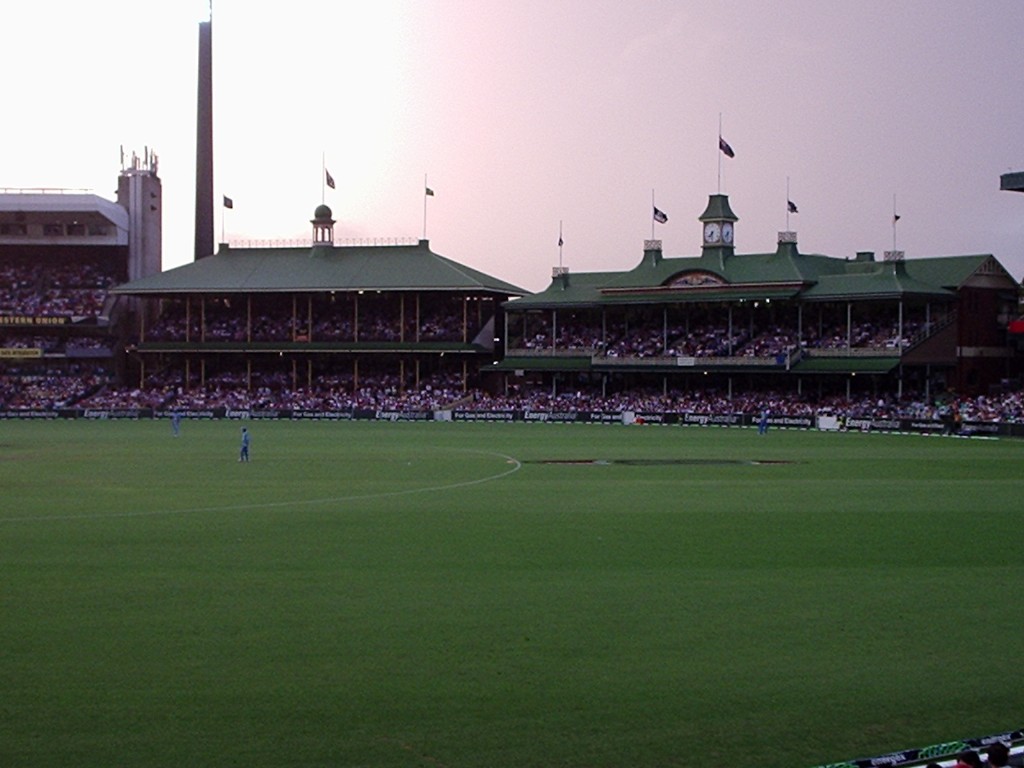
Me, I’m from Sydney. I love it, but I also have a whole lot of time for Melbourne. Melbourne has better licensing laws and thus better bars than Sydney, a better art and live music scene, and (mostly) better clothes shopping. Melbourne has trams. And what is not to love about trams? But Melbourne has little of Sydney’s breath-taking physical beauty, doesn’t have her beaches, or national parks, or fairies, er, I mean ferries, actually I mean both. It doesn’t have the wonderful bike path all the way from Newtown to the beach. Melbourne is, well, kind of dreary looking and its winter is unendurable. Nor does it have many of my favourite restaurants in the world the way Sydney does but, hey, the food is plenty fine in Melbourne too. And, please, do not give me the sacred MCG thing. There’s only one truly beautiful test-hosting cricket oval in Australia and it’s in Adelaide. And anyways my heart belongs to the SCG.

But who am I kidding? I was born here. I’ve spent the majority of my life here. I am completely biased about Sydney.

I’m not asking Melbournites to start loving Sydney. I’m just asking them to be a little reasonable about their over-the-top hatred. There are other cities out there that are actually worth hating (like, you know, um, another Oz city that I will not name because I have friends who live there what will be offended). Sydney ain’t one of them. And while I’m at it, Adelaiders, quit hating Melbourne, okay? You’re just being silly and why hate them when their MCG is ugly and your Adelaide Oval beautimous? You should pity them.

For me to work up a real forth of city hating, it has to be either a) a city I spent a miserable few years of my childhood in, or b) a city where you can’t get around if you don’t drive. Where the public transport and pedestrian access sucks. For this reason I perfectly understand why so many folks in the US of A loathe Los Angeles. Without a car in L.A. you are totally buggered. You have to beg rides from all your friends and are reduced to the status of a helpless child. But you know what? That’s true of almost every city in the USA, which is one of the reason I love NYC and San Francisco so much, they’re perfectly navigable by public transport and in Manhattan you can go wherever you want by shank’s pony. Plus, you know, there are so many places in both cities you’d want to go.

I used to hate London, because every time I’d visited the food was vile and expensive, it was gray, cold and raining (even in “summer”), and the people were obnoxious and rude. On my most recent trip the food was still expensive but it was excellent, the weather was endurable, and I only had one rude encounter, so now London’s in my good books. It certainly passes with flying colours the good public transport and pedestrian getaroundability rule. (Thanks to Niki, Lauren and Andrew for showing me the non-sucky London.)

Cities are who you know. The people who take you in and show you their town. I’ve had wonderful times in Dallas and Austin, Texas neither of them pedestrian friendly. I adore Toronto and it sure ain’t pretty. I’ve enjoyed Brisbane, Rome, Madrid, Bangkok, Jakarta, Dunedin, San Miguel de Allende, Davis and Lisbon—all of them because the people there were amazing and went out of their way to show their town to me. I imagine that even L.A. with the right people in the right light could be kind of okay. And now that my sister‘s moved there I guess I’m going to find out.

Or maybe not. There’s still that bloody car thing.

Author Etiquette 101

Lesson no. 1: Be nice to booksellers1

If you’re an author or wannabe author never do the following:

  • have a bookseller check on the availability and price of a book and then when they offer to order it for you tell them, “No thanks, I’ll get it on Amazon—it’s cheaper.”
  • Think about it: many independent booksellers are struggling to survive in a market dominated by the big chains and online booksellers. The words “Amazon” and “Barnes & Noble” frequently make them sad. You can just say, “No, no need to order that book. Thanks so much for finding the info for me. I really appreciate it.”

  • Do not expect your local book shop to order in your book in huge quantities sight unseen.
  • Go in, talk to the buyer, the manger, or the owner—or all three. Give them a copy of your book. Tell them you are a local author, extoll the virtues of your book. Then they either will or won’t order it. If they do, offer to sign copies for them, give them the tschotkes you’ve had made—bookmarks, postcards, whatever—to promote said book. Buy one of their books. Buy two. Show you support them as much as they support you. Besides, many bookshops give authors a discount.

  • When you’re doing an event at a bookshop, no matter how famous you are, no matter how long you’ve been on the road spruiking your books, do not treat the booksellers as if they are your servants.
  • Do I really need to explain this one? And, yes, I have seen it happen. More than once.

If you haven’t already here’s something you should do: make friends with your local booksellers. First up, like librarians they’re usually fabulous. They like books; we writers like books. Together we can all talk and argue about books. Fun!

I have many friends and acquaintances in Sydney, Melbourne, Brisbane, New York City and San Francisco who are booksellers. The Australian ones were friends of mine long before I started publishing books. We became friends because I’ve been buying books from them since before I was a teenager. I’m a book addict. I haunt bookshops and libraries. Booksellers and librarians are my kind of people. (Archivists, too, though they can be kind of weird. In a good way!)

Since I published my first book a really cool and unexpected thing has happened: those booksellers got behind it, plugged it big time, and sold many more copies than you’d expect for such a book. And they’ve got behind Magic or Madness in an even bigger way. They’ve been amazing. The handselling of my book that’s gone on at bookshops like Books of Wonder, Galaxy, Gleebooks and Pulp Fiction (Ron, when are you getting a website?)—well—I blush! I totally blush.

So there you have it: booksellers are your friends. Do not cross them! They will remember.

  1. I would like to take this opportunity to apologise to any booksellers or librarians I have ever offended. I was young and knew not what I did. And if it was more recent, well, then, um, that book that I ranted about and called the worse book ever, after you’d just told me you loved it so much you had to read it twice in a row? That book? Turns out it is a work of genius. Ooops! Sorry, Stephanie . . . []

Get Publish Need Magic?

Diana has an excellent post today answering questions about the magic of being published. Can you get published without knowing anyone in the industry? If you’re not married to a publisher? If you’re not a celebrity? If you haven’t been hit by the publishing charisma stick?

Here’s the one thing that every single published writer I know has in common:

They write.

Yup, that’s it: they write. They work at their craft. They write almost every day, and when they’re not writing, they’re thinking and talking about it. Even when they’re procrastinating, they’re thinking about it. (Procrastination is work, too, people!)

Yes, getting published is hard. Yes all those rejections are frustrating. Yes, it can take years to get published. (Look at me: first novel begun in 1988; first novel published in 2005.) But if you’re not putting the majority of your energy into writing, odds are you’re not going to get published.

Writing is the thing.

That is all.

On Hackery (inspired by Delany’s About Writing)

Samuel R. Delany’s book About Writing will not get out of my brain. I keep thinking about his concept of the usefulness, no, the essentialness of doubt (good! I got plenty of that), about how slavishly following the rules and working hard leads to aesthetic banality (the rules of good writing, not the rules of how-to-get-an-agent/editor—you have to follow those). And about being a hack.

Delany’s book made me feel like one (in a good way). His description of his own writing process, of how to write the absolute best you can, is a recipe for books that go through many, many drafts and take a long, long time to write, books that delve down into every doubt or dream you ever had. These descriptions are sensual and exhilarating and inspiring (if I hadn’t read his book I’d still be working on the draft of M! M! M! O! O! O!). As Delany goes through explaining every word choice, you marvel at not just his brilliance and talent, but at his unerring ability to explain this really, really difficult stuff (how’s that for a word choice!).

The book inspires and it also makes you think seriously and long about your own writing.

I’ve been a freelance writer since 1 April 2003 (excellent day to begin, no?). In that time I’ve sold four books, written four and a half, edited one. Deciding to make a living writing, meant deciding to tell different stories than I would if I had a stayed as an academic. Given that so far it’s earned me about US$1,200, and it took four years to research and write, books like The Battle of the Sexes in Science Fiction went out the window. I had to tell stories that enough other people wanted to read that publishers who could pay decent advances would want to buy them, and I had to learn to write faster. Much faster. I’m now on a two-books-a-year schedule.1

Every page of Delany’s book made me think about the central tension in my life between writing the best books I can and writing them quickly. How do I not become a hack?

I don’t have an answer.

I’m lucky that I write Young Adult books which are considerably shorter than say, Charlie Stross’ work. Magic or Madness and Magic Lessons are both about 65 thou words. In book form that’s 275 pages with a comfortable sized font and balanced amount of leading. But it’s still 130 thousand words of publishable prose a year.

I’m starting to think that—except for the lucky few—to make a living at writing is to be a hack. The best I can do is to write as well as I possibly can within the time restraints, and hope that one day I’ll be generating enough money that I can slow down. But I temper that hope with the knowledge that most people never do. I’ve already seen any number of writers around me write too fast and burn out. Scott was on a near three-book-a-year schedule and wound up with all sorts of health problems (and also nine very fine YA books). But still: too fast words eat up your body and your brain.

And while on a major deadline crunch—unless you have servants or a traditional wife—the rest of your life is falling apart. Housework doesn’t get done, or your taxes, or any of the other admin, you don’t see your friends, and lots of takeaway and delivery food and ramen noodles are consumed.2 When you finish you really should be turning to the next book before your editor’s notes come back at you. Because that’s one of the worst things about writing more than one book a year: the constant interruptions from the previous book. You do not—as a dear friend of mine imagined—write one book, send it off, and then leisurely write the next. While writing the next you’re also be working on the last. There are rewrites, checking copyedits, proofs, and galleys. I have no idea how those writing four or more books a year cope.

I’m hoping, some day, to have the time and opportunity to write both as slowly and as well as I want. To only go on to the next book when the last one is well and truly finished and as good as I can make it. In the meantime I strive to be the very best hack I can be!

How do all you other hacks manage?

  1. I have many writer friends who are writing many more books than two a year, who consider such a schedule luxury. []
  2. I am well aware that there are much harder jobs than being a novelist. This is the best, most fulfilling job I’ve ever had. Every single day I’m grateful I’ve had the opportunity to have a go at it. []

My Swollen Head

Magic or Madness just made its fifth best books of the year list with its inclusion on Locus’ 2005 Recommended Reading List. I’m in ace company with the likes of Elizabeth Bear, Judith Berman and John Scalzi. Scott made the YA list along with Holly Black and Carol Emshwiller and other excellencies. Best of all they listed Midnighters 2: Touching Darkness which has been mostly ignored by the other lists. Dunno why. It’s fabulous.

Anyways, I’m off to stick my head in a bucket of cold water in hopes of reducing the swelling.

All over the place & a question

I have a question for sf/fantasy/horror etc readers. Who are the new feminist voices you’re most excited about? I’m hearing great things about Sarah Monette. And I know all about Lauren McLaughlin and Meghan McCarron. But who am I missing out on? Who now is writing books and stories that look at questions of identity, gender, sex, race, class in cool and interesting ways? Who talks about these issues in exciting ways on their blogs? Tell me!

I just heard that, Daughters of Earth, my feminist sf anthology will be out 1 May. Just in time for WisCon! Most excellent!

I’ve been working on a post for awhile now about all the fabby blogs about the publishing industry and the glories of Miss Snark et al. Fortunately for me Diana Peterfreund has beaten me to the punch so now I don’t have to bother. What she said.

I agree with Matt Cheney that Mister Boots is Carol Emshwiller‘s best novel and I can’t believe I forgot all about it when talking about the BBYAs. Why the hell wasn’t Mister Boots on that list? Why wasn’t it a Printz honoree? Everyone go buy a copy immediately. You’ll love it!

BBYA happiness

The Young Adult Library Services Association has just announced its lists of recommended books for 2005. Getting on one of these lists is a very big deal because they are frequently used as a guide for building a collection etc. The two main lists are the Best Books for Young Adults (BBYA) and the Quick Picks for Reluctant Young Adult Readers.

This year both Scott and me were on the BBYA. I’m so thrilled. Magic or Madness is one of the best young adult books of the year! Woo hoo! Even cooler, Scott made the list with two books, Peeps and Uglies, and Peeps was on the top ten BBYA of the year. How bout that?!

Here’s my pick of the other books on the lists:

Black, Holly. Valiant: a Modern Tale of Faerie (on both lists!)
Bray, Libba. Rebel Angels
Castellucci, Cecil. Boy Proof (on both lists!)
Green, John. Looking for Alaska
Halam, Ann. Siberia (Go Gwyneth!)
Hartnett, Sonya. Stripes of the Sidestep Wolf
Johnson, Maureen. 13 Little Blue Envelopes
Lockhart, E. The Boyfriend List : 15 Guys, 11 Shrink Appointments, 4 Ceramic Frogs, and Me, Ruby Oliver
Lanagan, Margo. Black Juice (will the accolades ever stop? I hope not!)

Here are the books I’m sad didn’t make either list:

Cabot, Meg. Ready or Not (It’s nuts this didn’t make the Quick Picks list!)
Haitani, Kenjiro. A Rabbit’s Eyes (I simply adore this book. In a just world it would’ve won the Printz! Not that Looking for Alaska didn’t deserve it, mind.)
Nelson, R. A. Teach Me (Raw and intense just like it was for me being a teenager! Though I understand that’s very unusual . . . )

Now, I’m looking forward to catching up on the many books on the lists I haven’t read yet. Sigh! We are living in a golden age of young adult publishing.

Done and away and over and off and like that (Updated)

I just pressed the send button, and now Magic! Magic! Magic! Oi! Oi! Oi! is winging its way across the Pacific, and then across mainland USA, all the way to Hudson Street in New York City. Except that, you know, technology, being what it is, my baby is already there. Freaky, eh?

I can now watch the Sri Lanka v South Africa One Day International in good conscience. Who am I barracking for? Sri Lanka, natch. But it would prolly be more interesting for the competition if South Africa won. But, frankly, without Makhaya Ntini South Africa just ain’t that interesting. Even if Sean Pollock does look uncannily like my husband.


Sean Pollock aka Scott Westerfeld (original source)

Can I just say that I love the extreme slow mos? Beautiful.

I have now worked way more than 20 days straight on finishing MorM 3. In that time I also achieved the following:

    wrote the first 500 to 1,000 words of three other novels.

    exchanged many many whingey emails with Holly Black moaning about our novels-in-progress.

    was waited on hand and foot by my most excellent husband.

    resisted reading the second Temeraire book which Naomi Novik so kindly sent me (so. very. difficult.).

    was given a first edition hardcover copy of Steve Waugh’s autobiography by my wonderful Australian publisher, Laura Harris (Something else to resist reading).

    chewed my finger nails way beyond the quick (ewwww! Do you know how many times I’ve sworn I would stop that? Aarrghh!)

    read the last five chapters of my novel to Scott at least three times. Fortunately for him, each time they were completely different!

    wrote five different endings to the novel (two of them so shockingly bad I didn’t read them to Scott).

    watched the first ten episodes of the second series of Battlestar Galactica. Thank you Sean Williams! Thank you Cat Sparks and Rob Hood!

    watched all of Ultraviolet. More thanks to Cat & Rob!

    completely failed to arrange accommodation in Bologna.

    realised that there is no sport on earth remotely as wonderful as cricket.

And now I fall asleep on the couch watching Sri Lanka defeat South Africa. Yea verily, this is the life!

Update: South Africa won! Wowzer.

writer’s block and awards

From Jonathan Yardley’s Washington Post article about John Gregory Dunne comes this quote:

“Because one has written other books does not mean the next becomes any easier. Each book in fact is a tabula rasa; from book to book I seem to forget how to get characters in and out of rooms — a far more difficult task than the non-writer might think. Still I went to my office every day. That is the difference between the professional and the amateur. The professional guts a book through this period, in full knowledge that what he is doing is not very good. Not to work is to exhibit a failure of nerve, and a failure of nerve is the best definition I know for writer’s block.”

How wise! How true! And how apposite to my current situation! (MorM 3 is due in New York City in just under twelve hours.) Via the lovely Ms Bond.

Margo Lanagan‘s Black Juice is now a Printz honour book. Most excellent! If you haven’t already read it, then you really really must!

Now I return to twelve more hours of not exhibiting a failure of nerve . . . Fingernails? What fingernails?

French Title of Magic or Madness

It seems that the direct translation of Magic or Madness is less than euphonious in French, so my publishers there, Editions du Panama, have opted for a new title for both the series and the first book. The series title will be:

AU-DELA DE LA PORTE (BEYOND THE DOOR)

and Book 1 will be:

DANS LES GRIFFES DE LA SORCIERE (IN THE WITCH’S CLAWS)

Interesting, eh?

Books about Writing (updated)

As I’ve mentioned I recently read Samuel R. Delany‘s About Writing which is seriously very very good. One of the smartest, most inspiring books on writing I’ve ever read. It includes a piece on “thickening the plot” where he shows you precisely how he does it. The many moments where he goes through word by word pointing out exactly what isn’t working in any given passage are gorgeous (as are the pastiches he whips up for dissection). His advice to wannabe writers is harsh and honest and reveals heaps about his own writing life. The introduction—where he discusses the difference between “talented” and “good” writing—is worth the price of the whole book (as is the appendix, “Nits, Nips, Tucks and Tips”). In the intro he sets out the rules of good writing, it’s the usual suspects: “use precise language”, “avoid the passive voice” etc. etc. and then Delany writes

If you start with a confused, unclear, and badly written story, and apply the rules of good writing to it, you can probably turn it into a simple, logical, clearly written story. It will still not be a good one. The major fault of eight-five to ninety-five percent of all fiction is that it is banal and dull . . . However paradoxical it sounds, good writing as a set of strictures (that is, when the writing is good and nothing more) produces most bad fiction.

Delany is such an extraordinary writer that reading him musing at length on his profession is beyond pleasure and off into a whole other realm. His book made me realise how far I still have to go to become the kind of writer I want to be. I’m a mere beginner at the published writer game, there’s still oceans for me to learn (especially about punctuating conversation!—see the section on same in the Appendix). A sobering and incredibly useful realisation. How many books force you to look close and hard at what you do for a living? The book has fuelled my own writing and left me hungry for more brilliant books on writing. Books as good as Delany’s.

So far I’m not doing great on finding such a book. Right now I’m reading Sol Stein’s Stein on Writing but compared to the Delany it seems kind of anaemic. I suspect that this is because, unlike Delany’s book, the Stein is aimed at beginning writers and also because what I really want to be reading is more Delany on writing.

I’ve been asking around for recommendations and so far I have From Where You Dream by Robert Olen Butler, Writing the Australian Crawl by William Stafford, A Dangerous Profession by Frederick Busch, and The Art of Fiction by John Gardner on my list. Anyone read ’em? Whatcha reckon?

Update: Just to be clear all the books in the following paragraph are books I’ve already read. There’s no need to keep recommending Stephen King’s On Writing!

Other books on writing I’ve read and enjoyed are Flannery O’Conner’s Mystery and Manners, Patricia Highsmith’s Plotting and Writing Suspense Fiction, Stephen King’s On Writing and Ursula Le Guin’s Steering the Craft. The books I enjoy most are not how-tos, but personal accounts of a writer’s relationship to writing. I’d love to hear of more.

PS I know this post should have been all exquisitely writ and that, but I got a book due Tuesday and I’m saving my pretty sentences for Magic! Magic! Magic! Oi! Oi! Oi!!

Weirdness Meme

Shana tagged me and I didn’t even know it.

It’s a tricky meme, I’m not saying I’m not weird and all, it’s just that pretty much all the weirdnesses I’d be willing to tell you about—how much I hate socks etc. a) have already appeared on many other people’s lists (and thus how weird can it really be?) and b) I just don’t think that’s weird. Frankly, it’s the people who like socks that I worry about.

So here are the weirdnesses I’m okay with you knowing about (oh, and family of mine and close friends—you do not have permission to post comments):

    1) I don’t like anything with caffeine in it. Not coffee, chocolate, coke, tea, not anything. This is not a health choice. They taste bad to me. Especially coffee and dark chocolate. Yuk! (Liquids should never be imbibed hot cause it’s just weird! And why would you drink soft drinks when you could have yummy water? Very weird indeed.)

    2) I love all food that wobbles. Yes, including tripe. (I am, however, very particular about how the tripe is cooked. Italian and Spanish tripe=good; English tripe=bleahh!)

    3) I love offal, even the stuff that doesn’t wobble. Mmmm foie gras . . . (and I live with a vegetarian!)

    4) My favourite joke is still “where did Napoleon keep his armies?” I’ve found it hilarious since I was five years old.

    5) I think about food all the time. I mean all the time (I was thinking about it while writing about the Napoleon joke). I do not think that’s weird.

I’m not tagging anyone else, it seems rude or something. But, you know, if you feel like doing this meme consider yourself tagged.

P.S. A belated thanks to Chris McLaren for helping me get recent comments showing up in the sidebar. You, sir, are a WordPress god!

Ooops!

Apparently, calling my first novel, Magic or Madness was a big fat mistake. It’s the “or” that’s the problem, with certain searches it brings up lots of results that get in between you and finding my book. That can’t be good. And of course no one can spell my surname . . .

I suspect the title Magic Lessons isn’t much of an improvement. There must be gazillions of books with that title. You know, ones that actually teach you how to do magic tricks. Thank Elvis the third book in the trilogy has an utterly unique title: Magic! Magic! Magic! Oi! Oi! Oi!.

Best go finish writing it so I’ll have at least one book in the catalogue punters can actually find!

Magic Lessons in Australia

I just found out that Penguin Australia has made an offer for Magic Lessons! They’re planning to publish it in September exactly a year after Magic or Madness was released here. I’m thrilled! Penguin Au doesn’t buy many foreign books (yes, even though an Aussie wrote them, the MorM books are “foreign” because they’re being sold through Penguin USA), so it’s really exciting that they’ve now bought two of mine, and two of Scott‘s (So Yesterday and Peeps). Yay! It means a lot to me to be published in my own country.

More on the Art of the Synopsis

Diana Peterfreund who claims to love writing synopses is doing her very best to try and get out of writing one. Her methods include, well, actually you really have to see it. It’s very very funny, and I may steal it for our workshop on synopses in March, especially the interpretative dance!

C’mon, Diana, just write the damn thing!

Speaking of which I’ll be getting back to writing my own damn book . . .