Category Archives: Writing life

Questions authors always get asked

I have a bunch of friends who have brand new books coming out next year. Friends who will be doing at least one or two appearances—or in one case (lucky duck!)—going on a book tour. This post is for them because they’re going to be asked certain questions over and over again and it’s best to have a bunch excellent and entertaining answers. Here they are:

    Where did you get your ideas for this book?

    This is a particularly hard one for most of us because often we have no idea where a book comes from. Best to start thinking about that questions and putting together some anecdotes. I have a bunch of different ones for HTDYF because, like most books, the ideas for it came from several different incidents. The first time I was asked it about Magic or Madness I ummed and ahhed and generally made myself sound like my IQ is lower than room temperature. Sigh.

    Where do you get your ideas?

    I tend to respond to this one by talking about how ideas are not the hard part, making yourself sit down and write is. Or I say I steal them from Maureen Johnson. Hey, it gets a laugh. Did I mention that going for the laughs is always the right move?

    What were/are your inspirations?

    I tend to interpret this one as being about what books/writers most inspired me when I was a beginning writer. So I talk a lot about Enid Blyton. I’ve also used it a couple of times to talk about the people who encouraged me to write when I was little. But I think you can interpret it as widely or broadly as you like.

    When did you decide you wanted to be a writer?

    People love to hear the story of how and when you became a writer. Is it something you always wanted to do? Or did you just suddenly decide to give it a whirl one Sunday morning when you figured you could write better than the crappy bestseller you put down in disgust? Tales that involve dealing with rejection are always popular. Fortunately almost every writer I know has had to deal with it.

    What’s your favourite book/author?

    This is the question I still don’t have a handle on. Every time I’m asked I kind of freeze and can’t think of the title of a single book or author let alone the many, many ones I love. I always have a difficult time when I’m asked to pick just one thing. But, really, I’ve been asked the question often enough—pretty much every appearance I did on the tour it was asked—I need to prepare for it much better.

Bonus: Questions you’ll be asked if you’re an Australian author touring the USA:

    Do you like vegemite?

    Is the Pope Catholic?

    Can you wrestle a crocodlie?

    I’m sure I could if I tried.

    Did you know Heath Ledger?

    Sadly, no. But I think he was an amazingly talented actor.

    Speaking of acting. Actually, I think that’s a whole other post, which I will now go write.

If I missed any general author questions you’re asked a lot please to share.

Good luck, everyone, with your first appearances. Break a leg! (In the good way.)

Awards question

Been having a discussion on the effectiveness of awards. Are there any book awards you follow? Any awards that you automatically read the winners or shorlisted books? Can be any genre.

If not, why do you think?

Thanks!

What Ally Carter said

Ally Carter has a wonderful post on asking the wrong questions about writing.1 She is a HUNDRED PER CENT correct! Go read her!

I’ve been asked every one of those questions many many times and I always struggle to answer them but I couldn’t figure out why exactly. Thank you so much, Ally Carter, for figuring it out for me.

So many beginner questions at writers conferences are more concerned with marketing than they are with writing. This is putting the cart so far in front of the horse it ain’t funny. Questions like—How long should a YA novel be? Should I blog to promote my book? (NO! Blog because you enjoy it.) How do I find an authentic teenage voice?—are coming at things from the completely wrong direction. (Read Ally Carter’s post for the right questions and excellent answers.) Especially when these questions come from people who haven’t finished a novel yet.

Write the book first.

Write in a genre you know and love and understand. Do not attempt to write a YA novel if you’ve never read any YA novels. My first novel is an adult historical. A genre I know and love. It didn’t sell. My second novel was YA. Another genre I’d read obsessively for years. It also didn’t sell, but it was seen by an editor who took a risk on buying an unwritten trilogy from me because she loved the concept. She’d seen that I could write a good novel so she trusted me to write three more.2

As I wrote the Magic or Madness trilogy I did not think about word count. I just wrote the book and it was as long as it needed to be, which happened to be 65 thousand words. I have never worried about the length of any of my books. They’ve all been the length they needed to be. YA novels range in length from as little as 40k words to as long as—what was Libba Bray’s The Sweet Far Thing?—25 billion zillion katrillion words? Right then. But they were good words. The book is unputdownable even though it’s so heavy it could break your wrist.

When you’re writing your first novel your job is not to worry about word count, or any of those other irrelevancies, like how it will be marketed, your job is to write the best book you can. If it’s a billion zillion katrillion words long then fine as long as those words aren’t boring and crap.

Writing comes first. Always.

I have said this many times and sometimes I get the response that I must be lying because that person sent their extremely long novel out and it was widely rejected. The reason given was that it was too long.

I doubt very much that the agent/editor was saying that the book was too long for YA. There are many very long YAs.3 What they probably meant was that the book was too long for the novel it was. I.e. it wasn’t well-paced. The book needed cutting—not because it was YA—but because it was boring. If you’re getting that same comment over and over again then it’s time to stop sending the book out and go over it to see if they’re right. Are there sentences/chapter/sub-plots that could do with cutting and or trimming?

Or is it time to let that book rest and move on to the next one?

I’m always astonished by the people who say they want to be a writer who stop at one book. Well, it didn’t sell, they’ll tell me. THEN WRITE ANOTHER ONE. If you’ve written the book and it’s as good as you can make it then move on to the next one. Rinse and repeat. One of my friends wrote more than a dozen novels before they finally sold one. I sold my third novel. My first and second remain unpublished. It’s just how it goes.

It could be that your first novel was not ready to go out. It could be that now is not a good time for it. There are many many reasons books get rejected. Ninety-five per cent of the time it’s because they suck. Don’t worry, if you’ve been paying attention to the criticisms you’ve been receiving, and reading lots of really good novels, and working on your rewriting skills as well as your writing skills then your next novel will be much better. By the time you get to your tenth you’ll be rocking out loud.

Did I mention that it’s the writing that’s the thing?

  1. Via PubRants. []
  2. Which is a good thing to keep in mind. Sometimes even when you’re being rejected the editor/agent remembers you, because while they may not like that particular book, they see a glimmer of talent and hope that the next book might be more to their taste. Editors and agents are always looking for new and exciting writers. It’s a big part of their job. []
  3. By the likes of Libba Bray and Cassandra Clare. []

In which I disagree with Meg Cabot

Meg Cabot just wrote something wrong on the internet! It really pains me to take her to task because, as I may have mentioned one or two times, I am a huge Meg Cabot fan. I adore her books, her fashion sense, her blog. She is quite possibly the most fabulous person in YA. Pointing out her wrongness, well, ouch.

But here goes. In her latest post she made the following claims:

I think some people, when they’re asking authors about inspiration, are actually mistaking the word inspiration for motivation, ie, “What motivates authors (motivation = willingness to complete a sometimes onerous task) to sit there and keep their butt in a chair for so long that they’re able to finish a whole book?”

If authors were really being honest, they’d admit there are only three things that motivate them to finish their books. They are, in order of motivational effectiveness:

–Chocolate (any kind, cheap, expensive—doesn’t matter)
–Just wanting to get the damn thing finished so they can get on with their lives
–Panic over inability to pay their mortgages if they don’t get paid

There may be other motivational devices authors use to encourage themselves (music; Cheetos; revenge on their enemies), but the above are the main sources of motivation for most, I think.

Chocolate?! Chocolate?! Ewwww!!! I am a writer and chocolate has never motivated me to do anything except throw up. I’m sure I am not the only writer completely not motivated by chocolate or by Cheetos for that matter. (I’m not exactly sure what Cheetos are but they begin with a “ch” and that makes me suspicious.)

Her second reason is also suspect. Why, I hug each and every book to my chest and never want to let it go. I’m sure if you search this blog you will not find a single sentence where I express anything but sadness at having to part company with one of my beloved books.

As for no. 3 . . . Well, frankly I’m shocked. I have never in all my days come across such a mercenary statement from a writer. Me and my writer friends tap out our creations for the pure love of it and require no more payment then to be allowed to keep doing so. Money? I can’t believe she would even mention something so low.

My inspiration to write comes from the sweet lovely muse who floats in through my window to whisper sweet and pure creative thoughts into my head as golden petals float through the air and nightingales sing and . . .

Forget it. I can not keep that line of palaver going a second longer. Muse schmuse. Cabot’s correct about numbers 2 & 3. Wanting to finish the damned thing has gotten me through more books than I care to count.1 And knowing that a cheque will come once the manuscript is accepted is very very motivating indeed. Even though the speed of that arrival is rarely greased lightning. But if I don’t finish it don’t arrive.

I am also motivated by

  • wanting to write the next shiny shiny new new book because I am bored with the current one.
  • Not wanting Scott be mad at me for abandoning a book I’ve been reading to him. He hates narrativus interruptus.
  • Not wanting to piss off my agent or publisher.

I know some writers are motivated by a fear that if they ever fail to finish a book they will lose their ability to write another sentence ever again. That fear motivates me to start the next book but is useless in getting me to finish.

Those of you who’ve finished a novel or two: what kept you going all the way to the finish line?

WARNING: I will delete anyone who craps on about their love of chocolate. I am uninterested. I know that many people’s taste buds are seriously warped on that subject. I have zero interest in hearing more about their perversion.

  1. Actually it’s only seven. I don’t even have to stop using my hands to figure it out. I bet it would take AGES for Meg Cabot to figure that out. []

An interesting question

Ally asks:

Justine, I was wondering what you would do in a situation like this:

“As some of you may have heard, my partial draft of Midnight Sun was illegally posted on the Internet and has since been virally distributed without my knowledge or permission or the knowledge or permission of my publisher.”—Stephenie Meyer

Since I don’t really write or anything I don’t know what I would do. Would it bum you out to where you couldn’t write it anymore or would you just ignore it and keep going?

I’d be very unhappy and hurt that someone had betrayed my trust like that. I recently sent my most recent novel, Why Do I Lie?, to a bunch of people for comments—if they’d passed it on to other people to read I would be furious. That’s an enormous violation of trust.

As for what I’d do in that situation? It’s very difficult for me to say. I’m not Stephenie Meyer. It’s really unlikely an unfinished ms. of mine would wind up online and widely circulated. I don’t have anywhere near her fan base.

I can definitely imagine the whole thing souring me on the book. On the other hand, I really like to finish what I’ve started. Not to mention that my manuscripts tend to change a lot after I’ve finished the first draft. So what was distributed would not bear much resemblance to the final book.

I certainly feel a great deal of sympathy towards Meyer. That situation sucks.

Popular versus critical acclaim

There’s an excellent post by the whip-smart1 Sherwood Smith on this hoary toothed and clawed subject generating much excellent discussion. It’s mostly been said over there but I cannot resist adding my tuppence worth.2

Firstly, the discussion over there is in terms of “award winning”. As Sherwood acknowledges, I think this is a problem because all awards are not created equal. There are a number of awards such as the Quills for example which explicitly go to popular books. Some awards are voted on, some are juried with a different jury every year, some have the same jury for years. Some awards have huge amounts of prestige, some no one’s ever heard of. Some awards will make a book popular if they win it. The Booker in the UK and the Newberry in the USA create bestsellers every year and keep books in print for decades. “Award-winning” and “popular” are not (necessarily) oppositional terms.

But the question is usually a hypothetical and assumes that you can have one or the other but not both: Would you rather be a bestseller or be critically acclaimed?

Every writer I know says bestseller because that means money and making a living. The question winds up sounding like, Would you rather eat well for the rest of your life or have one perfect meal and then starve? Most sane people are gunna say, “No to starving. I wants to live!”

The question also makes assumptions about the kind of books that are critically acclaimed versus those that are popular. I see many DREADFUL shockingly written books get critical acclaim and awards, while there are also gorgeously written books that sell bucketloads.3

The concept of the “commercial fiction” writer comes up in the discussion on Sherwood’s blog and how they are generally not respected etc. etc. This has a lot to do with what field you write in.4 Commercial fiction is usually taken to encompass the genres: crime, romance, fantasy, sf etc. It’s a bit of a misnomer because some genres sell better than others—sf is in the doldrums right now and most sf writers are hardpressed to make a living. Does that still make them commercial? And what about literary writer Cormac McCarthy writing a science fiction novel? Does that make him a commercial writer? Cause he sure is making a lot of money. Also in crime in particular there are many writers who are critical darlings such as Richard Price. Does his award-winning critically-acclaimed work lift him up from being a “commercial” writer and deposit him in the lofted halls of the literary?

I am a commercial fiction writer producing YA. Within my field I have won awards, been totally ignored by other awards, been critically acclaimed, been critically dumped on, and had one book sell bigger than expectations5 as well as in many non-English speaking markets, as well as had books sell only so-so, as well as totally bomb in some markets6. In my very small way7 I’m both popular-ish (though by no means a best-seller) and critically acclaimed-ish.

Within my field I’m slightly known; outside my field, of course, I am unknown. There are at most three YA writers with name recognition outside the land of YA: Stephenie Meyer, Philip Pullman, and J. K. Rowling. There are, of course, other big names in my field: Meg Cabot, Sarah Dessen, Garth Nix, Christopher Paolini, Scott Westerfeld. But, trust me, when I mentioned their names to readers who don’t know YA8 they’ve never heard of them.

What does this all mean? I have no idea. I’m thinking out loud here. *Heh hem.*

The two categories are slippery. How popular do you have to be to merit the term? How critically acclaimed? The category of bestseller is notoriously slippery. The New York Times‘s methods for deciding border on voo doo. I know people who are USA Today bestsellers but not NYT bestsellers and vice versa.

Most of the writers I know don’t obsess as much as you’d think about being either a bestseller or critically acclaimed. They want to be able to make a living at writing and they want to be able to do it while writing the best books they possibly can. Naturally, we all mean something very different by that. Both what it takes to make a living and what constitutes a good book.

Those two things are a big enough struggle. The vast majority of published writers do not make a living from writing. And most of us struggle to meet our own standards of good bookness. Though writing the best we can is usually the only thing we have any control over.

Speaking of which, I have a zero draft of the Liar book to make good.

Later!

  1. What is so smart about whips? []
  2. I realise that I have never in my life so much as seen a tuppence. Never mind . . . []
  3. Why, yes, I am not going to give examples. You know I don’t say mean things about living writers. Well, okay, I have mentioned my disagreements with OSC but I have not dissed his books on account of I haven’t read them. []
  4. Romance writers are not dissed for being commercial writers within the romance field. []
  5. The expectations were low. []
  6. France and Taiwan. []
  7. At this moment in time. It could all go pear-shaped. []
  8. And who don’t have teenage kids []

News from the writing bunker

Both Scott and me are writing up storms, or, you know, novels. Our bunker is excellently designed, being gorgeous, with great views, comfy writing spots, and NO internet access. It’s brilliant: we get so bored we can’t help but write.

I am now five stories away from the bunker in the secret place of wifi access. I have snuck out while Scott’s not looking to have a peek at the wider world and to see what’s happening here on me blog. Thanks much for all the fascinating comments on previous post. The discussion has left me feeling much more relaxed about the writers I refuse to read. I am zen.

I wonder how zen Stephenie Meyer is feeling? I don’t think I’ve ever seen such a negative reaction to the final book in a series before. I’ve seen Scott cop some flack because of the way he ended the Uglies and Midnighters series but wow the response to Breaking Dawn is, um, intense.

The whole thing makes me grateful that I’m not nearly as popular as Meyer (or Scott for that matter). What would it be like to have your fans turn on you? I mean the Amazon reviews are dripping with anger. I’ll be honest: I feel awful for Meyer. Negative reviews are hard to weather at the best of times. Plus everyone I know who’s met her has said what a lovely person she is.1

I feel like saying to her fans: Relax, it’s just a book! But that would be hypocrisy of the worst kind because I felt the same way about the third book in His Dark Materials. You betrayed me, Mr Pullman! How could you? I WILL NEVER READ YOU AGAIN! Which was a lie, but I was ANGRY.

The Twilight phenomenon has been fascinating. There are thousands reading for pleasure now who weren’t before Meyer’s books came along. It’s a wondrous thing. Other than Harry Potter these are the bestselling children’s/YA books we’ve seen in a long time. I’m wondering if this last book has ended the phenomenon. It seems unlikely. I’m also wondering if we’re going to see another such hugely successful YA series. Or if Potter & Twilight are it for the next decade or so.

And now I must return to the bunker. But before I go I’ll note that there have been some particularly nasty spam attacks. Sorry if your comment winds up in moderation as a result. I promise to free it ASAP. And sorry too for all those unanswered emails. When the book is done I will catch up. Promise.

  1. Not that this would be fun for her if she wasn’t lovely . . . []

Trying for clarity

A number of people seem to be under the impression that in the previous post I was recommending against MFAs. My post was about undergraduate, not postgraduate study. I made no such recommendation.

As it happens, I know a number of people who’ve found certain MFA programmes extremely useful. The Vermont one, for instance, has been a wonderful experience for several friends of mine. But the vast majority of full-time professional writers do not have MFAs. Nope, I don’t have statistical evidence to back that up, but I’d be very surprised if I was wrong.

My post was in response to teenagers who asked about majoring in creative writing for an undergraduate degree. They seemed to be under the misapprehension that such a degree would automatically lead to a career as a full-time professional writer. It will not.1 Or that it is the best preparation for such a career. It is not.

There are a million different paths to being a writer. Most writers have had (and have) a huge variety of different jobs and studied (if they did at all) a wide variety of subjects. There are as many different experiences and backgrounds as there are writers. And don’t forget the vast majority of published writers are not full-time writers. They have other jobs.

Garth Nix, who confessed to having an undergraduate degree in writing, did not graduate and instantly become a New York Times bestseller. First he worked as a bookseller, an editor, an agent, and, I’m sure, many other things. He read and read and read and wrote and wrote and eventually was published and later still became a New York Times bestseller.

Do I think if you do major in creative writing that you’ve made a dread awful mistake and your life is over? No, of course not. Everything that happens in life is useful to a writer. The good, the bad, the ugly and the boring. I have a friend who swears she learned way more about human nature in a critique circle than she did travelling through Europe and Asia.

If I’m asked the question again will I answer the same way? Sure. I think there are way more useful things to major in as an undergraduate. Something that hones your research skills, for instance.

You can study anything at all, do any kind of job, and still become a writer. All I am saying is that studying creative writing is not a prerequisite to becoming a writer.

  1. I’m sure there’s some exceptions somewhere but they are so rare as to be irrelevant. []

Writing career advice (updated)

I am occasionally asked what you should study in uni (or “college” as USians call it) to prepare for a career as a writer. Should you major in creative writing?

In a word: NO.

The best preparation for a writing career are saleable skills in some other area. If you want to go to college study history or mathematics or sociology or engineering or whatever else takes your fancy. Variety is good. Anything, really, other than creative writing.

Never forget: The vast majority of published writers do not make a living writing. You will need some other way to make money to support your writing habit.

The courses that helped me prepare most for my writing career were in linguistics, history, and semiotics. The one semester creative writing course I did was by far the least useful.

Every single full-time professional writer I know had other jobs before they switched to full-time writing. They were teachers, software engineers, food critics, librarians, journalists, masseurs, dramaturgs, waitresses, receptionists, lead soldier pickers, copywriter, executives, lawyers, editors, and a bunch of other jobs I’m not remembering right now.

Most—but not all of them—earned an undergraduate degree, but none of those degrees were in creative writing. Not a single one. And very few of them have an MFA or other postgraduate writing degrees.

The best way to perfect your craft is to write and write and write. I’ve talked about that elsewhere. But what I haven’t mentioned is that another part of being a successful writer is having something to write about.

Yes, that’s right, experience, knowledge. Those are what help generate ideas.

Spending the majority of your time in uni (college) writing stories and concentrating on your craft, and not learning all the kinds of useful stuff (history, languages, physics, agriculture) that can feed into your stories can be a mistake. It’s hard to write well about the world if you don’t know a lot about it. Which is another reason I advise people to live in other countries if you ever get the opportunity. Preferably, ones where they don’t speak the same language as you do.

I also think it’s a really good idea to take a year off and work and travel before you go to uni. Meet a wide variety of people. Leave your neighbourhood, your town, your city, your state, your country.1

You may get lucky and find an awesome career that doesn’t require a degree. But, sadly, that’s getting less and less likely. Undergraduate degrees seem to be required for pretty much every career these days, which is a shame because some of the smartest people I know are autodidacts.

I digress.

To sum up: majoring in creative writing for an undergraduate degree? A thousand times no.

Update: A post in which I attempt to clarify my position. No, I’m not against MFAs.

  1. Now, I have occasionally met people who had so many experiences packed into their first 18 years of life that this advice is redundant. But they’re rare. They’d probably welcome the rest of a few years of writing workshops. []

YA stigma

The lovely Margo Rabb (yes, I know her—all writers of YA in the US of A know each other—or at most there’s two degrees of separation) has an article in the New York Times about how writing YA is looked down upon by those who write proper Literachure for teh adults.

I must be living in a lovely cocoon. I honestly have not experienced the kind of snobbery Margo Rabb describes in the article. I suspect that’s because pretty much all the publishing people I know are YA people. Whereas most of the people quoted in the article either come out of the adult literary world or aspired to write for adults.

I never did.

So there are many things in the article I’m startled by. Like Meg Rosoff’s claim that YA gets more respect in the UK. My experience, though obviously much more limited than hers—I mean she lives there—is the opposite. I think it gets tonnes more respect here in the US. In fact, the one and only time I was asked when I was going to write a “proper grown up book” was in London.

Also I think the idea of having an adult and a young adult edition of a book (which happens a lot in the UK) screams of not respecting the YA genre. Why would you need an adult edition (which is always the exact same text but—usually—with a different cover) if you felt no shame about reading the young adult version?

Here in the US, I run into adults who read lots of YA all the time. In fact, the majority of my fan mail comes from adults. The “stigma” of being published as YA does not seem to be stopping them from reading my books. The same does not seem to be true in the UK or Australia for that matter.

In fact, the writers for teh adults I do know, here in the USA, are all hell bent on switching to YA. But none of them write Literachure, they write fantasy, science fiction and romance, and they’ve heard that the going is good in YAland. That they can write whatever genre they want—crime, realism, fantasy—and that their books will be shelved next to each other and what’s more they’ll be paid better than they are in their given genre. So off to YA they go.

I guess that’s the biggest dissonance for me reading the article. I do not write Literachure. I have never written it. I have never aspired to write it. I have only ever wanted to write historicals or fantasy or crime and I can do ALL of that while writing YA.

That’s why I’m a YA writer and plan to stay one for the rest of my career.

Book = Teh Devil

Libba Bray likens writing a book to a love affair complete with the foul ending where everything goes pear shaped.1

Libba’s analogy does not work for me. It is too kind. It also implies that the author is some how at fault when the affair sours and ends. Au contraire.

The truth is that books are Satan. Or at least devils of some particularly nasty kind. Mine keep demanding bits of my body. And those demands escalate.

Initially they just want some hair, the odd fingernail, dead skin cells. That’s cool. I have a lot of hair. Fingernails grow back. I don’t even mind when it steps up to wanting all my fingernails down to the quick.

But right now it’s after my muscles. As in, it seems much happier when every muscle in my back and shoulders and neck is locked in place and I cannot move anything but my typing fingers and the muscles that make my eyes move. See? It has everything it needs to continue to be written but I’m incapable of doing anything else.

Cunning, eh?

This happens every single time with every single book. When my neck stopped moving on Monday, Scott sighed, looked at his watch and said, “It’s that week, isn’t it? I’ll be getting you a massage appointment then, won’t I?”

The devil books Maureen writes also freeze her muscles though the current one added a new variation when it threw in a dread skin disease. Sometimes the devil books we write visit even nastier afflictions upon us: like Scott‘s and Cassie‘s shingles. I have even heard of some writers being struck with leprosy and bubonic plague.

I am not complaining, and require no sympathy, think of this instead as a gentle warning to anyone foolish enough to want to make a career out of dealing with the devil writing books.

Gotta dash, book’s demanding blood.

  1. Yes, I’m doing it again, linking to someone what just linked to me. But, see, Libba and me are gunna get married and engaged people can do the mutual linky thing to their heart’s content. It’ll even be in our wedding vows. []

Post-a-Rejection-Letter Friday

Tempest Bradford links to Shaun C. Green who has declared today post-a-rejection-letter Friday. Tempest also links to an INSANE rejection of Ursula K. Le Guin’s brilliant Left Hand of Darkness which is one of my favourite books of all time. The person who wrote that letter clearly read an entirely different book. Possibly one by Ayn Rand.

My rejection letters are in a filing cabinet in Sydney. The only bit I can remember from them is from a rejection I received in the 1980s that included the following PS:

If you insist on writing under a pseudonym it is best to also include your real name. Thank you.

The crazy outlandish pseudonym I used? Why, that would be “Justine Larbalestier”. I know! What was I thinking?

I do have a few rejections from Strange Horizons—they do everything electronically—but they’re all super nice and encouraging so that’s no fun. Sidenote: If you write sf or fantasy short stories I strongly recommend them as a market. They publish great stories, they respond promptly, and their rejection letters are really nice even when they clearly hated your story.

I just remembered another one, which came from an English magazine. It went something like this, “You write beautifully but this story is completely pointless. Please don’t waste our time again until you learn to plot.” Ouch! They were right though. Sigh.

Post a rejection letter of your own! The club of those who have received them is a very very very big one.

The writing-not-easy thing, part the millionth

Yes, again! What of it? I promise this will be the last whingeing-about-writing post. Truly.1

I think I’m still in shock that my job is not always a doddle. You see, I fully expected that it would be.

Let me explain:

A full-time novelist is all I’ve ever wanted to be. Obviously the main reason I wanted to do it is because I’ve always loved telling and writing stories and I’ve done it since I was knee-high to a grasshopper. But I also kind of figured that it would be easier than any other job. Writing stories was fun. Something I did when I wanted to take a break from the onerous crap that I had to do. Surely doing it most of the time would be even more fun?

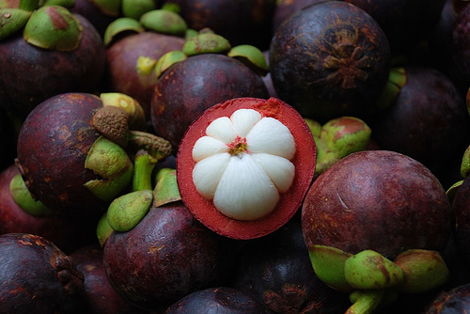
I imagined my life as a full-time novelist would involve never having to get up before noon, writing only when I felt like it, never being stressed, six-figure advances for every book, mangosteens for every meal, and walking on rose petals while fairy dust fell from the sky.

None of this has happened! NONE of it.2

I’ll admit that my job is not as hard as some people’s. I’m not down a coal mine. I’m not in a war zone. I don’t run the risk of death or injury very often—though paper cuts can be nasty.3 Many people work way harder than I do. Like my sister, who does 3,000 hour a week in dark rooms, making everyone in Hollywood’s hair look real, and the monsters look super scary.4

What was I saying?

Oh, yes, I thought writing would be the easiest job on the planet and I’d never have to work hard. So every time I do have to work hard it’s a horrible shock. Thus my whingeing.

Though it probably is the easiest job on the planet, which leads me to the depressing thought that no job is without hard bits. How unfair is that?

  1. Though I am writing a novel about a compulsive liar so I could be practicing. Plus all I’m doing right now is writing. What the hell else do I have to blog about? []
  2. Though I do occasionally get to eat mangosteens. []
  3. Not to mention RSI and back pain. []
  4. Or something. I’m never entirely clear on what exactly Niki does. []

More on writing being not so easy

This is going to be a bit mutual linky-linky.1 Maureen Johnson linked to my quick little whinge about writing sometimes being hard before going into more detail about the sometime not fun-ness of it. And now I am linking to her. Quoting her even:

When writing goes well, it feels magical . . . but there is no magic to it. Writing goes well because you have done some work. You have spent MANY MANY MANY HOURS sitting at your desk, written pages and pages and pages of useless crap, read piles of books, done a lot more wrong than you have right, questioned your sanity and talent . . . and just kept going. No muse involved.

Maureen is against muses. In fact, I suspect that she would advocate killing them:2

I hate muses . . . I mean, with the obvious exception of Olivia Newton-John in Xanadu. This idea that all you have to do is sit around and a muse lands on your head, dances around your desk, and whispers in your ear and BANG! BOOK!

Forget that. Get yourself a can of anti-muse spray. The things are credit-stealing parasites.

Personally, I think Maureen’s just jealous because—like me—she doesn’t have a muse. In fact, I’ll be honest and admit that the reason I think this is that I, too, am jealous. Frankly I would love to have a muse inspire me to work. Better still I’d like a muse to do the damn work for me.3

Imagine it: I’d be in my bedroom, lazing around, catching up on all the manga I haven’t had a chance to read in ages, because I’ve had to do so much research for this stupid book while my muse would be in the study working its arse off. Sounds good to me.

Sadly, that has never happened. Maybe if I’m more gooder?

I think part of the reason people refer to their muse is because they have no idea where their ideas come from.4 They should’ve asked Maureen. Trouble is all the muse talk makes it sound like ideas and inspiration are the most important part of writing, which, sadly, is rubbish.

I wish it wasn’t. I get dozens of ideas for novels every single day; I do not write dozens of novels a day. Nor do I write 4,380 novels a year.5 Even when you realise that it takes several ideas to make one novel the percentage of my ideas turned into novels is very very small. I’ve never managed to write more than one novel a year . . .

This does not mean that I think ideas are unimportant—I read a novel recently that was entirely void of ideas, let alone original ones, and I gave up after a few chapters—it just means that you can have the best idea in the world but if you don’t put in the hard yakka to transform them into a novel, or a play, or whatever, then they’re just ideas.

Also no muse—even Olivia Newton John—is going to help you do that.

  1. “You’re fabulous!” “No, you’re fabulous!” While those watching gag. []
  2. Possibly I was clued in to her sentiments by the title of her post: “Death to Muses” []
  3. And while they’re at it the flat needs vacuuming and dusting. []
  4. Or because they’re barking mad. []
  5. Which is how many ideas I have in a year assuming an average of 12 a day. []

The hard bits

The hardest part of writing a novel isn’t the beginning, or the middle, or the end. It’s not getting characters right, world building, keeping your sentences gorgeous, it’s none of those things. The hardest part is having to write when you don’t have the heart for it.

When you’re sad, or distracted, or in a bad mood, or bored. It’s writing when you can’t think straight, when the words are arranging themselves in dreadful “sentences” that hurt your brain. It’s writing when writing is the last thing you want to do, and every word, phrase, sentence is a struggle.

Writing through a crap day is the very hardest part of being a writer. Then getting up the next morning and doing it again. And the next. And repeat until the bloody book is finally finished.

(Blurbs are still harder, but.)

The Art of Writing Blurbs (updated)

NB: The Alchemy of Stone is not a YA book.

I have just read a splendid book, Ekaterina Sedia’s The Alchemy of Stone, and now I must blurb it. I am realising once again that blurbing a book is really hard. As you may have noticed from this blog, I am not naturally succinct. I fail at all forms of writing that are on the short side: blurbs, pitches, haikus, summaries. They are all nightmarish to me.

I am so crappy at pitching my own books that Scott uses my feeble attempt to pitch Magic or Madness to a Sydney bookseller as his standard example of how not to pitch. (After hearing me out the bookseller put on a forced smiled and said, “Hmm, that sounds really complicated.”)

I wish I could just say:

Ekaterina Sedia’s The Alchemy of Stone is rooly good. Read it!

—Justine Larbalestier, Magic or Madness

Or do as Quentin Crisp used to, which was to respond to blurb requests with the following:

You may attribute to me whatever words you think will assist in the marketing of this fine work.

On this occasion my problem is that The Alchemy of Stone is a really complicated book and I love it but I don’t know how to describe it and thinking about it is hurting my head.

Maybe that should be my blurb? Hmmm.

The Alchemy of Stone is a really complicated book and I love it but I don’t know how to describe it and thinking about it is hurting my head. Buy it! Read it!

—Justine Larbalestier, Magic or Madness

Blurbing a dense, original and smart book like Sedia’s is especially hard. There are so many things to say about it. I love the alienness of the protagonist, Mattie, who is an intelligent automaton in a world in which automatons are dumb: they can neither talk nor think and are used as servants. How she grapples with being the only one of her kind and with actually knowing and talking to her creator is the heart of the book. She never once reads like a human being and yet she is a compelling character. I like her. I want her to succeed.

I love, too, the stone gargoyles who watch over the city, the power struggles between Mechanics, Alchemists, and the hideously oppressed miners and farmers, the subtle yet brilliant worldbuilding, the quasi-myth like though also fairy tale-ish feel to the language. Oh, yes, the language! Sedia’s a gorgeous maker of sentences. Not in an obvious show-y off-y way. Many of her sentences are sparse and unadorned. Yet several times I had to back up and re-read in order to savour and relish the implications of a particular word or phrase.

You see my problem? And I haven’t even really begun to describe why I enjoyed the book so much. Or mentioned the Soul-Smoker or explained why I don’t think it’s steampunk, which leads me into a long rant on why I don’t find “steampunk” a very useful term for describing books.

Stupid blurbs. I kick them.

How about:

Ekaterina Sedia’s The Alchemy of Stone bursts with inventiveness from its robot heroine to the Soul-Smoker and stone gargoyles that watch over the city. The book is full of explosions both literal and metaphorical as well as being a gorgeous meditation on what it means to not be human. I haven’t been able to stop thinking about this beautiful book.

—Justine Larbalestier, Magic or Madness

Or something. Did I mention that I hate writing blurbs?

Alchemy of Stones is rooly good. Read it!

Update: Here’s what the publisher decided to go with:

“A gorgeous meditation on what it means to not be human. I haven’t been able to stop thinking about this beautiful book, from its robot heroine to the Soul-Smoker and stone gargoyles that watch over the city.” —Justine Larbalestier, author of Magic or Madness

Lost in your book

My job means that I spend many hours each day lost in the novel I’m writing. It’s a very weird way to make a living. When I have a looming deadline—like I do right now—and have to drop everything but finishing said novel I feel like I get further and further away from real world and more and more lost in the imaginary one. Talking to real people in the real world gets trickier and trickier.

I was thinking about this today and decided that it’s no co-incidence that “novel” and “navel” have only one letter different. No co-incidence at all.

Now I return to imaginary world.

Bad writing days

The fabulous Robin Wasserman was recently asked these two excellent questions:

  • Is your mood affected by whether you have a good writing day or a bad writing day?
  • When you’re having a bad day, do you conclude that your entire life must be somehow defective?

My answer is a big fat yes: YES!

Especially to the first question. I’m extremely foul to be around when the writing isn’t going well and a total delight when it’s going swimmingly. On good writing days there are rainbows everywhere, the birds sing, and a large bowl of fresh mangosteens shows up out of nowhere. It’s magical, innit?

In fact, I’d be really surprised to discover writers whose moods are unaffected by how the writing’s going.1 I imagine this applies to most other professions. Very few of us can get home after a crap working day and just shrug it off.

I cannot tell you how often I have had the following conversation with my various writer friends:

Me: How you going?

WF: My life sucks! Everything about it is misery and woe. I might as well kill myself.

Me: Writing not going well?

WF: It is the WORST BOOK EVER WRITTEN! Anyone who claps eyeballs on it will contract the most horrible disease known to humanity! Or they will cease to be able to read. Or die. My book will kill them DEAD! My book is the end of civilization as we know it! Why was I even born?! Aaarrrggghhhh!!

We writers are a neurotic whingey bunch.2 When we are in that kind of state it’s best not to remind us that the day before we thought it was the best book ever written. All you can do is nod and smile and make sympathetic noises and offer us food or liquid we find particularly comforting.

Only when we’ve calmed down is it safe to mention that we have expressed similar sentiments in the past. That, in fact, we have said the exact same thing about every book we’ve ever written. And yet we managed to finish those books without the world ending.

The only time the good writing day = joy; bad writing day = horror isn’t true is when I’ve been working too hard. Writing every single day, for long hours, for weeks, for months on end to meet a deadline can do my head in. As it goes on and on and on, even when I’m happy with the words I’m producing, I become increasingly grumpy until I finally send off the millstone manuscript and earn myself some writing free days, at which point the rainbows, singing birds and mangosteens reappear.

Only to disappear when I go too long without writing. And repeat.

How about youse mob? How say you to these questions?

  1. Though given how people can disagree about pretty much anything I won’t be that surprised. Truly, I know someone who hates fruit. Seriously, all fruit! I know! I couldn’t believe it either. []
  2. Obviously, except those lucky sods who only have good writing days. []

How I finished my first novel

Often when people find out what I do it turns out that they harbour ambitions of writing a novel too. Mostly they just daydream about it. But sometimes they confess that they’ve had a whack at it but not very successfully. “How do you actually finish a novel?” they’ll ask. “Starting’s easy but how do you finish?”

I cannot tell you how many novels I started but did not finish before I finally managed to complete one. Not because I don’t want to tell you, but because I honestly don’t know. On the hard drive of my current computer there are fourteen unfinished novels. But there are others that didn’t make it to this computer. Not to mention many notebooks that are lost or in storage. I started my first novel before I was twelve, started many more in my teenage years, not to mention my twenties, but I kept stalling.

Every. Single. Time.

I could write beginnings. Some of them are corkers. I could even get some of the middle stuff happening. But I could not get to the third act. Hell, I couldn’t even finish the second act.1 None of my unfinished novels get anywhere near the climax, let alone the actual ending.

There were lots of reasons why. My short attention span was definitely part of it. I’d think of some other shiny shiny idea and start on that instead. Or I’d get bored with the work in progress and go read a book instead. Or I’d get stuck and have no idea what happens next. Or I’d decide the whole thing sucked and realise I could never show it to anyone else because of its hopelessness and give up. It could also have been the absence of a deadline—I find they concentrate the mind quite fabulously well.

I also suspect part of my problem was that I never had a clear idea of the whole book. I’d just start writing a conversation, or describing a scene, and figure out who the people were and what was going on as I went. I had never heard of outlining so it never occurred to me to do so. Maybe it would have made a difference and I’d have finished a novel much earlier. I’ve always imagined that writers who figure out the plot ahead of time, who know who their characters are and what they’re going to do before they start typing have a much easier time finishing their first novel.

Left to my own devices I suspect I would never have finished. I’d still be an academic. Or possibly a rabbit farmer. Or a stringer for National Enquirer.

But one fateful day I got talking with an acquaintance, who happened to work at a book shop in Sydney where I fed my book habit frequently bought books. I’d been going there for years. We’d chatted many times but didn’t really know each other. On this occasion we both confessed that we were wannabe writers. I remember how embarrassed I was by the confession. How stupid it sounded. But she was embarrassed too, which encouraged me to admit that for all my ambitions I’d never managed to finish a single thing. Turned out she hadn’t either. Somehow we ended up agreeing to read each other’s stuff.

Once every one or two weeks we’d meet, swap pages, have lunch, talk about what we’d written, offer (very gentle) criticism, and cheer each other on. Within six months I’d finished my first novel. Or the first draft of it anyways. A novel I’d started in 1988 was finished in 1999. Greased lightning!

I could not have done it without her. Writing can be a lonely, frustrating business. Having someone who’s in it with me made a huge difference. Because back then I had no idea whether I could finish a novel. And not knowing if that was possible made finishing really really difficult.

Now when I start a novel the fact that I’ve already finished six makes me pretty (not wholly) confident that I’ll finish this one too. Even if it is turning out to be longer than expected.

  1. Possibly because I have never thought of my books in terms of acts. But whatever. []

Stupid recalcitrant novel beasties

You know when you set out to write a novel and it’s supposed to be around 60-65 thousand words, like your last four novels, and knowing that you’ve calculated how much time you need, and how many words per day, and it’s all going along crackingly, and you’re meeting your targets, wrangling words—some of them are even pleasing words—when you realise that this novel is not, in fact, a 60k beastie, it’s more of a 75k beastie, possibly even a 80k or 90k MEGAbeastie? Well, um, that is somewhat sucktastic and hair-pullingly wrong.

Stupid recalcitrant novel beastie. I spit at you! Spit, I say.

When writing is easy

Socialising gets hard.

You know what I mean. When you’re so buried in your book that you can’t remember how to talk to people who aren’t imaginary.

I’m off to see E. Lockhart, Sarah Mlynowski and Lauren Myracle talk about the book they wrote together, How To Be Bad, at Books of Wonder.

18 West 18th Street
New York, NY 10011

If I seem crappy at talking you’ll know why.

Types of crazy writers

Because I am myself barking mad I feel moved to share my four varieties of insane writers with youse lot. This is different from the run of the mill craziness of every writer who writes differently to me. This is the down-to-the-bone craziness.

I just shared my list with a bookseller friend and we agreed as to the unadvisability of ever blogging them.

So here they are:

    1. The unpublished writer who can barely string a sentence together yet is convinced that the reason they are not published is because of a conspiracy. “Those evil New York publishing houses only publish crap, deliberately keeping me from being published! They are fools and cannot recognise my genius!”1

    2. The newly published writer who believes they have the keys to the kingdom and know everything there is to know. “I am published! I am real! I have met my editor and thus acquired all publishing knowledge ever! All bow down to me!”2

    3. The midlist writer whose career is not where they wish it was and blames it on everything and everyone in the entire world. Especially all those foreignors who are gobbling up all their publisher’s attention and winning all the prizes that are rightfully theirs.3 When in fact success or failure in publishing is almost always a matter of luck. This is the most common form of madness simply because success in this game is such a crapshoot. If by success you mean “can make a living at it” then not that many published writers are a success. Maybe five per cent of them. Tops. If you mean “has written a book that they’re proud of” then many writers are a success. Guess which definition I prefer.

    4. The super successful writer who believes that they are so important and such geniuses that they should never be edited again. Or questioned. And that their fans should lay down at their feet as if before a god. In fact, so should everyone.4

Of course, there are all sorts of temporary insanities that hit every writer. Not just crazy outlining and writing books backwards and burning the first version of the book, there’s also:

  • Amazonomancy5 the obsessive consulting of the Amazon tea leaves to see if your book is selling despite knowing that Amazon tells you nothing. Absolutely NOTHING.
  • Furtive facing out of your books in bookshops when the clerks aren’t looking in the largely mistaken belief that they won’t notice and that in the fifteen minutes it stays like that your book will sell.
  • Conviction that your book is tanking even though it’s only been out for a week and the only evidence you have is Amazon numbers and a note from someone in Delaware/Dubbo saying they couldn’t find a copy in their local bookshop.

There are many many more. Seriously, I could go on forever listing them.6

In fact, I would argue that attempting to make a living writing is a sign of total insanity, which may be why the part-timers tend to be much more stable.

  1. I definitely suffered from this one during my twenty years of not being published. How could they publish HIM and not me?! []
  2. I confess that I went through this stage. I’m so sorry! []
  3. This is where I’m headed. Best to buy LOTS of copies of my next book to prevent me from winding up there. I’m just saying . . . []
  4. Let’s all hope this never happens to me for I would be a MONSTER. []
  5. The term comes from the briliant Hal Duncan []
  6. You may have noticed that I am a big fan of lists. []

Obama—just like every other first-time author

Scott just pointed out an interesting article in the Times about Barack Obama’s publishing career. Here’s the bit that cracked me up:

“Barack is a very focused, determined person,” said Ms. Hartman, who now considers Mr. Obama a friend. “Barack would go to people one by one and say, ‘Here’s my book, I want you to read it, give me feedback.’ For me, as a publisher, he wanted me to write about it. He would call me every week and say, ‘Did you read my book?’ ”

Oh, I remember those days of harassing all my friends and family, not to mention mere acquaintances and random strangers, thrusting my brand new book upon them and then always greeting them with the same refrain:

Did you read my book yet? Did you read my book yet? Did you read my book yet? Did you read my book yet?

Well done, Obama, that those you harassed are still friends with you!

Other writers are crazy

I was chatting the other day with a writer friend who was all freaked because they don’t know what happens in their work-in-progress. We chatted for some time me making suggestions, them nixing the suggestions, when in the course of the chat it emerged that they hadn’t actually started the novel.

The work it was not in progress.

“Of course, you don’t know what it’s about or all of the plot yet!” I exclaimed. “You haven’t started it! You’ll figure it out as you go along,” I said.

“Are you insane?” they replied. “I can’t start writing until I know exactly what’s going to happen. There’ll be nothing to write!”

Am I insane? I thought. I don’t think so. I’m not the one who can’t start a novel without knowing every single thing about it ahead of time. That’s nuts.

A year earlier I was bitching to this same writer that I had no idea how my book ended. I had nine tenths of the book, but no ending, and I had no idea what to do.

They thought I was insane: “How could you get that far into a book and NOT KNOW THE ENDING?!”

Um. Cause that’s how I write books.

Another writer friend of mine had a complete snit fit when they discovered another book had the same title as their yet-to-be-published book. My pointing out three earlier examples just made the author cry. I tried to console them by explaining that there are heaps of books with the same title and that this is not a problem. There must be dozens of books called Leviathan. It’s no big deal. Honest.

They does not believe me. Because author is cra-zy.

Like the friend of mine who cannot get going with their book until they know what the first sentence is. It has to be perfect. They can spend six months just writing that sentence over and over and over.

Nuts?

I think so.

Someone else I know writes their books backwards. Ending first. Then middle. Then beginning.

Another one writes a complete first draft and then destroys it and writes the whole thing over again.

And then there’s the writer who will write an entire novel without knowing what their main character is named. They’ll call them X throughout the draft and then only at the end go, “Oh, now I understand them. Clearly their name is Jebediah.”

Barking mad!

I’m just saying . . .

Thank Elvis there are some sane writers like me around. Clearly you should only listen to my advice.

When the words do not flow

Yesterday was not one of my better writing days. My fingers were recalcitrant and my brain mutinous. After a couple hours of pointless battle with ’em I gave up and read a vast deal of Sarah Rees Brennan’s blog.

What fun. Sarah is dead funny. Her and Maureen Johnson’s blogs are two of the funniest in existence. I especially enjoyed reading Sarah’s entries over the past year or so as she sold her first novel and talks about what it’s like to be an about-to-be-published writer. It made me all nostalgic for my more than a year of waiting for my first book to come out.

Sarah talks about all the various stages. The post on her first editorial letter is delightful as well as a really good explanation of what exactly an editorial letter is. The only thing I would quibble with is the idea that an editorial letter can vary in length from “two to twelve pages”.

I have a friend who once received a one-page editorial letter. Actually, it was more of one-line editorial letter and it ran something like this:

Beginning slow. Ending confusing. Protag unlikeable. Fix.

Another friend got one that was well over twelve pages. It was almost like the editor had written a novel about the novel. Bizarrely that super-long ed letter required less work from the author than the one-line ed letter. One never knows, do one?

I also loved her post about memoirs and totally agreed with her comments about Rachel Manija Brown’s brilliant memoir:

All The Fishes has something I would really like to see in other autobiographies. Rachel Manija Brown says that sometimes she doesn’t remember things: there are several scenes where she describes what she thought was going on, then details other people’s entirely different viewpoints, and leaves it up to the reader to decide. When wrapping up the book she gives us her mother’s perspective, which is a world apart from her own, because she wants to be fair. That is awesome. And it makes me trust her autobiography, because that’s what real life is. Nobody’s going through it as a monologue: there are other players around.

There are many memoirs and autobiographies that do this. Some of my favourites become a meditation on memory and how we construct our understandings of the world based on these memories. So what does it mean that we all remember differently?1 This always makes me think of that song from Gigi, “I remember it well” which is a duet giving totally different accounts of the same events: “We dined with friends. We dined alone. A tenor sang. A baritone. Ah, yes, I remember it well.”

Sarah’s blog is an excellent example of a really good writer’s blog. It’s well written, witty, entertaining and makes me want to read her books. It’s also a good example of how you can’t just conjure a good blog out of thin air as some new writers are being expected to do. Sarah’s been blogging for years: her archives go back to 2002; her book deal didn’t happen until 2007. She did not set out to have a Writer’s Blog to Publicise Her Writing thus it does not read in the awkward way that such blogs often do.

Yes, I have come across a few such lately. Debut writers merrily dispensing wrong advice about the publishing industry they as yet have no clue about because that’s what they feel they must do. “I’m a REAL writer now I must tell everyone how it works!”

Which is actually what Sarah does. The difference being—and it is a HUGE difference—that Sarah is very clear that she is talking about what is happening to her, and her understanding of it, and it is all new and strange and if anyone could clear up this particular point she’d love to hear from them. She never says “this is how it is”, she says “this is how it is for me“.

That’s why I cannot wait to read her debut novel. She didn’t set out to create a blog that would make punters want to read her books and yet that’s exactly what she’s done.

  1. For instance, Scott and me have totally different memories of how we met. []

And now we are in Paris

Which I can report is wonderful though cold. Great food, great gorgeousness, great people. Thank you, Luis and Maude, for showing us such a great time!

Several people have written to ask what on Earth we are doing galivanting about Europe. I could have sworn that I mentioned why at some point. But here it is again for those what missed it:

We are here to do research for Scott’s next book part of which is set in the European alps. As it involves air ships we went for a ride on a Zeppelin. We also came to attend the Children’s Book Fair in Bologna, to launch Extras in the UK, to get some writing done, to catch up with some of our European-based friends such as Coe Booth, David Moles and Ben Rosenbaum who are all in Basel at the moment, and to eat lots of wondrous food (see poll to your right).

Things learned on the trip so far:

  • Dutch publishers hate fantasy, but they love Maureen Johnson.
  • Germans ones love fantasy.
  • Stephenie Meyer is a Scott Westerfeld fan and has been going out of her way to tell her foreign publishers how much she loves his books. Thank you, Stephenie Meyer!
  • Switzerland is INSANELY expensive for tourists. Every menu I looked at I thought there had been a series of bizarre numerical typos. Surely the soup couldn’t be twenty dollars in an ordinary cafe?
  • Ben Rosenbaum’s kids are fabulous.
  • You can get great vegetarian food that isn’t cheese and noodles anywhere in Europe that isn’t German speaking.1
  • Zeppelins are quiet and smooth and the best form of transport other than a bicycle or shank’s pony. You would not believe the views.
  • Free wifi is the best thing in the universe. Why are posh hotels so allergic to it?
  • Paris remains the most beautiful city I have ever seen.2 Though Bolzano’s pretty gorgeous too. As is Rome and Bologna. And Buenos Aires. And, um, oh nevermind.

And now I must return to having fun in Paris. As you were!

  1. Oh, okay, I can’t speak for the whole German-speaking world, but Austria was pretty dire. And what’s with all the smoking everywhere? []
  2. Other than Sydney. []

Writers and fans

Thanks for all the deeply smart and thoughtful comments to yesterday’s question. You lot are awesome.

Youse lot have gotten me thinking muchly on the topic. On the one hand, I am a fan of many writers I’ve never met, like, Denise Mina, Meg Cabot, Geraldine McCaughrean, Walter Mosley, Megan Whalen Turner, Peter Temple and would probably embarrass myself by breathless gushing all over them if we were ever to meet. On the other hand, I’m a working writer who knows a lot of working writers and knows that we’re not particularly different from everyone else. (Well, except for Maureen Johnson . . . )

I put it like this to Holly Black:

It does not surprise me in the slightest that Karen Joy Fowler and Ursula Le Guin are friends. But it surprises me HUGELY that I am making a living as a writer and therefore I have many writer friends. I constantly have to pinch myself. How on Earth did I get here? Please don’t let anyone take it away!

That fear is real: many writers don’t make a living at it for their whole lives. It takes a long time for most of us to get published (took me close to twenty years) and then once you are published there’s no guarantee that your books will keep selling. Styles of writing go out of fashion. So do genres.

Your comments were all so useful, I thought I’d respond in more detail:

Danica’s point is a really good one: “I guess we (meaning non-writers) don’t always think of publishing as an industry and don’t realize that most writers must be connected somehow.”

That’s so true. I remember the first science fiction convention I went to back in 1993. I was astonished to see all these writers and editors I’d heard of in the one place. All of them clearly knew each other and were, in fact, a community. A pretty big community that consisted not only of those whose living was directly tied to the publishing industry (writers, editors, publishers, publicists etc) but also readers and fans and a handful of students and scholars. Long before I sold a single short story I was becoming friends with the likes of Ellen Datlow, Samuel R. Delany, Ellen Kushner, Delia Sherman, and Terri Windling. It was astonishing.

That community—of science fiction people— is the oldest genre community I know of and has roots that go back to the late 1920s. There are also romance communities, crime fiction communities, YA communities etc., and to a lesser extent mainstream lit fic communities (though I suspect that the easy access of fans to pros is not so strong in the lit fic world).

Tole said: “Perhaps it’s not so much that we are surprised that you know each other, as much as amazed at how lucky you are to not only have the talent and perseverance to write a novel, but that you have an amazing set of friends as well.”

I am also amazed by that. I mean, yes, I said above that we’re not that different from everyone else, but my writer friends understand the ins and outs of this weird job we have better than anyone else. No matter what questions I have there’s someone I know who’s been through it before and can help me out. “My book’s been remaindered! Does that mean my career is over?” “Barnes & Noble aren’t stocking my book! Does that mean my career is over?” “How do you write action scenes?” “What’s the best writing software?” and so on and so forth. When I have a success that’s hard to explain to people outside the industry (my book is on the BBYA) my YA writer friends get it and can celebrate with me and vice versa.

Having peers is a wonderful, wonderful thing. And when your peers are as talented and amazing as mine. Well, it’s pinching yourself time.

JS Bangs made two excellent points:

1) People think of authors as solitary geniuses scribbling away and living on water and crusts of bread, without any contact with others of their kind.

2) It feeds people’s fear that the publishing industry is all about who you know.

1) There are writers like that. There are definitely working writers who live a long way from their peers and don’t ever meet them at conferences and convention and so on. But I think they’re getting rarer. The internet has allowed more and more people in the same industry to be in contact with each other and break down that isolation. Is very good thing!

2) Oh, yes, that old bugbear. Pretty much every industry from medicine to the building industry to agriculture has a certain amount of who-you-know going on. The world runs on personal relationships. What most people who are paranoid about the publishing industry don’t get is that an unpublished writer knowing some editors may get them read but guarantees nothing beyond that. I’ve had editor friends since 1993. A decade later I sold my first novel.

I know plenty of writers who started selling before they’d met a single person in the industry.1 Knowing people in the industry means that it’s easier to figure out how it works—you have friends you can ask—but it doesn’t mean anything if you have no talent.

Camille expanded on the solitary point: “I think, too, it’s because you can write from anywhere. With lawyers and professors and the like, generally you have to congregate in a place to get anything done. (Less now, with the Internet, but still, predominantly people go TO work.) You HAVE to physically associate with your colleagues. Writers can live anywhere and yeah, somebody above said we think of writing as being a solitary exercise.”

That’s true. Part of my knowing so many writers has to do with my living in two very big cities: Sydney and NYC. And in both cities the writers in my genre have made an effort to make contact. Because so many of us write alone, I think the need for community is much stronger than those who work with people in their profession every day.

Of course, there are still writers out there who don’t know other writers and aren’t part of any writing communities.

Herenya: “I think it’s because we know who these other writers are. If I started talking about who my friends are, people would look at me blankly because none of my friends have done anything to warrant that sort of recognition (yet!) But you talk about your friends, and I think ‘oh, yes, I know who they are, I was reading one of their books yesterday.’ It’s a bit like the same sense of surprise you get when you find you and a friend / acquaintance ‘know’ someone in common, but with the awe factor involved, because we only know them through their writing and not personally.”

That makes a lot of sense to me and jibes with my own experience. The awe factor is nicely summed up by Bill: “Myself, I’m still so amazed that certain books exist at all (say, Stranger in a Strange Land) I can’t rationally believe that it was typed by hand by a human being named Robert Heinlein. Books, especially books that change your life, are inherently mystical objects to those of us on the receiving end.”

Even though I write books myself, I still feel that way about the books that move me. There is something fundamentally mysterious about the process of creating (no matter what you create). I think that’s why so many writers struggle to explain where they get their ideas.

On that note, I should probably get back to doing some creating of my own.
  1. Scott Westerfeld and John Scalzi are two that come to mind. []

Writers what know writers

I keep getting letters from people being spun out that I know Maureen Johnson and Holly Black and Margo Lanagan and Libba Bray and Garth Nix and Cassandra Clare and a bunch of other writers. I’m trying to figure out why they’re so amazed.

My parents are scholars; they know heaps of other scholars. I’m pretty sure that lawyers know other lawyers, dentists other dentists, hairdressers and bricklayers ditto. So what’s so startling about a bunch of YA authors knowing each other?

I ask out of genuine curiosity.

The blog thing

What Michelle Sagara and Scalzi said.

Lately I’ve been getting a bunch of people writing me wanting advice on how to blog. They’ve been told that it’s a great way to promote their books but they don’t know how or they want some magic recipe for attracting lots of traffic.

I haven’t answered any of those letters yet. (Hey, I owe my mother emails! No one’s ahead of Jan in the email queue.) But mostly I haven’t answered because I really don’t know what to say. For starters, I don’t get lots of traffic. I average around a thousand hits a day,1 which ain’t bad, but it’s no where near the numbers of the truly popular blogs. Also blogging just to promote yourself? Meh.

For me the least interesting part of having a blog is talking about myself and my books. The most fun is ranting and opinionating about stuff I care about like writing, fashion, politics, cricket, Elvis and quokkas. I have a lot of opinions and I likes to share them. More than that I likes to hear other peoples respsonses to my rants. When I first started pontificating online back in 2003, I didn’t allow comments. Mostly I didn’t like the idea of flame wars or dealing with spam. When I switched to proper blogging in 2005 I quickly realised that the comments were the best part.

Blogging’s a dialogue, that’s one of the many reasons I love it. Part of what’s so awesome about Scalzi’s Whatever and the Nielsen Hayden’s Making Light is that they’re communities. They’re smart, argumentative, witty communities and they’re that way because of the high quality posts and comments they’re responding to. You’re never going to wind up with a community like that if all you can talk about are your books. BORING!!

I always have several posts I’m working on at once. Right now I have one about my friend Lisa Herb’s incredibly inspiring non-profit organisation, Alliance for International Women’s Rights, another about torture inspired by this incredible book, which I read because of Scalzi. Then there’s the long-overdue insomnia post, more stuff on fashion, DNA and race, and answers to reader questions about agents, how to give public readings, and world-building.

But most of my posts are an immediate response to something I saw or read or tripped over that day. It’s occasional writing—as in, inspired by a particular occasion. I see a stupid list of rules for writing so I write my own and so on and so forth.

Keeping a blog has changed how I view the world. Mostly for the good, but sometimes for the bad (ish). You know you might have a problem when your friends ask you, “Are you going to blog this argument?” “Er, no,” you tell them as you mentally erase the post you have just composed in your head. “How could you think such a thing?” Or worse when they ask if you’re going to blog the fabulous evening you’ve just had when that was the last thing on your mind because you was just having fun. That’s one of the many reasons I don’t blog about my life directly.

My advice to would-be bloggers is the same as Michelle Sagara’s and Scalzi’s if it’s not fun, don’t do it.

There are many extremely successful writers who don’t blog. There are some wonderful bloggers whose books don’t sell that well. A successful blog is neither here nor there when it come to a successful writing career.

  1. When I first started pontificating online in 2003 I had barely a hundred hits a day []

Rules for writing

The responses to Scalzi’s talking about whether writers should be married or albino or live in igloos or smoke crack have flooded the internets. It’s so out of control I’m not even going to link to any of it. I am merely going to offer my own rules for writing:

  1. Write.
  2. Try not to procrastinate too much in your efforts to avoid 1.
  3. Unless procrastinating really helps with 1.
  4. If procrastinating to avoid 1. doesn’t help with 1. then never give me your IM handle.
  5. Don’t even give your IM handle to someone who might give it to me.
  6. Memorise Matt Cheney’s rules for writing. They totally will ensure that you do lots of 1.
  7. Split as many infinitives as you can.
  8. Always add at least one zombie—even if it’s not to your writing.
  9. Seriously, giving me your IM handle will ensure that you never write again. Don’t do it.

There’s no rule no. 10 because I’m living in a barbaric country that doesn’t have metric. Whatcha gunna do?

Money advice for writers

John Scalzi has some excellent advice for writers who are trying to make money out of said occupation. Go forth, read, take notes.

While I strongly agree with most of his advice, I have issues with two of his points:

3. Marry (or otherwise shack up with) someone sensible with money, who has a real job.

This is something that worked really well for John. I’ve met his wife, Krissy, and a more formidable, fun, amazing person I have yet to meet. And she knows from money. Seriously smart about it. I wish I had married Krissy.

But, really, this is Scalzi confusing his own excellent good luck with general advice for everyone. Not everyone’s going to meet a Krissy. I suspect there’s only one and she ain’t leaving Scalzi anytime soon. Not everyone has any interest in getting married or shacking up. And, call me a romantic, but taking into account someone’s money management skills is not something I was thinking about when I fell in love.

Not to mention the salient advice my mother gave me which was to never depend on some man1 to look after you. Make your own way in the world. Earn your own money.

8. Unless you have a truly compelling reason to be there, get the hell out of New York/LA/San Francisco.

Rubbish! Big city living can be cheaper than being out in the burbs or the bush. Food is usually much cheaper, clothes too. Pretty much everything, really, except accommodation. That’s a very big except, I admit, but the notion that everything is cheaper outside big cities is rubbish. Sure NYC and Sydney have some of the most expensive restaurants and produce in the world but they also have some of the cheapest.

Living in New York or Sydney or Melbourne or any European city also means you don’t have to have a car. Cars are hugely expensive and they’re only going to get more expensive (price of oil ain’t ever going down, people). You live on your big property in Ohio or wherever and you have to have a car. I am a strong advocate of car-less living.

Cities are where a lot of the writing work is. We are still monkeys and face-to-face interaction is often more effective than emails or letters especially when you are starting out. Obviously, contacts aren’t everything: you have to be talented and hard working. There are many writers who have built careers without ever living anywhere near NYC or Sydney or London or wherever. But contacts can lead to work and there are more of them in cities.

There are more people in cities which means you’re more likely to find people like you. Living someplace where you are the only person of colour/writer/science fiction fan/nudist/australian/sculptor can really really suck. Sure you can find those communities online, but a real life community is pretty wonderful too.

And, lastly, cities are fun. They’re bursting with entertainment and great people and awesome food and all sorts of unexpected joys and pleasures. All of which I find incredibly inspiring for my writing. I’m not even sure I’d be a writer without all that wonderful city stimulation.

Ironically, I write this from a rocking chair in the country watching red-bellied woodpeckers feeding. I don’t hate the country; I just don’t want to live here.

  1. or woman depending on your inclinations []

Blurb Etiquette

Recently several friends have been on the receiving end of some very bad blurb etiquette and they have requested that I set the world straight about how blurbage should actually work. I live to serve.

What is a blurb? It’s the little quotes that typically appear on the back of a book saying how wonderful it is. For instance here is what Libba Bray has to say about How To Ditch Your Fairy:1

Justine Larbalestier has a super-cool writing fairy, and I am vastly jealous! Thoroughly entertaining, totally enchanting, wickedly funny, and 110% doos, How To Ditch Your Fairy had me grinning from page one (when I wasn’t laughing out loud). And as soon as I can figure out how to do it I’m going to ask to swap fairies with Justine.

—Libba Bray, New York Times Bestselling author of A Great and Terrible Beauty

A while back I talked at length about my policy on blurbs. The short version is: Yes, I am happy to look at books and if I love them I will blurb them.2 Turns out that there are other aspects of blurbage that I did not cover. Mostly because I did not know these things happen. But apparently they do.

  1. Never offer to swap blurbs with an author. “Hey, I have a book coming out. If you blurb it I’ll blurb your book!” This is a terrible idea. I may be a blurb purist but all the authors I know only blurb books that they enjoyed reading. They do not blurb books because that person blurbed their book and they especially don’t do that for someone who has never had a book published before and therefore has no track record. Blurbs are supposed to help to sell books but they’re useless if no one knows who the blurber is.
  2. If the author who agreed to look at your book does not get back to you DO NOT bug them. There are several reasons for not blurbing a book such as not liking it, not having time to read it, and losing said book. Putting the author in the position of having to explain which reason applies is not fair. No author wants to explain to another why they didn’t like their book well enough to blurb it. Just assume it was lack of time.
  3. There is nothing wrong with receiving a blurb from a friend unless of course that’s the only reason they’re doing it. I blurbed Cassie Clare’s City of Bones because I could not put it down. I loved it. The reason I know some of the wonderful writers who have blurbed me—Karen Joy Fowler, Samuel R. Delany, Libba Bray, Holly Black—is because I love their writing. They are my friends because of writing. None of them would blurb my books if they weren’t into them. It’s not worth our reputations to blurb books of varying quality. Every author I know has said no to blurbing a book by a friend. It’s awkward, but not as awkward as having your name eternally on the back of a book you don’t love.
  4. Never claim to have a blurb from an author if that is not the case. If the author in question has agreed to look at your book with the possibilty of providing a blurb that DOES NOT mean they are going to blurb you. I looked at several books last year and blurbed none of them. The author has agreed to read your book NOTHING more. If you go around boasting that you have a blurb when you don’t odds are it will get back to the author, who will then be much less inclined to blurb you. This is a very small industry. Word gets around.

This last point leads to a bigger point: Anyone who advises you that lying: claiming blurbs you don’t have, doctoring your publications list, claiming non-existent connections etc. etc. is a good way to get “your foot in the door” is full of it.

Don’t do this. Not ever.

Finding out that someone you have NEVER met is using your name to get ahead is vastly cranky-making. Also in the age of the internet it’s almost impossible to get away with these shenanigans. Google knows when you lie.

I think that about covers it, but if I’ve missed anything do please let me know.

  1. My apologies for the skiting, but I love this blurb. []
  2. In practice I do not blurb many books because I do not love very many. []

Genre schmenre

I had a conversation with Holly Black recently where we both admitted that every time we’re told that we can’t do some particular writing thing we are compelled to do it.

“Vampires are played out. There is no new take on vampires left!” someone will tells us.

“Right then,” we’ll think to ourselves. “Challenge! We’ll be writing a vampire story.”

“Avoid adverbs and adjectives,” someone will say.

We will immediately have an attack of the Angela Carters.

David Moles admitted to a similar reaction to definitions of genres. They make him want to write something entirely outside the limits of the genre being defined.1 Holly and me are the same,2 whenever we see a YA definition we find ourselves thinking of the exceptions and thinking of ways we can stretch those boundaries. How can we get away with writing books where the protags aren’t teens? Or have the kind of content everyone is so sure you can’t have in a YA? Or where the story does not have the immediacy everyone associates with the genre?

It’s probably very childish but there’s a level at which all writing rules (never head hop! avoid passive voice!)3 and genre definitions make my back straighten, my nostrils inflate, and leave me with an overwhelming urge to shout, “You are not the boss of me! I’ll write what I bloody well want to write!”

When I was chatting about it with Holly we decided it was a good thing. Definitions be damned!

  1. Well, okay, he said something kind of sort of like that but it’s my paraphrase and I’m sticking to it. []
  2. I also like to defy certain grammar rules: “Holly and me” sounds way better than “Holly and I” which always sounds to me like the British queen saying “My husband and I”. []
  3. Except for always add zombies. That writing rule you should all obey. []

Teenagers? Young Adult? Fiction?

I just received a very lovely fan letter from Brent one of the folks I met at ConFusion. Thank you, Brent!

In his letter he asks:

What makes your books YA? YA is a publisher’s category I understand. But what makes a publisher decide a book is suitable for YA? Do you just say “this is a YA book” when you submit the manuscript? Is it the age of the characters? If Reason, Tom and J.T. were 22, would the books still be YA? I’m a writer myself (not yet an author) and I’m very, very curious about what exactly makes a YA book YA.

I’ve talked about the what-is-YA thing before. And I think the answers are many and varied. Defining any category, any genre, is always tricky. My fave genre definition remains Damon Knight’s that science fiction is what we point to when we say “science fiction.” Young Adult ditto.

And yet that’s a cop out. Part of the problem with defining Young Adult fiction is that it’s a category defined by its audience in a way that “science fiction” or “romance” or “mysteries” or even “literature” is not. In discussions about the genre, I’ve heard many different generalisations about teenagers: Teenagers are smarter, more open, read more, are more adventurous etc. etc. I’ve even made such statements myself. They’re even true—of some teenagers. Pretty much any generalisation is true of someone somewhere, but they never tell you enough because they’re also completely untrue of someone somewhere else.

Defining a genre in terms of its presumed audience is a problem. Especially when that audience is something as nebulous as “teenagers”. According to the OED the term wasn’t even used for the first time until 1941. “Teen age” was first used in 1921. It wasn’t used as one word “teenage” until the 1940s.

Teenagerdom does not have a very long history. Only ninety odd years. Books specifically written for those in that relatively new stage of life “teenagers” weren’t really published as such until the 1960s. If anyone can tell me when the first “YA” or “teen” section of a book shop appeared—I’d be eternally grateful. My guess is the late 70s/early 80s.

YA as a publishing category is recent. YA as a publishing EXPLOSION is even more recent.

The range of books published as YA is extraordinary—setting aside all the different genres (i.e. all of them: romance, mystery, sf, fantasy etc. etc)—there are books as complex and sophisticated as M. T. Anderson’s The Astonishing Life of Octavian Nothing or Margo Lanagan’s Black Juice (two books that could not be more disimilar) both of which could easily have been published as adult.

Often a book is published as YA because its author has a track record of publishing in YA. That’s definitely the case for M. T. Anderson and Margo Lanagan whose most recent books could have gone either way. Sometimes it’s a matter of the age of the protagonists, but sometimes not. There are a fair few YA novels with protags in their early twenties.

Some books like Margo Rabb’s Cures for Heartbreak were not written as YA, but wound up being published that way.1 I’ve heard tales of lots of other writers who wound up being YA writers even though they thought they were writing for adults.

So, yes, YA is a publishing category and books are published there if that’s where a publisher thinks a book will sell best and attract the most attention. But it’s also a distinctive genre with its own flavour. Which brings me back to Damon Knight’s definition and winds up with my saying I know what YA is when I read it and when I write it.

With the Magic or Madness trilogy I set out to write YA. It was most influenced by writers like Diana Wynne Jones, Margaret Mahy, Holly Black, Megan Whalen Turner, and many others. All of whom I strongly recommend if you’re interested in reading more fantasy YA. They’re amongst the best in the field.

I hope I’ve answered your questions, Brent.

  1. The original stories that make up the book were all first published in very adult places like The Atlantic Monthly. []

I am not an expert

I occasionally get letters from beginning writers and newly published authors who are confused by some of my writing advice and observations about the publishing industry. Confused, because they have read exactly the opposite information elsewhere.

This is my disclaimer for everything I say about writing and publishing1: I am not an expert.

I do not know everything there is to know about writing and publishing. What I post here may or may not apply to you. That’s especially true if you’re looking for publishing wisdom. I’ve only been in this game a bit shy of five years.2 There’s still a TONNE I don’t know or understand. I’m constantly bewildered by publishing. Fortunately, I know lots of more experienced publishing folk whom I can turn to for explanations, like my agent. Though sometimes it’s hard to ask because I don’t entirely understand what it is that I don’t understand. The publishing industry is arcane and weird.

As for writing. Well! There are zillions of different ways to write a novel. Me, I’ve only written six. That’s a drop in the ocean compared to folks like George Sand or Joyce Carol Oates. I’m still learning.

The novel I’m writing right now is unlike anything I’ve written. Previously, I’ve started at the beginning and written my way through to the end. Makes sense, right? This new novel I’m writing scene by scene but so far not one of these scenes follows directly from a previous scene. This novel refuses to be written chronologically. It’s making me relearn how to write a novel. It hurts my head!

All writing advice should be taken with a grain of salt. Maybe it’ll work for you, maybe not. There are no hard and fast rules, only guidelines. Do what works, chuck what doesn’t, but stay open to it maybe working for you at a different time or for a different novel.

Well, there is one rule: All novels are improved by the addition of zombies. VASTLY IMPROVED.

  1. or anything else for that matter []
  2. And only if you count from the offer. The actual contract wasn’t signed until late 2003. []

The juvenilia panel

I have returned home to oceanic amounts of work. It is crazed!

But I must tell you briefly about the Juvenilia panel at High Voltage ConFusion before it all fades from my memory.

Short version: Best. Panel. Ever.

Longer version: It were me, Scott and Merrie Haskell. I cheated and read cute stuff from when I was 7 or 8. And some pretentious 10 year old stuff. They were brave and read teenage monstrosities so bad that we wept on account of laughing so hard. WEPT!

John Scalzi moderated and he was so appalled by the pretentious badness of Scott’s writing that he couldn’t look at Scott directly. It was AWESOME.

The best lines were:

Merrie Haskell: “Keeper of Earth Gaia,” the Light One said arrogantly, “I honor you with my manhood.”

Scott Westerfeld: Recognition of the House of Eleven took no long time, and the lady midst the compliment was none other than wench Mary, a liaress whom I had met before in the rank combats of her style, and who had left more than one of the Clan Demonus with garrote between chin and breathless breast.

Oh no, I starts to laugh all over again . . .

Heh hem. In addition to being really really really funny. Sharing our crappy writing from when we were beginning writers has the salutary effect of making it clear to those what aspire to be published writers but aren’t there yet that we published folk didn’t step fully formed from Zeus’s head. There was lots and lots and lots of bad words and phrases and sentences and stories and novels written before we were good enough to be read by anyone other than our doting parents.

Every con should have a juvenilia panel. I’ve been on two. The other one was in Brisbane in 2006 with Kim Wilkins and Sean Williams. It was just as fabulous and funny as the ConFusion one. Better in a way because the audience was much bigger thus more people got to laugh at our stumbling first writing steps.

I don’t think about it like that, honest . . .

Interviews hurt my brain. Being asked to talk about my work in the abstract feels weird. Especially when I’m asked about what message I wished to convey, what I want to teach people, how I want to change the world, and why did I have this bit of my book symbolise x, y, or z.

The truth is I don’t think about any of that stuff when I’m writing a first draft. Nothing in any of my books is meant to symbolise anything. As far as I’m concerned my zombies are just zombies. I don’t set out to teach anyone anything and I have no overt messages to convey.


(The secret message of my books is that mangosteens are the best food in the universe, quokkas the cutest animal, and anyone who lives somewhere cold should have their head examined.)

If other people see my zombies as representing the corruption of Western capitalism or the horrors of commodification or whatever. That’s cool. If they learn something that’s fabulous, too. One of my favourite things is hearing what readers take out of my work. Mostly it’s not anything I intended. My readers teach me stuff.1

But I didn’t do that on purpose. Truly. I don’t write like that.

I know writers who do, though. A friend of my carefully plans all sorts of symbols and always talks about the message of their book. Not me, though.

I just had to answer a set of questions from the members of the Teen Advisory Group of the Kingsbridge Branch Library in the Bronx via their Young Adult Librarian, Andrea Lipinski. Their questions were awesome. There was nothing about metaphors or meanings or messages. Bless you all! They wanted to know if I believe in magic, whether I like Sydney or NYC better, who I think is the better writer me or Scott, whether my trilogy’s going to have a fourth book, and which of my characters is most like me.

So much more fun answering those kinds of questions! Especially as the answer to all of them is “Maureen Johnson.”

  1. Except for the loony readers. You know who you are! []

Where do you get your ideas?

I’ve been asked this question about eleventy bazillion kajillion times and I’ve only been a published writer for about three years.1 Most recently my new (and FABULOUS) publisher Bloomsbury USA asked me, “Where do you get your ideas?” in their author questionnaire. Here’s what I said:

I steal them from Maureen Johnson.2

So now Maureen, the wise one herself, has answered the question and she’s done it so brilliantly and perfectly that I can do what I said I do: steal her idea, which is

brain monkeys


(This is how I imagine brain monkeys look. Though they are actually twin albino pygmy monkeys.)

That’s where Maureen gets her ideas from and it’s So True. Mine come from brain monkeys, too! Nasty little buggers running around in the old brain pain, flinging poo, screeching, tugging at bits that don’t want to be tugged, laughing.

Evil annoying brain monkeys.

Except when they cobble some really cool stuff together like cricket and mangosteens and Elvis and monkey knife fights (though should they really be pointing at themselves?) and quokkas and feminism and runic surfing and it congeals and melds and explodes and winds up being my next book, formerly known as The Ultimate Fairy Book, which is coming out in September and whose brand new title and cover I hope to share with you sometime in the next three or four weeks.

Glorious brain monkeys!

Now we all have the answer to that extremely irksome question. Bless you, Maureen.3

  1. I hate to think how many times Stephen King has had to answer it. I mean, seriously, if he punches the next person to ask, that should be permissible. []
  2. Was probably funnier before the most recent plagiarism scandal . . . []
  3. We must all tell Stephen King before he punches someone. []

Why I don’t like writing groups

In my previous post I mentioned in passing that writing groups don’t work for me. Here’s why:

Don’t get me wrong, I’ve been in some wonderful groups with fabulous writers, who are brilliant and incisive critics, not to mention heaps of fun to hang out with. Frankly, I don’t think you could find better groups. Yet I did not enjoy them, and found they made me less, not more, confident about my writing. After a year I gave up on writers’ groups forever.

It turns out that sitting in a room with a bunch of people taking turns to tell me what they do and don’t like about what I’ve written is my idea of hell. I hated it for several reasons but mostly because I need time to digest criticism. That’s because my initial reaction is pretty much always:

“You are completely insane and wrong and if it wasn’t illegal I would set your hair on fire!”

It takes me awhile to get from there to,

“Huh? You know I think you may be right: my six hundred thousand-word novel could stand some trimming. I can see as how sixty-three sub-plots is perhaps too many.”

Sitting and listening to criticism is too immediate for me. It makes me feel vulnerable and like I’m back in primary school, getting in trouble yet again.1 I hate it when the critiquer would look up to see how I’m taking the criticism and I’d have to bite my inner cheek to keep from showing what I was feeling.

I’m also uncomfortable with the group-think I’ve seen develop whereby one person says, “This really isn’t a mystery. You should recast it as a mainstream novel.” And pretty much everyone else keeps making the same criticism, adding their own twist on it, even though you know in your gut that they are absolutely wrong. Yet the pile up continues and you start to doubt yourself.

Then afterwards when you ask one of them about it, the person will say, “Oh, well, I didn’t really think that. Not really. I mean it might help, but I doubt it. You probably just need to make it more of a psychological mystery, you know?”

“So why didn’t you say that in there?”

They shrug. “I don’t know.”

Grrr. The group-think thing is especially likely to happen if the rest of the group is in awe of one of the writers (they’re published; everyone else isn’t) and uncomfortable contradicting them. Or if one of the group is very definite and assertive. But I have seen it happen in very well-balanced groups as well. One person will deliver a very witty and eloquent critique and (inadvertently) sway the rest of the writers to their way of thinking. I’ve not only seen this done; I’ve done it myself.

I do not find it healthy or helpful.

Which is why I rely on a group of first readers. When I think my latest novel is ready for feedback I send it off to about a dozen people whose opinions I trust. When they have time they write back with comments and criticisms. I still go through the wanting-to-set-their-hair-on-fire stage but in the privacy of my own room I can yell and stomp and no one’s the wiser. I get to the point where I understand what they’re saying much quicker when the comments are written rather than verbal. It’s less intense and less confronting. Many of these first readers are people I was in those groups with.

This is just my view. I have friends who swear by their writers’ group. I have other friends who don’t let anyone but their editors read early drafts. Each to their own. But if you are one of those people who’s been told by just about everyone that you should really join a writers group2 and then you tried it and didn’t like it. Well, you’re not alone.

  1. Okay, maybe it happened in high school also. []
  2. hey, I just suggested it in my last post []

Podcast Seriousness

Not!

While we were in Chicago for the Great Lakes Booksellers Association conference in October, me, John Scalzi and Scott Westerfeld recorded a podcast in which he purportedly interviews us about our books. Zombies do come up—cause really when writers get together what else are they gonna talk about?

Apparently this is part 1 of the convo. Will keep you posted when the rest of it goes up.

Enjoy!

P.S. Scalzi’s pronunciation of my surname is prefectly accurate. I was just teasing him.

A clean desk

Kenina-Chan wanted before and after photos of my desk but sadly it did not occur to me to take a before photo so instead I offer you some statistics:

Hours spent cleaning the desk1: 12

Weight of paper to be recycled: 5 kilos (11 pounds)

Weight of garbage: 0.9 kilos (2 pounds)

Number of dead things discovered: classified

Breaks taken during cleaning: lots2

Time spent working at desk since cleaning: 03

And here is a photo of the recycling and garbage removed from the desk during cleaning:

rubbish1.jpg

And here is the clean desk from two different angles as the sun sets4:

deskclean.jpg

cleandesk.jpg

I may never work again.

  1. The largest amount of time was spent sorting (recyclable, rubbish, or to be filed) and filing the crap on the desk. []
  2. I lost count, okay? []
  3. I’m too afraid of messing it up again. []
  4. At barely five in the afternoon!!! []

Post no. 755

Why is it often such a nightmare trying to come up with the right title? Why can’t I just call my next article “Article no. 25,” my next short story “Short Story no. 3,” and my next novel “Fourth Novel,” and the one after that “Fifth Novel”?

Don’t you think that has a ring to it? Sixth Novel by Justine Larbalestier.

Or, better still: Two Hundredth and Twenty Seventh Novel by Justine Larbalestier.

Or, how about: Just read it, already! by Justine Larbalestier.

Or, It’s a Book, Stupid. What did you think it was? by Justine Larbalestier.

Stupid titles. I kick them all.

New does not equal young

I’ve been thinking about all the various awards out there for writers under a certain age and realising that I’m not sure I think such awards are a good idea. I figured it was just a case of me getting older and crankier. But it’s more than that.

I’m all for encouraging people who only have a book or two under their belt. I’m just not convinced that a first novel by someone who’s 23 has more intrinsic worth than a first novel by someone who’s 56 or 83. If we’re going to encourage new writing why does there have to be an age limit?1

Tayari Jones author of the brilliant Leaving Atlanta2 agrees with me. What’s more she’s put her finger on something else insidious about such awards:

I now am wondering if these lists are inherently biased in terms of socio-economic class. Think about it. Most of what anyone, not just writers, accomplish at a young age has much to do with that person’s family background. It takes a few years for the boot-strappy among us to catch up with the accomplishments of the silver-spoon crowd.

Why shouldn’t these lists of new writers be determined by the author’s publishing history? I know that “Best New Writers Who Have Published Two or Fewer Books” doesn’t have the same ring of “Best New Writers Under 30,” but it makes a whole lot more sense.

“Best New Writer” has a great ring to it.

  1. One of the things I like about the John W. Campbell Award for best new writer is that it has no age limit. []
  2. It’s a seriously extraordinary book. You must read it! []

The computer ate my novel

In the olden days people often had only one copy of their magnus opus and it was on paper. One copy! They used to lose their novels by leaving them on buses, or having the dog eat them, or the wind blowing it away. I know one person who lost their PhD thesis because their ex snuck into their flat and threw it in the fireplace. They had to write the entire thing over. I’ve heard that often leads to better work. But what a way to get there!

When the brave new world of word processors opened up, many people thought, “At last! It will be impossible for our books to go astray! Computers are indestructable!” Computers are much more durable than paper!1

Hah. I have never lost a whole novel but I have lots big chunks of work on several occasions because of computers dying. I have become much more rigorous in my backing up. Now that I’m published I have the best backup system of all: Thousands of copies of my books out there in the wild. Scott pointed that one out when we were in Dunedin on the South Island of New Zealand. He found a copy of his out-of-print first novel, Polymorph, in a used book shop there. “Best back up system ever!” he declared. Polymorph had only ever been published in North America.

Today Lisa Yee reports an entertaining2 novel disaster. Lisa is the queen of computer disaster story telling. How she could write about it so soon after the events I do not know. I would still be crying and sucking my thumb.

Has anyone got any excellent computer disasters or lost novel/thesis/mag op stories to tell? Share!

  1. I’m not convinced that’s true. There are books that are hundreds of years old that are still readable and in great shape—thousands if you count papyrus as paper. I doubt this computer I’m tapping on will still be working in a hundred years time. []
  2. entertaining to us I’m not sure she had such a fab time with it []

Sitting

Maureen Johnson ones again reveals the truth of what it is to be a writer:

Sitting plays a bigger role in writing than you would think. I mean, a lot of people say, “Oh yeah, I want to write a book one day.” And I smile and nod. Some of them will—but a lot of them can’t sit still for more than fifteen minutes if the TV isn’t on.

You have to sit like a champion when you write. Oh, you’re laughing. You think you can sit like a pro. But when it starts to all go rocky, when your characters don’t behave, when the wolf is at the door and the plot is starting to quake like a jello mold on a trampoline . . . . I defy you to keep sitting.

The sitting thing is why I rarely join my writer compadres in coffee shops. I’m only there if I absolutely have to get out of the house.1 My back is so destroyed by the whole sitting thing that I need an entirely ergonomic set up. I’ve got my ergie chair, my ergie desk, my ergie keyboard. All of it the right amount of heights and distances and blah blah blah. Even with all of that the end of every book I’ve ever written has seen me spending considerable time and money at the chiropractor’s. Oh joy.

Except this last book. I started going to the gym four times a week with a trainer—oh, yes, I’m now one of those wankers—and working mostly on my back and tummy muscles. Result: I finished a book without having to go into traction. I could achieve the same thing by swimming every day but there’s not a 50 metre pool within coo-ee. Buggered if I’ll swim in one of those annoying short course pools. Aargh. Yoga’s good too. But I’ve never found a yoga teacher as good as the one I had back in Sydney. Le sigh.

Anyways, writing = sitting. And sitting can get very bloody ouchy. I’ll never understand why people think being a writer is glamorous. Hah!

  1. So I don’t wind up climbing the walls and rending my hair with writerly frustration and madness. []

Writing is hard

I know many of you think that the writing life is dead easy and we all sit around sipping pina coladas while we dictate to our secretaries.1 Nothing could be further from the truth:

Note the post-its stuck to her arm and chest. I’m not quite sure what that’s about . . .

PS: This is what happens to those who cross me by putting me in videos when they promised they would not.

  1. Though I hear that’s exactly what Raymond Chandler used to do. []

Rejection (updated)

David Oshinsky’s piece on rejection letters written by Knopf editors is most pleasing.1 It’s sobering, but also reassuring, to learn that some of the best and most popular books have been rejected. Perhaps, you tell yourself, I am in that company and some day I too will be discovered. Afterall, Rowling’s first Harry Potter book was rejected all over.

The Knopf editors and readers said “No!” to an astonishing array of legendary writers:

The [Knopf] rejection files, which run from the 1940s through the 1970s, include dismissive verdicts on the likes of Jorge Luis Borges (“utterly untranslatable”), Isaac Bashevis Singer (“It’s Poland and the rich Jews again”), Anaïs Nin (“There is no commercial advantage in acquiring her, and, in my opinion, no artistic”), Sylvia Plath (“There certainly isn’t enough genuine talent for us to take notice”) and Jack Kerouac (“His frenetic and scrambling prose perfectly express the feverish travels of the Beat Generation. But is that enough? I don’t think so”). In a two-year stretch beginning in 1955, Knopf turned down manuscripts by Jean-Paul Sartre, Mordecai Richler, and the historians A. J. P. Taylor and Barbara Tuchman, not to mention Vladimir Nabokov’s “Lolita” (too racy) and James Baldwin’s “Giovanni’s Room” (“hopelessly bad”).

It’s easy to look at this list and think, “The fools!” But then I think of the published books I’d’ve passed on were I an editor. There would be so very many of them!

Anything by Henry Miller or Charles Bukowski would’ve gotten a big old no. So would Moby Dick. Stupid boring doorstop! Not to mention the Gormenghast books. I’ve tried to read them a billion times and can never get past the first few chapters. Boooooring!

I would also have said no to a number of huge selling YAs over the years, not to mention many many many bestselling fantasy series. And even more bestsellers on the adult fiction list. I’m so sad I can’t name living writers . . .

If it’d been up to me Isaac Asimov would never have found his way into print. Not his fiction anyway. I adore his letters. Nor would there have been any Lensmen or anything by A. E. Van Vogt. In fact, classic American sf of the thirties and forties would be looking very very anaemic after I’d got done with it. (Which would have made writing my thesis about bad science fiction tricky to say the least. On the other hand, then I wouldn’t have spent four years reading some of the worst dreck imaginable . . . )

The Pilgrim’s Progress I’d’ve rejected before I got past the first page. Same with The Woman in White. Blerk! There’d be no Agatha Christie or Sherlock Holmes (sorry, Maureen, and all the Holmes fanatics who will now no longer read my blog).

Wow. This is way too much fun. Now, I’m starting to compose mean rejection letters:

Dear Mr Henry Miller,

It is with no regret at all that I decline to publish The Tropic of Cancer. This isn’t a novel—it’s a vicious and self-aggrandizing tediously boring tract. It’s possible, though unlikely, that there may be persons other than yourself who are interested in the size of your bed flute. This editor, however, is not one of them.

Might I suggest you seek counselling immediately? Your misogyny is so out of control that if you don’t seek help you will wind up in gaol for some vile crime committed against your poor wife. Her, I have written to recommend a good divorce lawyer.

Your sincerely etc.

Sadly, as the list above demonstrates, one “No!”—sometimes even dozens of them—is not enough to keep a book out of print. Even if I could go back in time I could not have saved the world from Henry Miller. Not unless I shot him before he wrote a word but, as we have established, killing people is wrong.

Update: This update is for the angry people sending me nasty emails who appear to have missed my point. I will be boringly explicit: Tastes vary. That is my point. No editor in the world will like every book no matter how fabulous. They buy books to suit their tastes and their publishing list. Thus they pass on what many consider genius. Sometimes those editors regret their decision, sometimes they don’t. No book or writer is universally loved.

I happen to really dislike cosies and most procedurals thus Sherlock Holmes bores me. Fortunately we live in a complex world with varied tastes. I would not like to live in a world where I had the final say on all books published. Nor would I like to live in a world where any one person had that power. Especially certain friends of mine because then we’d have no Angela Carter or Raymond Chandler or Jean Rhys or Walter Mosley or Lisa Saint Aubin de Teran or Flowers in the Attic.

Just so you know “Sherlock Holmes” and associated words are in my kill file. No angry letters about him will get through to me.

Note to self: Never diss Sherlock Holmes in public.

I am now very very very certain that my policy of never dissing living writers is a wise one.

  1. Thanks Literaticat for pointing it out. []

One Cherie Priest Forgot

In a bizarre oversight Cherie forgot to mention this golden rule of publishing—Never publish a novel which is a thinly disguised account of a murder you committed. It might help the cops bust you:

In his debut 2003 novel Amok, Polish author Krystian Bala describes the torture and murder of a young woman whose hands are bound behind her back with a cord that is then looped to form a noose around her neck. According to a judge’s ruling this week in the western Polish city of Wroclaw, Bala was drawing not on his imagination for that scene, but on his own experience.

Tsk. Tsk. Tsk. I thought we authors were smarter than that?

Plus: killing people is wrong.

On the other hand, his book was a bestseller . . .