Category Archives: Writing life

Cherie Priest tells the truth

The ever fabulous Cherie Priest has compiled a list of everything she’s learned about publishing since her first book came out. It is all totally true!

My favourites:

You will not be rich. Whatever money you might have earned from an advance will have been spent fully a year before your book appears. Maybe you paid off your car, or maybe you got that leather jacket out of lay-away at Wilson’s. Whatever, that money is LONG gone.

My advances for the trilogy and my two scholarly books are long, long, long gone. I just got a royalty cheque for the scholarly books. Yes, they’ve both earned out! The amount: $200. I’m rich! My Magic or Madness trilogy has yet to earn out. I’m hoping it will by the next royalty statement (two and a half years after the first book was published; almost four years since I sold the trilogy). The only money I’ve received this year is from foreign sales of Magic or Madness. Enough to cover the rent . . . barely.

Getting your foot in the door is not the hard part. It is the first hard part.

Sing it, Cherie! People (especially aspiring writers) have this bizarre idea that you’ve made it when you have a book published. Au contraire. Most writers never make enough money to live off. Many writers don’t get reviewed, or win prizes, or sell more than a thousand copies. Even authors with a squillion published books. Being published does not mean that you will cease to be rejected. Selling your first book does not mean that you will sell your seventh or seventieth.

There is such a thing as the law of aggregate success. You will also be offered more paying gigs, and if possible, you should probably try to take advantage of them. Some paying gigs (especially short markets) do not pay much, but there are plenty of very fine venues that can’t afford to offer a huge rate.

I wouldn’t have believed that one until this year when for the first time I’ve been approached to write stories for well-paid anthologies. Cool, huh? Now if only I could write short stories . . .

People will ask you questions about stuff you wrote, and you will say, “Um …” By the time your book actually comes out, it will have been a full year or even two years since you actually composed the material. You will have moved on to other projects, in which you are wholly immersed; and when someone asks about why character X in book one does thing Y, you’ll have no earthly idea. But you’ll be confident that there was an excellent reason.

This is true beyond trueness. People keep asking me questions about the trilogy but it’s almost a year since I last looked at Magic’s Chld and way longer than that since I looked at the first two books. It’s almost ten years since I looked at Battle of the Sexes. I can’t remember a thing about it. All I know is the book I’m writing right now.

You will acquire fans. This will blow your freakin’ mind.

Oh, yes. I’m still embarrassed and weirded out and made ecstatically happy by people (I’m not related to or friends with) liking my books. I’m not sure I’ll ever get used to it. I loves it.

Writerly naughtiness

Meg Cabot hates rewriting. In her rant against it she mentions that

the first time I got a copy-edited manuscript back, I was so offended by anyone second-guessing all my research (this was in the days before everyone had the Internet, and I had done all of it in the library), I ripped all the Post-It notes off and threw them away and just sent the manuscript back without addressing any of them. And no one said anything about it!

That’s, like, the naughtiest thing a writer could do. Well, other than being years late with a book, or stealing your editor’s car, or spouse, or, um, never mind.

I do know of one writer who totally ignored their editorial letter. They changed a few things in the first chapter—very cursory stuff—and then sent it back with a cover letter saying how helpful the ed letter was, how much they appreciated it etc. etc. The editor wrote the writer to thank them for all their hard work and the book went through to copyediting. I think that one only works if your editor is lazy or insanely overstretched. It would never work for mine. They read every single word. Over and over and over again. Bless them.

Now I’m wondering what other naughtinesses writers have gotten up to. Feel free to comment anonymously. No one here will reveal your dread secrets. Promise!

To freelance or not to freelance . . .

A friend of mine is thinking of quitting their day job. They’ve had a novel published, which is doing very well indeed thank you very much. Their publisher is solidly behind them and eager for more books. The friend has turned to me for advice. On account of how I’m already a freelancer.

However, their situation is very different from mine when I went freelance. I had come to the end of a fellowship so instead of seeking employment or another fellowship I opted to try my hand at writing full time. My friend would be leaving a job which has a clear path of promotion in a secure industry with great health insurance and all sorts of other perks. Also the friend likes the job, but they love writing. And the job is so full on that it’s very difficult to make the time to write novels.

My first impulse is to say, “Keep the job!” But the friend is a brilliant writer. Keeping the job means a book every three or four years. Tops. At the moment the money is about the same between the two options.

What to do?

Here’s my list of pros and cons of freelancing.

Cons Pros
very irregular pay
have to provide your own health insurance
your own super (savings for retirement—dunno what they call that in the US of A)
can be very isolating working long hours on your own
stationery no longer free
life ruled by deadlines
concentrate on writing
your time is your own
work uniform is pyjamas
no boss
can work wherever you want
can work whenever you want
travel is easy
its fun
no office politics
if you need to get out and go for a walk/swim/ice cream you can

I’m a bit stupid today so I’m sure I’ve forgotten heaps and some of them are a bit repetitive. Please chime in with your own pros and cons to the freelance life. What would you do in this situation? What’s your advice for my friend?

Spelling (updated)

I am not a great speller. I wouldn’t say I was a terrible speller either, but I doubt I’d get many rounds into a spelling bee. I subscribe to two online dictionaries—the Macquarie and the OED—so I can check and double check words that look wrong to me1. For the last few years many words have looked wrong. Mostly because I spend part of my life in a country that spells differently from where I grew up. I don’t think it would be an issue if I were a solid speller, but because I’m not I live in a state of constant confusion.

I am not alone. I know lots of writers who are only av. spellers like me. I know a few who are TERRIBLE. I will not name them—they know who they are. Hello, Sarah! But, for example, Samuel R. Delany is dyslexic. Great writer, not so great speller.

I bring this up because I keep seeing over and over again in flamey online writing discussions people declaring that someone else will never make it as a writer because they can’t spell.

Rubbish.

Usually the comment they’re responding to is terrible for lots of reasons, such as badly constructed sentences, being illogical, ungrammatical, as well as poorly spelled. If the sentences were gorge, made sense, and were grammatical, a few wrong spellings wouldn’t be that big a deal. They’re not when you hand your ms. into your editor.

Also, hastily written, off the cuff comments and emails do not equal a polished gone-over-a-billion-times manuscript.

I truly doubt that an agent or editor—unless they’re totally pedantic crazy people—would pass on a genius ms. because it had some spelling issues.

Not being able to spell does not make you a bad person or a bad writer. It is not a moral failing. It just makes life a little bit harder for your copyeditor and proofreader.

Update: Okay, this is an irritable update as people seem to be thinking that I am saying there’s no need to proofread work before submitting. Au contraire! Of course you proof your work and get other people to look at it before submitting. Especially if you’re a crap speller. All I’m saying is a career as a writer is feasible even for those of us who can’t spell.

  1. Oh, okay and so I can spend hours finding out if “grunch” and “flird” etc. are real words. []

Money writing advice

Someone wrote to Victoria Strauss over at Writers Beware asking for advice on pursuing writing as a career. Namely will it make me money?

Strauss was honest about what a hit-and-miss career writing is and how the vast majority of pro writers do not make a lot of money. Her respondee did not take kindly to the truth and wrote to Strauss to tell her that he was

not worried about your discouragement. I understand, the history of the human race is but a brief spot in time, and its first lesson is modesty, but some people are better than others. I wouldn’t discourage anybody from having high ambitions, because the good of their success outweighs the bad of their failure. The successful ones always tell everybody to be more ambitious, which is why I think you’re biased and your judgement cannot altogether be respected.

Aside from this being a breathtakingly rude response to someone who’s gone out of their way to give an honest answer the layers of delusions are breathtaking. How is telling someone the truth discouraging someone from being ambitious? If you want to be a writer the odds are that you will not make much money. Best to know that straight away because if that’s your main motivation then you’d be better off playing the stock market or getting a law degree or becoming a plumber or finding a rich spouse.

I’ve been asked the money question by aspiring writers many times during my brief career (I’ve been a full-time writer only four years) and like Victoria Strauss’s correspondent they really don’t want to hear the truth. They want success stories. They want to be told that they will sell their first novel for six figures.

They might. I know one first timer who did. But the vast majority of first-novel advances I’ve heard of have been under twenty grand. Way under. Mine was. Scott’s was. Garth Nix’s was. So was J. K. Rowling’s.

If you don’t believe me subscribe to Publisher’s Lunch. Start counting how many of those debut novel deals are anything other than “nice” deals ($1-$49,000). Make sure to check how many books are in the deal. A “good” deal ($100,000 – $250,000) sounds fabulous but often those deals are for at least three books. I’ve seen a six-book “nice” deal which means the author got at most $8,000 a book.

Strauss’s questioner ends by telling her:

And if you don’t get it, maybe that’s why you’re not very successful. Write until your words bleed. I don’t see that color in your prose.

His notion of success is all tied up with money and he has the hide to hell Strauss that she’s not a success? He hasn’t sold a book; she’s published many. The only thing Strauss is not a success at is telling him what he wants to hear: you, sir, are the chosen one who will earn gazillions.

Hard work has a lot to do with success (though bleeding really isn’t necessary) but I know plenty of hardworking writers who don’t earn enough to support themselves, not to mention all the hard workers who’ve never made it into print. Talent and hard work are very necessary, but to make the big bucks luck is essential.

You can be a very successful writer—well reviewed, award winning, decent sales—and earn only 30 thou or less a year. The majority of pro writers would be over the moon to be earning that much year in and year out. Money for writers is low and erratic. It’s August and I’ve been paid about $4,000 for my writing this year. I’m owed more but who knows when it will come? That’s the writer’s life right there. Just like any other freelancer.

Besides what is a successful writer? There are many genius writers who made bugger-all writing during their lifetimes. You can’t tell me that Joseph Conrad and Emily Dickinson and Philip K. Dick weren’t successes. They’re still in print and they’re still read unlike gazillions of best sellers over the years. Who’s reading Coningsby Dawson and Warwick Deeping now?

An unanswerable question

Someone just wrote to ask me what to do when the writing is not going well. Fortunately, Diana Peterfreund has just written on this because I have no useful answer.

I suspect my own struggles with sentences that crumble as I type, with plot and character and meaning twisting out of my control, are at least partly because I’m very early on in my career. Old timers are much smarter about this stuff. Fer instance, my parents heard Thomas Kenneally interviewed the other day and he said that the writing got easier as he got older. After having written for more than forty years and having produced a bazillion gazillion novels (or, you know, thirty odd) he knows his own process and what to expect.

I don’t.

Not really. I’ve only written six novels and the writing of each one was different. I’ve been a freelancer writer for four years. I still have no idea how long it takes me to write a book. I can tell you how long the last one took, but not how long the next one will.

When you’re starting out you don’t know what to expect. You don’t know what you’re capable of. When the crappy writing days hit you—it’s a shock and you don’t know how to handle them.

Even super disciplined writers, like my old man, have days of words dissolving into puddles of putrescence, when they can’t focuss, and can barely squeeze out five words let alone a thousand.

What he does is keep writing. That’s where the discipline comes in. The act of getting yourself into the chair and typing—even if the words you’re producing make William McGonagall look like a genius—can be enough to get you past the crap and into the good.

Or not.

Sometimes people just need a break.

And only the writer can figure out which it is.

Personally, I’m pretty much always convinced that I need a break. Preferably in a place where there’s plentiful cricket coverage (alas, poor England), the food is fabulous, and the wine even better.

Sadly, my deadlines say otherwise . . .

Ed Letters

Via Elizabeth Bear a discussion of how writers feel about getting editorial letters.

First up, for those who don’t know an editorial letter is pretty much what it sounds like: a letter from your editor about your book, telling you all the things they want you to change in your manuscript. You only get an editorial letter if they’ve already bought your book.

The responses over at Blue Rose Girls are varied and run from love to hate and back again.

Me, I love editorial letters. I will go so far as to say that I find them sexy.

Seriously, imagine receiving a long letter (I’ve had up to ten pages single-spaced) that is all about your book, that totally gets what you were trying to do, and has billions of awesome ideas about how to make it better. I get a yummy shiver every time I receive my latest ed letter.

I’m lucky, of course, I’ve never had a bad ed letter. Mine have been not only full of insight and brilliant structural solutions, but they’ve been well-written and witty as well.

My relationship with my ed letters runs like this:

  1. Nervous anticipation as I wait for the letter to show. Will we agree about how the ms. is broken?
  2. Ecstasy at the ed letter’s arrival and discovery that not only do we agree but my editor has noticed all sorts of other stuff I did not.
  3. Shivery joy as I imagine the fixed book. Magically it has all fallen into place. I can do this, I think. I can!
  4. Despair on the day that I begin the work as I realise that I haven’t in fact rewritten the whole book by osmosis from having read the ed letter multiple times, and that I have to sit down and figure out how to do all those excellent and elegant structural changes.
  5. Despair turns to ecstasy as I work out solutions and back to despair as I come up against the next problem to be fixed. And repeat. A lot.
  6. Ecstatic joy when the ms. is finally whipped into shape and sent back to my editor.
  7. Nervous anticipation as I wait for the second letter to show. Will we agree about how the ms. is broken?
  8. And repeat.

I am a much, much, much better writer now then I was before I was professionally published. Part of that is because I write far more than I did back then, but a larger chunk of it is from being edited by professionals. My ed letters push me much farther than any other criticism I’ve ever received. My editors want my books to be the very best I can write as much as I do. They have a vested interest in them being good—it’s not only their job, but my success is their success, and my failure is their failure.

To sum up: a good ed letter and thus a good editor are worth their weight in mangosteens. There is nothing finer!

The writer’s life: 1930 compared to 2007

Somerset Maugham meditating upon the writer’s life:

It is full of tribulation. First he must endure poverty and the world’s indifference; then, having achieved a measure of success, he must submit with good will to its hazards. He depends upon a fickle public. He is at the mercy of journalists who want to interview him and photographers who want to take his picture, of editors who harry him for copy and tax gatherers who harry him for income tax, of persons of quality who ask him to lunch and secretaries of institutes who ask him to lecture, of women who want to marry him and women who want to divorce him, of youths who want his autograph, actors who want parts and strangers who want a loan, of gushing ladies who want advice on their matrimonial affairs and earnest young men who want advice on their compositions, of agents, publishers, managers, bores, admirers, critics, and his own conscience. But he has one compensation. Whenever he has anything on his mind, whether it be a harassing reflection, grief at the death of a friend, unrequited love, wounded pride, anger at the treachery of someone to whom he has shown kindness, in short any emotion or any perplexing thought, he has only to put it down in black and white, using it as the theme of a story or the decoration of an essay, to forget all about it. He is the only free man.

Cakes and Ale (1930)

Leaving aside that Maugham is under the delusion that everyone is male except wives and those in need of marital advice, how does all of that apply to us pro writers now? Or, rather, to this pro writer in particular.

Tribulation? Check.
Fickle public? Check. Why can’t all of them love all of us all the time? Or even know who we are!
Mercy of journalists who want interviews? Of bloggers yes. Of journalists not so much. But frankly I kind of like it that way.
Of photographers who want to take the writer’s picture? Hah! If only Maugham had lived to the current day when almost everyone in the first world has a bloody camera and feels compelled to plague everyone else with it and will not accept the idea that some people do not want their photo taken. Is there anyone left who’s never been photographed? Are there any souls left unstolen?
Editors who harry the writer for copy? Oh, yes. Just the same! Bastard editors!
Tax gatherers who harry a writer for income tax? How odd. I didn’t realise that in 1930 only writers had to pay tax.
Persons of quality who ask the writer to lunch? Are my editors and agents “people of quality”? Are librarians? I’m gunna say yes.
Secretaries of institutes who ask the writer to lecture? I imagine that still applies. Not to me though. No secretary of any institute has ever asked me to lecture. Rotters!
Women who want to marry the writer? Now, I’m bummed. No woman or man has ever asked me to marry ’em just cause I’m a writer.
Women who want to divorce the writer? But, here’s the upside: no one’s ever asked me for a divorce on account of I write words that turn into books on shelves. Poor Mr Maugham!
Of youths who want the writer’s autograph? This has happened occasionally. And, oh, how I loves it! More, please!
Actors who want parts? Parts of what? Most definitely does not apply.
Strangers who want a loan? Do letters from Nigeria count?
Of gushing ladies who want advice on their matrimonial affairs? Actually, because I wrote this piece I have had a handful of people asking for advice on their love life. None of them gushed though and they were boys as well as girls.
Earnest young men who want advice on their compositions? Check. Though not all earnest, not all young and not all men.
At the mercy of agents? Check. I guess. But my agents, Jill Grinberg and Whitney Lee, are so lovely and so very good at what they do it’s hard to think of it that way.
Of publishers? Check.
Of managers? Writers had managers back in 1930? I didn’t even think they had them now. How strange.
Of bores? Check. But just a tiny percentage of the number I had to deal with when I was an academic.
Of admirers? Check. There’s one or two. Bless their every breath.
Of critics? Check. One or two of them and all.
Of their own conscience? Huh? What is this “conscience” Maugham speaks of? And why would I be at it’s mercy? I am confused!

As for Maugham’s one compensation:

Whenever he has anything on his mind, whether it be a harassing reflection, grief at the death of a friend, unrequited love, wounded pride, anger at the treachery of someone to whom he has shown kindness, in short any emotion or any perplexing thought, he has only to put it down in black and white, using it as the theme of a story or the decoration of an essay, to forget all about it. He is the only free man.

Maybe I’m more neurotic than Maugham—figures, it’s more than seventy years later, neuroticness has definitely grown—but just writing about a trauma or experience does not expunge it for me. Or maybe that’s just because I haven’t really done it. I haven’t written about the people I love who have died. I haven’t typed for hours to make it go away. I am not free.

Though I’ll wager that my writer’s life is heaps happier than Maugham’s!

I do agree with him, though, that the writing part is by far the most wonderful thing about being a writer.

That, and the champagne.

Cranky readers

The tactic of writing to librarians to make them disappear books has been around for some time. The following is from Somerset Maugham’s Cakes and Ale (1930). The protag’s uncle is talking about his nephew’s friendship with a local author:

“They bicycled together last summer, and after Willie had gone back to school I got one of his books from the library to see what it was like. I read the first volume and then I sent it back. I wrote a pretty stiff letter to the librarian and I was glad to hear that he’d withdrawn it from circulation. If it had been my own property I should have put it promptly in the kitchen stove.”

Wouldn’t it be lovely to think that didn’t happen nowadays? Alas and alack.

Third book blues

I have on several occasions mentioned how I hard I found writing the third book of the Magic or Madness trilogy and how it was way way way harder than writing the other two books. I’ve also seen others struggle with the third book of a trilogy so I don’t think it’s just me what finds them super tricky.

Recently Cedar Librarian asked what was so difficult about writing the third book:

Okay, now I’m curious to know why the third one is always the hardest to write. I’d always thought it would be the easiest, because haven’t books one and two been pointing to book three all this time?

I didn’t answer then, but I will now.

When I first wrote the proposal of the trilogy I had a very clear idea of how it would end. However as I wrote books one and two they got further and further away from the proposal. When I got close to the end of the third book my original ending no longer worked.

But I wrote it anyway.

This was just sheer cussedness on my part. I had always had that ending in mind and by Thor’s mighty hammer I was going to have that ending!

It made no sense. I rewrote the ending at least six times. Probably more. And each time I changed the ending I had to go back and rewrite the rest of the book to match. More than six times!

I can’t imagine all writers are as stupidly stubborn as I am. But even if I hadn’t insisted on writing that wrong ending it still would have been a struggle. Cedar Librarian is right, books one and two do point the way. But they don’t only point in one direction, they point to lots of different ways to wrap up the trilogy. For two books you’ve been throwing a tonne of balls up in the air. In book three you have to some how catch them all and then arrange them in a way that makes sense.

That is brain-breakingly hard.

Also if the books in your trilogy are getting published as you go then you can’t go back and change things in books one or two to fit the changing storylines. You’ve created your bed and you have to bloody well lie in it.

As I wrote the third book there were many many things I wanted to add or change in the second book. But I couldn’t. It was finished and on shelves. It drove me mad!

If I ever write another trilogy (and I have taken a vow that I won’t) I’d like to write all three books first and only then sell them. I wonder if anyone’s ever done that? Very tricky. Cause it means writing three whole books with no money coming in. You’d have to write very quickly, or be working on other books at the same time, or be independently wealthy.

I’d love to hear from other trilogy writers. As I’ve only written one I’m hardly an expert. And I clearly made a stack of beginner errors.

Do any of you find the third book of a trilogy the hardest?

Do you have any tricks to avoid such trouble?

Do you prefer writing trilogies or series to writing standalones? (Diana just wrote very thoughtfully about series writing on her agent’s blog. I recommend it.)

I’ll admit I’m tempted by the idea of a series. But only one in which every book stands alone. There are continuing characters and the same world, but each book tells a complete story. I think it was the three-book arcs that did my head in.

I hope I’ve answered your question, Cedar.

Beginning Writers

John Scalzi told teenagers that their writing sucks. A few (but by no means all) were offended. Mr Scalzi has now responded in detail to teens who do not believe that their writing sucks.

I got a similar response from a small number of teens to a piece I wrote called “Too Young to Publish“. Those offended seemed to think that I wrote the piece to mock aspiring teenage writers. Not true!

Neither Scalzi nor I have any interest in stopping teenagers from writing. Au contraire. We both wrote then and got a hell of a lot out of it, including reasonably successful careers now. I wrote the piece in the spirit of passing good advice along. (As well as to mock the younger me.) When I was a beginning writer lots of people went out of their way to help and encourage me.

Still, were I to write that piece now I would call it “Too Early to Publish” rather than “Too Young”, because the crux of the matter is not age but experience.

I started writing stories very young, but I didn’t start writing seriously until I was 20. By seriously I mean writing regularly with the aim of publishing short stories and novels with a reputable publisher. When I first tried to get published in adult markets I was fifteen.

My work was rejected. This made me sulk (for ages) and then (eventually) write something new. I did not sit down and try to figure out why my stories were being rejected. I didn’t try to improve my work because I didn’t know how. I didn’t know how because I didn’t think my writing needed to be improved. Back then I believed the problem was not with my work, but with the foolish blind mean editors who were rejecting it.

Which is why, as Mr Scalzi would say, my writing sucked.

I have come across writers in their twenties, thirties, forties, fifties, and sixties who have a similar attitude to their writing. They think it’s wonderful and when told it’s not, even if they’re shown ways to improve it, they are bewildered, hurt or sometimes even angry.

I once critiqued a novel by a long-way-past-teenage acquaintance. I spent a long time on it because the novel showed a vast amount of potential. The writer had bucketloads of talent. But they had been in their novel for so long, and knew the characters and world so well, they’d forgotten to include vital pieces of information, leaving the reader at first intrigued, then bewildered, and ultimately frustrated and annoyed.

It was like reading a novel in thousands of haiku. My edits were pointers to where the confusion lay and to where things could be teased out, and expanded.1 They were really good edits! (Yeah, yeah, self praise is no praise. Whatever.)

The writer, black affronted, yelled at me. Then sent me dozens of emails refuting Every. Single. Point. It was astonishing. I found out later that others who’d helped had met with the same response. This writer would not make a single change. And years later they still won’t.

So despite all that talent—and they were positively corruscating with it—and many completed novels, the writer has not found a publisher. And if they ever do I can’t imagine any editor wanting to work with them more than once.

Technically that writer was not a beginner—they’d been writing for years—and yet they were. Because they weren’t learning. Their writing wasn’t getting any better and they weren’t getting any closer to being published.

I said I became serious about my writing when I was twenty. I did. But that seriousness manifested itself in volume. And it’s true the more I wrote the better I got, but only very very slowly. I didn’t make my next big leap forward until I learned to rewrite. That thing about which most writers bitch incessantly.

Back in my twenties I thought I had mastered rewriting. But what I was really doing was shifting deck chairs on the Titanic. I’d delete a bit, add a bit, push a few words around, polish bits. To say my “rewrites” were merely cosmetic would be too kind. Make up can totally change the way a person looks; I wasn’t changing nothing.

I’m still learning how to rewrite. How to go in and tear things apart and then rebuild from the ground up. It’s dirty, effortful, messy, time consuming work. What I used to call rewriting I now call a quick once over of the final draft.

I think of myself as a beginning writer, but I’m probably more like a journeyman because I actually have some idea of what it is that I don’t know and how very vast that is. Like commas! Stupid bloody commas.

Many beginning writers are clueless about the depths of their writing ignorance. And the beginningest of them squall and rage when it’s pointed out to them. But that has nothing to do with how old they are. I know a few teenage (or just post-teenage) writers who are well into their journeyman writing years. And I’ve come across all too many older writers who are no where near them.

Too many people try to rush their babies into print before they’ve learned how to tell a story, before they’ve learned how to structure a sentence, or even a clause, or, Elvis help us all, how to pick the words they want (I do not think that word means what you think it means).

Whether you’re sixteen or sixty, if you want to be published then you have to learn how to write.

  1. This is really unusual for a beginner novelist, by the way. Normally they err on the side of too much. I certainly did. []

Time

Time. Time is a peculiar item.

So said Benny (played by Tom Waits) in Rumble Fish. A movie I watched obsessively when it first came out. Nine or ten times in its first week of release (which was considerably later than its US release). But I haven’t seen it once since. So I may have that quote arse backwards. Fact remains, Time is weird.

Some of your wonderful responses to my last post mentioned time management and the notion that you should have an estimate of how long a particular task is going to take you. Which is a brilliant idea. In theory.

When it comes to writing I have no idea how long it’s going to take me to write or rewrite anything.

I have written a first draft in six weeks.

I have written a first draft in eleven years.

It took me four months to rewrite Magic or Madness.

It took me eight months to rewrite Magic’s Child.

Sometimes it takes me less than an hour to write a thousand words. Other times it takes me many days.

Some writing days run smooth and fast. Some run ragged and torpid. I can be writing with rhythm for weeks at a time, clocking in between 1,000 and 3,000 a day. No worries. And then it breaks down and I can’t write more than one hundred. Or ten.

Maybe at some time in the distant future when I’ve been a professional writer for a dozen or more years (fingers crossed!) I’ll have a better sense of what I’m capable of. Right now I’ve only been doing this for (barely) four years. I feel like I’m still serving my apprenticeship. There’s so much I don’t know about my profession. Including just how much and how fast I’m able to write.

I know I can write a book in a year because I’ve done it five times. But I don’t know if that’s going to be true of every book I write. It’s part of what makes contracts for unwritten books so scary.

Am I the only one who’s this out of touch with their writing abilities?

Multitasking

I hate that word. Multitasking. So very blerky. I prolly feel that way because I’m really crap at it. Really crap.

Like this weekend I’m trying to work on two different essays, the lodger novel, and also on a short story. Not to mention all the admin (correspondence, shopping, cooking, cleaning, organising, blah blah blah).

I’m trying to get as much stuff out of the way before I get The Ultimate Fairy ed letter, which will come in the next week or so. That way I’ll have oodles of time (due date’s the middle of September) for the rewrite. I want to make it shiny shiny shiny!

Most especially I want to have a solid chunk of the new novel so that coming back to it won’t break my brain. I don’t know about other writers but I much prefer to write one complete draft of a novel before beginning the next. I hate leaving things unfinished. Not to mention that it’s really hard to keep two big novel worlds in your head at the same time. It is for me anyways.

Right now I’m nowhere near a complete draft of the Lodger (hmmm, the working title needs work, doesn’t it?) so that when I return it’ll only to take a few days (if I’m lucky) to figure out what I was thinking way back then and who the hell all the characters are. If I’ve barely got a few thousand words then there’s not a lot for me to get back into.

I cannot write more than one novel at the same time.

I’m discovering that I can’t write a short story and a novel at the same time. I can barely work on a short story and figure out what to make for dinner. The best writing multi-tasking I can manage is one essay and one novel. On account of essays are not much like stories or novels thus they require different parts of the brain. (It’s like your dessert stomach being different from the rest of your stomach.) But two essays at once? Too hard.

My other multi-tasking impairments are laziness and being very easily distractable.

Thus this weekend I’ve managed to partly re-write a (very short) essay, write half of a new (and equally short) one, make dinner, re-organise my sock drawer (truly—it was a mess!), blog three times (this will be the third), take a stab at catching up on email (then stopped after a while depressed at the impossibility of ever doing so) and update my website (a tiny bit). I also opened the short story and Lodger documents and perused them. No new words were added to either.

But I’ve read many books, much manga, watched several episodes of The Wire and a fair few articles on and off line. (None of them related to either of the essays I’m writing.)

I feel discombobulated and disjointed and feel that I’ve lost my way.

I am now closing all documents other than the essay due Monday. I am even turning the intramanets off. When I have finished and sent off the essay—and only then—I will turn to the next pressing document. I will then work on nothing but it for a bit before turning to the next one. Otherwise nothing will get done.

So successful multitaskers do you have any tips for me? I have no children, no day job, no excuses for being this crap. I know people with children and day jobs and many other responsibilities who are vastly more productive (to the tune of two or more books a year) than I am. How do they do it? Help!

Waiting

Someone just asked me what the worst thing about being a writer is. Took me less than a second to answer:

Waiting.

I’m always waiting for my editors, or agents, or publicists, or someone to get back to me. Yes, all of mine are miraculously fast. Yes, I’ve never had to wait more than a week for notes on any of my books. But when you’re waiting for notes a week is an eternity! Sadly, my middle name is not patience.

But the wait for money to show up is genuinely interminable, and the wait for my books to finally come out already? Ditto. I finish the bugger in, say June, and it doesn’t come out until March of the following year—if I’m lucky! In publishing land, that’s fast. Waiting, waiting, waiting.

One of the longest waits is between finishing a book and getting reader responses, finding out if people other than Scott and my editors think it’s unchunderiffic. That’s partly why I send out my early drafts to so many first readers. Otherwise I don’t find out till the end of time what people think of it. But most of them don’t get back to me, or they do much later than they said they would. And because I do exactly the same thing to them I can’t get cranky. Not fair! (Well, okay totally fair, but bloody annoying!)

The following true stories have random pronouns attributed to them in order not to reveal who the waiting writers are:

Right now I have one friend waiting on an editorial letter. He was supposed to have it weeks and weeks ago. He’s going insane, unable to concentrate on other tasks because he knows the minute the ed letter comes in he’ll be thrown into convulsions because he’ll only have ten minutes to do the rewrite and it will probably involve having to throw out the whole thing and start from scratch. Editors can be cruel that way.

Another friend has a proposal out for a series of book completely unlike anything she’s written before. She loves this project more than anything else she’s ever worked on. She’s in paroxysms waiting to see if it sells. What if it doesn’t? Will she be stuck writing books like the ones she’s been writing and is now bored of? Will it torpedo her entire career if this new series doesn’t sell? Aaaarghhhh!! She is in a total state and the proposal’s only been out a few days . . .

And then there’s the waiting when you get given fabulous news and you’re not allowed to say a thing about it. That’s kind of a delicious yet frustrating waiting.

I am waiting on one of those right now. It’s doing my head in. I know the trick is to put the waiting out of my mind and keep writing, but that is so so so much easier said than done.

I am a much more patient person than I was ten years ago. And massively more patient than twenty years ago. But I’m still not patient. Gah!

Community

Q: What is more fun than laundry and packing?

A: Pretty much everything, but I’m plumping down on the side of blogging.

Gabrielle says, “Isn’t it amazing to talk (and debate) with other writers?”

It sure is! I’m still buzzing from the high of Reading Matters and then last night it continued as I got to spend time with some of the top writers in the universe. Including—wait for it—Jaclyn Moriarty! Me and Randa Abdel-Fattah (who wrote the gorgeous and wry Does My Head Look Big in This?) were introduced to her at the same time and in unison we burst out with, “I love your books!” And proceeded to fangirl her. I’m such a dag sometimes. At least I wasn’t alone in my worship! Talking with both Jaclyn and Randa was one of the many highlights of this trip home.

Writing is a lonely profession. You spend oodles of time on your own: thinking, pacing, procrastinating, grumbling, and (eventually) getting words on paper. You get very little feedback on those words until than a year after you’ve finished deleting and pushing them around. Sometimes it feels like the only people you talk to are your agent and your editor and your cat. No matter how lovely they all are it’s not enough.

The occasions when you get to hang out with other writers are gold. You get to talk shop, hear about other writers’ processes, their relationships with their agents and editors and cats, hear gossip about writers you haven’t met. You get the warm and wonderful feeling of not being isolated. There are people who know exactly what it’s like to live and work the way you do.

I don’t know how I would have finished Magic’s Child—the third book in my trilogy—if it hadn’t been for Scott and Libba Bray sharing their war stories as they battled the third books in their trilogies. Not being alone makes the world a more manageable place.

And that’s one of the points David Levithan was making when he called for more books to be published in Australia by and about a greater range of people. If you’re a gay or lesbian kid there’s not a lot on the bookshelves here that touches on your experiences and what there is comes from overseas like David’s Boy Meets Boy. I still remember the shock of recognition the first time I ever read a book that was set in an area of Sydney that I knew: Patricia Wrightson’s I Own the Racecourse. Finding people like you in books is even more intense and way more necessary. Being alone can be wonderful, but being isolated not so much.

Most of us need to know we have peers.

The past few days has been chockfull of meeting people like me: Writers (like Jacqueline Wilson), Australian writers (like Simmone Howell), Australian writers who live in more than one place (like Jaclyn Moriarty). I am overwhelmed with the sense of having not one, but many communities. It’s a glorious feeling.

Fourth Anniversary

Today is the fourth anniversary of my becoming a full-time freelance writer. That’s right, on 1 April 2003 I stopped getting a regular salary and set about trying to earn dosh with the words I write. What more appropriate day than April Fool’s day?

It was Scott who convinced me to do it.

For the previous eighteen months my regular salary as a post-doctoral fellow at the University of Sydney had been the bulk of our income, but Scott’s earnings as a freelancer were on the rise. It would be more than enough, he asserted, to support both of us while I found my legs as a writer. There were several academic jobs I could have applied for, but Scott convinced me not to. It wasn’t hard, while I preferred being an academic to any other job I’d had, I liked writing way more. “It’s the only thing you’ve ever wanted to do,” he told me over and over again. “Now’s the time to do it.”

I thought he was mad.

I was right.

The next three years and a half years were filled with financial anxiety: loans were taken out, credit cards were juggled, and tonnes of panic was panicked. Two freelancers living together is not for the faint of heart. It’s not even a good idea for nerves of steel, lion-hearted types.

I received my first freelance money—the advance on signing for the Magic or Madness trilogy—in December of 2003, which was eight months after I’d gone freelance. It was my first professional sale. The offer came in September so by publishing standards I was paid very quickly. But it was an awfully long time to be bringing in no money. In the meantime Scott signed up for two separate three-book deals (the Uglies trilogy and the three Razorbill books—So Yesterday, Peeps, and The Last Days) to keep us from going under. Problem was those books were on top of the Midnighters trilogy he’d already sold.

Suddenly he was writing three books a year and experiencing the joys of shingles. All because I’d gone freelance prematurely.

Do I regret it? (The real question is: Does Scott regret it?)

No. I’m proud of what I’ve achieved. In my first four years of freelancing I’ve written four books, edited another one, and published four: the Magic or Madness trilogy and Daughters of Earth. I sold my first novel only five months after going freelance. Not bad, eh?

Of course, I’d been trying to sell a novel since 1999, so it was four (almost five) years from first finished novel to first sold novel. And I’d been trying to sell short stories for much, much, much, much longer than that (way back into the eighties). I still haven’t had a pro sale for any of my short stories.1 And since I’ve pretty much stopped writing them, or sending them out, that’s unlikely to change any time soon.

Although the trilogy hasn’t earned out (bloody joint accounting!) it’s close and with the foreign sales of the trilogy (thank you, Whitney Lee) I’m now earning enough to support myself.2

But if someone who’d never sold a novel asked me whether they should go freelance I would tell them no.

No matter how talented or promising you are, going freelance without a single professional sale is madness. Perhaps you have a partner or a parent or a patron who’s willing to support you—it’s still dangerous and scary to try to make a living at something you’ve not proved yourself at. And there’s no guarantee that your partner or parent or patron will continue to support you. They might one day get jack of the whole thing. You might never make a single sale. Lots of extraordinarily talented people have failed to make a living as writers.

I have no idea what the future will bring. I’ve seen too many writers with stalled careers after even the most brilliant of starts to be sanguine about my own. The young adult market is thriving right now and advances seem to be going up all the time, but who knows how long that will last?

Yet despite the financial insecurity, the never knowing if my next book will sell or not, and the destruction of Scott’s health, these have been the best four years of my life. All the books I’ve published are the very best that I could make them at the time. There’s no book out there with my name on it that I’m ashamed of.

Turns out that I love being a writer. It’s what I’ve always wanted, and now I have it, it’s better than I imagined. Fingers crossed that it lasts.

Happy anniversary to me! And thank you, Scott, for everything.

NOTE: I apologise for the complete absence of April First Foolery. Fortunately others in the blogosphere are more than making up for my seriousness.

  1. When I sold to Strange Horizons in 2001 it wasn’t classified as a pro market. []
  2. Or to support the alternative me what doesn’t have expensive tastes and lives in Dubbo. []

Why?

Why do I keep writing novels that involve numbers? I am spending today going through the Great Australian Cricket Mangosteen Fairy Monkey Knife Fight Elvis YA novel and counting things, many different things, because sadly it is a vital part of my plot.

Why?

Why do I keep doing this to myself? I am borderline inumerate (and deeply ashamed of it). Hmmm . . . Maybe that’s why? My shame keeps prodding me towards numeracy. Stupid shame. Stupid numbers.

Let this be a warning to anyone still in school and inclined to slack off in maths class. It will bite you in the bum later. Study hard! Pay attention! This stuff is important.

In other news Maureen is handing out the best advice ever on dealing with a crappy Amazon review. It’s official: Maureen is my favourite comic writer of all time.

One of my favourite Amazon activities is to go to my fave books and order the reviews from lowest stars to highest. I then go through hitting the “no” button. “No, your stupid review is not remotely useful! No! I say, No!” It’s remarkably cathartic.

Speaking of comic, scary brilliance. You should all go see The Host. It’s so fabulous that even the New York Times noticed. Best monster movie ever.

Also Diana seems to agree that the relaxation poses in yoga are excellent for solving plot holes and other problems with your novel. Meditation? What’s that?

Okay, I have procrastinated enough. I must return to counting. (Stupid novel!)

Day jobs

Rebecca asks:

Got any suggestions for day jobs? What were yours?

Good question.

My jobs were: babysitter, sales assistant, receptionist, cleaner, waitress (very briefly), admin worker, IT support, academic.

Being an academic was my main day job and the one I held when I finished my first novel and countless short stories. I found that the research I did often fed into my fiction, but at the same time I found it very difficult to switch between scholarly and non-scholarly writing.

But I’ve heard many say that being an academic is perfect for a writer because you can get a lot of writing done during the long summer vacations. I’m not convinced. All the academics I know work their arses off over summer, teaching summer school, revising courses, and doing loads of other admin, not to mention writing all the scholarly articles and books they need to secure tenure and promotion.

I met this guy once who claimed that being a builder was perfect for a writer because there was nothing you took home from your job. At the end of the day when you were finiished you were finished and could throw yourself into writing your novel.

I open the question to all you writers:

What are (were) your day jobs to support your writing habit? What jobs do you think are the best for a writer to have? Rebecca needs your guidance.

Getting paid, or, don’t quit your day job

I promised some friends that I wouldn’t blog about the business of writing for a while and I haven’t in ages so, um, you two? Avert your eyes.

Recently some dear friends of mine sold books for the very first time. A small round of applause for their hard work and good fortune! Yay, them!

And as you do (and as I did) they’ve started planning how to spend their advance money (such that it is). They were suffering from the missaprehension that they would be seeing the money sometime soon. I disabused them.

Now I would like to disabuse you.

Before I begin two things:

    1. I’m only talking about publishing payment practices in the US of A and I’m only talking about mine and my friends’ experiences of them. I have never worked in publishing. I’d be grateful and interested to hear about varying experiences both here and in the rest of the world. And I’d love to hear from those who pay as well as those who receive.

    2. I suspect some of you are hazy on what exactly an advance is. (I was.) An advance is a sum of money that is paid (or advanced) to a writer by a publisher against the future earnings of a book. So when a writer is made an offer of money for their book that offer is an advance.

    I sold my first book (not a novel) to Wesleyan University Press for US$1,000. I got to keep that money no matter what happened, but I didn’t get any more dosh from Wesleyan until the royalties (a percentage of each book sold, can vary from 5% to 12% depending on format) on the book exceeded the $1,000 needed to pay Wesleyan back.

Here’s what happens when you sell a book:

A choir of angels sing and fairy dust descends from the air

Once you have accepted an offer on your book the nitty gritty of the contract must be negotiated. This is tricky to do and involves things like “escalation clauses” and “sub-rights” and is why it’s a stupendously excellent idea to have an agent do it for you. Believe me they earn their 15%.

How long that process takes depends on whether your agent already has a specific pre-negotiated contract with the publishing house or not. When I negotiated my contract with Penguin USA for the Magic or Madness books it didn’t take very long because I had no idea what I was doing and said yes to pretty much everything. Ah, the perils of negotiating a contract agent-less.

Once that’s done the contract has to be drawn up. How long that takes depends on the publishing house. Once it’s done your agent checks it. Believe it or not, sometimes there are things in the contract that shouldn’t be there, items that have specifically been negotiated out. This is another reason it’s such a great idea to have an agent.

One of the items specified in the contract is not just how much you will be paid, but how you will be paid. Typically (but definitely not always) your advance is split into thirds. The first third you get upon signing the contract, the second upon delivery and acceptance of your manuscript, and the third upon publication.

If you have a three-book deal of say $15,000 a book1 your total advance is $45,000. Thus you get $15,000 up front as the third on signing because you are signing for all three books. Then you get another $5,000 when the first book is delivered and accepted because that is a third of the $15,000 advance for that book. Then another $5,000 on the publication of the first book. And so on for the second and third book. Your $45,000 winds up being spread over at least three years, but sometimes more than four or five. This depends on how long before your first book is published.

Back to the contract:

Once your agent approves it, you sign it, and the contract is returned to the publishing house where the department that handles payments issues a cheque. I have seen the gap between signing the contract and receiving the cheque be anywhere between two weeks and a year. Any of you had a quicker turnaround? Slower?

The gap between accepting the offer and the contract being offered can also be many weeks. So it’s not only possible but usual for it to take at least six weeks between the intial offer and your cheque showing up. And, frankly, six weeks is fast.

And remember that’s just the first third. The other two thirds will come to you in third of a third parcels over the next few years. It means that your writing earnings could well look like this (minus your agent’s 15% which I haven’t taken out on account of my mathematical ability is not up to it):

2007: $20,000 (payment on signing, delivery & acceptance of 1st book)
2008: $10,000 (publication of 1st, delivery & acceptance of 2nd)
2009: $10,000 (publication of 2nd, delivery & acceptance of 3rd)
2010: $5,000 (publication of 3nd)

It will especially look like this if, like me, you didn’t know enough to make sure that your three-book deal wasn’t joint accounted. I sold my trilogy in 2003 and although the first two books have already earned out their advances I have not seen any royalties. Nor will I until the third book earns out as well. That’s what joint accounted means: The accounting for all three books is tied together.

It’s also increasingly unusual for a book to come out that quickly. I have several friends who sold books last year that aren’t scheduled for publication until 2009 (or in one case 2010). In which case their spread could look like this:

2006: $20,000 (payment on signing, delivery & acceptance of 1st book)
2007: $5,000 (delivery & acceptance of 2nd)
2008: $5,000 (delivery & acceptance of 3rd)
2009: $5,000 (publication of 1st)
2010: $5,000 (publication of 2nd)
2011: $5,000 (publication of 3rd)

Obviously living on $5,000 a year is tricky. Most full-time writers I know are getting bigger advances than that, or writing more than one book a year, or doing other kinds of writing, or all of the above. Scalzi did a recent breakdown of his fiction writing earnings over the past few years.

The more salient point: Most writers I know have a day job.

Each one of those payments comes less quickly than you think it will. I naively thought that my payment on delivery & acceptance of my first book would come automatically as soon as my editor had accepted the manuscript. It did not come until I asked for it. Or rather several weeks after asking.

This is not unique to publishing. It is, in fact, the lot of the freelancer: No matter who you work for, no matter what the industry, the gap between doing the work and getting paid is a LOT longer than we freelancers would like.

Hope this has been helpful.

Do please fill the comments thread with criticisms, questions and accounts of how it works in other places. I’m all ears. (Or, you know, eyes. Whatever!)

  1. That’s an above average advance for most genres I know about. I chose it because it’s easier to do the maths with an advance of $15,000. []

Bad Writing Day

Here are some of the things that guarantee a bad writing day:

  • laptop making loud and disturbingly ominous noises
  • no fingernails left to bite
  • person writing nearby typing too loudly
  • person writing nearby sighing too loudly
  • too many interesting blogs to read
  • not enough interesting blogs to read
  • the availability of the internet
  • the non-availability of the internet
  • the moon not being in the seventh house
  • the moon being in the seventh house
  • the long google search to figure out what the moon being in the seventh house actually means
  • the siren call of other more interesting novels that want to be written
  • the siren call of other more interesting novels that want to be read
  • not to mention the graphic novels and manga and pile of New Yorkers
  • it being the wrong time of the month
  • it being the wrong time of the year
  • it being the wrong hemisphere
  • a recently developed allergy to typing and pencils and pens and any known means of conveying words in head onto paper
  • helper monkeys being lazy
  • non-availability of replacement helper monkeys
  • novel failing to rewrite itself

Care to add some? I know I’m not alone.

And now I begin this writing day. May the internet not tempt me, the moon be where it’s supposed to be, and the helper monkeys well behaved!

More on blurbs, plus zombies

I am so proud that my serious, soul-baring post about the trials and tribulations of blurbs wound up turning into a debate about whether unicorns or zombies are better. Sometimes I just love my genre people.

This response to Scalzi and me on blurbing also made me smile. I am, indeed, very proud of this sentence:

“How do you tell someone you shot their dog cause you really hate unicorns?”

The writer of that post suggests that it would be amusing to just blurb everything and if you don’t like a book give it an ambiguous blurb of the “I cannot praise this book too highly” variety. Clearly they meant it in jest, but it reminded me that there are writers out there who do exactly that.

Writers of this ilk let you know that they don’t like your book via their blurb:

Justine Larbalestier’s Zombie Dancing is the worst kind of commericial romantic filth. My eyes they bleed! I would rather eat my own entrails than be in the same room with this “book”. Run away as fast as you can!
—Discerning Genius Writer, author of genius books that sell very well thank you very much

It’s only happened to me once (very early on in my career) but, wow, did it hurt. Basically in four sentences this famous (in Australia) writer said they thought my writing sucked and I had no future.

Ouch.

Frankly, I think writing ambiguous, indifferent, or bad blurbs in the real world is passive aggressive nastiness. If you don’t like a book, don’t blurb it. Writers are delicate fragile creatures. Don’t be pouring acid on them!

To sum up, zombies are a zillion, bazllion, katrillion times better than smelly old unicorns, and blurbs are a tricky business.

Blurbs

John Scalzi has a post up explaining his blurb policy. He even kindly explains what blurbs are.

I think his policy is so spot on that I’ve adopted it (slightly amended) as my own:

1. Yes, I am happy to look at books and if I love them I will blurb them.

I adore reading my peers’ work and getting to read them ahead of publication is particularly exciting. It makes me feel like I’m really part of the Young Adult publishing world with my little ole finger right on the pulse. Not to mention that being asked for a blurb is an honour.1 It says that someone somewhere thinks my say so might be good enough to sell a book. That’s flattering as hell. I mean, Wow.

So far I’ve been lucky: None of the books I’ve been asked to blurb have been bad. And yet I’ve blurbed only one novel. I’ve not blurbed books I thought were pretty darn good because I didn’t think they’d be a good fit with my audience. Or because they touch on certain taboos or bugbears of mine. (You know, like unicorns or negative portrayals of Australians.)

I have now read and not blurbed several books by people I know and like and who’ve written other books I would have blurbed in a heartbeat. It sucks, but not as much as having my name on the back of a book that I feel uncomfortable about. I can’t have my readership thinking I endorse unicorns.

I have to really love a book or think it’s doing something important or new to have my name on the back extolling its virtues. I don’t have the largest readership in the world, but I want my readers to know that if I’m talking up someone else’s book I’m really into it. That way if they read it, hate it, and call me on it, I can in good conscience say, “I blurbed it because I loved it. I’m sorry you don’t agree.”

2. Requests for blurbs should come from the book’s editor or publisher, not from the writer.

That’s the ideal, but sometimes your editor is too busy, or your press too small to do it, and it falls on your shoulders. I understand. I’ve been there.

Scalzi gives lots of excellent reasons why it’s better for the blurb request to come from the publishing house than from the writer. I’ll add another one: it’s really embarrassing for a writer to have to ask another writer to publically praise them.

I’ve had to ask writers to sing the glories of me. Even if I know they like my work, and are likely to be willing, it makes me feel like I’m going to throw up. I really really really hate having to ask. I’d much rather have someone else do that. I’d much rather not know if a writer chooses not to blurb me. I’d much rather not even know who was asked.

And I’d really much rather have writers not know I’ve been asked to blurb their books so it never comes up that I haven’t done so. Having to explain to a friend why you won’t blurb their book is one of the world’s least fun things to do. Me, I don’t even like hurting the feelings of authors I’ve never met! Scalzi’s right, it’s just like shooting their dog. And how do you tell someone you shot their dog cause you really hate unicorns?

I have several writer friends who have a no-blurb policy. I’m starting to think that’s a really good idea. The reason I can’t adopt it is that so many people have blurbed me. It would feel churlish not to blurb other people. I know from fan mail that people have picked up my books because of blurbs from Holly Black, Samuel R. Delany, Cory Doctorow and Karen Joy Fowler. While I don’t have anywhere near their audience, if a blurb from me will help someone new whose work I love, than of course I will blurb them.

The other scary thing about blurbs—and let’s face it they’re a whole lot of terror for a writer—is that they’re really really hard to write. Seriously it’s easier to write a whole new novel than it is to write a good blurb:

“You should read this book. It is really good. I liked it. Heaps.”
—Justine Larbalestier, author of books that must really suck if that’s her idea of a good blurb.

Gah!

  1. Though who gets asked is a mystery to me, seeing as how I get asked to do it so much more often than Scott “New York Times Bestselling Author” Westerfeld does. What’s up with that?
    []

Reviews

The ethics of accepting free things for review is being debated amongst comic reviewers. Can you give an unbiased opinion about a book or comic or DVD or whatever if it’s a freebie? Etc etc blah blah blah.

Please! Of course, you can.

I have to admit I find this debate a bit yawn-worthy. Reviewers and critics have been getting stuff for free and then completely slamming the stuff they don’t like since the dawn of the printed word. If someone out there is giving only good reviews to the free stuff then they’re not worthy of the name “reviewer” or “critic”. They’re poorly paid advertising. Readers can tell the difference.

Colleen Mondor agrees the debate is pretty silly. She also makes a really excellent point over at Comics Worth Reading:

I am sure it is frustrating for creators to know their books (or comics) are being sent out there and then not hear anything from reviewers, but it is just one more step in the long frustrating game of publication. Honestly, I think writers should be glad that there are so many more venues for their books to be reviewed now then in the past —at least with the web you can get your work reviewed by literally hundreds of places, rather than relying on a very few the way it was twenty years ago. At least you have a decent shot to get some publicity.

This is so very true. In the last six months or so I’ve been finding accidentally stumbling across roughly a review a week of one of my books somewhere on the intramanets. Some are just a line or two, others are much longer. That’s a lot of talk about my books that would not have existed ten years ago. Or even five. Not all are positive, not all sites have a tonne of traffic. So they’re not generating oodles of sales. Doesn’t matter. It’s absolutely delicious to be able to read what my audience thinks. To have tangible proof that I have an audience. No matter how small.

I remember way back in 1993, at my very first science fiction convention, meeting a published writer who had already published five or six books. She told me one of the things she liked best about cons was getting to meet people who’d read her books. “Otherwise, I’d just be writing in a vacuum. Most of my books haven’t been reviewed anywhere.”

My eyes bugged out. It had never occurred to me that you could be a published author and not be reviewed. (It had never occurred to me that you could be a published writer and not be living on champagne, mangosteens, and caviar with rainbows of happiness cascading all around you.) Now, of course, I know better.

I’ve just finished a trilogy. The first book was widely reviewed in the offline press, the second book—not so much. I’ll be interested to see what happens with the third. I’ve heard that the longer a series goes on, the less you get reviewed. (You know, unless you’re J. K. Rowling.)

But I do know that even if I get no “official” reviews at all. There’ll still be online ones. There have already been a few. I came across the lastest one today. It’s from one of the regular commenters here, Rebecca, and it’s her very first book review. I think it’s excellent, but I’m incredibly biased. She says

Magic’s Child does everything I could have hoped for and more. If you aren’t already reading it, or on the waiting list to borrow my copy of Magic or Madness (hehe, I have a waiting list), then you should go out and get the books RIGHT NOW. Plus, Magic Lessons just came out in paperback. And so I must conclude that Magic’s Child is awesome and was an excellent, surprising, and exciting end to the trilogy (which, incidentally, I pulled an all-nighter to read. Yes–it’s that good 😀 ). Read it. Everyone. Now. 🙂

So, yeah, what Colleen said. This writer is very glad indeed that the intramawebbies has produced so many more venues for reviewing and talking about the things we love. Yay intramanets!

Love of writing

Doris Egan has a lovely essay about writing from the heart that explains that it does not mean writing drippy and sentimental (unless, you know, that’s your heart’s desire), but allowing yourself to write what you want to write without second guessing yourself.

I have heard people object to the idea that you should write what you love on the grounds that some people have no talent and no taste and what they love is too hideous for words.

Leaving aside how subjective the idea of talent and taste are, why can’t people without either write if they want to? Who are they harming? (Other than the eyes and brains of those who read the slush pile, but they knew the dangers when they took on the job.)

Lots of people write who have no intention of ever being published or becoming a pro writer. Why shouldn’t they? I like to dance, but I’m not ever going to make a living at it.

Sure there are lots of people who try to become pro writers and don’t succeed. There are lots of actors, singers, musicians and dancers who are unable to support themselves doing it. So they find other ways to make a living, but keep on doing what it is that they love.

I know I talk here a lot about writing as a profession. That’s because I’m a pro writer and the realities of that concern me greatly. But if I stop being able to make a living at it, I will not stop writing. This isn’t just how I earn my money, it’s a huge part of who I am. Most of my writing life has been spent unpublished and without an audience. It never stopped me.

I love writing. If you love it, no matter how talentless others might consider you, then write.

RW5: aaargh, finishing stuff, and Jones and Mahy

Request Week is now over and the comments are closed, but I’ll continue working through the rest of the requests. Cause I’m honorable that way.

Marrije wants to know about

the pluses and minuses of living in several places (i.e. nyc and sydney) and how you do that logistically.

I hope you understand, Marrije, that a question like that is a license for me to whinge. You have been warned.

My answer in short: Aaaaaarrrrrrggggggghhh!!!!!!!

We’ve been saying for a while that we live half the year in Sydney and half in NYC. But it’s not true. It never has been.

We haven’t lived anywhere for six months straight since we lived in Sydney for almost two years way back in the olden days. The last time we were three months anywhere was San Miguel de Allende. In 2006 I spent time in Sydney, Brisbane, Melbourne, San Francisco, Bologna, Madison, New York City, Kyoto, LA, Seattle, Lexington, London and Bangkok.

I have no idea how we do it logistically. Every time I think about it my head explodes. I long to live somewhere for a year without packing and unpacking my bags at least once a month. (I’d prefer that somewhere to be Sydney.)

Pluses: Lots of different friends in lots of different places. Seriously, the list of cities I could happily live in just grows and grows. Seeing more of the world is wonderful. (The whole airplane/airport thing I could live without.) There are still so many more cities I’d love to see: I’ve never been to Istanbul or Paris or Rio de Janeiro or Dublin or Capetown or Amsterdam or Tokyo or Moscow or Kinshasa.

Minuses: Too much jetlag and travel (seriously I think we lose at least two months every year to travel and dealing with jetlag. Not good.), getting sick A LOT, being desperately homesick for at least one month of the year (I know, I’m a big baby), never knowing where my favourite coat is, the book(s) I need are always in the other city, doing my taxes is a nightmare, feeling like I’m missing all the important moments in my family and friends’ lives, missing my family and friends (doesn’t matter where I am, I’m always missing someone), whingeing about it all way too much.

A lurker asks:

what if (hypothetically of course) one is an adolescent writer, who writes sporadically – poems, first pages, occasionally a whole short story! – but never finishes? should i (or one . . . or . . . never mind) push myself to finish a novel if i hope to be a writer someday, even if the process starts to feel stressful and rushed? and any tips to how to reach the end? or should i take my time and enjoy the ride? i’ve never been able to stick with a story more than a couple months MAX on my own. i’ve tried several times to write a nano-novel or similar timed bits but always give it up as more hopeless than usual. i love starting to write novels—just never finish them. thoughts?

Scott has written about this one in detail. Read him! There’s gold in that there advice.

Like he said the only way to learn how to finish a story is to, you know, finish a story. Circular but true. Personally, I don’t reckon writing’s much fun until I have a complete draft to mess around with. You’re denying yourself the best part!

That said I didn’t feel that way when I was a beginning writer. I wrote more fragments than finished stories and novels, and I almost never wrote more than one draft. Finishing and redrafting were skills I learned (to love) later.

My biggest advice to beginning writers is to have fun, enjoy yourself! I have more to say on the subject of beginning writers getting overly obsessed with the publishing rather than the writing part here. Which is not what a lurker was asking about, but is a tiny bit a propos.

Orangedragonfly asks:

if you could sit down and have lunch with any person who ever lived, who would you choose and why? (this is a standard question for me. i ask everyone. i love to hear the responses.)

Diana Wynne Jones and Margaret Mahy. Because they are the two geniuses of my field. I would love to sit down and talk writing with them. Or anything else really. They are goddesses.

RW2: Jetlag, my favourite fruit, and signing etiquette

Pt wants to know how to cope with jetlag. I have but two pearls of wisdom:

    1) Be very very rich and fly first class. On those rare occasions I’ve been upgraded to business class I’ve recovered from jetlag many days earlier than when I fly cattle class. I can only imagine how much faster the whole thing would be in first class. Or in your own private jet. Or if you could teleport. I would not say no to a door between Sydney and New York either . . .

    2) Don’t fly anywhere. You get no jetlag and the environment will thank you.

Little Willow asks what my favourite fruits are and gets extra points for being an American and spelling “favourite” correctly.

I may possibly have mentioned my love for mangosteens. I am also dead fond of mangoes (I read this wonderful novel recently that featured a character eating a mango for the first time without knowing what it was), pineapples, rambutan, figs, longan, lychees, dates, custard apples (I just realised I haven’t eaten one in at least two years. Crap. That’s what I get for missing Sydney winters), apples (when they’re crisp and not even slightly floury), grapes (especially champagne grapes), nectarines, sugar bananas, peaches, passionfruit, dragonfruit, these amazing brown fruit I had in Thailand that I can’t remember the name of sapodillas, cherries, strawberries, raspberries, blueberries, blackberries, mullberries, boysenberries, cape gooseberries and apricots.

I’m sure there’s some others that I just can’t think of right now. It’s much easier to say which fruits I’m not in love with: paw paw and grapefruit, but if there’s no other fruit going I’ll eat them. I just won’t melt with joy as I do so.

If I could only live off one food group I’d go the fruit and veg with major emphasis on the fruit part. I loves them. Anyone who does not love fruit is deeply weird and suspect.

Rebecca asks:

book signing etiquette. ex. 1: is it a bad idea to bring every book the author has ever written, even if they’ve written, like, 20? is it okay for book signees to start conversations with the author, or will that be considered rude for holding up the line?

It’s entirely dependent on how long the queue is.

If it’s short then most authors will be grateful to you for showing up at all. When they see you have all their books they may cry. Authors with teeny tiny signing queues are more likely to start a conversation with you than the other way round. They may not let you go at all. The thought of the queue going from miniscule to non-existent is too frightening for them. If this happens to you, smile politely, ask them questions, and as soon as another of the writer’s fans shows up, back away slowly and make good your escape.

I have no advice for you if no other fan shows up. It may get tricky and involve staging a diversion. I imagine Maureen Johnson would have some excellent suggestions, but I fear they would involve a stun gun.

If the line is very very very long then they’ll probably have a limit on how many books you can sign, and the author may be too ecstatic with joy at the size of their queue to be capable of coherent conversation.

But I can only surmise. I have never had a queue of unusual length (QOUL). It’s something I aspire to, like having my name bigger than the title on my books. Some day . . .

RW1: Day in the life

The first post of the inaugural request week (rw) was suggested by Rebecca:

Ooooh, and a day-in-the-life thing, kinda like Maureen Johnson had up the other day.

Someone asked me to describe my average working day a while back and this is what I came up with:

Today I typed, yesterday I typed, tomorrow I will type. Words were written, words were deleted. Dictionaries and thesauruses and Scott (do Americans say “poxy”?) were consulted, as were various other reference books, and things were googled. Then there was more typing. And around about five or six I gave up and had a glass of wine, unless it was an alcohol-free day (curse them!) in which case I merely contemplated the glass of wine I’d be having on the next non-alcohol-free day.

Very little has changed in the two years since.

So Maureen’s day in the life is more interesting than mine. Other than Maureen, most of us writers do not lead glamorous, exciting lives. What we mainly do is type (except for the crazies who use pens—you know who you are, Mr Vandermeer).

We also procrastinate. Writers are probably the world’s best procrastinators.

Some of us procrastinate by imagining that the characters we write about are real and take them shopping, others put together loopy spreadsheets to chart their progress, and still others talk to their published books. (Gotta say the last one is by far the weirdest. Poor Scalzi.)

But no matter how loopy we are, or how much we procrastinate, the main thing is the fingers on keyboard. Type, type, typetty type.

Not very interesting, is it?

Some days I go over copy edits or page proofs, but mostly it’s the typing thing.

I’ve never flown a helicopter, or wrestled crocodiles, or been a spy, or had children. The reason I’m a writer1 is so that I can live vicariously through my characters2 who have very interesting lives indeed. It’s much less dangerous than the aforementioned things what I haven’t done.

I’m still taking requests so keep ’em coming. Even the silly ones from deeply deluded English cricket fans.

  1. And, you know, because I really like writing. []
  2. But not in a buying-them-presents, talking-to-them, or baking-them-cakes kind of a way. []

Name Big=Good

I misspoke. Turns out that it’s more than possible for my name to be bigger than the title.

You can see the proper cover of Magic’s Child in the sidebar to your right. And, honestly, my name is so small you can barely even read it. How humiliating!

Now, this, this is much better:

Isn’t that a vast improvement? I likes it! I likes it a lot!

Well, okay, yes, my photoshopping leaves much to be desired. But work with me! You can see where I’m going with it, right?

You may add my name to the list of writers who dream that one day their name will be bigger than the title: “Look, Ma! That’s me! My name’s in lights!”

One day, one glorious day . . .


Hey, and this also means that Scott can have his name bigger than the title! Given that his name’s shorter than mine. Excellenter and excellenter!

Big name, little name

A few blogs have picked up my intemperate tongue-in-cheek comments about reading habits. Here’s my favourite comment. It’s from over at Bookshelves of Doom:

I’ll also avoid the book if the author’s name is bigger than the title. That’s a dead giveaway.

That’s a hilarious. I can’t tell you how many authors I know who dream—dream I tell you—that one day their name will be bigger than the title.

I do not share this dream.

Not because I’m not as vainglorious as the other writers, but because my name is not short and compact like, say, Garth Nix. No, my name is long. Good luck on getting Justine Larbalestier bigger than the title and fitting it all on the front of the book in a way that keeps the book title legible. Kudos to the designer who can pull that off and make the book look good.

Nah, it’ll never happen.1

I don’t see Scott Westerfeld getting his name bigger than the title either. No matter how many times he makes the New York Times bestseller list.

Tis a cross we long-named authors have to bear. But at least we now know that there are some readers who’ll love us despite our names not being emblazoned huge on the front of our books. Tis some comfort . . .

  1. Though maybe if I gave all my books really short titles? Like It, for example. I bet no one’s ever had a book called It before.

    Or maybe I could have a book called *. Won’t the booksellers and librarians love having to alphabetise that one? And wouldn’t * break all search functions? I mean, just having “or” in the title has already caused major probs! Mwahahaha! []

And she goes

I’ve been just a few days away from finishing the first draft of the great Australian Elvis mangosteen monkey knife-fighting cricket fairy novel for weeks and weeks. What is it with that? I feel like there’s someone up ahead with my ending, who—every time I get close enough to touch it—madly sprints away.

Bloody bastard!1 Stop it!

I can’t tell you how much I’m looking forward to finishing this draft. I have such plans for the rewrites! Rewriting is so much funner. You can’t really get the monkey-knife-fighting scenes right until you’ve gone over them many times adding zeppelins and fireworks.

I’m also a bit cranky cause this was going to be my shortest novel ever, but it keeps growing. Grrr.

Do any of youse ever have the receding-into-the-distance ending problem? What do you do about it?

  1. Just rewatched Bodyline. My favourite bit is when Douglas Jardine (evil captain of the English team) goes to the Australian dressing room to demand an apology for being called a bastard. The captain turns to his men and asks, “Which one of you bastards called this bastard a bastard?” Jardine stalks off in high Pommy dudgeon. Tee hee! []

Writer list

Things that it is useful for a writer to do at some point in their life:

  • Travel Call me old-fashioned, but it is way easier to describe a place if you’ve actually been there. Plus travelling really can broaden the mind.
  • Own a sommelier’s kit So you can learn to identify smells and thus how to describe them. Or—cheaper option—walk around smelling stuff and figure out how you’d write it.
  • Juggle, play a sport, or learn to dance, or a martial art So you can describe limbs in motion. Much easier when your limbs have been there. You can also just watch lots of juggling, sports being played, kung fu fighting, and dancing. Extreme slow motion is particularly excellent. But feeling it from the inside can you give that extra insight in the describing. And details: if I hadn’t fenced I wouldn’t know that it leaves you with tiny point-of-the-foil-sized bruises, and some bigger ones too—direct hit to the hipbone? Ow!
  • Learn another language Cause aside from everything else it makes you think about your native language in all sorts of new ways. Deeply cool for a writer.
  • Work in a book shop Good to understand as many bits of the book industry as you can. This would be supply.
  • Work as an editor Another bit of the book industry. The bit that wants to change your words. Best to understand why, right?
  • Work as a publicist So that you’ll understand that there are many of us and few of them.

Disclaimer: I have never worked in a book shop, or as a publicist, or editor. Nor do I juggle. I speak a little Spanish, but not enough to qualify as even semi-fluent. I did read a novel in Spanish once, but. I’ve travelled a fair amount and I do own a sommelier’s kit.

Over to you lot. Any other useful suggestions?

To google or not to google

A few folks seem to be under the impression that my last post was advising people not to look themselves up on the interwettys.

No way.

I not only google, I also icerocket, blogpulse, technorati and feedster. And I don’t just look up my own name, I looks up Scott’s, and other friends as well.

What can I say? I like to know what’s being said. Also bad reviews don’t upset me that much. Well, bad reviews of my books are getting more and more duck’s backy, but I do get irate at some reviews of Scott’s and other dear friends’ work. And do not diss Angela Carter!

I used to leave comments saying thanks for good and interesting reviews, or answering questions of the when-is-the-next-book-coming-out, is-she-really-Australian, is-it-true-she’s-married-to-Scott-Westerfeld variety. But I stopped cause it mostly just seemed to freak people out. “Oh my God! I wrote something about an author and then they showed up!” I understand that feeling. I’ve been deeply freaked when authors I’ve written about have emailed me. Freaked and gratified in equal measures.

When my first book came out I would spend hours and hours a day tracking down even the teeniest reference to it. I mean, I had a book out! My dream had come true! I had to know what people thought of it. I was pretty upset by some of what I found. I’d never been reviewed before and, well, ouch.

But I’m still glad I searched. Because the more bad reviews I read the more innured to them I became. From a bad review putting me in a funk for days, it now makes me pissy for around ten minutes. Unless it’s a funny bad review—“Magic or Madness is like a bad Australian episode of Charmed“—in which case the pique doesn’t outlast the reading of the review.

But then I have never come across really nasty attacks on me personally. I imagine that’s a whole other thing. I have read such attacks on friends of mine. And livid is not the word. But I would always rather know than not know.

But some authors freak at positive reviews with one snark (“overwrought”) and lose days and days of writing while they stew. They would be better off not googling. If not knowing is what you need then go for it. Ignorance can indeed be bliss.

When my agent is shopping a book of mine, she tells me nothing until a sale is imminent. That’s how I likes it. Being informed about every single rejection buggers me up because I start obsessing about the non-sale of that book, and not the writing of the current book. Not good.

Scott and other author friends think that’s nuts. They reckon the not knowing would drive them up the wall.

Whatever. You need what you need. If googling helps go at it. If it don’t don’t.

Don’t

Somewhere out in the dangerous land of the intramawebby, an author is being bent out of shape by a less-than-positive review they have accidentally stumbled across using the magic of “google”, or “blogpulse”, or “icerocket”, or some such fell black witchcraft. That author is prolly contemplating their witty riposte, or deciding what to call the vengeful sock puppet they will loose upon the malign and malodorous writer of the less-than-positive review.

Don’t.

Truly. Just let it go. If you publish stuff you have to learn to do the duck’s back thing. Folks are going to read your stuff and hate it. You cannot stop them. And if you try you will only look really really really pathetic and tarnish your reputation amongst readers who really care about what they read. Like I said before your book no belonga you.

And those reviews? Bad or good: they’re not about you or for you. Believe it or not, most are written without giving the real, living, easily wounded author of the book a second thought. A wise friend of mine points out that they are written for readers. Just as most literary prizes are about canon formation, about pointing librarians and booksellers to the books they should be making available, and scholars to the books they should be writing about. Rewarding the author is a mere side effect.

Or to put it more simply: you are not your books. You just writes them.

Are short stories necessary?

Now this is interesting, the comment thread on Tobias Buckell’s survey results has turned into a debate about the efficacy of writing short stories for learning how to write novels and for establising your reputation so that it’s easier to get your novels published.

Given that I can’t write a decent short story to save my life and have sold three novels I don’t think short stories are necessary to build a career as a novelist. Short stories and novels are very different kinds of writing. Being good at one does not mean you’ll be good at the other. There are the folks who are genius short story writers whose novels are well, um, not anywhere near as good as their stories. Like I said, they’re different forms.

On the other hand, I wrote hundreds of (broken, crappy) short stories before I wrote my first novel. Every one of those stories taught me something about writing. So as I began that first novel I’d already had a lot of practice writing dialogue, describing magical anvils, blowing monsters up. All of which came in very handy when I started writing the fictional form that I’m much better at.

Then there’s the publishing side of things. Science fiction has long had a very strong and vibrant short story market. So many well-known sf writers started out publishing short stories: Asimov, Pohl, Silverberg, Russ, Delany, McIntyre etc. etc. So it used to be true that a great way to break into sf was to make a name for yourself as a short story writer. It’s not nearly as true as it used to be. Though if, say, Ted Chiang had a novel to sell I imagine the editors would be lining up around the block.

Romance and young adult and crime and other genres do not have anywhere near the same kind of short story market so that path into publishing is not available. You want a name as a romance writer then you have to publish novels because there’s pretty much no one publishing romance short stories.

So here are my questions: How many of you write both short stories and novels? How do you see the relationship between the two forms? Is one harder for you than the other? Or does it depend on the kind of story you’re telling? Do you read short stories as frequently as you read novels?

Why do all the writers know each other?

I sat in on a young writers’ workshop in Brooklyn a few months back. In the midst of our chatter about the horrors of the publishing industry, the joys of writing, and the inadvisability of living on a steady diet of ramen noodles, one of the students asked how come all the writers seem to know each other and are always thanking each other in the acks of their books. The question was sparked by a student telling us his favourite writer is Jonathan Lethem and my mentioning that I once house sat for Lethem. (Yeah, yeah, I know, shocking name dropping.1)

Sarah Mlynowski answered that writing is a lonely business and that as soon as she moved to New York City she made it her business to meet other writers because she didn’t know any. I met her that very day at the workshop and we’ve since corresponded some more. Cause that’s one of the ways writers know each other—they meet at workshops.

One of the first writers I met and became close friends with was Yvette Christianse«. We were both postgraduate students in the English department at Sydney University and shared an office. Neither of us had published books at the time, now we both have. I also met Mandy Sayer that way. Later at my first science fiction convention I was introduced to so many writers I thought my head was going to explode. Some of them, like Ellen Kushner and Delia Sherman, have become dear friends.

I met Scott Westerfeld at the Dixon Place Science Fiction reading series. Now we’re married.

So how do all us writers know each other? From hanging out in places other writers are likely to be: conventions, conferences, book festivals, university English departments, writers’ workshops.

Which means that those teenagers in that Brooklyn workshop were also writers meeting writers: each other, as well as their teachers and all the folks, like me and Sarah, who come to sit in on their workshop. When I first started meeting other writers (like Yvette and Ellen and Delia and Scott) I was an unpublished aspiring writer.

Now, there’s the added avenue of the intramanet making it easier and easier to meet other writers. All these blogs and chatrooms and critique groups and NanNoWriMo etc.

Not very mysterious at all, eh? It is, however, wonderful. Sometimes I have to pinch myself when I think about all the amazing and talented writers I know. Samuel R. Delany! Karen Joy Fowler! Angelica Gorodischer! Margo Lanagan! Very cool indeed.

  1. I am now house sitting for Melina Marchetta. Nyer nyer! []

Your book no belonga you

Recently, I’ve come across a few writers complaining about idiotic readings of their work. Which is fine I’ve been known to do the same. But one writer went so far as to claim that there is but one true way to read their work, and that they are the only one privy to it, and yet anyone who reads their work differently is deeply stupid. Excuse me?

Your book no belonga you. If you wrote about the nobility of bad bad banksia men and one of your readers chooses to read your book as a racist attack on bad bad banksia men then that’s their reading and nothing you can do or say will change that reading.

You can write whatever you want, but no matter how finely crafted, no matter how clever you are, some reader out there will read it in a way you find completely inexplicable. Like the friend of mine who persists in thinking that Magic or Madness is a thinly veiled autobiography. What now?

You cannot control the way your books are read. Once a book is published it’s no longer yours. It’s out there being read and interpreted and enjoyed and hated and there’s nothing you can do about it. Not a single thing. Your book no belonga you.

And you know what? That’s mostly a deeply cool thing. I especially enjoyed this review of Magic Lessons by Tansy Rayner Roberts because she talked about one of my characters in ways that surprised me. I honestly hadn’t thought of Esmeralda in that way.

One of the greatest delights of being a writer is having readers reveal your books to you in unexpected ways. Sure, I mightn’t agree with some of their interpretations but so what? They probably don’t agree with some of mine. Cause, you know, my books no belonga me.

How to talk to authors

A while back I wrote a wee little etiquette thingie for authors on how to talk to booksellers. It has recently been suggested by a remainder1 of authors that the non-authors of the world also need such a guide. So without further ado here is how to talk to an author:

  • Never tell us that you don’t read or like books. Or that you only read non-fiction or John Grisham. Unless we write non-fiction or are John Grisham we don’t want to know.
  • Never tell us you haven’t read our books even if you genuinely intend to. Such information will only cause us pain as we try to figure out what it is about our books that has not lured you into reading them. Is it the covers? The titles? Our name? Is it because our ranking on Amazon is too low? Our not having won the Pulitzer? Why?
  • Don’t tell us you have read our books and then say nothing. We’ll assume you hated them and us.
  • Don’t tell us you hate our books. Most authors were born with a rare condition that makes our skin much thinner than that of a normal human being. Any hint of disapproval or criticism causes us to lose even more layers.
  • Don’t be too embarrassed to praise us. Praise from our readers is the one bright moment in our otherwise blighted lives. (You try existing with hardly any skin!). Writers live in dark squalorous warrens where editors visit from time to time for the sole purpose of beating us and telling us what is wrong with our books. For a brief moment praise makes us forget these horrors.
  • Thirty minutes is considered an adequate amount of time to spend praising an author’s work. Though an hour is better. And a day or more is best of all.
  • While it is not necessary to tug your forelock, bow or curtsy, it is very much appreciated.

Feel free to share any further advice on how best to treat us poor benighted skinless authors. But not if you are an editor. Or a bookseller or agent or publicist . . .

  1. A “remainder” is the official term for a group of authors. []

Everything dates (updated)

Quite a few writers of books for teens are deathly afraid of producing works that seem old-fashioned and dated within minutes of publication. To avert this dread fate they aim for timelessness and classicness by avoiding slang and brand names and pop culture references. I have good news and bad news for them.

  • The good news is that there are books with dated slang and brand names what remain in print decades after their first printing.
  • The bad news is that all books become dated.

It’s pretty much impossible to write a book without using the language of your time and place. Lots of phrases and words that don’t seem like they could ever date, do. Take “gay”, for example. It used to mean happy and carefree. Remember Cary Grant dancing around Katherine Hepburn’s family house in 1938’s Bringing up Baby, wearing a frilly nightgown and screaming, “Because I just went gay, all of a sudden!” He didn’t mean what you think he means. But who cares? The new meaning of “gay” makes it even funnier. (Update: Walter Jon Williams sets me straight—so to speak.)

Every single one of the movies I love so much from the 1930s and 40s are dated. And yet they’re still widely available and consumed and loved and written and talked about.

Same for the books. Dawn Powell, Dashiell Hammett and Raymond Chandler are all dated. Very. People don’t talk like that now (if they ever did). The world isn’t the same. Those versions of New York and San Francisco and Los Angeles are long gone. But you know what? The best of their books are still fabulously readable despite their weird forms of address (“doll”?) and the strange way the characters dress (hats at all times for everyone; suits and ties always for the men; gloves for women).

So should you pay attention to advice that says at all costs avoid contemporary slang, avoid referring to things by brand name, and avoid pop culture references?

Yeah, you prolly should, at least, most of the time.

Here’s why. The time when datedness is the biggest issue is in the early days of your book’s lifespan. You have to remember that there’s usually (at least) a year’s gap between a book being finished and a book coming out. A lot can happen in a year. Words that are hip and happening now can be torpid and dated then.

If your characters are obsessed with the hit TV show Dale Susskind’s Food Frolics, but before your pub date the show is cancelled because of the financial and sexual scandal that enveloped Susskind, and “Let’s frolic!” the hip catch-phrase that your characters say a lot has become a reference to a sad and incarcerated man. Reviewers are likely to make note of it and mock you more than somewhat. You better pray your book is good enough for it not to matter.

But in twenty, forty, sixty, two hundred years time most people won’t have heard of Dale Sussskind’s Food Frolics. Your book will no longer create cognitive dissonance for your readers.

Think of it as like fish. There’s the fresh, good-to-eat period shortly after being caught, then there’s the hideous rotting stage, but then—glory of glories—there’s the fossilization phase where the stink’s gone forever. And if your fish was lucky enough to be smoked it stays edible and tasty even longer.

Of course, the bad news is that most books go out of print within six months no matter how fresh they were on publication. But then not many fish make it to the fossilization stage either.

A solemn vow (updated)

I, Justine Larbalestier, do solemnly swear never to comment on an Amazon customer review. If I ever succumb to said stupid temptation you have my permission to force-feed me a mixture of the five vilest substances known to humanity: coffee, chocolate, licorice, tonic water and gin.1

I invite all published writers to join me in this vow.

  1. Apparently there are some weirdos who find the concoction above inviting. Those benighted souls must substitute five things they despise. I’ll have no cheating! []

John Green and The Art of Lying

“And now that she was doing something difficult
and familiar and never quite predictable,
namely lying, she felt a sort of mastery again,
the same sense of complexity and control
that the alethiometer gave her.”
—Phillip Pullman The Golden Compass
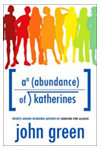
John Green, whose latest book, An Abundance of Katherines, is out this week is stopping by my blog today to be interrogated interviewed by me about lying, on account of how he is somewhat partial to spouting the tall ones.

John’s partialness is by no means unique amongst writers. (Truman Capote, anyone?) In the interview we ponder the connection between the telling of lies and the writing of stories. Do you have to be a good liar to be a good storyteller?

Justine: So, John, were you always a liar?

John: Presumably there was a time before I could talk when I was honest, but I’ve been a liar since at least the age of four, when I convinced my preschool teacher my home had been burglarized, and that the burglars had stolen our television. How about you?

Justine: My memories are hazy, but I do remember trying to convince my younger sister that she was adopted, but even though she was very little at the time she wasn’t buying it—we look a lot like each other.

Do you think that lying and being a writer go together?

John: One time I was on a panel with Markus Zusak, and I made some joke about how when I was a kid I figured that the only things I was good at were sitting and telling lies, so I decided to become a writer. And then someone was blogging about this event later and said something like, “Shame on John Green for claiming that fiction writing is lying.” Shame on me? Am I wrong? Is it NOT lying?

Justine: I think so. The kind of creativity you need to get away with an elaborate lie is very close to what you need for writing fiction. But at the same time if a book’s labelled as being fiction then it’s not actually lying. I can see the point, just not why people get so upset about it.

Why do you think people get hot under the collar about calling fiction writing lying?

John: I have no idea. People can be very persnickety about what writing is, and how to do it, and what writing ought to do.

I will acknowledge that the mere ability to lie well is not the same thing as being able to write good fiction, but they are surely related talents.

Justine: Indeed. I’ve heard people from certain religious backgrounds say they weren’t allowed to read novels on the grounds that they are nothing but a pack of lies. Jane Austen makes reference to the supposed moral laxity of novels in her books. Maybe people are still angry that used to happen?

Or perhaps it’s because some people agree that lying is a terrible sin and believe that liars can’t be trusted. If you lie, they believe, you’ll also cheat and steal and murder.

But I think there’s a big difference between kinds of lies. Lying for gain or to cheat are bad, bad, bad things. But lots of lies are completely necessary and good. If people are coming to kill your family and friends and you know where they are hidden, saying you don’t know is the only honourable, good thing you can do. Telling the truth in that situation would be reprehensible.

Also sometimes telling someone the truth can really, really hurt them. I once told a friend that her boyfriend was cheating on her. She hated me for it and we’re still not friends. I have never done that again. There are some things people don’t need to know or need to find out for themselves.

Is there anyone you would never lie to?

John: The true answer is no, although I’d like to say yes. I very rarely lie to my wife, and never about issues of substance. But I’m with you on the nobility of some lies. I am WILLING to lie to anyone, if the situation arises. I’ve always felt that lying can be perfectly noble: Say, for instance, that Sarah (my wife) got into a duel, and her opponent cut off her nose (as happened to the astronomer Tycho Brahe). Okay, so if a half-conscious and noseless Sarah said to me, “Am I losing a lot of blood?” And I would say, “No,” because I’d want her to stay calm and wait for help to arrive. That’s an ethical lie, I think.

Justine: I’m adding that to my list of folks it’s okay to lie to: semi-conscious, noseless people. I don’t lie to Scott or my parents or sister. Well, not unless I confess instantly in a ha-ha tricked-you way.

Is there anything you would never lie about?

John: Oddly, I don’t think I would ever lie about my lying. Does that make sense? Like, I am perfectly happy to answer these questions honestly. I don’t think we, as liars, should be ashamed. There are shameful lies, certainly, but I don’t think the enterprise is in and of itself bad. Lying is like the Force: It can be used for good or evil.

Justine: Absolutely! I don’t lie for gain. I could never be a confidence trickster because I find parting fools from their money deeply wrong. We’re all of us foolish about something, so we can all be tricked. The conman believes that they’re better than everyone else. They’re grifters; we exist only to be their marks. That’s psycho thinking.

Did you make a distinction between the different kinds of lies you tell? (I have many categories for different kinds of lies.)

John: Oh, yeah. What are your categories?

Justine: Reinventing-Yourself lies, Making-a-Better-Story lies, White lies, Getting-Out-of-Trouble lies, Exaggeration.

When I was young Reinventing-Myself lies were my favourites. I moved around a lot as a kid, so every time I was the new kid in school I had a new opportunity to reinvent myself and my family. A lot of the lies were wish-fulfillment lies. I would say that I was on the verge of selling a novel, that I’d been asked to become a model/actor/singer/trapeze artist/DJ but turned them down because it seemed like too much work. Stuff like that. My parents weren’t too worried about it cause the lies were mostly so outrageous no one believed them for long. (They were a bit miffed though when I said they’d met fighting for the Republicans in the Spanish Civil War on account of they’re not nearly old enough to have done it. Not really born enough, either.)

John: Reinventing-Myself lies were also very popular with me, and I still occasionally find myself telling a Reinventing-Myself lie when I feel nervous or uncomfortable. A few years ago, for instance, I was having dinner with a woman I’d just started dating, and before I could even stop myself, I started talking about the two weeks I’d spent in Uzbekistan just after graduating from college. In fact, I’ve never even been to England, let alone Uzbekistan. To me, the Reinventing Myself lie is the surest sign of adolescence and/or immaturity.

Justine: Also of boredom. Me and my sister being on the run from an evil cult of nuns who killed our family and ate our family cat and now being in witness protection with our fake parents was way more exciting than my actual life. But now I think my actual life does not need to be improved by adding evil nun cults.

I also used to tell a lot of Making-a-Better-Story lies. When retelling a story I smooth things, leave the boring bits out, add more interesting bits in order to make the story more story-like. Real life is irritatingly messy and usually does not translate well into a story unless you bend things.

John: I am also quite fond of the Making-Better-Story lie. I’m sure that all of my stories contain them, although I’ve been telling some of those stories so long I don’t even know what’s false memory and what isn’t. The narrator of The Great Gatsby notwithstanding, very honest people rarely tell good stories, in my experience.

Justine: My next category is White lies. Even though I don’t lie nearly as much now as I did as a kid, I still sometimes tell social lies to people I don’t know that well. “Your dress is beautiful.” “I loved your book.” “Sorry we couldn’t make it to your party—we were both a bit under the weather.” Etc. etc.

John: Yeah. With my closest friends, the white lie is unnecessary, because I can just say something like, “I want to go home now,” and that’s fine. But with acquaintances, the white lie is a great blessing.

Justine: Getting-Out-of-Trouble lies are the kind I always felt the guiltiest about. I usually wound up confessing to my misdeeds later.

John: I rarely tell these anymore, because I’ve become such a boring homebody that on those rare occasions when I get myself into trouble, I sort of enjoy it.

Justine: Me neither. When I was a kid, getting in trouble was the worst thing in the world. I’m completely inured to it now and will own my bad deeds. Mostly because I try hard not to commit any.

Exaggeration’s the last kind of lie on my list. Most of my lies are of the poetic kind, embellishing stuff to make it cooler variety. The ceilings were twenty metres high! The walls painted such an intense gold your eyes watered just looking at it! Though it prolly belongs in the Making-Better-Story category.

John: Yes, I’m also given over to these.

Justine: Do you have any categories of your own?

John: Well, I would add the Compassionate Lie (outlined above, in the example where Sarah gets her nose cut off during a duel). I’m a big fan of the Compassionate Lie, although it can be a bit of a slippery slope. It’s easy to convince yourself you’re telling a Compassionate Lie when you’re really just telling a regular old self-interested lie. Here’s an example: Say I killed your pet llama by accident. Now, I can tell you that your pet llama ran away, or that it went to go live on a farm. And that’s kind of a compassionate lie. But mostly, I just don’t want you to be mad at me about killing your llama.

Justine: Oh, yes. I used to tell people what I thought they wanted to hear when they asked me if they looked okay. But now if there’s something correctably wrong I will tell them: “Your tag’s sticking up.” ‘There’s schmutz on your face.” “Your pimple is glowing red.”

John: I’d also say that for me, Telling-Better-Stories lies and Reinventing-Myself lies are subcategories of Trying-to-Make-People-Like-Me lies. Basically, all of my lies were Trying-to-Make-People-Like-Me lies.

Justine: Once again we are in complete agreement.

Do you lie as much now as when you were kid?

John: Oh God, no. It would be impossible to lie as much now as when I was a kid. When I was younger, I was able to devote all of my resources to lying. Entire days could be spent on the construction and telling of lies. Now I have to, like, do the dishes and go to the grocery store. But also, as I get older, I feel less compelled to lie. Partly, this is because I’m happier. I have friends now who like me, which is most of what I wanted to get out of lying. The Trying-to-Make-People-Like-Me lie just doesn’t appeal to me like it used to. I’ve discovered, belatedly, that pretending to have spent two weeks in Uzbekistan does not actually make people like you.

Justine: Me neither. For much the same reasons. In fact I don’t tell anything other than white lies and exaggerations these days. Of course I’m stuck with the legacy of my lying past. No one in my family believes a word I say. I am the family’s unreliable witness and even though I’m almost entirely lie-free and have been for years—they will always doubt me. That’s my warning to the kids who read this: The tale of the Boy Who Cried Wolf is absolutely true.

Do you have that reputation within your family?

John: To an extent. None of my complaints are ever taken seriously, because they’re counted upon to be exaggerations. But they’ve learned to trust my stories. Or at least they pretend they do.

Justine: Do you think part of why you lie less now is because the lying part of you gets enough exercise from writing novels?

John: That’s a good observation, and I think writing has lessened my desire to lie. I can now get immersed in a fictional world without having to deceive my friends, and you never have to feel guilty about making things up in a novel. When I’m working on a book, during those periods where I’m just working day and night, I get to spin whatever lies I want about those characters. Reinventing-Yourself lies and Exaggerations and Making-a-Better-Story lies and lies that help me get the characters out of trouble. Not all the lies go into the book, of course, but it’s fun regardless.

Justine: Yup. I got a huge kick out of some of the more elaborate stories I used to tell, the friends I invented and their stories. I get to use all those skills when I write novels but this way I don’t get in trouble for it, I don’t lose friends, and I get paid!

What’s the worst trouble you’ve ever gotten into for lying?

John: Well, my fourth grade girlfriend Julie Baskin broke up with me because of my lying, which sucked. But I think the worst consequences for lying are emotional: If you tell the wrong kind of lies, it prevents intimacy; it makes it impossible for you to be a whole person in communion with others; it poisons your relationships. That hasn’t been an issue for me in adulthood, thank God, but it’s something I think liars must always stay mindful of.

Justine: Yes, indeed, the erosion of trust is a biggie. It’s why I don’t lie to the people I care about. Or not about anything important.

Who is your favourite fictional liar? Mine’s Lyra Silvertongue from Phillip Pullman’s His Dark Materials trilogy. She is brave and courageous and true and totally understands the difference between good and bad lies. I adore her.

John: I can see the case for Lyra Silvertongue, but of course I can’t pick her because fantasy isn’t really literature. Oh, God! I’m kidding! Stop hitting me! I have to go with Huck Finn. And then maybe Jay Gatsby, but Huck Finn stands out to me as the best liar, real or fake, in all of history.

Justine: Who is your favourite real person liar?

John: Well, I’m quite fond of you. And Sarah knows how to tell a tale, certainly. Sometimes, I’ll see a flicker in her eyes when one of her stories takes a turn, and I’ll know, but even when you know, it is a sweet pleasure to watch a master work.

Justine: Yes, indeed! Watching Scott telling stories is prolly one of my favourite things in the universe. Even though I’ve heard all his stories a gazillion times he changes them depending on who he’s telling them to and what the context is. I loves it. (And, natch, I too am fond of you.)

Disclaimer: This entire conversation is, itself, a pack of lies.
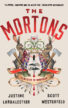
Writer’s looks

For some reason the question of writers’ good looks (or lack thereof) comes up over and over again. Far more often, for instance, than the question of whether a writer’s class or connections are assets. How come?

While a writer’s good looks might be used for marketing, it has very little to do with which books get published. I know lots of drop-dead gorgeous folks whose novels have been rejected all over the shop. And lots of plain ones who are published.1 Very few submissions come with attached author’s photo.

The rule in marketing a book is that they use what will give a book or an author an edge. Sometimes an author’s looks are considered an edge. (Anyone ever seen the full page author photo on the back of Perfect Storm?) And yet I’ve seen plenty of books by absolutely gorgeous writers that don’t even have an author photo. Holly Black is stunning. I don’t think any of her books have her photo on them.

Sure looks makes a difference. But lots of things make a difference to a writer’s career—knowing about publishing before you sell your first book, living in NYC, having a good agent. More important than any of them is being a talented and determined writer.

I’ve seen less-than-gorgeous writers promoted to the skies and have huge best-selling novels. I’ve seen pulchritudinous writers get the same treatment and have their books die. In the end it really is about whether a book connects or not. If not enough people like your book it’s sunk no matter what you look like.

Good looks don’t make any more of a difference in publishing (and prolly a bit less, actually) than they do in the rest of the world. There are lots of important things to angst about as you try to sell your first book, or promote it after publication, or continue an existing career, but how your looks are or aren’t affecting your career is not one of them. Forget about it already!

  1. Of course “ugly” and “beautiful” are not exactly universally agreed upon. My idea of who’s good looking and who’s not may differ from yours more than somewhat. I will never get the appeal of Leonardo diCaprio or Gwyneth Paltrow, for example. []

Bad bad bad writing advice

Holly Black wisely points out that all writing advice can be bad. And Sherwood Smith writes some excellently out-and-out bad writing advice: “Write it in a week and send it instantly because professionals don’t revise. They get it right the first time.”

That’s like the worst advice ever. Can anyone top that?

The worst I can come up with are all variations on Sherwood’s: “Your first drafts are genius. Don’t change a thing!” Though how about, “It’s always best to invent your own system of spelling. It makes you stand out as a writer.”

I can think of lots of post-publication advice that would lead to career suicide:

  • Make sure to email your publicist every day to make helpful suggestions for selling your book.
  • Your editor and copyeditor are always wrong. Feel free to entirely ignore their edits.
  • Call your agent often demanding to know why they haven’t gotten you on Oprah yet.
  • If you are on a panel at a convention make sure you stay on message and steer all conversation back to you and your book. Make sure you bring a great big stack of them to show everyone.
  • If your local bookseller doesn’t have your book. Demand to know why. Do they not know who you are?!

I will stop now. This is making my brain hurt. But feel free to suggest more.

Naming

Someone was telling me recently about a writer who gets astrological charts done for all their characters and picks their names on the basis of that. So they know what year and date their character is born but not what their name is? Huh. Whatever works, I guess.

Me, I just grab the first one that comes to mind. So far this method has worked fine. Reason got her name instantly. It just made sense. Jay-Tee I picked cause it sounded American. I mean who other than Americans call people by their initials? And Tom, well, c’mon, it’s not exactly the world’s most unusual name, is it?

Surnames are marginally trickier. If I can’t think of one I’ll look at my bookshelf and pick whichever surname fits. Sometimes I’ll look through newspapers online and grab ’em that way. I’m dead against having to get out of my chair to find names. (Reason’s family name was stolen from Rita Hayworth.)

I reckon people spend way too much time angsting about names (check out Scott’s latest book for lots of bandname angst). Nine times out of ten whatever name you randomly pick will end up working. This applies to babies, boats and pets as well as characters.

How many times have you thought a band name sounded really stupid? But the more you hear it, the more you get used to it, and the more natural it sounds. Scott always gives the example of the Beatles, which is a pretty dumb name when you think about it. Beetles spelt Beat-les as in musical beat. That’s so cutesie it winds up being completely lame. Or it would except that we’ve all heard it so many times the lameness is now invisible.

So it is with characters’ names. The only important rule (which is frequently ignored) is that if you’re writing a book with lots of names that aren’t going to be familiar to your readers make sure they begin with different letters. Cause you just know that readers are going to think of them as J unpronouncable, K likewise, L even worse and X are-you-insane. If they all begin with J—Jaquanatsuaa, Jatarganta, Juypghert and Jioplikaz, for example—your readers are not only going to be confused, they’ll want to kill you.

How do youse lot pick names for your characters? Or are you lot all as lazy as I am?

Easy writing

A while back Carbonelle argued that writing the kinds of books Meg Cabot writes is easier than writing Scott Westerfeld books. That is, that books set in the “real” world that are more-or-less formulaic are easier to write than ones that require scads of world building. (Carbonelle, please jump in if I’m mangling your argument!)

I disagreed and facetiously said that world building is a piece of piss. And then an annonymous commenter wanted to know if I was serious. And I never got around to answering on account of having to finish my latest book. (So annoying when my job gets in the way of blogging. Grr.)

So now that you’ve all forgotten about it I respond:

Yes and no. On the one hand, I think many people wrongly assume writing formulaic fiction is dead easy. Personally I find it heaps easier to write a world buildery sf or fantasy novel than a Meg Cabot kind of book.

And I know this for a fact. When I was fifteen I heard that someone’s mum’s best friend’s sister had written a Mills & Boon romance in about fifteen minutes and been paid zillions for it. I could do that, I thought. I’d read a couple and not been that impressed. How hard coud it be?

So I wrote off to Mills & Boon for their guidelines and started typing. After a week in which I manage to type a few pages (which mercifully have been destroyed) I gave up. It was too hard. I didn’t understand the genre. Afterall I’d only read a few. I couldn’t do what I’d been so dissmissive of. Writing a romance that works for the very knowledgable romance audience is really hard.

Agents and editors get reams of romances, chick lit, crime, sf, fantasy and other genre mss. across their desks all the time. They pass on the vast majority because it’s really hard to nail (tee hee) even the seemingly simplest formula (girl meets boy–what could be easier?). Some of the most seamlessly entertaining books are the hardest to write. I can’t think of anything I’d find harder than writing a book that is meant to be a comedy. Unintentional humour? Easy. On purpose? Oh oh.

The problem with writing realist books (and I mean that in the broadest sense from most of Meg Cabot through to Alice Munro et al) is that at least some of your audience knows the instant you get it wrong. They’ve been to New York/high school/McDonalds; if you describe it wrong they’ll be closing your book.

When you invent your own world you can’t be faulted that way. You can just make it all up. Do no research at all, not even sticking your head out the window to see if the light really does shine off the street like you just described. You can totally wing it! Easy as pie. (Of course I know heaps of fantasy and sf writers who do all sorts of research. The fools!)

There isn’t a genre or type of writing that’s inherently easy. I can’t write short stories despite endless attempts at the form. I find writing novels much, much, much easier. When I say that to short story writer friends they don’t believe me. And who knows? Maybe it’s not true for them. (Though secretly I think they’re lying.)

As various people have said all over the place and particularly in that comment thread, some books come fast, some books come slow. Some are easy to write, some a nightmare. I doubt that Meg Cabot finds every single one of her books a breeze; I know that Scott doesn’t.

Publishing is not a zero-sum game

Okay, fellow writers, I know you know this, but bugger it, I’ll say it again:

Publishing is not a competitive sport. If another writer is unbelievably successful that does not take away your chance of success. If it has any effect on you at all it’s a positive one. Super sccessful writers create more readers. J. K. Rowling has single-handedly made young adult publishing more profitable and better paying. Every YA writer should fall down on their knees in gratitude. (I have my own J. K. Rowling shrine that I worship at every day. Bless, J. K., bless!)

If we’re defining success as making loads of dosh, then most writers are not super successful, or even mildly successful. I’m certainly not. The majority of published writers cannot make a living from their writing. Does that mean their writing is not as good as those who can? No, it does not. I know fabulous writers who are still unpublished (and, yes, Jeannie, I mean you). Writing good books (however you define “good”) and making money from books are two different things. Sometimes they co-incide—sometimes not.

There are lots of ways to measure success as a writer: good reviews, respect of your peers, winning prizes, or best of all—knowing that you’ve written a book that you’re really proud of. The last one is best of all because all the others will do your head in. What happens if you stop getting good reviews or winning prizes? Does that mean you’re no longer a good writer? That path leads to madness.

In my genre lots of books I don’t like sell better than mine, and lots I adore sell worse. Neither state of things has anything to do with how my books sell. If you start thinking that other books published are stealing sales from your books, and that other writers are “the competition”, you will become bitter and twisted. I’m hear to tell you that bitter & twisted clashes with every single thing you’ve got in your wardrobe.

Trust me on this.

Thus endeth the rant.

To belong or not to belong

I’m a big believer in community. I’m convinced that it’s very very very difficult to produce good art without some kind of a community behind you. I can date the turnaround in my own writing to my first showing it to other writers. Their critiques hurt like hell, but my writing got better in ways it never would have otherwise.

The communities of writers and other publishing folks I’m involved with share a wealth of information with each other. We tell each other about which editors we enjoy working with and why, which houses have the best publicity/sales/marketing departments. Who got paid what by which house. When third person is a better fit than first. What the differences are between writing middle grade and young adult books. What Amazon numbers mean (bugger all). How to survive writing the third book in a trilogy and so on and so forth.

I honestly don’t know how I’d cope in this industry if I didn’t have all my publishing friends to turn to. I’ve also been enjoying passing on what I’ve learned to others via my musings, this blog, at various appearances, and by other means, most enjoyably in person over a yummy meal. Helping other folks is even better than being helped. Who knew?

And yet I’m also extremely reluctant to join organisations.

I’m currently a member of SCBWI because I taught at one of the SCBWI workshops and was comped a year’s membership. I doubt I would have joined otherwise. I’m also a member of ASIF! because censorship makes my blood boil and also it’s not a formal organisation in the way that SCBWI is—it’s more of an activist mailing list based around one particular issue. Mailing lists I can do. I’m also not a member of SFWA which is the premier organisation of science fiction and fantasy professionals.

That’s weird because although I made my fiction debut as a young adult writer, I’ve been a part of the sf and fantasy community for more than fifteen years now, dating back to when I was researching my PhD (which became The Battle of the Sexes in Science Fiction).

I think it might be because I know too much about SFWA. As part of my doctoral and post-doctoral research I read a vast deal of correspondence about SFWA and a great many back issues of their SFWA Forum. The result is that I feel completely burned out by the organisation without ever having been part of it.

This is not to say that SFWA is any more dysfunctional than any other organisation. Show me an organisation whose members are all a hundred per cent gruntled and I’d want to know what drugs they’re on.

Professional organisations have a great deal going for them. The best of them provide vital services to their members like advocacy when professional disasters occur, cheap lawyers, cheap health insurance, and so forth. They’re also a good way to meet your peers, which (see above) is invaluable.

However, you can be part of a community but not of any its professional bodies. There are some who’d say you’re not being a good citizen in doing so, but, well, I seem to disagree. Thing is I’m not entirely sure why.

It may be a touch of the Groucho Marxes (“I refuse to join any club that would have me as a member”), or it could be that I worry about being associated with an organisation that is on the record as supporting causes I don’t support. Or not on the record for supporting causes I do. I guess I would much rather keep my solo voice as part of broader and more disparate communities.

Or maybe it’s because I didn’t enjoy playground politics in high school. Nor did I enjoy the university version—either as a student or as a staff member. It could be that I’m just not comfortable with the politics of any formal organisations. I guess there’s a reason that the happiest I’ve ever been is as a work-at-home freelancer.

Could also be that I’m just lazy.

Or something. Those of you who are members of these kind of organisations—what do you get out of it? How do you cope with the politics?

No Control

A recent post on Miss Snark reveals the horrible truth that often writers have no control over what their books are called. That’s right, folks, your publisher can change the title to something they deem more commercial.

There was much debate over the title of the first book in my trilogy. I’d always imagined Magic or Madness as the series title with the actual books being called Reason and the Two Cities, Reason and Margarita, and Reason defeats the Evil Monster Marauding Zombies from Hell. Marketing intervened and the series title became the title of the first book, leaving me and my editors to come up with new titles for books two and three and thus the whole working title thing of Magic! Magic! Magic! Oi! Oi! Oi!.

In addition to not having final say about the title. Writers also usually have no control over the following:

  • The cover
  • The jacket copy
  • What font it’s typeset in
  • Whether there’s an author photo or not
  • When the book is published
  • What format the book is published in (that’s right, Scott did not decide that the third book of his paperback trilogy, Uglies, should be printed in hardcover)
  • Whether there’s a signing in your town or not (when I do a signing it’s usually because a bookshop has requested that I do one or because my publicist at Penguin has arranged one or because I’ve set it up myself—though I’m getting too jaded to do that anymore)
  • The cost of the book
  • Whether it’s available in your country
  • Whether it’s available as an audio book

Am I missing any? Feel free to add more in the comments.

What writers (mostly) have control over is the words within the covers of the book. (You know, excepting the copyright page etc.) That’s pretty much it.

P.S. I was so cheered up by the good news comments that I’d like to invite you to all to keep sharing your good news. I’m contemplating renaming my blog the Pollyanna blog. Or the Gladblog. The glad game rocks!

P.P.S. Congratulations to all of you for your good days and publishing triumphs and award nominations and absence of cancer and every other thing. So wonderful!

P.P.P.S. And do keep us all posted on the outcomes of all that good news. Orangedragonfly, that means you have to let us know when your husband gets home. (If you’re allowed to, I mean.)

P.P.P.P.S. Sadly Ellen Kushner jumped the gun in the good news comments: Magic’s Child is not yet finished. But as soon as it is I’ll be announcing it right here. (That is when I recover from the over-the-top celebrations!). In the meantime, good luck with your books. May they all be reprinted often and wind up on bestseller lists! May your days be beautiful, your health excellent, and your loved ones close by! (That’s right, I am Pollyanna the Glad Girl. Just got my hair bleached blonde yesterday.)

P.P.P.P.P.S If none of this makes any sense it’s because I’m working too hard and as an Australian I find that I’m deeply allergic to it.

P.P.P.P.P.P.S. Don’t forget to add more stuff writers have no control over to the comments.

P.P.P.P.P.P.P.S. I go sleep now . . .

An experiment

I’ve decided that I will sell my fourth book after I’ve finished writing it, rather than from a partial. I sold the Magic or Madness trilogy from an outline and the first three chapters of the first book. That is, I sold the idea of three books and then had to turn around and write them to pretty tight deadlines. Now I want to try writing one at my own pace and not try to sell it until it’s as good as I can get it.

I’ve done this before. My very first novel was written that way. I had a lot of fun writing it and I’m proud of it, too. But it hasn’t sold. That’s the huge risk, of course. Who’s to say that a novel of mine that hasn’t been sold from a sexy proposal will sell at all?

Having a contract— even though it comes with a big ole scary deadline—is comforting. You have proof that a publisher wants your work. You’re not floating in space hoping that one day you’ll sell a book again. You’re not thinking, I am contractless does that mean I am no longer a professional writer?

There are the economic factors, too. I’m halfway through the first draft of the great Australian feminist YA Elvis monkey-knife fighting mangosteen cricket fairy book. If I sell it from a proposal and the first few chapters now I’ll get money a lot sooner than if I wait until I’ve finished it. Bills do have to be paid . . .

Here’s my question: Do you prefer selling books before they’re finished or from an outline? In an idea world where money wasn’t a question which would you rather do?

And for those non-pros: How do you feel about the books you love being written to deadline? Do you think much about the writerly means of production?

Scott Write Fast

I get asked a lot about how Scott manages to write as fast as he does. I guess people are too frightened to ask him. Or something.

I wonder about how fast Scott writes, too. But then I look at how many books Meg Cabot has out every year (by my count around five) and I wonder how come he writes so slow.

Here’s the background on the nine books he’ll have published from March 2004 to September 2006:

He started the first Midnighters book in early 2002. He’s since written books 2 & 3 of the Midnighters trilogy, So Yesterday, the three Uglies books, Peeps, The Last Days (which is my fave) and is well on his way with the first Leviathan book. That’s nine plus books in four and a bit years. Not quite as fast as the publishing schedule makes it look, but still plenty fast.

For comparison: during that time I’ve written four books—Magic or Madness, Magic Lessons and Magic’s Child (and I’m still rewriting), plus another book that didn’t work out—I’m also halfway through another one, and I’ve edited Daughters of Earth. Many would say that’s a decent output, but in that time Scott’s written five more books than I have. Five! (And, no, I’m not going to figure out how many books Meg Cabot published during that time.)

But he’s also been sick more often than me. Lots more and lots worse (shingles, anyone?). Writing that fast and that diligently—Scott, like Meg Cabot, writes really good books—isn’t sustainable. It broke his brain and his body. He’s on the mend now, and has a much less gruelling schedule ahead: only one book a year.

The problem is that when you write three or more books a year you never have time for anything else. You turn in the draft of one book and immediately have to turn to rewrites on another, then to checking copyedits, or page proofs on yet another. There’s never ever a break and eventually your brain blows up. (I’d love to know how Meg Cabot does it. Maybe she has clones.)

On the other hand, he could be making a living doing—I don’t know—pretty much anything else. Writing, afterall, is (mostly, or at least, sometimes) fun. Not to mention that Scott’s previous gruelling schedule is how come he’s now able to afford to write just one book a year (and under his own name too). Lots of gruel first before you can live a life of non-gruel. (If you’re lucky, that is.)

Writing fast, it turns out, can be amazing for your career. Having all those books out so fast is what made Scott a name in Young Adult lit land so quickly. If you have a bunch of books out every year your name is less likely to disappear off the face of the earth.

It’s why I plan to up my own productivity to two novels a year. You know, if I can actually write that fast and still produce words that hang together okay, which, obviously, remains to be seen. Not many people can. Writing fast isn’t a necessary ingredient for being a good writer. But it can help if you want to make a living as a writer.

Wish me luck!

Ignore your critics

A friend has a new book coming out soon and is dealing with being reviewed for the first time. She’s swinging from high to low and back again and trying to make sense of the contradictory takes on her words. Been there! So here’s my advice (which I wish I’d taken myself): ignore it.

I’ve had people tell me (repeatedly) that the MorM books are way too short, way too long, overwritten, underwritten, pretentious, condescending, annoyingly confusing, deliciously ambigious, beautifully written, badly written. That the Australian slang is confusing and distracting, that the slang is the best thing about the books. That Magic Lessons is crap compared to Magic or Madness, that Magic Lessons is heaps better than MorM. That the Reason/Jay-Tee/Tom bits are boring/the best part of the books. That Reason Cansino is way too sophisticated/too young for a fifteen year old.

What’s a gal sposed to do in the face of all of that?

Me, I’m slowly learning to only pay attention to the stuff that touches on what I was already concerned about. For example, the complaints from readers who bought Magic or Madness not knowing it was the first book of a trilogy and were then pissed when it didn’t resolve satisfactorily for them. Been there and experienced that.

Yup, the signal that MorM was first of a trilogy was very discretely hidden on the hardcover. It bugged the hell out of me. I wanted a big ole number one on the spine and “first book of the Magic or Madness Trilogy” emblazoned on the front cover. I was overruled by my publishers. Apparently when the first book of a trilogy by an unknown comes out with its triloginess prominently proclaimed it doesn’t sell as well as if you hide it. Selling stuff, apparently, is all about tricking people.

I’m determined that if I ever write another trilogy—which I’ve taken a vow not to do (hey, Libba, let’s keep the faith)—it will clearly be marked as such. But, who knows, I’ll probably get overruled by my publishers again. Sigh.

The writer can only control (most of the time) the words between the covers. We rarely control the way the book looks, how it’s marketed (or not), and we have absolutely no control over what people think of it.

Scott gets fan mail all the time saying how wonderful X book is, but that they hated the bit where their favourite character had something bad happen to them. Could he write another book where bad stuff doesn’t happen?

Um, yes, he could, but reading it would bore you into a coma.

Praise is nice, criticism can be helpful, but sometimes the best thing you can do is stop your ears and keep on writing.

Someone hand me the ear plugs!