Oz GLBT YA books (updated)

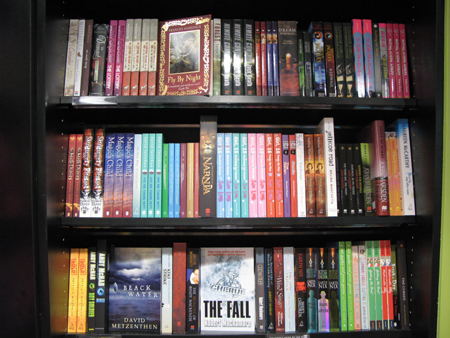
David Levithan’s speech at Reading Matters inspired me to put together a list of Australian gay and lesbian young adult books.

I could not do this on my own. Thank you Lynndy Bennett, Kate Constable, Susannah Chambers, Pamela Freeman, Simmone Howell, Judith Ridge, Penni Russon and Ron Serdiuk for all your help and suggestions.

This list is definitely not complete and is not annotated. It’s just a start. If you can think of any more titles, please let me know! And if you’ve read any of the books on the list and can say a bit more about them that’d be great too.

Lili Wilkinson has said that the Centre for Youth Literature will give the list a permanent home.

So here it is:

    Novels

    Will by Maria Boyd 2006
    Settling Storms by Charlotte Calder 2000
    The Rage of Sheep by Michelle Cooper 2007 (It will be released in August—so soon that I figured no need to stick it in the forthcoming list.)
    The Tiger Project by Susanna van Essen 2003
    A Trick of the Light by Susanna van Essen 2004 (Lili Wilkinson says “two dads”.)
    The Other Madonna by Scot Gardner 2003
    White Ute Dreaming by Scot Gardner 2002
    Square Pegs by Nette Hilton 1991
    Out of the Shadows by Sue Hines 1998 (Lynndy Bennett says, “From memory—it’s years since I read this—it is not the teenage characters but some of the parents who are gay or lesbian.” Update: I’ve now heard from a few people that there are gay teenagers as well.)
    A Charm of Powerful Trouble by Joanne Horniman 2002
    Obsession by Julia Lawrinson 2001
    Suburban Freak Show by Julia Lawrinson 2006
    Tumble Turn by Doug Macleod 2003 (Lynndy says “there is the assumption the protagonist is gay”.)
    Hot Hits: The Remix by Bernie Monagle 2003
    Thriller and Me by Merrilee Moss 1994 (Lynndy says, “From memory—it’s years since I read the book–it is not the teenage characters but some of the parents who are gay or lesbian.)
    Mr Enigmatic by Jenny Pausacker 1995
    What are ya? by Jenny Pausacker 1987
    Sky Legs by Irini Savvides 2003
    A Candle for St Antony by Eleanor Spence 1977 (Penni Russon says “a friend said it was a memorable book about an intimate relationship between two boys, though I think the homosexuality is very understated. It’s more about love than sex, I think the boys actually tell each other that they love each other and then kind of have to deal with the intensity of their emotions in the face of their peer groups.”)
    Peter by Kate Walker 1991
    Camphor Laurel by Sarah Walker 1999
    The Year of Freaking Out 1997 by Sarah Walker
    Loose Lips by Chris Wheat 1998

    Forthcoming novels
    Truly Mackenzie by Kate Constable 2008

    Collections
    Clouded Edges by Nette Hilton 1997

    Anthologies

    Ready or Not: Stories of YA Sexuality edited by Mark MacLeod 1996
    Hide and Seek edited by Jenny Pausacker 1996

    Memoir

    Holding the Man by Tim Conigrave 1995 (Penni Russon says “it wasn’t published as YA, it’s also not strictly fiction I think. But it is about two young men (a lot of it is about the relationship they have at school) and it’s such a beautiful beautiful weepy wonderful book.”)

    Inside Out: Australian Gay, Lesbian, Bisexual and Transgendered People Write About Their Lives edited by Erin Shale 1999
Memory

I have a terrible memory. Especially for people. My memory for names is non-existent unless I’ve met that person many times. My face memory is a little better, but I struggle to place faces. If I see someone I’ve met several times at Young Adult Lit events in a totally different context I often cannot figure out who they are. But usuallly I don’t even recognise the face of the person beaming at me and saying, “Hi, Justine.”

Once the person I’m not remembering starts to recount how we met and describes the conversation I start to figure out who they are. But sometimes even that doesn’t help.

I know I am not alone in this. Almost every writer I know complains about it because we’re often in situations where we’re meeting someone who remembers us because we met at an event, which is a rarity for them, but common for us.

It’s not just a writer problem. Any profession where you’re likely to meet lots of people: retail, teaching, performing etc etc is going to run up against this problem.

I was horrible at remembering my students when I was an academic. To be honest I’ve always been bad at remembering stuff. I sucked at Memory games as a child. Still do.

How do politicians cope? I know Bill Clinton is famous for remembering every single person he’s ever met. But not all politicians are like that. How do they deal with so many different faces?

It could be worse. I know someone who has a condition which means they cannot remember faces. All faces look the same to them. Without name tags or someone prompting them they are lost. They are constantly giving offence.

So, I’m not that bad. And I’m better at faces than Scott is. Though sadly he’s about the same as me on names.

I have gotten better at simply asking the person to tell me how I know them. But often I’m too embarrassed. It feels rude.

Having a bad memory feels rude.

I really hate not remembering people. I know that I’m a wee bit miffed when people don’t remember me (which happens often) and yet here I am constantly doing it to everyone else. So much of the time I act like I know the person and keep the conversation going in the hopes that I can figure it out. Fortunately I usually can. Though there are the horrible moments when I decide they’re someone they’re not. Erk.

Seems to me that there’s only so much space in most (non-Bill Clinton) people’s heads for remembering. So the average person can at most remember, say, a thousand people. Once you meet more than that your brain starts deleting, or pushing them to a less easily accessed part of the hard drive. And creating trouble for you. Stupid brain.

I’m sure there are all these tricks for getting around the limited hard drive space. Hell, I know there are. Friends have taught them to me. But I keep forgetting to try them out.

How do you lot cope?

Self-indulgent autobiographies

Okay, the next person I hear accusing an autobiography or memoir writer of being self-indulgent gets a smack in the head, or—because violence is wrong—a pointed glare.

See the “auto” in front of “biography”? That means it’s about the person who wrote it. Very tricky to write one of those and not, you know, talk about yourself.

Third book blues

I have on several occasions mentioned how I hard I found writing the third book of the Magic or Madness trilogy and how it was way way way harder than writing the other two books. I’ve also seen others struggle with the third book of a trilogy so I don’t think it’s just me what finds them super tricky.

Recently Cedar Librarian asked what was so difficult about writing the third book:

Okay, now I’m curious to know why the third one is always the hardest to write. I’d always thought it would be the easiest, because haven’t books one and two been pointing to book three all this time?

I didn’t answer then, but I will now.

When I first wrote the proposal of the trilogy I had a very clear idea of how it would end. However as I wrote books one and two they got further and further away from the proposal. When I got close to the end of the third book my original ending no longer worked.

But I wrote it anyway.

This was just sheer cussedness on my part. I had always had that ending in mind and by Thor’s mighty hammer I was going to have that ending!

It made no sense. I rewrote the ending at least six times. Probably more. And each time I changed the ending I had to go back and rewrite the rest of the book to match. More than six times!

I can’t imagine all writers are as stupidly stubborn as I am. But even if I hadn’t insisted on writing that wrong ending it still would have been a struggle. Cedar Librarian is right, books one and two do point the way. But they don’t only point in one direction, they point to lots of different ways to wrap up the trilogy. For two books you’ve been throwing a tonne of balls up in the air. In book three you have to some how catch them all and then arrange them in a way that makes sense.

That is brain-breakingly hard.

Also if the books in your trilogy are getting published as you go then you can’t go back and change things in books one or two to fit the changing storylines. You’ve created your bed and you have to bloody well lie in it.

As I wrote the third book there were many many things I wanted to add or change in the second book. But I couldn’t. It was finished and on shelves. It drove me mad!

If I ever write another trilogy (and I have taken a vow that I won’t) I’d like to write all three books first and only then sell them. I wonder if anyone’s ever done that? Very tricky. Cause it means writing three whole books with no money coming in. You’d have to write very quickly, or be working on other books at the same time, or be independently wealthy.

I’d love to hear from other trilogy writers. As I’ve only written one I’m hardly an expert. And I clearly made a stack of beginner errors.

Do any of you find the third book of a trilogy the hardest?

Do you have any tricks to avoid such trouble?

Do you prefer writing trilogies or series to writing standalones? (Diana just wrote very thoughtfully about series writing on her agent’s blog. I recommend it.)

I’ll admit I’m tempted by the idea of a series. But only one in which every book stands alone. There are continuing characters and the same world, but each book tells a complete story. I think it was the three-book arcs that did my head in.

I hope I’ve answered your question, Cedar.

Beauty

In the Romance discussion Sherwood Smith writes:

I absolutely loathe romances in which all one or the other brings to the relationship is beauty, and the reader is clearly expected to think that sufficient unto itself. Feh.

Oh, yes! Oh, yes, indeed!

I also hate the assumption that beauty=goodness, that beauty is something that everyone agrees about, and that beauty is something everyone aspires to.

Don’t get me wrong, finding someone aesthetically pleasing is kind of important if a romance is to happen. But I have never gone out with anyone (for more than a sec) who didn’t have something else going on as well. And, frankly, smarts and humour are vastly more important to me than anything else.

For a romance to work you have to engage with both of the lovers. If one of them only has beauty then that’s the end of my interest because the only people I’ve ever met who went out with people solely because of their hotness have been shallow and gross and not folks I want to spend any time with. Certainly not a whole novel’s worth of time. Erk.

I’m also irritated by books where everyone agrees that the hero or heroine or both is hot. I’ve never known anyone who was a universally acclaimed beauty. There’s always someone who looks at the so-called beauty and shrugs. For example, I don’t get the appeal of Gwyneth Paltrow, Paris Hilton, Matt Damon, or Leonardo diCaprio. They all look plain and boring to me. I also find it hard to see beauty in stick-thin men or women. I look at them and think, “Oh, honey. I know where we can get you some really good pasta followed by olive oil ice cream.”

So when in a book everyone is falling over themselves about the beauty of one character I don’t believe it. I’ve never seen that kind of over the top response to a person’s looks.1 Not unless they’ve swallowed a love potion of something. I know it’s a cliche but beauty really is in the eye of the beholder.

One of the many things I adore about Pride and Prejudice is that not everyone agrees that Elizabeth is beautiful or Darcy handsome. They don’t even think it of each other on first meeting. Their attraction slowly grows. And millions of readers over the last almost two hundred years have totally bought it.

  1. The only times I’ve seen everyone stop and stare is when a person is Bill Clinton or Halle Berry. Fame is the real head turner. []

I don’t normally do these

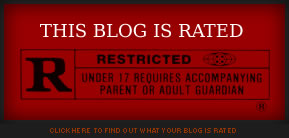
But how could I resist finding out what the American movie rating for my blog is?

Online Dating

Thanks, Gwenda, for allowing me to find out that my blog is evil.

Apparently my blog is R rated on account of the following words:

* hell (5x)
* pain (3x)
* knife (2x)
* bitches (1x)

So much for sweetness and light, eh?

Romantic conclusions

Judging from your comments here and those over at Cassie Clare’s lj the following are what you look for in a romance:

  • tension
  • conflict
  • verisimilitude
  • external obstacles
  • geek love
  • banter
  • painful misunderstandings
  • Gender-bending mistaken identity
  • super competence
  • baggage
  • equal partners
  • witty banter
  • wish fulfillment
  • restraint
  • chemistry
  • little things
  • vulnerability
  • choosing happiness
  • Character development
  • lots of witty banter
  • no internal thoughts
  • verbal sex
  • brooding
  • unrequited love
  • undying love
  • enemies in love
  • slow, lengthy build ups
  • humour
  • context
  • best friends falling for each other
  • lots and lots of witty banter

i just love this list! Makes me so happy. I agree with almost everything on it (especially gender-bending mistaken identity These Old Shades I go weak!). Thanks, everyone. Your comments were witty, thought provoking and wonderful.

So why was I asking?

Because I’ve never written a romance.

I’ve never started a book and known that one of the major plot arcs was going to be about people falling in love. But since so many of my favourite books are that way (Pride and Prejudice, too many Heyers and Kinsales to name, The Mountain is Young, Whalen Turner’s Attolia trilogy etc etc) I thought it might be fun to try my hand at it. But I soon realised that I’m really not sure how to do it on purpose. It also rapidly became clear that it’s much much much harder than it looks.

Also of that list above there are two that don’t work for me:

  • Brooding

and

  • wish fulfillment

Don’t get me wrong I was once very much into them. I loved Heathcliff! Bad boy love of any kind! But the Angel/’Buffy romance wound up just annoying me. Angel’s broodingness caused my eyes to roll. He was a WW. A whingeing wanker. Blerk.

I also used to adore heaps of books that were basically that ultimate wish fulfillment: the Mary Sue. But they don’t work for me anymore. Could be that I’m too grizzled and cynical to believe it now. The world is way more complicated than that and often when people get what they want it doesn’t make them happy.

Yet I know wish fulfillment books and brooding heroes work very powerfully for any number of readers.

So I’m struggling with the whole writing about people falling in love thing and was looking for some advice. And what you’ve given me is lots of ideas and a long list of books to check out as well as to reread (like The Master and Margarita which strangely I never thought of as a romance. When I think of that book I think of cats walking upright smoking cigars and demons floating in and out of windows. How dumb am I?) It was wonderful to see how many of your favourites are also my favourites.

It’s obvious, isn’t it? The way to learn how to do any new kind of writing is to figure out how other folks do it. Der!

So, Julia Quinn, you reckon? Or Jennifer Weiner? Or Jo Leigh? Which is the best of their books?

And again thank you so much, everyone, for all your responses. Vastly entertaining and useful. And extra thanks to Diana and Cassie (who are both pretty bloody good at the romance thing) for sending so many smart folk my way. I owe youse all one.

The F-bomb

USians sometimes talk about the “f-bomb”. A euphemism I heard for the very first time last year from a librarian whose full time job is to fight censorship. We were on a panel (at WisCon) discussing book banning and censorship in front of an audience of adults. I was the moderator and in my introduction I used quite a few of the words that are likely to cause a book aimed at teenagers to run into trouble. It didn’t occur to me not to given that the panel started at 10PM and was in front of an audience of adults.

For less than a second all the air went out of the room.

And then the librarian laughed and said as how she had been tiptoeing around those words for so long that she could no longer say them out loud. Everyone else laughed too.

You’ll notice I’m not using any of them in this post either. That’s because I happen to know that some of the readers of this blog would be offended and I do not wish to offend them.

Chris Crutcher in his keynote speech at the Humble Teen Literature Festival last February eloquently defended his use of “cuss words” (tee hee! Sorry, it just makes me giggle) in his books without using any, but making it clear which ones he was talking about. It made me wonder what the difference is between making it clear what the word you’re not saying is and simply saying that word. It’s obviously a huge one because I’m pretty certain that if Chris Crutcher deployed any of those words in his speeches he would not get as many speaking gigs as he gets and he would lessen his power in the fight against censorship.

Ironic, innit?

I happen to like swearing. Some of my favourite words are offensive to many people. And so are those of Chris Crutcher and Holly Black. The enjoyment comes not from the shock value. Frankly, none of my friends or family are offended by swearing. The pleasure is from—to borrow a term from the land of wine and food lovers—the mouth feel.

I love the way many rude words feel in my mouth. I love their explosiveness. I love to use them as punctuation, as intensifiers, as poetry, as song.

I love getting creative with my swearing. I love using old standards. I love the age of these words. The majority of the rudest words in English go back to the beginnings of the language. I love that feeling of longevity. Words like these have been exploding out of people’s mouths for centuries.

I would love to write a book for teens that used the kind of language that I hear them use every day. That I use every day. I would love to capture those rhythms and cadences. But such a book would probably not get published.

I’d also love to write a book that did everything I want it to: was exciting, dramatic, moving, fun, and populated with recognisably teen characters but also managed to not offend anyone. What would such a book look like?

There would be no swear words in it. Everyone would speak uncolloquially and without grammatical errors. Characters would only fall in love with people of the opposite sex and same race and religion, yet they would not have sex. They would not smoke or lie or cheat.

But I know people who are offended by books that create worlds in which the ten per cent of the population that isn’t heterosexual do not exist.

I’m not sure a book that offends no one is possible. After all, I’m deeply offended by unicorns and by books in which the heroine keeps falling over and has to be rescued by the big handsome hero. That’s right, passive heroines drive me spare. But lots of other people just gobble them up.

I do not wish to have those books banned. I just wish people wouldn’t gobble them up. I also wish never to be subjected to the foul smells of coffee, petrol and perfume ever again, but I don’t fancy my chances.

I don’t want to offend anyone but as long as I’m writing books I don’t see how I can avoid it.

Romance (updated)

What’s your favourite romance? I mean that in the broadest possible sense. It doesn’t have to have been published as a romance. (I think most books are romances in some way or other.) What is your favourite book where a love relationship is a big part of the story?

And what was it about the way that relationship was written that so appealed to you?

What writers do you think do love stories particularly well?

Feel free to give me examples from Young Adult, Adult, mystery, romance, science fiction, mainstream, or whatever. Don’t care. Oh, and don’t forget about manga and graphic novels. I’ve been reading Emma by Kaoru Mori and it’s currently one of my favourite romances of all time. Because of the subtlety of the writing and the interplay between it and the images. The tension just sizzles from panel to panel.

I look forward to your thoughtful long answers! Which is my subtle way of saying I don’t want just titles. I want to know what it was about the romance that worked for you.

Oh, if you can do that without too much spoilerage I’d be very grateful. Unless you’re talking about a really famous book like Pride & Prejudice or Gone with the Wind or something. Then it’s okay to talk about how Darcy gets left at the altar as Elizabeth rides off into the sunset with Charlotte. Or was that Sense & Sensibility? I’m always mixing these things up.

Wow, I am being demand-ery today. Tell me where to buy precious things! Answer my questions! Peel me a grape! French me a fry!

Update: Karmela Johnson in the comments reveals what doesn’t work for her in a romance. Most useful and fascinating. She’s right, it’s just as revealing as what you do like. So, please, feel free to tell me the don’ts as well as the dos.

And thanks so much for all the comments. Fabulous!

Quessies for New Yorkers

Anyone know where I can buy preserved lemons (Morrocan style)? (Yes, I know I can get them online, but I like to shop in real life with actual people. I also know I could make ’em but I ain’t in the mood for sterilising jars.)

I’m also looking for Thai herbs like pak chii farang and pandanus leaf. And, yes, I’ve tried Chinatown. Couldn’t see ’em anywhere and no one knew what I was talking about.

And how about plain old chervil? (The places round here haven’t even heard of chervil. Is there some strange USian word for chervil I don’t know about? I googled and came up with chervil being chervil. So how come no one knows what it is?)

I’m in the East Village and am hoping not to have to travel too far to get these essentials.

In Sydney these are readily available so I’m cranky with NYC right now. I am hoping that they’re easy to find here too and it’s just that I don’t know where to find them. Otherwise I will start kicking NYC. Also pouting. Lots of pouting.

Today’s interviews

It’s a heady batch today. Don’t miss Ysabeau Wilce over at Gwenda’s. Or Cecil at A Chair, A Fireplace and a Tea Cozy. And then there’s Bennett Madison and Holly Black. Not to mention another one with me. This time at HipWriterMama. Oh hell, you should read them all!

Congratulations, Colleen, for organising the best blog tour ever. The interviews were wonderful and inspiring. I feel all giddy from keeping up with it all week. There were a few blogs in there I’d never read before. I’ll be keeping up with them from now on. Thank you, Colleen!

Aussies bash Aussies

The following is just me thinking out loud. I’d really love to hear from people who actually know about this stuff.

A while ago I read a piece by Susan Wyndham about Oz writers getting much better reviews in the US of A then in Australia. I was hoping for lots of examples but Wyndham only talks about Richard Flanagan’s latest book. Not that that wasn’t interesting, but I’d love too see if there’s any substance to the impression and if there is then is it a new phenomenon or an old one?

Within the world of YA I can only think of a few examples of Oz books being bigger in the US of A then at home. The Book Thief is the main one that springs to mind. It’s insanely huge in America and not especially big back home. The reviews in the US were over the top; I don’t know what they were like in Australia. Quite good I suspect but I doubt they’re as over the top as the US ones. Most Oz reviews of anything are less fulsome than US ones.

Writers like Ursula Dubosarsky, Sonya Hartnett and Jaclyn Moriarty, for example, are bigger at home than in the States, which is a shame on account of they’re all BRILLIANT. (Go read!) And then there’s Margo Lanagan who’s been pulling down as many prizes and accolades at home as she does in the US of A.

But YA is another world from mainstream literature. In Australia it barely gets reviewed at all whereas in the US there are gazillions of important review outlets: Publishers Weekly, Kirkus, Booklist, School Library Journal, Horn Book Review, BCCB (Bulletin of the Center for Children’s Books), not to mention all the local newspapers and journals that review it. I’ve had reviews in The Washington Post, Wisconsin State Journal, Des Moines Register, and The Eugene Weekly. We’re a country of 22 million; they’re one of 300 million.

In Australia reviews are pretty much irrelevant to a YA book’s success. Most of the big sellers have had very few reviews. It’s pretty much all word of mouth. For the grown up books reviews seem to be WAY more important, which leads me back to Wyndham’s piece and the comments it inspired. Is the harshness of some Oz reviews because their eyes are not dimmed by a romantic view of Australians and Australia? I’ve definitely seen strong responses to my work over there stem largely from my perceived exoticness. A response that would never fly here at home. I’ve been told many times by Yankees that they picked up my book because I’m Australian.

And then Sonya Hartnett in her interview earlier this week was talking about how difficult it is for her to be taken seriously at home because she doesn’t write adult fiction. That attitude doesn’t seem as prevalent in the US. But then I haven’t really come across it at home either. But I’m very new to this game and I’m not very well known in Australia.

Hmmm. Like, I said I’m not sure where I’m going with this. Just thinking out loud.

Does anyone else have some thoughts?

My people

So I just noticed that of the 25 authors being interviewed this week as part of the summer blog tour only 3 are Australian (me, Sonya Hartnett and Shaun Tan).

Excuse me? That’s only 12%. It’s an outrage, I tell you!

On behalf of my compatriots I am now sulking until I get a firm promise of fair representation of Aussies next year. I reckon 50% would do it . . .

And there are many more interviews today, including this one with Cecil Castellucci and, um, one with me. (Eek! Enough already!)

Comment error nuked

Just so as you know: that erky error you were getting when you tried to make a comment? It wasn’t just you. Twas everyone who attempted to comment here in the last couple of days. But now it is fixed.

Thank you so much, Malcolm Tredinnick! You are my new hero. Without you and Chris McLaren I would be carving my thoughts on lumps of coal and mailing them to people.

David Levithan: Vampire Slayer

The wonderful speech that David Levithan gave at Reading Matters is now available as a podcast. You all should listen to this passionate, galvanising call to arms that left most everyone wanting to go out and slay vampires right that very minute. Or, you know, get the books that kids need into their hands.

I’m still mulling over my response to David’s call to arms. On the one hand, I think he’s totally right. On the other, it’s so annoying to have a foreignor come in, spend a few minutes in the country, and then tell us Aussies what to do! We hates it, we do. Especially when they’re right . . .

Beginning Writers

John Scalzi told teenagers that their writing sucks. A few (but by no means all) were offended. Mr Scalzi has now responded in detail to teens who do not believe that their writing sucks.

I got a similar response from a small number of teens to a piece I wrote called “Too Young to Publish“. Those offended seemed to think that I wrote the piece to mock aspiring teenage writers. Not true!

Neither Scalzi nor I have any interest in stopping teenagers from writing. Au contraire. We both wrote then and got a hell of a lot out of it, including reasonably successful careers now. I wrote the piece in the spirit of passing good advice along. (As well as to mock the younger me.) When I was a beginning writer lots of people went out of their way to help and encourage me.

Still, were I to write that piece now I would call it “Too Early to Publish” rather than “Too Young”, because the crux of the matter is not age but experience.

I started writing stories very young, but I didn’t start writing seriously until I was 20. By seriously I mean writing regularly with the aim of publishing short stories and novels with a reputable publisher. When I first tried to get published in adult markets I was fifteen.

My work was rejected. This made me sulk (for ages) and then (eventually) write something new. I did not sit down and try to figure out why my stories were being rejected. I didn’t try to improve my work because I didn’t know how. I didn’t know how because I didn’t think my writing needed to be improved. Back then I believed the problem was not with my work, but with the foolish blind mean editors who were rejecting it.

Which is why, as Mr Scalzi would say, my writing sucked.

I have come across writers in their twenties, thirties, forties, fifties, and sixties who have a similar attitude to their writing. They think it’s wonderful and when told it’s not, even if they’re shown ways to improve it, they are bewildered, hurt or sometimes even angry.

I once critiqued a novel by a long-way-past-teenage acquaintance. I spent a long time on it because the novel showed a vast amount of potential. The writer had bucketloads of talent. But they had been in their novel for so long, and knew the characters and world so well, they’d forgotten to include vital pieces of information, leaving the reader at first intrigued, then bewildered, and ultimately frustrated and annoyed.

It was like reading a novel in thousands of haiku. My edits were pointers to where the confusion lay and to where things could be teased out, and expanded.1 They were really good edits! (Yeah, yeah, self praise is no praise. Whatever.)

The writer, black affronted, yelled at me. Then sent me dozens of emails refuting Every. Single. Point. It was astonishing. I found out later that others who’d helped had met with the same response. This writer would not make a single change. And years later they still won’t.

So despite all that talent—and they were positively corruscating with it—and many completed novels, the writer has not found a publisher. And if they ever do I can’t imagine any editor wanting to work with them more than once.

Technically that writer was not a beginner—they’d been writing for years—and yet they were. Because they weren’t learning. Their writing wasn’t getting any better and they weren’t getting any closer to being published.

I said I became serious about my writing when I was twenty. I did. But that seriousness manifested itself in volume. And it’s true the more I wrote the better I got, but only very very slowly. I didn’t make my next big leap forward until I learned to rewrite. That thing about which most writers bitch incessantly.

Back in my twenties I thought I had mastered rewriting. But what I was really doing was shifting deck chairs on the Titanic. I’d delete a bit, add a bit, push a few words around, polish bits. To say my “rewrites” were merely cosmetic would be too kind. Make up can totally change the way a person looks; I wasn’t changing nothing.

I’m still learning how to rewrite. How to go in and tear things apart and then rebuild from the ground up. It’s dirty, effortful, messy, time consuming work. What I used to call rewriting I now call a quick once over of the final draft.

I think of myself as a beginning writer, but I’m probably more like a journeyman because I actually have some idea of what it is that I don’t know and how very vast that is. Like commas! Stupid bloody commas.

Many beginning writers are clueless about the depths of their writing ignorance. And the beginningest of them squall and rage when it’s pointed out to them. But that has nothing to do with how old they are. I know a few teenage (or just post-teenage) writers who are well into their journeyman writing years. And I’ve come across all too many older writers who are no where near them.

Too many people try to rush their babies into print before they’ve learned how to tell a story, before they’ve learned how to structure a sentence, or even a clause, or, Elvis help us all, how to pick the words they want (I do not think that word means what you think it means).

Whether you’re sixteen or sixty, if you want to be published then you have to learn how to write.

  1. This is really unusual for a beginner novelist, by the way. Normally they err on the side of too much. I certainly did. []

Interviews

My first interview for Colleen Mondor’s summer blog tour went up this morning. Twas conducted by the lovely Liz B of A Chair, A Fireplace & A Tea Cozy.

Bored with reading about me? (Elvis knows, I am!) Then check out all these other interviews with folks like Gene Yang who won the Printz for American Born Chinese.

This whole week will be awash with interviewy goodness.

PS This is the post I was trying to put up when everything went down (again) this morning. It’s post number? 666.

isp woes

Yes, my site has been down on and off since Friday. Ditto my email. Yes, it has driven me insane.

My apologies to anyone who’s been sending me urgent emails. I now have close to a thousand unread emails waiting for me.

Brave new world of faster and better technology, eh?

Bah, humbug.

Next week

Next week the denizens of blogland what care about kids and YA literature will be interviewing many amazing writers such as Sonya Hartnett and Holly Black and Ysabeau Wilce (and, um, me). Check out the full schedule of interviews. If the smart questions I was asked are any guide I reckon they’ll be corkers.

Next week is also the annual summer American Library Association conference. I sadly will not be attending. Waaah! I went to the one in New Orleans last year (or was it the year before?) and it was just incredible. I had such a wonderful time I’d even contemplate going to the midwinter ALA conference. And youse lot know how I feel about winter.

To make me feel like I’m not entirely missing out I have a question for librarians and non-librarians alike.

For the librarians: What do you love most about your job?

For non-librarians: What do you love most about librarians and libraries?

I am not a zombie

Unlike Mr Scalzi and a scary number of others, I am not a zombie. The flesh is still pink and I’m craving miso soup, not brains. (At least not unless they’re lamb’s brains lightly sauteed with lots of garlic.)

I suspect that the apocalypse has not hit New York City yet. Figures that it would ravage the midwest first.

We have a reinforced steel door and enough food to last . . . Hang on a second.

Oh. Okay, enough food to last a few hours. But there’s lots of booze. So I’m good.

And, frankly, I can think of no better way to spend the apocalypse than holed up with me old man and two cases of really good wine.

Here comes Scott to open the first bottle.

Scott? Scott! Oh my Go—

Starting out

Diana Peterfreund must have a looming deadline or something because she’s written two wonderfully helpful posts for writers who are brand new to the publishing industry. They include a glossary explaining what exactly, for instance, an agent does. Check ’em out!

One of the things she glancingly touches on is the idea that the already published are actively resentful of up-and-coming writers and go out of our way to lessen their chances. If that’s true why then do so many authors’ spend huge chunks of time offering advice and help the way Diana is right now? (I mean other than procrastination reasons.)

Publishing is very competitive. That’s true. Most professions are. But not in the way that most people think. One book being hugely successful can increase the chances of other books. J. K. Rowling’s Harry Potter books created a boom in children’s and YA publishing. Garth Nix says that before Rowling he was happily paddling along and then he got caught up in a tidal wave. He’s not the only one. I don’t know a single YA or children’s author who isn’t profoundly grateful to Rowling. She made our careers.

If a person really likes a particular book they don’t (usually) just read that one book over and over and over again; they try to find other books they like as much. Many kids who loved Harry Potter have gone onto read Nix and Diana Wynne-Jones and Eoin Colfer and Jonathan Stroud and so on. It’s not the end of the road; it’s the beginning.

Reading Dorothy Dunnett led me to Geraldine McCaughrean’s historicals and so on. Every time I hear there’s a new historical that’s approaching the genius of Dunnett I check it out as fast as poss. Jane Austen led me to Georgette Heyer. You develop a particular kind of reading thirst then you have to find the books to quench it.

Time

Time. Time is a peculiar item.

So said Benny (played by Tom Waits) in Rumble Fish. A movie I watched obsessively when it first came out. Nine or ten times in its first week of release (which was considerably later than its US release). But I haven’t seen it once since. So I may have that quote arse backwards. Fact remains, Time is weird.

Some of your wonderful responses to my last post mentioned time management and the notion that you should have an estimate of how long a particular task is going to take you. Which is a brilliant idea. In theory.

When it comes to writing I have no idea how long it’s going to take me to write or rewrite anything.

I have written a first draft in six weeks.

I have written a first draft in eleven years.

It took me four months to rewrite Magic or Madness.

It took me eight months to rewrite Magic’s Child.

Sometimes it takes me less than an hour to write a thousand words. Other times it takes me many days.

Some writing days run smooth and fast. Some run ragged and torpid. I can be writing with rhythm for weeks at a time, clocking in between 1,000 and 3,000 a day. No worries. And then it breaks down and I can’t write more than one hundred. Or ten.

Maybe at some time in the distant future when I’ve been a professional writer for a dozen or more years (fingers crossed!) I’ll have a better sense of what I’m capable of. Right now I’ve only been doing this for (barely) four years. I feel like I’m still serving my apprenticeship. There’s so much I don’t know about my profession. Including just how much and how fast I’m able to write.

I know I can write a book in a year because I’ve done it five times. But I don’t know if that’s going to be true of every book I write. It’s part of what makes contracts for unwritten books so scary.

Am I the only one who’s this out of touch with their writing abilities?

Multitasking

I hate that word. Multitasking. So very blerky. I prolly feel that way because I’m really crap at it. Really crap.

Like this weekend I’m trying to work on two different essays, the lodger novel, and also on a short story. Not to mention all the admin (correspondence, shopping, cooking, cleaning, organising, blah blah blah).

I’m trying to get as much stuff out of the way before I get The Ultimate Fairy ed letter, which will come in the next week or so. That way I’ll have oodles of time (due date’s the middle of September) for the rewrite. I want to make it shiny shiny shiny!

Most especially I want to have a solid chunk of the new novel so that coming back to it won’t break my brain. I don’t know about other writers but I much prefer to write one complete draft of a novel before beginning the next. I hate leaving things unfinished. Not to mention that it’s really hard to keep two big novel worlds in your head at the same time. It is for me anyways.

Right now I’m nowhere near a complete draft of the Lodger (hmmm, the working title needs work, doesn’t it?) so that when I return it’ll only to take a few days (if I’m lucky) to figure out what I was thinking way back then and who the hell all the characters are. If I’ve barely got a few thousand words then there’s not a lot for me to get back into.

I cannot write more than one novel at the same time.

I’m discovering that I can’t write a short story and a novel at the same time. I can barely work on a short story and figure out what to make for dinner. The best writing multi-tasking I can manage is one essay and one novel. On account of essays are not much like stories or novels thus they require different parts of the brain. (It’s like your dessert stomach being different from the rest of your stomach.) But two essays at once? Too hard.

My other multi-tasking impairments are laziness and being very easily distractable.

Thus this weekend I’ve managed to partly re-write a (very short) essay, write half of a new (and equally short) one, make dinner, re-organise my sock drawer (truly—it was a mess!), blog three times (this will be the third), take a stab at catching up on email (then stopped after a while depressed at the impossibility of ever doing so) and update my website (a tiny bit). I also opened the short story and Lodger documents and perused them. No new words were added to either.

But I’ve read many books, much manga, watched several episodes of The Wire and a fair few articles on and off line. (None of them related to either of the essays I’m writing.)

I feel discombobulated and disjointed and feel that I’ve lost my way.

I am now closing all documents other than the essay due Monday. I am even turning the intramanets off. When I have finished and sent off the essay—and only then—I will turn to the next pressing document. I will then work on nothing but it for a bit before turning to the next one. Otherwise nothing will get done.

So successful multitaskers do you have any tips for me? I have no children, no day job, no excuses for being this crap. I know people with children and day jobs and many other responsibilities who are vastly more productive (to the tune of two or more books a year) than I am. How do they do it? Help!

airport bookshop happiness (updated)

On our way to Adelaide way back when, I checked out the bookshop at the Qantas domestic terminal in Sydney.

bookalicious!

Lo and behold, there were multiple copies of Magic’s Child. Woo hoo! I’ve never seen one of my books in an airport bookshop before. But even better there were books by Maureen Johnson and David Levithan and Garth Nix!!! All friends of mine.

And now looking at the photo I see there are books by Jack Heath (who I met at Reading Matters in Melbourne) and Melina Marchetta (who we house swapped with) and Sonya Hartnett (who I briefly met at Reading Matters). So not only is one of my books in an actual airport bookshop, it’s there with books by people I know and adore who are amazing writers. Woo hoo!!!

Yes, it is very sad what gets writers excited.

Update: Wow. That was quick. Someone just emailed to say they can’t tell which book is which.

Here’s a closer look:

closer

From right to left left to right. Sonya Hartnett’s Forest, Jack Heath’s Remote Control, and Maureen Johnson’s 13 Little Blue Envelopes. Then there’s Magic’s Child and David Levithan’s Are We There Yet?. And, last but definitely not least, Melina Marchetta’s Jellicoe Road above many Garth Nix books.

Answers about The Ultimate Fairy Book

Thanks so much for all the warm yummy wishes. I’m bubbly and bouncing!

I’ve been getting some questions about my next book. I figured it would be most efficient to answer them all here:

Q: Will it be in hardcover or paperback?

A: Hardcover first and then later (don’t know how much later) paperback.

Q: Penni asked: Are you signing a contract for a book you haven’t written yet?

A: It’s like this: Bloomsbury have bought two books from me, the already-written UFB + an unwritten second book. Yes, that means I’ll be writing one novel of the contract to deadline. I know I said I wouldn’t do that anymore. But the writing-a-book-at-my-own-pace thing (which resulted in the UFB) was an experiment. I think I’m ready to tackle novel to deadline once again. Especially as I’ll have oodles of time and have already started a new novel. Plus Bloomsbury wanting a second book shows that they as a company are committed to me as a writer, which makes me feel warm and bubbly.

Q: Dess asked: Is there a difference between fairies and faeries?

A: There is. While as Diana pointed out they all have the same etymological root, in modern fantasy using “faerie” usually means the story will be influenced by Celtic or English mythology. There are lots of ballads that deal with the faerie folk. Those are a big influence on Holly Black’s work for instance. Her faerie are darker and scarier than mine. Also mine are invisible and not influenced by the Celtic or English traditions at all.

Q: Are there mangosteens and cricket matches and Elvis and monkey-knife fights in it?

A: Yes.

Q: Is it set in Australia?

A: Um. Sort of.

Q: Why did you leave your old publisher?

A: I had a three-book deal with Penguin/Razorbill for the Magic or Madness trilogy. So my contract with them was done. My new book is so completely different from the trilogy that it seemed a good time to find the best possible match for it. My agent and I both agree Bloomsbury are a wonderful home for the UFB.

Q: Maggie asked: Are ultimate fairies anything like extreme fairies?

A: Could be.

Bloomsbury Girl

My big news is that my next two books are going to be published by Bloomsbury USA. That’s right the great Aussie cricket mangosteen monkey knife fighting fairy YA novel has found a home! Not to mention an actual title: The Ultimate Fairy Book.

I am so excited I cannot sit still. I’m bouncing as I type this. I am all over with yays!

My new editor is Melanie Cecka who is wonderful. We had a three-hour lunch last year where we learned conclusively that we are each girls after each other’s heart. Hot sauce! Mexican food! Dessert! Love of many of the same books!

The whole team at Bloomsbury are incredibly impressive and seem to be almost as excited about my book as I am about becoming a Bloomsbury girl. It’s a match made in heaven. Just take a look at some of the books they publish! I am going to be on the same list as Shannon Hale, Simmone Howell, Susan Vaught, Herbie Brennan, Phillip Reeve! What’s not to love?

Before you ask The Ultimate Fairy Book or the UFB is scheduled to be published in Fall 2008 (ie September or October of next year). I know some of you will think that is a long, long, long, way away, but I was very surprised that they’re going to publish it so soon. Most publishers have already planned their Fall 08 list and are now plannning their 2009 books. I squealed when I heard it was coming out next year. More yays!

Also being on the Fall list in the US of A (and let’s face it where else do they even have a fall1?) is a Very Big Deal. The majority of the books featured at BEA, for instance, are Fall titles.

  1. Where I come from it’s autumn. []

New York Times suckage

New York has a sports team that’s opened its season with a five game winning streak, despite not even making the playoffs last year and no longer having its best and most popular player. How many column inches has the New York Times given this remarkable performance?

Pretty much none. Unless you count the teeny tiny AP reports.

This is because the team is the New York Liberty and it’s a women’s team. The New York Times is incapable of covering women’s basketball unless it’s a profile of a male coach. Especially if that male coach is ex-NBA and coaches a non-New York team.

The New York Daily has no problem covering the Liberty nor does the New York Post. What’s it going to take for the New York Times to send a reporter down to Madison Square Garden? A perfect season? Sex-change operations for the whole team? Pigs to fly? I understand it’s a hell of a hike from the Times’s headquarters to the Garden. They’d want a really good reason to have to travel so far.

Damn your sexist moronic eyes, New York Times!! Grrrr!!!

Admin Day

Today I am doing lots and lots of admin. Such joy!

Top of the list is putting together a list of all the typos in Magic’s Child as well as writing a teeny tiny essay about the trilogy to go at the back of the paperback edition.

If you came across any typos please tell me now!

Also if you have any ideas of what you would like to read in a short essay about Magic’s Child and the other books in the tril now’s the time to let me know.

My waiting continues. It’s been more than a month. Le sigh. Definitely helps not being alone.

Waiting

Someone just asked me what the worst thing about being a writer is. Took me less than a second to answer:

Waiting.

I’m always waiting for my editors, or agents, or publicists, or someone to get back to me. Yes, all of mine are miraculously fast. Yes, I’ve never had to wait more than a week for notes on any of my books. But when you’re waiting for notes a week is an eternity! Sadly, my middle name is not patience.

But the wait for money to show up is genuinely interminable, and the wait for my books to finally come out already? Ditto. I finish the bugger in, say June, and it doesn’t come out until March of the following year—if I’m lucky! In publishing land, that’s fast. Waiting, waiting, waiting.

One of the longest waits is between finishing a book and getting reader responses, finding out if people other than Scott and my editors think it’s unchunderiffic. That’s partly why I send out my early drafts to so many first readers. Otherwise I don’t find out till the end of time what people think of it. But most of them don’t get back to me, or they do much later than they said they would. And because I do exactly the same thing to them I can’t get cranky. Not fair! (Well, okay totally fair, but bloody annoying!)

The following true stories have random pronouns attributed to them in order not to reveal who the waiting writers are:

Right now I have one friend waiting on an editorial letter. He was supposed to have it weeks and weeks ago. He’s going insane, unable to concentrate on other tasks because he knows the minute the ed letter comes in he’ll be thrown into convulsions because he’ll only have ten minutes to do the rewrite and it will probably involve having to throw out the whole thing and start from scratch. Editors can be cruel that way.

Another friend has a proposal out for a series of book completely unlike anything she’s written before. She loves this project more than anything else she’s ever worked on. She’s in paroxysms waiting to see if it sells. What if it doesn’t? Will she be stuck writing books like the ones she’s been writing and is now bored of? Will it torpedo her entire career if this new series doesn’t sell? Aaaarghhhh!! She is in a total state and the proposal’s only been out a few days . . .

And then there’s the waiting when you get given fabulous news and you’re not allowed to say a thing about it. That’s kind of a delicious yet frustrating waiting.

I am waiting on one of those right now. It’s doing my head in. I know the trick is to put the waiting out of my mind and keep writing, but that is so so so much easier said than done.

I am a much more patient person than I was ten years ago. And massively more patient than twenty years ago. But I’m still not patient. Gah!

Best T-shirt ever (updated)

On Saturday I ran into wondrous super-librarian Carlie Webber at Book Expo America (BEA). She was wearing the best T-shirt of all time. Check it out:

The Mary Sue-iest!

And how about the back:

Ha ha ha!!

I laughed and laughed.

For those who do not know what a Mary Sue is or have not read any of the Harry Potter books—where have you been?

Update: The T-shirt of greatness was created by Amy
Tenbrink of Narrate Conferences.

Sometimes basketball makes me cry

Today at the New York Liberty versus Phoenix Mercury game (we won!) the Rutger’s women’s team stood in the middle of the court during one of the breaks. We gave them a standing ovation, stamping, and clapping and yelling for them. At every timeout thereafer they were beseiged by well-wishers and autograph seekers. They may not have won last years’ finals but they definitely won the battle against racist radio announcers. Yay!

Kay Yow one of the greatest coaches of women’s basketball ever and Vivian Stringer the fabulous coach of Rutgers were also there. So was Teresa Weatherspoon the best pointguard the Liberty has ever had. All were applauded and mobbed for autographs. It made me so happy. It made everyone happy. I’m still glowing.

Somewhat relatedly, Amy Fiske says she met Michelle Timms. To which I can only say, “Oh my God! You met Timmsie! She’s a goddess!”

Also check out this article about playing women’s basketball in Russia. Incredible stuff.

What I am excited about (short term)

    Spending a whole day at Book Expo America collecting free books & hanging out with my YAers

    Spending a whole day lazing around reading manga

    Getting back to work on my new novel

    The big news that I may get to announce next week

    White chocolate and macadamia bikkies

    Our first New York Liberty game—tomorrow! (the Liberty’s at 3-0)

    Orlin’s fruit plate for brekkie

What’s in your short term future that’s making you smile?

Romans a clef

Maud Newton keeps raving about books I used to love as a kid. First she went back and reread East of Eden and found it just as fabby as the first time she read it thus compelling me to do the same and find the same (ah, the bliss of that book!) and now she’s talking about Somerset Maugham with whom I was OBSESSED in years seven and eight. Me and my friend Michal read all his novels and short stories we could find. It was heaven. So much melodrama! So much angst! And unlike (most) Steinbeck—so many funny bits!

My Maugham love is why I booked us into the Somerset Maugham Suite at Raffles1 for Scott’s birthday. Twas a ittle bit naughty seeing as how I didn’t know Scott’s feelings about Mr Maugham. I am so glad I did because on the writing desk of the suite we found several collections of Maugham’s essays and memoirs which I’d never read before. We spent a whole day lazing about reading his thoughts on writing, which led to much reading out loud of particularly excellent passages and then long discussions.2 Most. Relaxing. Day. Ever.

Maud mentions Somerset Maugham’s most excellent roman a clef, Cakes and Ale, which deals with London literary life in the 1920s and is deliciously catty about several writers, most notably Horace Hugh Walpole. Maugham wrote to Walpole to deny having lampooned him even though it was obviously true3. I can just see Walpole’s response: “Please!”

I now have to reread Cakes and Ale because I distinctly remember that it was the one book of his that did not impress me at thirteen. Who cares about a bunch of whingey writers? BORING!

I doubt I will have the same response now that I am a whingey writer myself. And more to the point I’m a whingey writer who hangs out with other whingey writers. This is very strange but somehow I have wound up being part of a literary circle.4 We hang out together. We talk books and writing. We read and comment on each other’s work. We bitch about each other. We are just like Maugham and co way back when.5

Oh. My. Elvis!

Which raises the question who will be the first to write the roman a clef about the YA writers scene in New York? Surely it’s time! I demand that we be satirised!6 Immediately! Hurry up!

Why is no one scribbling away?!

Do I have to do this myself?

  1. Is there any way to type those words without coming across like a wanker? Though actually those words are more wanky back home than in the US of A. When boasting that we were going to be at Raffles I discovered that nobody in America has even heard of it. Good Grief. It’s only one of the most famous hotels in the world! What on Earth do USians learn in school anyway? []
  2. I must get copies so that I can share all the good bits. He has much to say about a working writer’s life. []
  3. He admitted it after Walpole’s death. []
  4. I’m not going to link to those people because I’m jetlagged and it’s the wee hours and I’m bound to leave someone out and offend them. Or include someone and offend them. []
  5. Except not as talented. I speak for myself on that one. There will be no tickets written on this blog! []
  6. By someone other than Gawker. []

Deadly Uni***ns

I’m so stoked to be able to announce that my mate Diana Peterfreund has just gotten herself a new two-book deal and it’s for young adult books. That’s right! Diana is now one of us!

From the Publisher’s Marketplace Announcement:

    Children’s:
    Young Adult
    Author of SECRET SOCIETY GIR Diana Peterfreund’s RAMPANT, about killer uni***ns that can only be defeated by virgin descendants of Alexander the Great, and the teenage huntress whose birthright is seriously messing up her social life, to Kristin Daly at Harper Children’s, in a good deal, at auction, in a two-book deal, by Deidre Knight of The Knight Agency (NA).
    Film: Matt Snyder at CAA.

I read and ADORED the proposal and cannot WAIT to read the completed novel. Congratulations, Diana. You rule!

All in the mind

Someone just told me jetlag is all in the mind. This made me cranky because I have jetlag right now.

My head feels strange, almost hollow. The world is several metres away on the other side of some (slightly) warped plexiglass. Sound is taking several seconds too long to get to me. When people ask me questions I have to figure out first if they’re speaking English, then if they are, what they’re saying, by which time they’re staring at me as if I am a moron. Smiling or nodding does not dissipate the moron effect. When I have jetlag I suspect I am a moron.

What does “all in the mind” mean anyway?

A boss I once had told me that menstrual pain was all in the mind. She had never suffered from it and so doubted it existed. But if it did she was sure that only the mentally weak suffered from it. I didn’t punch her because that would have been wrong.

Nor did I tell her that just because she has never experienced cramps or jetlag or head aches or chronic fatigue syndrome does not mean they do not exist. I’ve heard some people say the same thing about sexism and racism. “I have not experienced these things therefore they do not exist and people who say they do exist are merely making excuses for themselves.”

I have never been to Russia but I’m pretty sure it’s real.

Isn’t all pain, indeed all sensation, experienced in the mind? So isn’t everything in the mind? Such as these people’s delusions that what they have not experienced does not exist.

Whatever “all in the mind” means the next person to tell me that jetlag doesn’t exist or to offer me crappy remedies that I’ve already bloody tried and don’t bloody work (and, no, I don’t care whether they work for you or your Great Aunt Tilda) will receive a long cranky rant.

You have all been warned.

Community

Q: What is more fun than laundry and packing?

A: Pretty much everything, but I’m plumping down on the side of blogging.

Gabrielle says, “Isn’t it amazing to talk (and debate) with other writers?”

It sure is! I’m still buzzing from the high of Reading Matters and then last night it continued as I got to spend time with some of the top writers in the universe. Including—wait for it—Jaclyn Moriarty! Me and Randa Abdel-Fattah (who wrote the gorgeous and wry Does My Head Look Big in This?) were introduced to her at the same time and in unison we burst out with, “I love your books!” And proceeded to fangirl her. I’m such a dag sometimes. At least I wasn’t alone in my worship! Talking with both Jaclyn and Randa was one of the many highlights of this trip home.

Writing is a lonely profession. You spend oodles of time on your own: thinking, pacing, procrastinating, grumbling, and (eventually) getting words on paper. You get very little feedback on those words until than a year after you’ve finished deleting and pushing them around. Sometimes it feels like the only people you talk to are your agent and your editor and your cat. No matter how lovely they all are it’s not enough.

The occasions when you get to hang out with other writers are gold. You get to talk shop, hear about other writers’ processes, their relationships with their agents and editors and cats, hear gossip about writers you haven’t met. You get the warm and wonderful feeling of not being isolated. There are people who know exactly what it’s like to live and work the way you do.

I don’t know how I would have finished Magic’s Child—the third book in my trilogy—if it hadn’t been for Scott and Libba Bray sharing their war stories as they battled the third books in their trilogies. Not being alone makes the world a more manageable place.

And that’s one of the points David Levithan was making when he called for more books to be published in Australia by and about a greater range of people. If you’re a gay or lesbian kid there’s not a lot on the bookshelves here that touches on your experiences and what there is comes from overseas like David’s Boy Meets Boy. I still remember the shock of recognition the first time I ever read a book that was set in an area of Sydney that I knew: Patricia Wrightson’s I Own the Racecourse. Finding people like you in books is even more intense and way more necessary. Being alone can be wonderful, but being isolated not so much.

Most of us need to know we have peers.

The past few days has been chockfull of meeting people like me: Writers (like Jacqueline Wilson), Australian writers (like Simmone Howell), Australian writers who live in more than one place (like Jaclyn Moriarty). I am overwhelmed with the sense of having not one, but many communities. It’s a glorious feeling.

Reading Matters

So much has happened over the past few days I don’t know where to begin and frankly I’m too knackered right now to go into any detail. The Reading Matters conference was amazing. Lili and Mike did the most incredible job bringing together writers, publishers and librarians from all over. My head is still buzzing with it all.

There were several incredible moments of the conference. The three I can’t stop thinking about are David Levithan’s call to arms to Australian publishers and librarians to do more to support and produce young adult literature about, for, and by gays and lesbians; Margo Lanagan’s fascinating thoughts about what you can and can’t write about in our genre illustrated by examples from her new novel which I CANNOT WAIT TO READ; and Jacqueline Wilson’s keynote presentation about her career and new autobiography. She and David both made me tear up.

I want to sit down and write ten new novels. Sadly what I have to do is loads and loads of laundry. Ah, the glamorous life.

Thanks so much for all the comments everyone’s been leaving here. Sorry that I’ve had no internet access or time to respond. I do read every single comment and when I’m in one place for more than ten minutes I even try to respond to them. Normal transmission should resume in the next few days. It’s been a crazy hectic few months.

PS Apparently the debate went well. It was a draw.

Nervousness

It’s a huge comfort to know that lots of people get stage fright or suffer from glossophobia (fear of public speaking). Folks like Rebecca Gibney, Kirsty MacColl, Laurence Olivier, Elvis Presley, Dusty Springfield, Barbra Streisand. I am not alone.

Not even slightly alone. It’s so common to feel vastly nervous at the prospect of standing up and speaking in front of peoples that I’m amazed by the people who don’t get freaked out. What is their secret? A complete absence of nervous system?

Tomorrow night I have to get up in front of the peoples and attempt wit, charm, and persuasiveness. Um, gulp. I’ll be debating whether girls’ books are better than boys’ books:

    Girls’ Books vs Boys’ Books

    Thursday 24 May, 6.30pm

    State Library of Victoria, Village Roadshow Theatrette

    A debate featuring the cream of Australian and international writers for young people [JL: does that mean we are creamy? Is that a good thing?]:

    Girls’ team: Jacqueline Wilson (UK), Justine Larbalestier (Aust), Simmone Howell1 (Aust)

    Boys’ team: David Levithan (USA), Jack Heath (Aust), Scot Gardner (Aust).

    Cost $10/$5 concession

Wish me luck! If I don’t fall off the stage, or break the microphone, or vomit, I’ll count the evening as a success.

PS Am still stuck using stupid crazy expensive hotel internet. So still behind with email etc. Especially as this current hotel is against having an smtp server that works. Grrr.

  1. Simmone replaces Meg Rosoff who was unable to do the debate. []

Seven billion dollar post

Because that’s how much it’s costing me to be online.

I may need to do hotel-hatred management classes fairly soon.

In short:

Adelaide still gorgeous, still full of churches.

The wedding was awesome. I’m a sucker for weddings at the best of times. But this was more excellent than most. The bride’s speech rocked.

Despite the insane hotel gouging not allowing me to function in the 21st century, I’m more relaxed and happy than I’ve been in ages. Amazing how wonderful not working (and possibly not going online) and getting to hang out with my friends without feeling guilty is. More please!

Melbourne next. Where there will be much work and fun at Reading Matters. I’d link but that would lose me my second and third born children.

I leave you with a few questions:

Why is it not socially acceptable to say no to having your photo taken?

Have you ever bought books on account of reading blogs by their authors? Do you do it a lot?

Purple dress or red shoes? Can they be worn together?


PS Sorry for not responding to emails or comments. Blame the gouging hotels. Normal service will resume at the beginning of June.

Adelaide

Am in the pretty churchy city of Adelaide for a wedding. What larks. I love weddings! And these two crazy kids are great together. But internet access is not so much limited as BLOODY EXPENSIVE. Stupid gouging hotels! Colour me outraged.

So quickly: “gaol” is an another spelling of that place where people are locked up which is usually spelled “jail”. It ain’t slang. It used to be the only way the word was spelled but is on its way out. I cling to it out of love and perversity.

And thanks again for all the congrats on the Norton win. I can’t believe I’m still getting them! Yay! And an even bigger yay for the impact it’s had on my Amazon sales and my secret NYC bookseller friend who told me she has some people come in and ask for the Norton winner. Who knew?

Have any of you read any Jacqueline Wilson books? Some of you must have given that she’s sold gazillion billion trillion copies. I’ve been reading and really enjoying her Girls in Love books. Lovely.

And now I go before they demand my first born child.

I am remiss

I forgot to mention that Marcus Zusak was blogging on insideadog (I accidentally typed insideadag—Lili, I think we need a name change! Inside-a-dag is a much more accurate name for the writer-in-residence blog!) last month. Oops. You can still go over and read the archive.

This month it’s the fabulous Simmone Howell, whose debut novel, Notes from the Teenage Underground I gobbled up some time ago. Wonderful! You should all go over and say hi.

I’ve also been asked by a couple of folks to blog about the Paris-Hilton-in-gaol thing. I have no idea why anyone would want my opinion on that. I try as much as possible not to think about the Paris Hiltons of the world when there are far more interesting and talented people out there like Lindsay Lohan.

Do I think she should go to gaol?

That’s kind of complicated. I’m not convinced that gaols are the best places for rehabilitation of wrongdoers. But I certainly don’t want rich people to be treated any differently to anyone else. So, yes, she should disappear from view for 45 days. But mostly I kind of don’t care.

What I really want is for her to disappear from view for a lot longer than 45 days. For no one to have heard of her. I know we don’t live in a meritocracy, but I really really wish we did. I’m sick of vast amounts of press being given over to people who don’t actually do anything like Paris Hilton or the British royals. Who cares what Diana’s little boys are up to? And why? What a waste of words, pixels and space. Gah.

Don’t get me wrong. I’m not against gossip. I loves it. I just wish we confined ourselves to gossiping about the people we know and people who do stuff not people who happen to be famous solely because they managed the tremendously difficult task of being born.

Thus endeth the rant.

Overwhelmed + Harry Potter

Thank you everyone for all the posts, comments and emails of congratulations on Magic or Madness winning the Norton. I’m completely overwhelmed. So happy! So dance-y! And so going to knock off some champers with my parents and Scott to celebrate tonight.

The only thing I feel a little weird about is Megan Whalen Turner’s King of Attolia not winning. As I’ve mentioned before the Attolia trilogy has been a touchstone for me ever since I first read The Thief way back when and even more since Queen of Attolia broke my brain in about twelve different ways. If you haven’t read the trilogy than I urge you once again to do so.

So Harry Potter. I’m hearing lots of speculation that Rowling is going to off Harry. Like this exchange reported by the lovely Cassie Clare:

CC: So, book 7. Harry dies?
Bookseller 1: God, I hope so.
Bookseller 2: But I don’t want him to go out like Sirius. He’s got to bite it in a definitive way so we know he’s really dead and is NEVER COMING BACK.
BS1: I want to see internal organs hanging from the ceiling. I want his liver splattered on the wall.
BS2: And then Draco should eat it.

I would like to go on the record as saying that while personally I hope Harry dies cause I find his endless whingeing annoying, professionally I desperately need him to live.

The death of Harry will so deeply traumatise fans that they are very likely to give up reading all together. Which would be a DISASTER!

Think of the drop in book sales! Think of me and Scott and all the other writers and publishers and editors and booksellers and printers and all the other people employed by the publishing industry having to support ourselves by scrounging for the change that’s fallen down the back of the couch!

And if the publishing industry collapses, then surely the paper industry will take a huge hit, not to mention the producers of inks, and everyone who works at libraries and schools. Literacy may end.

If Harry Potter dies the world as we know it will fall apart!

I know the book’s prolly already printed and everything, but if you’re reading this, Ms Rowling, it’s not too late to rewrite the ending if you did, in fact, do that dreadful world-destroying thing. I’m begging you, DO NOT KILL HARRY!!!

Am I wrong? Does anyone else fear a Harry Potter led end of the world?

Wow

I appear to have won an Andre Norton Award for the first book in the Magic or Madness trilogy. Someone pinch me!

This is super amazing because:

  • The books on the shortlist with Magic or Madness are absolutely fantastic.
  • It means I’m in the very tiny club of Norton Award winners with the brilliant Holly Black who won the inaugural award last year for Valiant.
  • I’ve won an award named in honour of one of the most important writers of young adult fantasy books. How cool is that?
  • Now when I’m described as an award-winning author it’s true!

Here’s the speech that Eloise Flood who published and edited the trilogy (as well as Scott’s Peeps and Maureen’s Devilish, which were also up for the award) delivered on my behalf at the ceremony:

Wow. Really. Wow.

This is such an honour. I’m a huge fan of genre YA and in particular of every book on this year and last year’s Norton shortlist. I’m not kidding. These are some of the best books out there: genre or not, YA or not. I can’t believe I’m on this list. And I REALLY can’t believe I won. You guys did read the other books on the list, didn’t you?

I’m bummed that I can’t be here but thrilled that Eloise Flood, who discovered me, nurtured me, and made me as a YA author is accepting on my behalf. Thank you for everything, Eloise! And thank you Liesa Abrams, Andy Ball, Margaret Wright, Kristen Pettit and the whole Razorbill team. You’re all awesome.

Thanks to everyone who nominated and voted for this award. Genre YA1 is in the midst of a Golden Age. The books are better than ever before. More kids and teens are reading than ever before. And these readers are the future of our genre and the future of literature.

This is a truly amazing time. I’m so proud to be part of it. I bet Andre Norton would be thrilled as well to see what she has wrought.

  1. Actually I think all of YA is in the midst of a Golden Age, not just genre. This has been an amazing week. I’m bouncing! []

Top 10 Reasons Banning Books is a Bad Idea

10. It upsets the writers what wrote the books.

9. It upsets the readers what want to read the books.

8. It makes the books cry and books are very sensitive.

7. If you really want people not to read a book, banning it will have the opposite effect.

6. If the content of a book offends you there are more effective ways to deal with your offendedness. Like, you know, engaging with it. Maureen Dowd’s columns frequently drive me spare, but I don’t try to get them banned, I argue against them.

5. Besides banning books does not make them go away. Just ask Chris Crutcher.

4. Banning books might make you feel like you’re in control, but it actually screams of lack of control. You think you can control input but you can’t. Banned books have a way of being passed around mightily and promoted during banned book week and gaining a whole other life they might not otherwise have had.

3. Banning books, you know, it kind of doesn’t encourage literacy. Last time I looked literacy was a good thing that goes hand in hand with increased life expectancy, education, living standards. Little stuff like that.

2. It’s a short step from banning books to wanting to burn ’em. People who burn books, well that is not company you want to keep.

1. Book banning clashes with everything in your wardrobe. Every. Single. Thing.

Inspiration

Where do you get your inspiration? is a question a lot of writers get asked. I find it really hard to answer and usually wind up mumbling, “I dunno. I just type.”

Not a satisfactory or particularly honest answer. The problem is that it’s a really complicated question for which every writer has a different answer depending on who’s asking them, and when, and which book they’re talking about.

Some writers, like Maureen Johnson, are inspired by free monkeys. Others by imminent deadlines or the need to pay their bills. And others by the need to tell stories or the urging of their extremely bullying muse. Some of us are inspired by all of these. (Especially the monkeys and even more so when they’re in knife fights.)

Most of the time I have no clue where my stories come from. And even when I do know (like with the Fairy novel) it’s only a partial answer because there are always lots of other things that feed in. Usually I don’t figure out what they are until long after a book is finished. If ever. And usually I feel like I’m making up the inspirations retroactively.

That’s the dirty secret: most of the time I have no idea what I’m doing. I suspect I am not alone.

So what inspires you in your writing? Let’s build up a list so that we can all crib from it when we next get asked this question.