AlisonG Says:
I’m working on my first YA novel, and have (of course) discovered two other books that have similar plots. What do you think, should I read the books so I can avoid similarities and reassure myself that my book will be unique? Or should I avoid them so I can claim I was not influenced and did not steal from them?
Kevin Says:
I’ll second AlisonG’s comment. Scalzi has talked about borrowing concepts for his books. I have a vague memory that Scott may have talked about his books having similar ideas or themes to other books. Have you had a situation where you’re borrowing concepts/ideas/settings and you borrow too much? How did you (or how would you) deal with that, beyond the obvious step of rewriting?
My apologies for the rambling messiness of this post, but these questions sent me off in many different directions.
It entirely depends on where you are with your project. I’ve been thinking about writing a zombie novel pretty much since I was knee-high to a grasshopper. As I mull and think and cogitate on zombies, I’ve watched many zombie movies, and more recently been reading zombie stories (though that’s had to stop because for some reason there’s not so many 1930s zombies). Reading material related to what you want to write about feeds your novel, makes it richer and better. You discover what works, and just as importantly, what doesn’t.
However, if, say, I’m in the middle of writing my novel about an underground colony of zombies, who can’t climb, or manage stairs or ladders, and thus are unable to get out of the bunker they were bred in, and a friend alerts me to a review of an underground zombie novel, I am very likely to panic.
Once I’ve calmed down, though, I will continue to write my novel, because even two novels with very similar set ups, wind up being very different. I would make it a point not to look at the other book because I would worry that, consciously or unconsciously, I would alter my book in ways that might break it. As in I would be paranoid about the similarities and would thus make changes to make mine massively different. However, chances are those changes might not make sense in my book, but only in relationship to the other book.
But once my bunker zombie book was in print I would totally read the other underground zombie book.
Or maybe not. Occasionally I’m told so often that some writer or book is just like mine that I develop an irrational hatred and refuse to read it (or them) at all. The five-year-old within screws up her nose, pouts, and says, “We are not the same!” But I’m assuming you’re more grown up than me. For your sake, I hope so.
I asked a bunch of other writers and they split fairly evenly on whether they would or wouldn’t check out the other book while in the middle of writing. Those who said, yes, they’d read it, said they’d rather know than not know. So, like everything in writing: figure out what works best for you.
Or should I avoid them so I can claim I was not influenced and did not steal from them?
People will accuse you of all sorts of crazy stuff once you’re published. Best not to let it bother you. Honestly, whether or not you’ve heard of or read the book/movie/tv show/ad copy you’re accused of stealing from is neither here nor there. C. L. Moore’s “Of Woman Born” was recently mentioned in a discussion of a friend’s book, with the implication that the book in question was overly influenced by it. This may shock science fiction nuts, but the vast majority of readers don’t know that story, including many science fiction fans. Not being an sf scholar like myself, my friend had never heard of Moore or that story.
This is because most people are confused about what plagiarism is. Plots and ideas cannot be copyrighted. No one owns them. It’s only plagiarism if the actual text is copied, word for word. Plots, ideas, concepts, themes are there for the taking. If you could copyright them there would only be a handful of books and stories and no new ones since the 1800s. The only vampire tale wouldn’t even be Bram Stoker’s Dracula, it would be John Polidori’s “The Vampyre”, which, trust me, is not very good.
Two books came out last year, The Adoration of Jenna Fox by Mary E. Pearson and Skinned by Robin Wasserman, which illustrate this. They were written at the same time, with neither writer having the faintest clue that the other writer was also working on a book in which a girl wakes up in a fabricated body after an accident. (Yes, that’s also the plot of the C. L. Moore story.) The two books could not be more dissimilar.
The Adoration of Jenna Fox is slow and contemplative; Skinned is fast-moving and action-packed. However, they both deal with the meaty (get it?) philosophical issues raised by having your memories downloaded into a body that is not your own. The main one being: Are you still you?
It’s an exaggerated version of what happens when you become an adolescent and your body changes in all sorts of weird and wonderful ways that totally freak you out. It’s a very juicy YA plot. I’ve had a novel brewing with a very similar plot for several years now—ironically enough, inspired by the Moore story. Does the publication of these two books mean I won’t write it now? Nope. I haven’t written it yet, not because there are too many other books like it, but because it’s not ready. Needs more stuff before it’s good to go.
Because Skinned was published a few months after Adoration. I’ve seen a few people online who seem to be under the delusion that the first was influenced by the second. Impossible. Given the way publishing works—a book coming out in September has already been finished the previous September—you can’t “rip off” a book published in the same year as yours. Besides, see above, using a similar plot is not a rip. It’s how many writers write.
My hope would be that people who’ve read the one, will then check out the other. I read Skinned first. Robin and me are mates and I read it in ARC. But as soon as I heard of Adoration I grabbed a copy and had a read. I absolutely adore seeing what different writers make of the same plot. I loved how different they are from each other and how VERY different they are from “Of Woman Born”. It’s one of the reasons I’m so addicted to fairy tale rewrites and have read every single volume of Ellen Datlow & Terry Windlings fairy tale series. Not to mention the fairy tale collections of Angela Carter and Tanith Lee.
It’s why I think vampires will never be played out. There’s always some writer to come along and breathe fresh air into them. Part of the appeal of vampires, or “Beauty and the Beast” for that matter, is that they’re so familiar. That’s why I found Holly Black’s Valiant such a joy: it was something old made very new. Same with John Ajvide Lindqvist’s Let the Right One In. Though I’m not sure I would describe it as a joy. More like the opposite. In a good way!
Plot similarities are not a problem
It’s very rare to come up with a plot that hasn’t been done before. In fact, I can’t think of a single recent book with a completely-original, never-been-done-before plot. They’re all interesting takes on something else (usually many other things). In fact, some argue that there are only two plots:
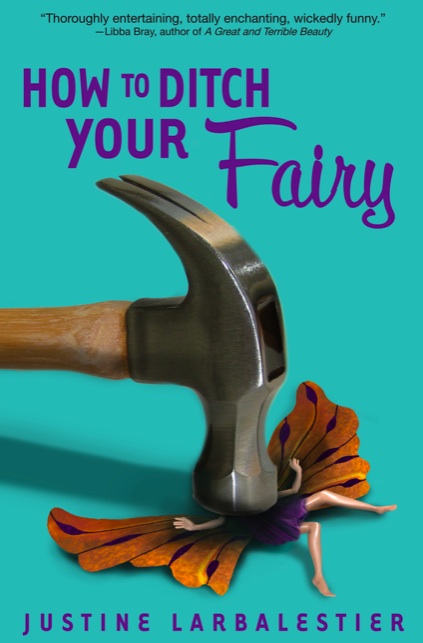
Stranger comes to town: Pride & Prejudice, every Western ever, How To Ditch Your Fairy
Someone goes on a journey: Lord of the Rings, every quest novel ever, How To Be Bad
Personally I think that’s so reductive as to be useless. But I do think many books have the same basic plot. Person opens a door/falls through a rabbit hole to a new world: Alice in Wonderland, The Lion, the Witch, and the Wardrobe, Magic or Madness, and to many others to name. Obviously the settings, the characters, and the many other details that make up these novels’ voice and feel are very different.
Because it’s the settings, the characters, the feel of a book that makes it unique. Very rarely is it the plot. And if the plot is all a book has going for it? Then you’re in deep trouble.
Let me repeat that:
It’s the settings, the characters, the feel of a book that makes it unique.
So, yeah, I would be concerned if key details of setting and characters appeared to be similar: two novels about an underground colony of zombies. But not that concerned. I’m pretty sure no other writer out there has my twisted brain, so they won’t have added an insanely evil spider-god who controls the zombie hordes, and is slowly teaching them to climb.
A spider-God! No one in the world has ever thought of that before.
Plus, I’m thinking of having my bunker zombies, who are controlled by the evil spider-god, be discovered by a girl who’s just woken up in someone else’s body after an accident . . .
What do you reckon?
NOTE: Please ask your writing questions over here. It’s easier for me to keep track of them and answer them in order if they’re all at the end of that one post. Thanks! I’m taking writing advice quessies for the whole of January.





 I always figured that I had to let you know when my books get good reviews etc. even though I find writing those posts the most boring thing in the world. Not to mention embarrassing. I always feel like I’m saying, “Hey look at me! I’m fabulous!” My heart was never in it. Thus there will be no posting about reviews of any of my books unless the reviewers raises an interesting point I want to riff on. If you’re interested in that kind of thing you can find
  More and more readers of this blog are here, not because they like my books, but because they like this blog. So overall I will be blogging less about the publicity aspects of my career. Though I will continue to bitch and moan and be rapturous over my struggles and joys in writing those books.