Signed Books

Some folks have been asking lately how to get hold of signed copies of my books. And asking if I’ll sign a book if they send it to me. Tragically the answer is no, I won’t. This is not because I’m mean but because,

  1. I travel too much. Your book is unlikely to get to me in a timely fashion.
  2. I am hopeless at getting to the post office. If your book does land in the right country at the right time it will then sit on my desk for about a decade. I tried book plates and I was just as bad at mailing them. It’s a sickness.

So I have created a signed books page. See the link in the right sidebar under Books? There’s a list of the bookshops where I regularly sign stock in the two cities I spend the most time: Sydney & New York City.

At the moment there’s only two, Kinokuniya in Sydney—it’s my fave bookshop here because it’s one-stop shopping, every single book I crave plus manga plus grahic novels plus anime—and Books of Wonder in NYC, which if you haven’t been there, you should. Best kids bookshop in the city.

I recently also signed a few copies of Liar for Berkelouw Books in Paddington. And am happy to sign for any other bookshop in my area that wants my signature scribbled on their stock.1

Also before we left NYC me and Scott signed at a number of Barnes & Nobles and Borders in Manhattan. So you may stumble across some signed copies in one of those stores.

Not to mention that I signed many, many books while on tour in the USA in October and November. If you live near any of those bookshops there may still be signed books left.

Hope this helps.

And, yes, I should probably have posted this before xmas etc. Whoops.

  1. Of my books, obviously. I’m not going to vandalise anyone else’s books. []

In Which, Yet Again, I am Annoyed by a Review

As mentioned in my previous post, I just finished Joan Schenkar’s The Talented Miss Highsmith. I loved it so I was curious to take a squizz at what reviewers had made of it and came across this one by Jonathan Lethem. Oh. Dear.

It is exactly the kind of review that annoys me the most. The I-don’t-like-this-kind-of-book-but-I’m-reviewing-it-anyway review. Editors seem to think it dreadfully clever to get the reviewer who hates feminism to review the feminist tome, the hater of romance to review Jennifer Crusie’s latest, and those who are full of contempt for teenagers and books to review YA. It will generate conflict and controversy! Goodie!

No, it will generate annoyance and boredom. I know what people who hate YA think of YA. I want to know if this is a good example of YA. I don’t want to read some boring tosser explaining why the genre sucks. Heard it all before.

Lethem is not a fan of literary biographies so he barely engages with Schankar’s biography. The first three quarters of the review is taken up with his view of the Highsmith revival and which books of hers he thinks best. When he finally mentions the bio, he complains that Schenkar goes into too much detail:

No impression, however, could have possibly prepared Schenkar for the catalogue of torments her scrupulous and excruciating research uncovered. She is compelled by that research to tell us more than we could possibly wish to know. Much as Highsmith rates full treatment, I can’t help wishing Schenkar had spared herself (and me) and written a personal recollection instead (think of Shirley Hazzard’s short memoir of Graham Greene, “Greene On Capri”).

Trouble is Schenkar never met Highsmith, so such a memoir would have to be fiction. That Lethem came away with the impression that Joan Schenkar knew Patricia Highsmith is very odd indeed. No where in it does she so much as imply such a meeting took place, let alone an acquaintance long enough to supply material for a memoir. Which leads me to think that Lethem did not read the whole book or skimmed it.

He concludes by saying:

The best thing Schenkar accomplished, for me, was to drive me back to the work. If Highsmith’s antidote to the poison of living was the writing of her novels, we can follow suit and read them. The antidote to literary biography is literature. [My emphasis.]

That last line is key. Me thinks Mr Lethem does not like literary biography if he feels it requires an antidote, which makes me wonder why he bothered to review one. I can certainly understand his reasons for not liking the whole genre. He’s a much more famous writer than I am so the odds of there one day being bios of him are relatively high. I worry about it and—other than J. K. Rowling and Stephenie Meyer—there’s not exactly a huge number of YA writer bios. But then I squirm every time I read a profile or interview of me.

As a writer reading a bio of another writer I find myself wondering just how particular episodes in my past would be portrayed. It makes for much discomfort and a strong desire to destroy all my journals. And I’m a model of good behaviour compared to Highsmith.

I admit I may be projecting my own feelings onto Lethem. Maybe he dislikes literary bios because he doesn’t want to know the warts and failings of his literary heroes? Or maybe one fell on him in his cradle?

I also disagree with the implication that biography is not literature. As it happens Schenkar is an excellent and witty writer. Lethem quotes one of the many passages I’ve read out loud to Scott:

Luckily, their African trip never came off. Jane Bowles had phobias about trains, tunnels, bridges, elevators, and making decisions, while Pat’s phobias included, but were not confined to, noise, space, cleanliness, and food, as well as making decisions. A journey to the Dark Continent by Patricia Highsmith and Jane Bowles in each other’s unmediated company doesn’t bear thinking about.

Some of my favourite writers are biographers. I’m sure they’d be astonished to discover they have not been writing literature. But surely he didn’t mean that last line to be read in an exclusionary way. I have heard Lethem at science fiction conventions making strong arguments for the inclusion of science fiction in the category of literature. Which makes it even more peculiar to see him employing such exclusionary tactics himself.

What I loved so much about Schenkar’s bio was that it created such a three-dimensional portrait of Highsmith. The book is fascinating. I had to stop and read sections out loud to Scott multiple times. Over the past few days of reading it I’ve been talking about it to everyone I know.1 It’s an incredibly intimate portrait of a writer. Of their life and their craft and their process.

It’s also a fascinating portrait of the development of a misogynist, bigoted, racist, anti-semite. Highsmith is awful. A genuinely bad person. But I now have a much clearer idea of how she got that way.

My main complaint about the book is that there was not enough detail. I was very frustrated that there was not a separate section on Highsmith’s publishing career and how, when, and where her current literary reputation emerged. We’re told in passing that her 1950s lesbian novel, The Price of Salt (later retitled Carol) sold hundreds of thousands of copies, but we’re not told over what period of time, and that Found in the Street only sold 3,000 copies on its first US publication. But those are pretty much the only sales figures in the book. The story of her finding her first agent and selling her first book, Strangers on a Train is not told directly. There are references to these events in other sections of the book but I itched for the whole story. Nor was the sale of the film rights to Hitchcock dwelt on—it’s a mere summation in the “Just the Facts” section at the back of the book. Much is made of her deal with the Swiss publisher Diogenes to handle world rights to her book but the specific details of the deal were not revealed.2 For this publishing geek, it was very frustrating.

Lethem’s right about one thing though3 reading the bio has led me back to the books. To thinking about what made her such a good writer when she had so little understanding of, or compassion for, anyone but herself. Not that her lack of empathy doesn’t come through in the books. There’s a reason I can’t read more than three Highsmiths in a row without sinking into a deep depression. Bleak is too mild a word for the outlook.

Except for The Price of Salt which is the outlier Highsmith book and one of my favourites. Think I’ll be re-reading it first.

  1. Sorry for being such a bore, people. []
  2. I get why but I’d’ve loved a hint. How much more than the usual 85% did Highsmith get? []
  3. Well, two, I also agree with his list of her best books. Though I would add The Price of Salt/Carol to the list. []

Patricia Highsmith, Much Crazier than You

All writers fear they are a bit crazy. Some of them are. Obviously, I am at the hardly-crazy-at-all end of the crazy-writer scale, most other writers are much loopier than me. While that is clearly a fact, I confess that I have my moments of doubt. I have found just the cure for those moments of doubt: Patricia Highsmith.

I am reading the new bio, The Talented Miss Highsmith by Joan Schenkar. Oh my. Oh wow. Oh Elvis. Highsmith redefines the crazy end of the crazy-writer scale. I have a million different responses to this book, but one is relief. Cause no matter how crazy I might (rarely) fear I am, Miss Highsmith will always be much much much much worse. Because she’s not just crazy, she’s mean crazy. She’s curse-out-everyone-at-your-favourite-restaurant crazy. Throw-a-dead-rat-in-your-room crazy. You know, not even slightly charmingly eccentric.

*Heh hem* I must get back to it. Best bio I’ve read in ages. So glad I never ever met Highsmith.

But, yeah, if you’re feeling loopy, read this bio. You’ll feel much much better.

Hair Stories Redux

Thank you so much for all the wonderful, moving, scary, funny stories about hair.

I wanted to highlight this comment from Wonders of Maybe because it underlines how hair and fashion and politics and identity (self and imposed from the outside) co-exist:

Hmm — I’m multiracial (Black/Native American/White) and very, very light-skinned with extremely thick, curly hair. I’m talking spirals on “good” days and fluffy frizz on “bad” days! When I was young I wanted to straighten my hair because of how much I got hassled but once I turned 12, I was intent upon my hair staying natural. With such light skin, I feel it’s an honest indicator of what I am and who I am since I so often am mistaken for being Latino or Italian or Jewish or “something.”

Have you all heard of the “pencil test”? I learned about it as a child and it was, apparently, used in apartheid South Africa. If a pencil was stuck in your hair and it fell out, you could be counted as white (or coloured, if you were darker skinned). If it didn’t fall through, if the pencil simply stayed right in your hair, well, you were coloured or black. As a youngster, I was obsessed with learning about the various tests governments, leagues and clubs had through out history to determine someone’s background based on their hair. Interesting hobby, kid!

So for me, taking care of my natural hair is part a matter of respecting my history, as much as it is part of trying to look nice.

I remember my friend, the wonderful South African writer, Yvette Christianse, telling me about the pencil test. Like everything about Apartheid it was hard for me to get comprehend. A person’s race was reclassified, they were made to move, to lose their jobs—sometimes their lives—because of how a pencil sat in their hair.

Of course, as Susan, points out people are still being discriminated against because of their hair. Though, it’s hard not to wonder if it’s really only hair we’re talking about. How often in the US do racist commentators go after a black person’s hair and then claim they’re not being racist because they’re just talking about hair? Answer: too often.

The other thing Wonders of Maybe touches on is the “good” hair versus the “bad” hair debate. Frizz seems to be a key indication of badness. And as someone with straight hair, I can attest that sometimes the short, new, flyaway hair sticking up everywhere causes me despair. Lay flat, damn you.

So, why do we hate frizz? There’s nothing intrinsically wrong with frizz. I think we’re taught to see it as “bad” hair. I think years and years of ads and movies and tv shows full of women with “controllable” hair has shaped how we see hair and what we expect of it. It’s even worse now when the vast majority of hair product ads are photoshopped into shiny, unfrizzy, unmoving or moving-in-a-really-weird-way, impossible-to-achieve hair.

About ten years ago, an acquaintance with very tight curls left the house without doing anything to her hair as an experiment. It was a ball of frizzy fuzz haloing her head. It looked amazing. I wish I had photos to show you how great it looked. Many people commented. Most were very positive, but she abandoned the experiment because she couldn’t handle everyone staring at her and everyone commenting. Bad enough, she said, when it was in its usual state of curliness.

Her chief pleasure in straightening her hair is that, other than people who know her, it’s the only time her hair is what she thinks of as “neutral.” People don’t comment, people don’t ask to touch her hair. She isn’t seen through the lens of her hair in quite the same way.

To bring this back to writing,1 I think what goes wrong in many books is that writers give their characters traits to distinguish them, such as curly hair, without thinking about how that would shape who the character is and their experience of the world. Not to mention how long they spend doing their hair. So, you know, don’t do that.

Thanks again for all your responses.

  1. I’ve had a few complaints that I’m not devoting January to answering questions about writng like I did last year. []

Curly Versus Straight (updated)

I have always loved curly hair. I myself have straight hair so my preference for curly is usually ascribed to the fact that I don’t have it. My hairdresser says all the straight-haired girls want curly hair and all the curly-haired girls want straight hair. When I press him on this, however, he admits that it’s not entirely true. That many of his clients are quite happy with their hair. I, too, am quite happy with my hair. But I do get bored and I’m glad that I know how to make it wavy without too much effort. A change, they say, is as good as a holiday. To which I’d say depends on the change and depends on the holiday. I once went to [redacted] for a holiday and let me tell you . . . *heh hem* I digress.

I don’t actually think my love of non-straight hair—it’s not just curly hair, any kind of non-straight, textured hair fills my heart with joy: kinky, curly, wavy, nappy, twists, locs etc. all looks good to me—is because I don’t myself have such hair. I think it’s because I like curves. Aesthetically I always choose a curve over a straight line. I don’t like hard edges or Modernism, I love Art Noveau and Art Deco. I love Gaudi and Zaha Hadid.

I’m not saying straight hair is ugly. I’m just saying that when people rave about the beauty of, say, Megan Fox’s hair, I don’t see it. I mean it doesn’t look bad, it’s shiny and that, but I can’t get excited. It certainly doesn’t look beautiful to me the way that Nicole Kidman’s hair was before she straightened it and nuked it blonde, or Gina Torres’, or Tawny Cypress’. I could go on for a week listing women with gorgeous hair.

It could be that part of my curly hair love is from being a kid in the 1980s in Australia when curly was the thing. Yes, I had a disastrous perm when I was wee. I used to think all perms left you with fried hair that smelled bad for months, but then I met a rich girl in my first year of uni, who had gorgeous corkscrew hair down to the small of her back, that you would swear was natural. It was not. She got it done once a week. I had never met anyone who went to the hairdresser once a week before. Well, not other than the ladies with their weekly sets. But I’m betting those sets did not cost $200 a pop. I did mention she was rich, right?

So that might be part of my curly hair love, but I don’t think it accounts for all of it, because I have been a lover of curls and curves and waves and spirals and twists, not just in hair, but in art, in buildings, in plots, in nature, in pretty much everything my entire life. And, frankly, I’m not particularly convinced by the grass is greener argument. That’s too easy and it’s certainly not the main reason so many people with curly hair want straight hair. Most of the curly-haired women I know were taught to hate their hair. They endured a lifetime of being told that the way their hair grows out of their head is messy and out of control and somehow wrong. I have curly, kinky and nappy-haired friends who’ve been knocked back from jobs because of their hair.

Most of those women have grown to love their hair. And in their professions—writers, journalists, musicians, academics—they’re able to wear their hair however they please. But I still know plenty of women who keep their hair straight for a variety of reasons, including being taken seriously in the work place and looking “professional”. If Michelle Obama were to appear in public with natural hair many, many people would say, What has she done to her hair.1

My straight hair has never cost me anything. When I make my hair wavy it doesn’t cost me anything either.2 No one has ever commented on the professionalism of my hair.

I’ve never lost a job over my hair. I’ve never had to deal with the politics of hair per se. I’m white, with straight hair. I’m not a politician, neither is my husband. But even without those huge pressures, I have spent lots of time and money and angst (I found my first grey hair when I was fourteen & thought that was the beginning of The End) over this stuff that grows out of my head. It’s a multi-billion industry world-wide and I’m throwing my money at much product and hours-long visits to the hairdresser every four weeks. I have to admit that sometimes I do find myself wondering why?3

Care to share your hair stories?

Update: You can find some of my additional thoughts on this fascinating subject here.

  1. See the crazy responses to Malia Obama’s gorgeous twists. No, I’m not going to link, makes me too cranky. []
  2. Well, except for the product involved. []
  3. Other times I’m just giddy at the new colour and waviness of my salon hair. []

Books Like Liar

Some of the people who enjoyed Liar have started telling me that they want to read something else like it. I’m not sure what to tell them. I can’t recommend one of my other novels because they bear no resemblance to Liar and readers would just be disappointed.

Here are three novels that people have compared to Liar:

  • Jacqueline Woodson’s If You Come Softly. This is hugely flattering. Softly is one of the best books I’ve ever read. I think Liar has some of the emotional intensity of Softly and it shares an NYC setting—with Central Park playing a key role in both novels. If Liar evokes New York City even half as well, then I’ve done a bang up job, haven’t I? This book will not satisfy the urge to battle with an unreliable narrator, however. Though it will gut you.
  • Roger Cormier’s I am the Cheese. If I have read this it was so very long ago that I don’t remember it. Maybe someone will say what the points of similarity are in the comments? NO SPOILERS.
  • John Marsden’s Letters from the Inside. Again I haven’t read it. All I know is that it features not one, but two, unreliable narrators. I can tell you, though, that the Marsden books I have read I’ve liked a lot.

Anyone got any other suggestions for Liar read alikes? Thank you!

Muhammara Dip

After I blogged about our feast of Turkish cooking, I had a few people demand recipes. To them I strongly recommend getting a copy of Classic Turkish Cookery by Ghillie BaĹźan. We’ve now tried multiple dishes from it and they’ve all turned out delicious.

MuhammaraHowever, there’s one recipe that wasn’t in that book: muhammara (walnut and roast red capsicum) dip. For that I had to google. I’ve now made it a bunch of times so this recipe is my take on the half a dozen or more recipes I found online.

5 or 6 big red capsicum (bell peppers)
2 cups of walnuts
approx half to 1 cup bread crumbs (1 pull two slices of bread out of the freezer, which defrost almost instantly, and then crumb them. Don’t use packaged bread crumbs. You can also leave the bread out altogether. Go easy on the liquids in that case and you’ll probably need more walnuts.)
garlic (I use A LOT.)
1 tbs pomegranate molasses or pomegranate juice
1 tsp kirmizi biber (a Turkish spice mix made from chilli peppers. So far I haven’t been able to find it in Sydney so I use half cayenne pepper and half sweet paprika.)
1 tsp ground cumin
juice of half a lemon (if they’re super juicy)
salt
pepper

I make it using two mortars and pestle, a large and a small one. Most people use a food processor. I’ve not used a food processor in, like, a million years, so you’re own your own if that’s how you want to do it. I’m sure you’ll know how.

1) Roast the capsicum. I do this by pre-heating the oven to 200C. I cover a baking tray with foil then oil it with olive oil. I put the whole capsicum on top and roll them in the oil and put a small hole in each one. (It’s never happened to me but a friend swears they can explode.) It takes about an hour. When they start to blacken, take them out, and put them in a large saucepan. Cover it with a clean, dry tea towel and stick the lid on top. When they’re cool you’ll find it’s easy to de-skin, de-seed and de-string them. As you pull the roasted capsicum free of that stuff, tear it into tiny pieces and place it in a bowl. You’ll find it tears easily. You can even squish it if you like. But basically you want it in as many small bits as you can.

When you’re finished you’ll find you’ve got a fair amount of liquid. I put all the capsicum bits into a large strainer to collect even more liquid and to drain the capsicum. This liquid can be used later to moisten the bread crumbs. The lemon juice is also good for that.

2) Bash the crap out of the walnuts in the big mortar and pestle. Have your assistant (mine’s called Scott) bash the garlic with some salt in the wee mortar and pestle until it’s practically liquid.

3) When the walnuts are near dust add the roasted capsicum bits and pound them.

4) Now it’s time to add three quarters of the breadcrumbs. (You hold back a quarter just in case it becomes too sloppy.) Moisten them a bit first. Most recipes say to use water, but I think that dilutes the intensity of the flavours, so I use either the capsicum liquid or some of the lemon juice. Bash away at it.

5) Next add the near-liquid garlic, the pomegranate molasses (or juice), and the cumin and chilli. Mix it together with a spoon. If you feel like it, pound remaining unpounded bits of capsicum or walnut. But don’t stress, part of the beauty of using a mortar and pestle is that you don’t get an absolutely uniform texture. It results in a better taste and mouth feel.1

6) Taste it. Add salt, pepper and more lemon juice until you think the balance is right. Mix it together with a spoon.

7) If it’s too liquid add the remaining bread. Bash the bread into the mixture. Repeat 6)

Last) Serve and eat! So far I’ve eaten it on bread, on carrot sticks, as a condiment with the main course, and off a spoon out of the fridge.2

You can add the ingredients in any order you like. The above is just what I’ve found works best for me. (I’m sure you food processor barbarians throw the lot into your evil machines in one go.) Though you do have to roast the capsicum first. The proportions are up to you as well. Depending on who I’m making it for I’ll use more chilli than I’ve suggested here. Make it a few times and figure out what you think works best.

Hope my directions make sense. You can tell I don’t make a living writing cook books, can’t you?

Enjoy.

Happy new year!

  1. Yes, “mouth feel” is a real term. I did not make it up. []
  2. Don’t tell Scott about that last one. []

Last Day of 2009

This is my annual post where I sum up what happened in my professional life in that year and look ahead to what’s going to happen in 2010. Basically I do this so I can have a handy record that I can get to in seconds. (Hence the “last day of the year” tag.) Do feel free to skip it.1

This year, though, was less happy than any of the previous years I’ve summed up here. Thus my summary is brief. I want to get past 2009 and on to the fun of 2010 as fast as I can.

Books out: Liar (hc in US & tpb in Oz), HTDYF (in Oz & pb in US)

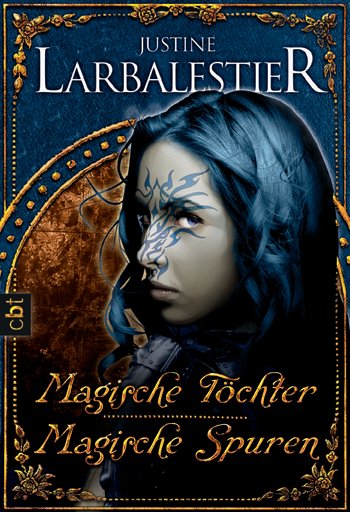
MorM&MLDeustchEdLiar sold in nine different countries this year (in order of sale): Taiwan, Germany, France, Brazil, Turkey, Italy, Denmark, the Netherlands & Spain. That last sale was to Ediciones Versatil. I only just found out about it. Since I’ve been wanting to sell Spanish-language rights since I even knew such a thing existed I’m dead happy. (Champagne tonight!) Spanish is the only language I can even vaguely speak. (Other than English, obviously.) I’m going to be very curious to read the translation. (Or try to anyways.) Liar has now sold in as many countries as the Magic or Madness trilogy. HTDYF remains my least popular book o.s. having only sold in Australia, the US, Germany & this year to Japan. Germany is the only country other than Australia and the USA to have bought all my novels. Apparently, the trilogy is doing well there—yay for German readers! I figure that’s because of the awesome covers. The cover above is of a new German edition of the first two books in the trilogy which will be out in October next year. Isn’t it gorgeous?

There were also audio editions of Liar and How To Ditch Your Fairy released in Australia by Bolinda and the USA by Brilliance. I was able to sit in on a bit of the recording of Liar and was invited to help choose the narrator of HTDYF both wonderful, wonderful experiences. I think the end results are amazing.

Okay, that was my 2009. Now on to next year!

First up, I have two books coming out in the USA in fall:

The paperback edition of Liar

Zombies versus Unicorns anthology edited with Holly Black

I am so excited about the antho. You would not believe how fantastic the stories are. Not a dud one in the book. Well, except for the unicorn stories which are all dreadful (Holly edited those) but you are going to adore the zombie stories, which are, no lie, the best stories written in the history of the universe by some of the best writers ever. Um, yes, I edited those ones. I’m not sure if I’m allowed to announce who the writers are yet. I’ll just give you their initials: LB, CC, AJ, MJ, SW, & CR. Tell no one! I’m not giving you the unicorn story writer initials because 1) I know you don’t care, 2) they’re all hack writers you never heard of anyways.

It’s quite astonishing that someone as spectacularly talented as Holly could be such a unicorn fan. I don’t understand. I think the best plan is for everyone to skip the unicorn stories and instead read Holly’s new novel, The White Cat, which is out in May next year and is the best thing she’s ever written. I say that as someone who adores everything Holly writes. The White Cat, though, beats them, hands down. It’s one of my favourite books of all time. You are in for such a treat! In even better news: it’s the first of a trilogy.

The ZvU antho began life as a sekrit project in 2007. It is my first sekrit project to see the light of day. Very happy making. It’s also the first project of mine to be inspired by this blog. By this comment exchange between me and Holly and many others, to be exact.

So that’s what I’m publishing, what about what I’m working on? People have been asking me about that a lot lately. I suspect because I’ve not blogged about it much lately. Especially compared the flurry of 1930s book posts earlier in the year. Speaking of which there have been queries about how the 1930s novel is going, seeing as how I haven’t mentioned it in awhile. “Have you given up on it?” I’ve been asked anxiously. (Mostly by my friend and critique partner Diana Peterfreund, who’s read some chunks of it.) I have not! But I have kind of been cheating on it.

Right now I’m working on four novels at once:

  • One is the 1930s novel, which has turned out to be much bigger than I thought. More than one novel, in fact. When it became clear to me that there was no way I was finishing it any time soon my brain spat out another idea for a much shorter novel and I started working on that.
  • That novel is set in the here2 and now and is closer in tone to How To Ditch Your Fairy. When I started working on it I stopped reading only 1930s books. I now only restrict myself when I’m working on the 1930s novel.
  • The third book I started awhile ago, it’s the lodger book for those of you who’ve been with this blog for awhile, and then rediscovered it while procrastinating. It was the one I put aside to concentrate on Liar.
  • The fourth one is a sekrit. Though not the sekrit project I thought would come to fruition this year that I mentioned at the end of last year. I still have hopes for that sekrit project but I do not see it happening for at least two or three years. Thank Elvis for the new sekrit project, eh?

At the moment none of these novels is winning the fight for my attention. And, honestly, while touring I was unable to get any writing done at all. I truly admire those who can. School events all day and then a library or book store event at night means no writing on tour for this particular writer. And travelling and returning home ate my December. (In a good way!) My next clear, no travelling, stretch starts tomorrow. Bless you, January 2010. So tomorrow I start writing again in earnest and that’s when I expect one of the four novels to take over my brain completely. But maybe it won’t. Maybe my new style of writing is to flit back and forth between books. I guess I’ll find out in 2010.

My only goal for this year is to be happy writing. If I finish one or more of these novels then wonderful. If not, no big deal.

I hope 2010 shapes up beautifully for all of us.

Happy new year!

  1. Cause it will be boring. Don’t say you weren’t warned. []
  2. Well, not Sydney (or NYC), but this planet and not an alternative version of it. []

Wonderful New Blogs Discovered in 2009

In no particular order here are my favourite new-to-me blogs of the year:

  • Reading in Color. Ari reads and reviews and discusses and generously gives away YA books about people of colour. Ari was the first person to tell me about Flygirl by Sherri L. Smith, which was one of my fave books of the year. For that alone I would be her devoted follower forever, but there’s way more to her blog than book reviews. If you have any interest in YA and you’re not following Reading in Color, then shame on you!
  • The Intern. An intern’s view of publishing. Funny as hell. She even has a nemesis and refers to herself in third person. She’s crazy, but so is publishing. They are the perfect match.
  • White Readers Meet Black Authors. Some wonderfully warm and witty outreach to us white folks who would like to expand our reading horizons.
  • Journal of a Baby Power Dyke in Training. Wickedly witty, insightful, Barbra Streisand-obsessed and happy making. Although I do not share the BS obsession I am a fan of many of her other faves, such as Rachel Maddow and Melissa Harris-Lacewell. I adore a good ole rant about politics and BPD is very happy to oblige.
  • Happy Nappy Bookseller. Doret Canton is my new favourite bookseller. Not only does she love YA, but she’s also a total sportshead and has given me enough girls sports book recs to last me a lifetime. Happiness! She runs two or three very thoughtful reviews a week. If you have have any interest in childrens lit, from picture books through to YA, you need to add Doret to your blogroll ASAP.
  • Eat Drink One Woman. Ganda is all about the food. Me too. This is probably one of my fave food blogs of all time. And she talks about bikes too! Perfect. Following her food adventures in Sweden was one of the blog reading highlights of my year.
  • Taste Life Twice. Two California girls, Tashi & Kiki, who love to blog about books. Their blog is chockers with book reviews and interviews. Their crazy high school schedule means they don’t blog as often as I’d like but, hey, that just means I treasure what they do post. Another essential for us YA fans.
  • Apophenia. Danah Boyd’s a researcher who writes incredibly thoughtfully about social networking online. I’m particularly fascinated by her research on facebook, myspace, twitter and race and class.
  • Color Online.
  • This is not just a blog about the work of women writers of colour, it’s also a non-profit that among many other things runs a library to get books by and about people of colour into the hands of those least able to get hold of books. They welcome book donations. It’s also a truly excellent blog with some of the best coverage of YA online. It really is essentially reading if you care about publishing or YA or reading. Susan also has an excellent personal blog, Black-Eyed Susan.

If you don’t know any of these there’s some wonderful reading in store for you. What were your fave new blogs this year? Oh, and no recommending your own blog. Self praise is no praise, people!

Things What Are Making Me Laugh

The first thing that’s making me laugh is that Scott is currently making me breakfast. A very happy breakfast:

happybrekkie

The next thing is that last night Scott was told about this gadget and now it is all he wants in the entire world:

The Dyson fan with NO BLADES! But how does it work? Because of AIR MULTIPLIER TECHNOLOGY.

Air multiplier technology. Hahahahaha.

This skit is making me laugh even harder. Via the fabulous Snazzydee I was introduced to The Armstrong & Miller Show. Here they are RAF airmen chatting up some fetching gels in Chav speak:

I’m sorry “innit” rendered as “isn’t it” in Posh Pommy Talk (or RP as it also known). I laughs every time.

What’s making you laugh?

I’m Not Your Target Audience (Yes, You Are)

Much of the fan mail and comments I get from adults includes this phrase “I’m not your target audience” before continuing to say how much they enjoyed one or more of my books in (sometimes) slightly embarrassed tones. As if they’re a tad worried to find themselves reading and enjoying a book published for teenagers. How did that happen? they wonder. Does it make me less of an adult?

I understand the anxiety. Before I became a published YA author, I was unaware of how disdainful many adults are towards teenagers and anything that smacks of teenager-y-ness, such as books marketed at teenagers. Looking back, I now find it weird that I was unaware of this. Firstly, I once was a teenager. How did I manage to forget the way many adults treated me?1 Secondly, I stopped reading books for teenagers when I was twelve because I decided I was too good grown up for them. So, yeah, I seemed to have imbibed adult disdain for the things of childhood and adolescence at a very early age. Yet I got over it enough to forget such disdain existed until I started writing YA.

At which point, wow, did I learn it all over again.

So, yes, I understand why some adult readers of YA feel a bit apologetic about it. But, truly, you don’t need to apologise to me. I am very happy to be writing the books I write and to be published as YA. Every day I wake up and cannot believe my luck to be in such a fabulous genre.

Also it so happens that I don’t write for a target audience. When I’m deep in the writing I’m not thinking about audience, but about writing the best book I can. Unless by “target audience” they mean “subject matter”. Absolutely, adolescence is the central matter of my work. But that’s a subject of interest for those who are about to be adolescents, for those who are adolescents, and for those, like me and the readers who say they are not my target audience, who were adolescents. From the fan mail I see that my books are read by all three of those groups, which makes me very happy.

Or in other words: I happen to think that everyone is my target audience.

You’ve been warned. I’m aiming at YOU.

Heh hem. As you were.

  1. How come so many adults forget this? []

The Audience of Leviathan

I recently tweeted a really interesting review of Leviathan by Tansy Rayner Roberts. It’s my favourite review so far partly because she puts into words something Scott and I have been noticing:

I find it interesting that so many people are talking about this as the latest Scott Westerfeld novel without really acknowledging that this is such a departure from his more recent work. I would not be surprised if some of the audience for the Uglies and Midnighters and Peeps books (at least the teenagers) were less interested in this new series, even as Leviathan draws in an entirely new generation of readers. It’s always interesting to see an author whose work you admire move on to pastures new.

Note: she’s NOT saying that teens aren’t reading Leviathan, she’s just saying that some of the teen fans of Scott’s other YA books will be less interested in the new series. But that a whole new audience will be.

This is exactly what we’ve been finding. Especially amongst the hardcore Uglies fans. Many of whom won’t read any of Scott’s books other than the Uglies books. Here’s a conversation Scott had at almost every stop on his recent tour:

Fan: OMG! I love the Uglies books SO MUCH. You are my favourite writer in the entire world! *hands Scott multiple editions of every Uglies book to be signed plus extra copies to be signed for friends*
Scott: Thank you! So many Uglies books. Amazing!
Fan: When will you be writing a new book? I can’t wait for the next one!
Scott: Well, I’m on tour for a new book. *points to giant stack of Leviathan*
Fan: *looks at Scott blankly*
Scott: Leviathan is my new book.
Fan: Um, when will there be a new Uglies book?

Now, Scott has plenty of fans who read every single book he writes. There are even a few who’ve tracked down his very first publications: kids books about Watergate and the Berlin Airlift. And a few more who are proud owners of Scott’s choose-your-own-adventure Powerpuff Girl books. However, there are a substantial group who are not Westerfans per se, but fans of only one of his series.1 Especially when it comes to the Uglies books.

Now, this is not at all uncommon. There are plenty of Dorothy Dunnett fanatics who only read her Lymond books and have zero interest in the others, Scalzi fans who only like the Old Mans War books, McCaffrey fans who ditto the Pern books and so on. I myself am a Georgette Heyer fan who only likes her regency romances. I won’t touch her straight historicals or detective fiction with a barge pole. So I totally get it.

It is, in fact, a small percentage of readers who will follow a prolific and diverse writer throughout their career and read all their books. This is true even for writers like Stephen King. Plenty of his readers read only the novels and ignore the short stories and non-fiction.

I frequently describe myself as a huge Margeret Mahy and Diana Wynne Jones fan. Yet I have not read all their books. Most, but not all. There are fans and then there are fans.

What’s been so interesting about Leviathan is that it seems like the same percentage of Uglies fans that didn’t pick up Midnighters or the three New York books2 are also not picking up Leviathan. The difference is that a whole bunch of folks who never really heard of Scott before are picking it up in their place. Leviathan really does seem to have brought Scott a whole new audience.

Broadly, we’re noticing way more boy readers than before and a much wider age spread: from eight year olds up through eighty year olds. Scott toured with Sarah Rees Brennnan, Robin Wasserman, Holly Black and Cassie Clare. At pretty much every event, boyfriends of these other authors’ fans, who had come along in a suffering kind of way, saw Scott’s presentation and wound up buying Leviathan, stunned that something could possibly interest them at such an event. Leviathan has also drawn in two specific groups who’ve had little interest in Scott’s books previously:

  • Steampunk fans
  • History buffs

Obviously there’s a big overlap between those two groups. But it’s been fascinating to watch the audience of his tour events change. Scott’s always had people coming along dressed up like Tally or Shay or other characters from his books, but this tour he had people showing up in full on steampunk garb. Fabulous. So far pretty much all the steampunkers are dressing in a generic steampunk way. I’m hoping that will change for his 2010 tour. I can’t wait to see the first person showing up dressed like Derryn or Alek.

Now before any of you jump into the comments and say “I’m a bloke! I love military history and steampunk and I’ve ALWAYS read Scott’s books!” I’m not saying you don’t exist, I’m just saying that before Leviathan you were only a teeny tiny slice of Scott’s audience. Now, you’ve got lots more company. Enjoy! We sure are.

  1. There are adult readers who’ve only read The Risen Empire and have no intention of ever touching that smelly YA stuff. []
  2. So Yesterday, Peeps & The Last Days. All three books are set in the same world, by the way. It’s just that Hunter (of So Yesterday) is totally unaware of all the vampires running around. See how the world of products and advertising distracts you from what’s really important? Let that be a lesson for you. []

What Novel I Wrote Next

Searching for something else entirely, I stumbled across this old post from March 2007 where I asked my faithful readers to help me choose what to write next. I decided it would be fun to do an update. Fun for me, anyways.1

First on the list of possibilities is this one:

The compulsive liar book narrated by a—you guessed it—compulsive liar. Downside: will involve lots of outlining. I hates outlining. Plus it’s going to be so hard! Upside: whenever I mention this one folks get very excited.

Sound familiar? Why, yes, it’s the book I wrote next: Liar which published in September this year. As it happens it involved no outlining at all. But I was right it was hard. Much harder than I knew at the time. It also generated more excitement than I anticipated.

The other now completed item on the list was this one:

Try to write a short story. I’ve had a brain wave for completely transforming a story of mine that’s never worked into one that will. It involves making the ending not suck (why did I not think of that before?!) and setting it a couple hundred years ahead of where it’s set now. It involves no research. Downside: I suck at short stories. Upside: Not starting from scratch and may lead to an actual good story. That would be cool!

The story was “Thinner than Water”, which was published in 2008 in Love is Hell. You can find a bit more about the story here. Even if I do say so myself it is an actual good story. I’m proud of it. But it was many years work and I think I’ll be sticking to novels from here on out.

I don’t know why the 1930s book isn’t on that list. I was already thinking about writing it in October 2006. Though the specifics didn’t come together until a fortuitous conversation with Cassie Clare in 2007. (Thank you, Cassie!)

The other idea on that list I’ve made a substantial start on is this one:

Protag’s father goes missing presumed dead on account of he and protag’s mum very into each other. Mum is forced to take in a lodger to help pay the mortgage. She advertises for a female uni student but takes in a strange youngish man who has no visible means of support and yet pays the rent on time. He’s gorge and speaks a zillion languages but the seventeen-year old girl protag doesn’t trust him. Her twin brothers (eight years old) almost immediately fall under his sway. I could go on, but it’s just not very pitchable. Alas. Downside: Not very ptichable. Tis one of those books that’s clear in my head but takes months to explain. Sigh. Upside: tis very clear in my head.

I have, in fact, recently resumed work on it. Though as I am at work on many other things that does not mean the lodger novel will be finished any time soon.

Actually none of the other things I’m working on is included on that list. Mostly because I hadn’t thought of them way back then. Which just goes to show you that ideas really are a dime a dozen. Why, I just got a new one yesterday that I’m valiantly struggling against given that I already have four novels on the go. Five would be too many.

It was lovely looking at that list from almost two years ago and realising that in the intervening time I’d written two of them. Novels take ages and for me short stories take even longer. It will be many years before I write all those books. If, indeed, I write them at all. Most likely I’ll forgot about them and move on to other shinier ideas.

Because it’s not about the ideas, it’s about what you do with them. My barely sketched out idea of Liar from early 2007 does not invoke the completed book. There’s no mention of murder, no sense of what Micah is like, and no hint of why she lies. The book you write is never a perfect match with the imaginary book that was in your head before you began.

And now I must go and do some of that writing thing. Hmm, lodger novel? 1930s? Or that shiny new idea from yesterday . . . ?

  1. Hey, it’s the holidays no one’s reading this right now. []

Sydney Christmas

This year Scott and me hosted the family xmas at our new digs. This is the first time in my entire life it’s been held anywhere but at my parents’ place. Made me feel very grown up indeed.

Because of our recent Istanbul sojurn we went with a Turkish feast. Here’s me and Scott putting the finishing touches on the main course patates bastisi (potato casserole) and çingene pilavi (gypsy salad) and part of the mezze (first course) haveuç köftesi (carrot rolls with apricots and pine nuts):

xmascooking

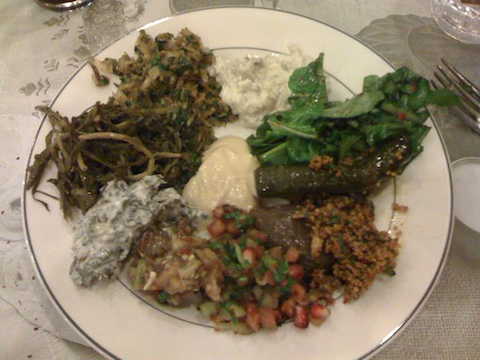
And here’s the mezze spread on the table. The dishes are aci domates ezmesi (chilli tomato paste), yoghurt with garlic and lemon juice to go with the carrot rolls, kisir (bulgur patties) which you squeeze lemon on (see the wedge on everyone’s plate), humus (which my sister made), and muhammara (walnut and capsicum dip):

mezzespread

The meal was powered by garlic (it was in every single dish—even dessert! Just kidding! Or am I?) and our mighty mortar and pestle (two of them: one huge, one wee). All the recipes come from Classic Turkish Cookery by Ghillie BaĹźan, which is dead good.

Hope you’re all eating and drinking as well as we are!

Wrongness on the Internet

This goes out with love to some dear friends of mine. You know who you are.

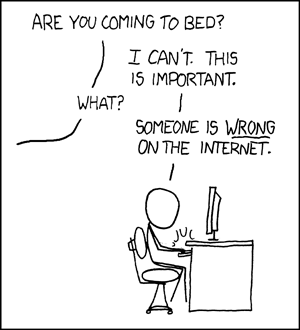
There’s an xkcd cartoon so famous that many refer to it by its number, 386. It’s my favourite and one that is referred to frequently in the Larbfeld household.

“OMG!” I will yell, looking up from my computer.

“Is someone wrong on the internet?” Scott will say, making me feel a wee bit foolish, and deflating my outrage by at least 50%. Thank you, Randall Munroe.

duty_calls

Turns out that it’s not as famous as I thought it was. Recently I discovered that my sister, who makes a living in the visual effects industry, had never heard of it or xkcd. Now, there aren’t many geekier professions or industries than my sister’s. And yet she did not know xkcd. I did a wee survey. Many of my friends, who spend as much time online as I do, had never heard of it.

Which leads me to my point: Internet famous is not the same as world famous. The internet may be vast, but it still isn’t as vast as the real world. Much that feels big and important online, that the whole world is paying attention to is, in fact, unnoticed by anyone but you and your online friends and enemies.

When you are caught up in some drama or other that has broken out on a list (or loops as some people call them), newsgroup, twitter, comment thread it’s easy to forget that. Many of these conflagrations are about incredibly important matters like race, gender, inequality etc. etc. Some are not. But no matter how grave the matter, getting caught up in an online shitstorm, or worse, being at the centre of one, is hellish. It can eat days or weeks of your life, mess with your head, and get in the way of work.

It’s easy to lose your sense of proportion and forget that the vast majority of people have never heard of the storm that’s been encircling you. Not only do they not know about it, they’ve never heard of the site where it took place, or the game it was about, or the field it’s part of. You will have friends and colleagues in your field who have no idea it ever took place.

The interweebs are vast. That’s true. But they’re also tiny and fragmented.

When I was on tour, I met countless booksellers who had no idea there’d been any storm surrounding the cover of Liar. These were YA specialists who make a living buying and selling YA.

The vast majority of people who read YA do not know about the YA lit blog world. I did many school visits. Most of the students I talked to had no idea that some writers blog, let alone that there are active communities and blogs solely devoted to discussing YA. So they certainly weren’t reading any of those blogs. Some of the librarians and booksellers and teachers ditto.

When you’re caught up in an online conflagration is exactly the time to remember that it’s a speck of sand in the scale of things. Sure, it’s important to argue for what you believe is right and to do so for multiple audiences. But don’t do it at the expense of your work and your mental health. Don’t think that the survival of the universe depends on your doing so. Let yourself back away when you need to.

Because one of the wonderful things about the intermawebbys is that you can back away. You can turn it off. Something it’s a lot harder to do with conflict in the real world.1

Besides for many of us around the world it’s holiday time. Enjoy yourself out in the sunshine!2

This is me turning off the internets and starting the xmas cooking.

Hope you have a wonderful break from work. I know I will.

  1. To be clear, what happens online is real. But it’s a real that’s a lot easier to turn off than conflict at work or at home. []
  2. Or out in the snow and cold and misery if you are unfortunate enough to live in the wrong hemisphere. []

More on Unhappy Endings

I started to respond to comments on the last post and realised it was turning into it’s own post. So, um, here it is.

Reading all your responses has crystallised something for me that I’ve been thinking for a long time: That there’s a gap between my expectations as a reader and what I do as a writer. The reader me desperately wanted a good ending1 for Lily Bart in House of Mirth and was furious with Edith Wharton for all the misery. Why, Wharton, why?!

The writer me though is unmoved by such readerly desires. I write the books the way they have to be writ. They have their own logic and I cannot force them to go where they don’t want to go. Trust me, I tried to force Magic’s Child to go in the direction I had planned for it. Wound up having to rewrite that ending a kajillion times until finally it was somewhere near where it was supposed to be. Yes, some readers are unhappy with it. Whatcha gunna do?

It fascinates me that, on the one hand, I can be angry with a writer for breaking my heart while, on the other hand, I’m more than happy to break readers’ hearts with some of my own stories and novels.

As a reader I would like to go back in time and force Edith Wharton to make it better for Lily Bart. Kind of a la Stephen King’s Misery. But, you know, without kidnapping or breaking ankles. But were I her I would tell me where to go. It’s not her fault I was under the misapprehension that she was the USA’s Jane Austen. Wharton wrote the best book she could with the ending that made sense given the world and characters she had created. My desire for the ending to be Pollyanna’d is my problem, not hers.

As a writer, nothing will convince me that we owe our readers anything other than the very best books we can write. And, we’ll be the judges of that, thank you very much.

As a reader, who just read a book she was not in the right space for, I think all you smelly writers can go rot in hell.

Yeah, sometimes it’s confusing to be me.

Thanks, so much for the wonderful comments on happy endings. It was lovely to see such a diversity of views.

  1. That good ending does not include Lily winding up with that spineless loser Selden, by the way. []

On Happy Endings or the Lack Thereof

I recently read House of Mirth by Edith Wharton for the first time and I was gutted. Unlike, most USians, who’ve at least some inkling of what to expect from a Wharton book I had zero expectations or, rather, zero correct expectations. Wharton is not nearly so well known here as she is in her native country. Those Aussies who do know Wharton tend to know her from the Hollywood adaptations of her novels. I have managed to see none of them. So, I went in to the House of Mirth blind, like a lamb to the slaughter. Let me tell you: There was NO mirth.

I also went in kind of expecting her to be the USA’s Jane Austen. I have no idea why. It was a wrong expectation. For starters there was no happy ending. It was the bleakest most horrible ending imaginable. And the awfulness started about half way through the book, which is when I first started weeping. But it kept getting worse. And worse and even worse. Until it had the worst ending of all time and I was crying so hard snot was pouring out of my nose.

Thanks a bunch, Edith Wharton! If you weren’t already dead . . .

Have I mentioned that it’s a wonderful book? That Wharton is a brilliant writer? That Lily Bart’s dilemma is what ties her to Jane Austen? For there is a connection even across an ocean and nearly a century: their books are about the same matter: what are the options for women of a certain class? Women who are expected to marry “well”?

Marriage, or dependence on relatives, or ruin, or attempting to work at crappy jobs despite never being trained to be anything but ornamental. It’s grim. And Wharton shows just how grim.

I will definitely be reading more Wharton but I’m not exactly looking forward to it. Miserable endings are difficult. And I say that as someone whose has many favourite books that do not end at all well1 I have to steel myself to read them or I have to be in the mood for a good cry.

There’s something very vulnerable about reading. When I am immersed in a good book I feel so utterly consumed by it that an unhappy ending, the death of a favourite character can totally wreck me. My defenses are down. I cannot cope with the enormity of loss and grief and sorrow. Even though it’s not real. Movies, theatre and television never affect me so badly.2 But there’s something about the intimacy and privacy of reading that increases the emotional impact of a story.

Which is why I understand those readers who won’t read books with unhappy endings. I am in total sympathy with the need for reading that doesn’t take you to a scary, uncomfortable, or painful place. I was not quite in the right place for House of Mirth. I imagine it will be some time before I am brave enough to read it again.

How about youse lot? How many of you need a happy ending? Do any of you read the end first to see if it’s safe?

  1. To be expected when two of your favourite writers are Toni Morrison and Jean Rhys. []
  2. Though they all make me cry on occasion. I am a massive sook. []

On Rereading Persuasion

Well, that was pure unalloyed pleasure. Though I wish I’d written this post immediately after finishing Persuasion, rather than now, when I’m still in post traumatic stress from having just read House of Mirth for the first time.1

Heh hem. Persuasion. Love it. Remains my favourite Jane Austen. With Pride & Prejudice only slightly behind. As I’m doing all this (re)reading in order to think about romance and heroines let’s start there.

The Romance: This books seethes. It’s full of glances, almost everything between Anne & Wentworth is unspoken. Until they get to Bath that is, which doesn’t happen until at least two thirds into the book. The scene where Wentworth writes his passionate letter remains one of my favourites in any book ever. I first read Anne’s speech as a littlie but I still hug it to my chest. Here’s a fave bit:

“If you please, no reference to examples in books. Men have had every advantage of us in telling their own story. Education has been theirs in so much higher a degree; the pen has been in their hands. I will not allow books to prove anything.”

I love that Wentworth is not of noble birth. I love that Anne learns that who you are is much more important than what you were born. Though it does seem she never cared about birth or status because she was more than happy to marry Wentworth at 19. It was smelly Lady Russell who talked her out of it. I like to think that Russell learns at the end of the book that you can be born a prince and still be a vulgar moron, like Anne Elliot’s father, but I find myself not entirely believing it. She’s just a bit too smug and satisfied by her own opinions for my liking. Yet unlike Sir Walter or Anne’s sisters she’s smart so there’s less excuse for it.

One thing I was struck by in this read was Jane Austen’s critique of the artificial means by which romances keep their lovers apart. At the time I’m not sure it was the staple of romance that is now.2 But I can’t tell you how many Romances I’ve read or romcoms I’ve watched where the stupid misunderstanding/transparent lie by “best friend”/missdelivered letter/whatever that has kept the lovers apart is tissue thin and unbelievable. In Persuasion I believe it. Yet here is Wentworth realising they could have been together sooner:

“But I too have been thinking over the past, and a question has suggested itself, whether there may not have been one person more my enemy even than that lady? My own self. Tell me if, when I returned to England in the year eight, with a few thousand pounds, and was posted into the Laconia, if I had then written to you, would you have answered my letter? Would you, in short, have renewed the engagement then?”

“Would I!” was all her answer; but the accent was decisive enough.

I can’t help reading that as a swipe at all the dumb misunderstandings that are used over and over that could be so simply resolved. But, of course, in Persuasion Wentworth’s reasons for not trying to reconcile sooner are perfectly clear: He thinks his chances are zero. The Elliots and Lady Russell were perfectly vile. They persuaded the love of his life to dump his arse. And BEING DUMPED? It takes a while to recover. Only the Mr Collineses of the world keep on trying and that’s only because they don’t get they’ve been dumped. As soon as they do they’re off with the nearest Charlotte.

I love Anne and Wentworth’s relationship. I love that it’s agony to them when they are not able to speak and when they are at last, the words come gushing out. There is so much to share, so much to tell that only the other would understand. I love Anne’s restraint and well, manliness. And Wentworth’s womanly passion. It’s he that’s always trembling with emotion, not Anne. LOVE THAT.

I’d also forgotten how funny Persuasion is, you know, in between the seething passion. This bit where Sir Elliot is unhappy with the women and men of Bath cracks me up. Tell me you haven’t known someone like this:

“He hoped she might make some amends for the many very plain faces he was continually passing in the streets. The worst of Bath was the number of its plain women. He did not mean to say that there were no pretty women, but the number of the plain was out of all proportion. He had frequently observed, as he walked, that one handsome face would be followed by thirty, or five-and-thirty frights; and once, as he had stood in a shop on Bond Street, he had counted eighty-seven women go by, one after another, without there being a tolerable face among them. It had been a frosty morning, to be sure, a sharp frost, which hardly one woman in a thousand could stand the test of. But still, there certainly were a dreadful multitude of ugly women in Bath; and as for the men! they were infinitely worse. Such scarecrows as the streets were full of! It was evident how little the women were used to the sight of anything tolerable, by the effect which a man of decent appearance produced. He had never walked anywhere arm-in-arm with Colonel Wallis (who was a fine military figure, though sandy-haired) without observing that every woman’s eye was upon him; every woman’s eye was sure to be upon Colonel Wallis.” Modest Sir Walter! He was not allowed to escape, however. His daughter and Mrs Clay united in hinting that Colonel Wallis’s companion might have as good a figure as Colonel Wallis, and certainly was not sandy-haired.

I know that’s a long quote but I could not resist. Modest Sir Walter, indeed.

In conclusion: Persuasion rocks out loud. And if I ever write a romantic heroine as strong and principled and honourable yet not boring or annoying as Anne Elliot then I will die a very happy writer. Persuasion is an incredible contrast with House of Mirth. Both Anne and Lily Bart’s existence are constrained by expectations of their class and sex. Anne cannot sail off to sea to make her fortune without forfeiting everything. And Lily can be disgraced as a whore, while still a virgin. I ached for both of them. My compassion for Charlotte and her dreadful marriage in Pride and Prejudice embiggened once again. I’m so glad I was born when I was and not when they were.

Note: This is not the place to declare your hatred of Jane Austen. We’re here to discuss our love. I’m sure there’s a Jane Austen haters forum you can find somewhere to share your hate. Yes, your hate will be deleted. Yes, I had to delete quite a number of JA haters from the Northanger Abbey discussion.

  1. More on that in another post. Complete with a detailed description of just how hard I wish to shake Selden and Lily Bart. Aaargh! []
  2. At the time there was no Romance with a capital R . . . []

Music Listened to a Lot While Writing Liar

Micah, the first person narrator of Liar, is very explicit about music not being her thing:

I hate music. It hurts my ears, my brain. Even the membranes in my nose. Any music. All music. I can’t distinguish between hip hop and hillbilly ramblings, between symphonies and traffic noise. All of it hurts.

So it’s a bit weird given that I listened to so much music while writing Liar. I know that she would hate very single one of these, but they were essential for me to get in the right state to be able to write Micah’s voice. I needed short cuts to sadness, anger and confusion. Hence the following songs proving to be just the ticket:


Shakira “La Pared”

An obsessive love song which includes lyrics like “Sabes que sin ti/Ya yo no soy” “You know that without you/I’m not me”. Perfect.


Billie Holiday “God Bless the Child”

I’ve always thought this was the most ironically biting song of all time. Angry, sad, brilliant. Kind of like Micah.

Suzanne Vega “Blood Makes Noise”

Self-explanatory really.


Samuel Barber’s Adagio for Strings (Original broadcast from the Albert Hall in London September 15 2001. Leonard Slatkin conducts the BBC Orchestra.)

Quite possibly the saddest piece of music of all time. If I was feeling too cheerful to write Micah I played this. Instant woe.


Danger Mouse & Jay-Z & The Beatles “99 Problems”

I just love this mash up. Micah would hate it. I mean more than she already hates most music. I cannot explain why it helped writing the book so much, but it did.

Commenting Etiquette

Before I begin I will confess that I have committed many of these sins. I know it was wrong and I will try very very hard never to do it again because it was rude and wrong of me.

I also know that everyone who comes to this blog is good and wise and already knows all this. I’m really writing this post to remind myself. Please to bear with my stating of much obviousness.

So here’s my rules of commenting etiquette:

  • Read the entire post before commenting. Nothing is more annoying to a blogger than to have someone say “But why did you not mention French beanbags?” when you have just spent six paragraphs doing exactly that.
  • Click through the links in the post. Nothing is more annoying to a blogger than to have someone say “Oh! You should read this genius article on the evil of French beanbags!” when you have linked to that very article and quoted from it four times.
  • Read all the comments before commenting. Nothing is more annoying to blogger and commenters than to have someone come along and say “Those French beanbags are totally a rip off the Eritrean ones!” when that point has already been made and responded to by multiple commenters. If the comment thread is insanely long, read at least the first few dozen and then if you must comment say “I’ve not been able to get through all the comments so sorry if this is a repeat . . . “
  • Do not explode on to a comment thread in a whirl of fire and outrage. Particularly don’t do this if all the discourse up to that point has been calm and measured.1 Try to match your tone to the rest of the comments. If something truly outrageous has been said point it out. But there is no need to yell. This is especially annoying if you’re also violating one of the previous points. Exploding into a comment thread in high dudgeon to rant about something which has already been pointed out is double plus annoying.
  • If your outrage is so extreme you are shaking, if the post is the worst post in the history of posts,2 why not blog about it on your own blog? This is what I do. But then I’m kind of allergic to flamewars. Basically I view blogs as someone’s living room. It’s pretty rude to start screaming abuse at someone in their own home. But by all means go back to your own living room and scream about them from there.
  • This last ones for the bloggers: if you write a post and the comment thread fills with outrage you might want to figure out what it is you’ve done to upset so many people. It could be a case of innocently blogging about beanbags without knowing about the great beanbag schism of 1985. Thank the people for correcting your ignorance and move on. It could be your post’s been linked to by a forum for crazy people who believe that beanbags are immoral. Delete their arses, ban them, or do whatever it is you do to crazy trolls. Or it could be that you’ve unknowingly said something genuinely appalling. When a whole bunch of people say they’re hurt and offended it’s always a good idea to try and figure out why and how you can avoid being offensive like that in the future. Onus is on you to apologise.

Maybe it’s more that blogs are salons and the blogger is the host. They become communities and develop their own mores and standards. When you show up at a new blog for the first time you should lurk, figure it out, and only join in when you have a sense of how it operates. Which is a pretty good rule for all social settings. Now, all I have to do is remember that!

Did I miss any obvious ones? Any commenting etiquette rules you’d all like to add?

  1. There are, of course, plenty of blogs and forums that welcome, nay, thrive on fire and outrage. In which cause go ahead. You’re definitely matching the existing discourse. []
  2. Valiantly resists temptation to link to some of those truly dreadful posts. But that recent one comparing Barack Obama and Tiger Woods? I’m looking at you. []

Re-reading Northanger Abbey

As you, my faithful readers, know lately I’ve been thinking about heroines and reader responses to them more than somewhat. This led me to re-reading Jane Austen’s Northanger Abbey because I’ve never had much of an opinion about Catherine and was curious to see where she fell on the blank page spectrum. I adore Lizzy Bennet and Anne Elliot. I don’t like Emma or Fanny Price. Elinor bores me and Marianne gets on my nerves but they both have their moments. But Catherine? I couldn’t even remember much about her other than she’s a bit wet. Cue re-read.

So what did I find? That Catherine and Henry’s pairing is unequal. It’s like the anti-Lizzy & Darcy. Catherine has nothing to teach Henry. He’s older, smarter and wiser. And I simply don’t see what he sees in Catherine. He must school her. Often. He is amused by her not because she’s witty but because she’s an idiot child. It verges on being what Diana Peterfreund describes as “the wiser/more cynical/world-weary/advisor dude who totally has the hots (or vice versa, or mutual) for our naive heroine.”

Except that Henry isn’t really into Catherine, not at first, not for some time:

[F]or, though Henry was now sincerely attached to her, though he felt and delighted in all the excellencies of her character and truly loved her society, I must confess that his affection originated in nothing better than gratitude, or, in other words, that a persuasion of her partiality for him had been the only cause of giving her a serious thought.

In other words, he came to like her because she was so besotted with him. Which, to be sure, happens all the time. But in this case when he’s so much smarter than her I just don’t believe it as the beginning of a wonderful marriage. In future years I fear they’ll wind up a bit like Mr & Mrs Bennet.

I don’t think Jane Austen believed it either. Northanger Abbey is, after all, a spoof on the novels popular at the time such as The Mysteries of Udolpho and very amusing it is too. But as a romance? For this reader the book is an utter failure. I need equality between my leads. I need for one of them to not be continually patronising the other. Don’t know about you but being patronised is not my idea of sexy.

Okay, now I must re-read Persuasion to see Jane Austen’s writing at its sexy best.

Is This Thing On? *tap* *tap*

Well, that was a long break, wasn’t it? I return refreshed and ready to resume blogging activities.

First boring admin: I have yet to tackle my mail, given all the totally urgent work on my plate, I won’t get to it until the new year. Resend if urgent. I do try to answer all mail so if I still don’t answer in January could be my spam filters ate it.

And now some commentary over at the Misfits’ Book Club on the new covers of E. Lockhart’s Ruby Oliver books. It made me really happy for two reasons:

  1. It’s a very interesting discussion of covers. I’ve been working on a big fat post about covers for a while now. One of the things I talk about the divide between the way people who’ve read a book see the cover as opposed to those who have not. People forget that most covers designs are aimed at the people who haven’t read the book and haven’t heard of the author. Cassandra Mortmain’s1 discussion of the rejacketing of the Ruby Oliver books perfectly illustrates that divide. She’s unhappy with the new jackets but also hopes that it will bring in new readers. Her and me both.
  2. I’ve thought for ages that the Ruby Oliver books were being overlooked. Just because they’re fluffy and light does not mean that they don’t also have a lot to say about sex and gender in high school. It bugs me how often light books that tackle serious subjects just don’t register with many critics and award committees. For my money every one of the Ruby books should be garlanded with every award going. Cassandra Mortmain agrees with me. Most pleasing.

If you haven’t read the Ruby Oliver books. I strongly recommend that you do so. Rather than me explaining them, let Ruby tell you about the first book, The Boyfriend List:

WHAT HAPPENED, YOU WANT TO KNOW?

In the same ten days I —

lost my boyfriend (boy #13)

lost my best friend

lost all my other friends

learned gory details about my now-ex boyfriend’s sexual adventures

did something shockingly advanced with boy #15

did something suspicious with boy #10

had an argument with boy #14

drank my first beer

got caught by my mom

lost a lacrosse game

failed a math test

hurt Meghan’s feelings

became a leper

and became a famous slut.

Enough to give anyone panic attacks, right?

I was so overwhelmed by the horror of the whole debacle that I had to skip school for a day to read mystery novels, cry, and eat spearmint jelly candies.

The Ruby Oliver book in order are: The Boyfriend List, The Boy Book, The Treasure Map of Boys, Real Live Boyfriends (out next year). Read them!

That is all.

  1. This is a pen name. For those of you who don’t know Cassandra Mortmain is the protag of the marvellous I Capture the Castle. Yes, my feet are in the sink as I write this. []

In Istanbul

I have fallen in love with yet another city. Istanbul is glorious. We have met with our lovely agent here, Asli ErmiĹź, who took us to meet our publishers, Omer Yenici at Epsilon (who will be publishing Leviathan) and Ilgin Toydemir at Artemis (who will be publishing Liar and already publish Midnighters). They in turn took us out for fabulous lunches.

In Istanbul we have eaten.

A lot.

Borsa
First course at Borsa restaurant.

baklavaci
A baklava shop, which sells many sweet and wondrous things. Yes, we bought and we ate.

EgyptianMarket
The Egyptian spice market.

amenities
I am of the school that finds Turkish Delight delightful. In fact, even Scott liked the Turkish Delight here and he claims to hate it on account of its grandma soap taste. The Turkish Delight in Istanbul is the best I’ve ever had.

Ciya
Ciya, my favourite restaurant so far. So many things I’d never tasted before in my life. All of it really good. If I could live at Ciya, I would. A multi-course meal for the two of us cost under forty USD (that’s together, not each). And we ate an INSANE amount of food, and drank mulberry and other fruit juices of wonder.

FourSeasonsBrunch
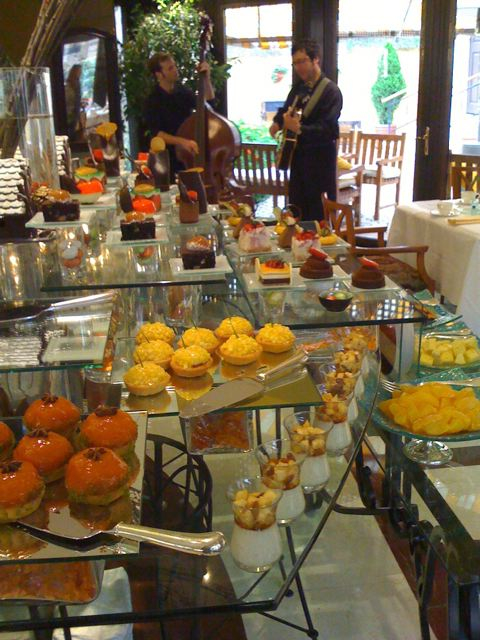
Brunch at the Four Seasons. This is the dessert station.

Once again my apologies for not posting or responding to mail and comments. We are too busy eating and seeing the glorious sights. This is the first real holiday I’ve had in a long time and I’m enjoying it muchly.

Hmm . . . is it lunch time yet?

On the Road Again + Collaboration Quessie

Or getting in a plane again. This time to Istanbul, which is a city I’ve never been before. Am I excited? Yes, I am. But it does mean that blogging may not be as every single day as I like it to be. Might be a couple of weeks before normal service resumes. On the other hand, there may be kickarse wireless in the hotel and I’ll blog like a demon. Just to keep you on your toes.

Have fun in my absence—I know it will be hard—and patient with my slow response to emails and questions etc. If you do have any quessies for me the best way to get a response is to go to the FAQs and ask there. I check them regularly. Whereas questions asked on regular posts often go unanswered. Sorry bout that.

I have a question for youse lot though: What do you feel about novels written in collaboration? I’ve heard some readers won’t touch them, which I find really odd. But I’m curious to know if it’s a widespread feeling. You don’t see that many bestselling collaborations, though there are a few. (I’m excluding ghostwritten books.) I’ve always wanted to do one but the opportunity has never arisen.

Thanks for your answers.

Quick Note on Yesterday’s Post

I’m very sorry that some reviewers of YA were upset or worried by yesterday’s post. I truly was not talking about you. If you’re reading my blog. odds are you know and care about the genre, which is something the people who write those kinds of reviews are often lacking—especially the knowledge.

There are two groups who are writing the kinds of reviews I was mocking:

  1. Reviewers for trade mags/journals/newspaper who are being asked to review outside their area of expertise
  2. Amateur reviewers whose gateway drug to YA was Twilight

The vast majority of specialist kidlit bloggers and trade reviewers are mad keen lovers of the genre who are knowledgeable about its history and don’t make idiotic mistakes like accusing L. J. Smith of ripping off Stephenie Meyer. My post was not aimed at any of you. The kidlit bloggers and reviewers do a wonderful job of keeping people like me informed about our genre and what books we should be reading.

Keep up the good work!

Paranormal/Fantasy YA Review Bingo (updated)

I have a rule that I never respond to bad reviews. I have blogged on several occasions about why I think doing so is pointless. However, I can’t help noticing a certain tenor in many Paranormal/Fantasy YA reviews lately. Everything seems to be talked about in terms of Stephenie Meyer’s Twlight books.

On the one hand it’s inevitable given that they are the most popular books, not just in YA, but in the entire world. Meyer’s had a huge influence and, yes, there are many Twilight knockoffs out there. But on the other hand, people seem to forget that Meyer’s books are very new. Twlight was first published in October 2005. YA fantasy had already existed for decades before Meyer. There were even YA vampire books before Twilight. Thus the constant accusations of ripping off Stephenie Meyer and jumping on the “paranormal bandwagon”1 are a bit rich, particularly when aimed at say, L. J. Smith, whose vampires novels were first published in the 1980s 1991. Pretty hard to rip off a book pub’d almost 20 years before yours.

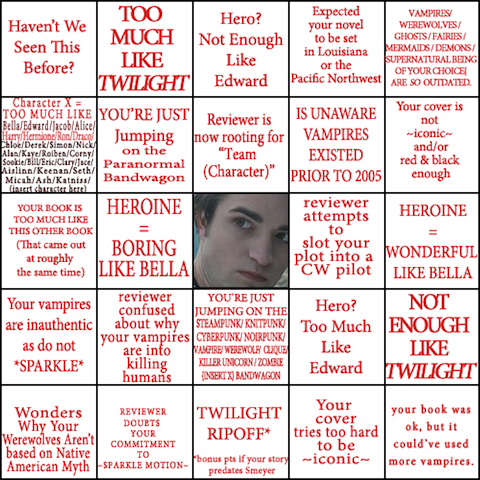
The constant accusations have led me to develop a bingo card so all us writers of YA Fantasy/Paranormal can tick each item off as we are accused. I admit I got the idea because I was recently accused of jumping on the paranormal bandwagon and ripping Stephenie Meyer off with my debut novel, Magic or Madness. As you’ll see below I get bonus points because MorM was first published before Twlight.2

Sometimes I am overwhelmed with the urge to educate people about the timescales of publishing. Not to mention how influences, trends and fashions work. But not today. Today I am in a mocking mood.

So here is my (Sarah Rees Brennan, Diana Peterfreund and Carrie Ryan contributed) list of squares on the Paranormal/Fantasy YA Review Bingo Card.3 See if you’ve gotten a review that allows you to cross off each one. I suspect pretty much all of us who write YA fantasy will be winners.

  • Twilight ripoff (Extra points if the book that is accused of this predates Twilight)
  • Jumping on the paranormal bandwagon (Extra points if the term “paranormal” did not exist outside the Romance genre when your first books were published)
  • Being accused of rippping off a book published after or around the same time as your book
  • Being accused of jumping on a bandwagon that’s hardly a bandwagon such as the steampunk or killer unicorn bandwagon. Shouldn’t there be at least a dozen books before it becomes a bandwagon?
  • The line “haven’t we seen this before” appears in the review
  • Says vampires/werewolves/zombies/fairies/[supernatural being of your choice] is old hat
  • Claims your protag is a ripoff of Bella and/or Edward and/or Jacob
  • Criticises your character for not being as wonderful as Bella
  • Criticises your character for being as drippy as Bella
  • Complains your hero is not dreamy like Edward
  • Complains your character is drippy like Edward
  • Complains your vampires are inauthentic because they do not sparkle
  • Is unaware vampires existed before Twilight came out in 2005
  • Says your book is great because is exactly like Twilight
  • Says your book is great because is nothing like Twilight

I’m sure I’m missing some. Do please suggest more in the comments.

NOTE: Please don’t bash the Twilight books in the comment thread. Stephenie Meyer and her books have been an enormous boon to the field of YA. She’s created more readers than anyone since J. K. Rowling. The fact that the criticisms above keep happening is testament to that.

Update: Aja went and made the bingo card! Bless!

BingoAja

You can see it bigger here. Thank you, Aja!

  1. “Paranormal” is also a pretty recent literary term and was not used at all outside the romance genre until pretty recently. []
  2. Not twenty years before like L. J. Smith but seven months prior is still before. []
  3. Someone with photoshop skills can turn it into an actual bingo card. []

The Problem with Gone with the Wind

Sarah Rees Brennan pointed me to this article about Gone with the Wind by Elizabeth Meryment. It annoyed me. So prepare yourself for a rant. Basically Meryment argues that all criticism of Gone with the Wind (book and film) over the last few decades has been dreadfully unfair, especially from feminists, and why can’t we all just enjoy such a women-centric book with its array of fabulous strong female characters. Now, I happen to agree that Gone with the Wind features many wonderful strong women. However, that being true does not contradict any of the criticisms made of both book and film.

Why do people find it so hard to love something and accept that it’s flawed?

Gone with the Wind is at once a tale of strong women and appallingly racist. Just as there were women who campaigned long and hard for women’s suffrage who were also members of the Klu Klux Klan. Being a feminist does not mean you can’t be racist. Alas.

When I was wee I read the book multiple times and saw the movie almost as often. To this day I can quote the novel’s opening lines: “Scarlett OHara was not beautiful, but men seldom realized it when caught by her charm as the Tarleton twins were.” (No, I didn’t have to google that.) Until my discovery of Flowers in the Attic1 there was no book I loved more than Gone with the Wind. I haven’t re-read it in more than a decade but I still know it better than any book other than Pride and Prejudice. I’m in a good position to unpick Meryment’s claims:

Scarlett O’Hara [is] a woman of substance. No cowering southern belle, here is a woman who is resourceful and resilient and does what she must to survive.

Yet critics and academics, in the seven decades since the film’s release, have been almost unanimous, and disapproving: Scarlett is no feminist but a damsel in distress who relies on feminine charms to get her way. She steals other women’s men, has an insatiable lust for Melanie’s dreary husband Ashley Wilkes and suffers from a chronic flirting problem. Worst of all, she allows Rhett to ravish her during a night of passion that she finds rather enjoyable.

Here’s the thing, all the above is true. Scarlett O’Hara is a woman of substance but throughout the course of the book she also relies on her feminine charms to get her way and has flirts with pretty much everyone who’s male and white. She is a multiple stealer of other women’s men—including her own sister’s—she does have an insatiable lust (which she confuses with true love) for the deadly dull Ashley Wilkes, and she does get ravished by Rhett in an extremely scary scene which (in the movie) cuts to her smiling and happy in the morning.2

All true.

As Meryment points out Scarlett O’Hara’s story begins when she’s sixteen and ends when she’s twenty-eight. During that time she lives through a war, sees many people she cares about die, loses two husbands, has three children, and goes from being a simpering southern belle to a shrewd business woman.

“Scarlett is a survivor,” says Toni Johnson-Woods, a professor of popular culture at the University of Queensland. “She’s the sort of person who would cut up the curtains to make a dress. She gets dirty. She works. She doesn’t actually do anything bad. She’s manipulative, but what person isn’t when they have to be?”

Johnson-Woods seems not to have read the same book I did. [Scarlett] doesn’t actually do anything bad. What now? Let’s leave aside all the lying and those two stolen husbands. I mean India Wilkes and Scarlett’s own sister, Suellen, clearly had it coming. Wanna keep your man? Then hold on to him tighter. Let’s put aside Scarlett’s multiple attempts to commit adultery with Ashley Wilkes.3 And let’s forget that Scarlett saw nothing wrong with slavery. She was sixteen when the war started and brought up to believe in such an evil system. But how about her using slave labour after the war is over in the form of convicts to work her saw mill and allowing her manager to beat them half to death? How’s that for an actually bad thing?

Now I happen to think that Scarlett O’Hara’s ethical impairment and selfishness is part of what makes her such a dynamic and believable literary creation. She lies, she cheats, she does pretty much whatever it takes to survive and save herself, her family and her land. But you don’t have to pretend that she never does anything bad to find her complex and three-dimensional. Many of my favourite literary creations—Mouse in Walter Mosley’s Easy Rawlins books, Highsmith’s Ripley, pretty much any character ever written by Jim Thompson—do many bad bad things. I don’t need to pretend that they’re good in order to enjoy reading about them.

Scarlett has many good qualities but she has plenty of bad ones too. Frankly I would not want her for a friend because she’s one of those women who only notices men. She doesn’t even realise what an amazing friend Melanie has been to her until Melanie’s on her death bed. Scarlett is not BFF material. And she’s not a feminist. She doesn’t care whether women get to vote or not, she doesn’t care about women as a group, only about herself and her family. She has no political consciousness at all.

Film critics also have been circumspect about Scarlett’s place as a feminist symbol, as well as horrified, in more enlightened times, by the glorification of the slave life on the southern plantations. As The Australian’s film critic Evan Williams noted in a 1981 review, published at the time of a re-release: “The film’s attitude to blacks (referred to constantly as ‘darkies’), to say nothing of its attitude to women, would scarcely find favour today. Slavery was glossed over; male authority taken for granted.”

Yet, for all its perceived flaws, the film and the novel are deeply loved, and remain the top-selling novel of all time (more than 30 million sales worldwide) and the highest grossing movie ($1,450,680,400 in box-office takings, adjusted for inflation). Now, in the US, where hardcore feminism has been decried for more than a decade, new perspectives about the film are emerging.

Evan Williams is spot on. Pointing out the film’s popularity does not change that. Lots of racist and sexist novels and films are deeply loved and do incredibly well. Success does not render a book or movie free of flaws.

Meryment writes “perceived flaws” as if to imply that Williams and other people who have criticised Gone with the Wind‘s racism are just imagining it. We’re not. None of the black characters in the book are fully-realised, three-dimensional characters. None of them have lives or dreams or aspirations outside of O’Hara and her family. They live in order to serve their masters. Before and after the Civil War. The book and the film are caught up in a poisonously romantic view of slavery wherein the slaves were happy to be slaves, were miserable when the South lost the war, and just wished their masters would keep looking after them. It’s only the bad negroes who make trouble. (The book and film’s language, not mine.)

In Gone with the Wind the Klu Klux Klan are the good guys.

Yeah, right, we’re imagining the racism.

Why just look at the character of Mammy, says Meryment, she’s a strong character! That proves the book isn’t racist:

Of all the strong females, perhaps Mammy is the most galling for ardent critics of the film. Black, enslaved and conforming to 1930s stereotype of the loyal, usually overweight, woman who offered cheerful servitude to her owners, McDaniel’s Mammy is nevertheless a complex and confronting creation. Indomitable and opinionated, she largely does as she likes, whether her masters like it or not. (“I said I was going to Atlanta with you and going with you I is,” she tells Scarlett at one point.)

Mammy is every bit the stereotype. With no life other than to look after Scarlett, which the quote above proves. The reason she’s disobeying Scarlett is in order to look after her. Not to do something for herself like find her own kin. The only reason so many argue that Mammy breaks with the stereotype is because Hattie McDaniel was a wonderful actor, who transcended the extremely limited and belittling role. There’s no such respite from the stereotype in the book. (Don’t get me started on the character of Prissy.)

To echo Meryment’s language, it is galling that a book first published in 1936, when the civil rights movement in the USA was already underway, and turned into a movie in 1939—the year that Billie Holiday first performed and recorded “Strange Fruit” about lynching in the South—could be so astonishingly blind to the evil that is slavery. That it could spend a gazillion pages and hours glorifying a system that was built on the kidnapping and enforced labour of hundreds of thousands of people appalls me. The glorious south that Margaret Mitchell is so nostalgic for was built out of exploitation, murder, and rape. But it’s even more galling that here in 2009 there are still people trying to pretend that Gone with the Wind isn’t profoundly racist so they can enjoy all its other aspects.

Yes, Gone with the Wind is an amazing book and film.4 Yes, it’s the tale of two extraordinarily strong women, Scarlett O’Hara and Melanie Wilkes, and their enduring friendship5. For many years I loved it. Feel free to continue loving it, but please don’t pretend that us critics are being unfair, or in some way misreading Gone with the Wind when we call it on its nostalgic longing for an era in which the white upper classes lived decadent useless lives dependent on the blood of black people.

We’re not.
  1. I was twelve! []
  2. It freaked me out as a kid—he says he’s going to crush her skull like a walnut!—it still freaks me out. []
  3. Let’s even forget that wanting him is a crime against good taste. []
  4. It’s stood the test of time way better than Flowers in the Attic. []
  5. Even while Scarlett doesn’t realise they’re friends. Another flaw of hers: not very observant. []

NaNo Tip No. 30: Rewriting

This is it the very last tip of NaNoWriMo 2009! At the end of this day you will be done! Woohoo!

Of course, you’re not really done. Not even if you managed to finish a whole novel in one month. Though if you did, congrats! I’ve never managed that. My hat is off to you. As it is to everyone who took part this month no matter how many words you wrote or how close you got to completion.

But what to do with your finished zero draft? How do you turn it into a first draft? Or better yet a finished draft?

Well that, my friends, requires a great deal of rewriting. Lucky for you I have written the essential guide to rewriting. Which, even though it is now almost two years old still contains much of my accumulated wisdom on rewriting. Here is a tiny preview:

There are two basic kinds of rewriting: structural and sentence level. Most beginner writers get caught up in sentence level changes. They go over their manuscripts deleting and switching words around (what’s called line editing in the biz). They do this before they’ve learned how to fix the structure. The result is lots of shifting around of deck chairs while the Titanic sinks.

The rest is here. I hope you find it useful.

But whatever you do take at least a week off between drafts. Your brain deserves a break.

Blogging & Teaching

One of my highlights of NCTE was doing a panel on blogging with Laurie Halse Anderson, Maureen Johnson, Barbara O’Connor and Lisa Yee. The panel was put together and moderated by Denise Anderson, who was just splendid and had done a tonne of research. I was very impressed. They’ve all now blogged about the panel. (Links to their posts are on their names.) All except for me and Maureen. As I think it’s a sign of deep failure not to blog about a panel on blogging I am now fixing my omission. I doubt Maureen will, however, because hers is not that kind of a blog.

The panel was aimed at teachers and concerned with demonstrating how they can make use of authors’ blogs in the classroom. Denise observed that many of her colleagues were unaware of authors blogs and was on a mission to open their eyes. I suspect, though, that most of the educators in the audience were well aware of blogs and that was why they were there. Certainly the questions we were asked were very knowledegable.

We authors took the opportunity to ask the teachers not to set writing to authors as an assignment. Yes, that’s right, we whinged. We explained how much time it takes for us to answer questions especially when there are forty students writing us at once. Volume is not our only issue. The students tend to write asking us questions that are already answered on our sites, revealing they have the skills to find our email addresses, but not to find the answers to their questions, which are also in plain slight.

We also mentioned that some of the letters we get from students are flat out rude:

YOU MUST ANSWER THIS EMAIL STRAIGHT AWAY. MY HOMEWORK IS DUE TOMORROW. HERE ARE MY 456 QUESTIONS.

Laurie asked the following question: “Should we continue to spend classroom time on letter writing or has the time come to teach how to compose appropriate email communication?”

Our panel gave a very emphatic yes to the second half. Teach them how to write polite emails, please! I saw many heads nodding in the audience.

Another concern we had was students leaving comments on our blog making their phone numbers or email addresses public. We made it clear that we delete such information but thought that was another thing that could be addressed in the classroom.

We were all very clear that we love hearing from our readers and try very hard to answer them all. It’s just the students demanding we do their homework that we’re reluctant to respond to. We write for a living. Our novels are our top priorities, any additional writing comes after that. Which is why most of us started blogging in the first place—to have a method of communicating directly with our readers. We all agreed that the comments are the best part of blogging. Laurie said that she feels the readers of her blog have become family.

Laurie also mentioned that if they ever have parents wanting to remove a book from the school library or prevent it being taught they should get in contact with the writer because often the writer’s been through this before and can offer support. (Oh, look: it’s happened again, this time in Kentucky. And Laurie Halse Anderson’s Twisted is one of the books.)

Hmm, we seem to have agreed about many things. The only disagreement I can think of is when we were answering a question from the audience about the relationship of our blog writing to our novel writing. I said that I found blogging much more relaxing and easy than novel writing. While I craft it, the writing here doesn’t go through any where near as many drafts as my fiction does. Nor is it professionally edited, copyedited or proofed. It also has a different voice than my novel writing, but I do still think of it as writing and it has an influence on my novels.

Maureen said that she views all her writing the same whether it’s a novel or a blog post or a tweet and that it all has the same voice. Which I think is one of the main things that makes Maureen’s blog so different to most other blogs I read. Every entry reads like a story and the voice is indeed very like her novel writing voice (but quite distinct from the Maureen I know). And is why a post about a blogging panel wouldn’t work there.

Sadly I can no longer remember Lisa or Laurie’s response but Barbara was very clear that she did not see her blog writing as real writing at all. It’s completely distinct from her fiction.

I have to admit that before I was contacted to be part of this panel I had not given much thought to the use my blog might have for educators. For me this panel was an eye opener to look at blogs from a different point of view. Not just from the “this is fun” pov.

Though blogging is fun. I feel like that’s the one thing we didn’t talk about. Maybe next time.

Do any of you have any comments or ideas about blogging and teaching? Do any of you use blogs in the classroom? Encourage your students to read blogs? To blog?

NaNo Tip No. 28: Take Care of Yourself

It’s my second last NaNoWriMo post! Wow, that went fast. You’ve all been at it for 28 days now.1 Which leads me to suspect that some of you may be feeling quite sore about now.

Writing, like any job that involves spending hours in front of a computer, has a high injury rate. Almost every pro writer I know has some kind of neck/back/wrist problem. Carpal tunnel syndrome and other repetitive strain injury are very common.

At the end of almost every first draft deadline, when I’ve been writing every day for weeks and weeks on end, and my writing days have stretched out from four hours to twelve or longer, my upper back and/or neck packs it in. I then have to get emergency work so that I can, you know, move my neck.

Once I recognised this pattern,2 I made a whole bunch of changes to stop it happening again. If you’re serious about writing, the time to start with good habits is now, before you become a crippled wreck unable to sign books for your fans.

Here are the changes I made:

  • I changed my work set up. No more writing slumped on the couch. All ergonomic all the time for me!
  • I started exercising more. I now work out at the gym with a trainer3 a minimum of three times a week. I also try to fit in a long walk at the end of each writing day. And lindy hop when possible.
  • I increased the number of breaks I took. I tried one of those programmes that beeps at you every thirty minutes but it kept beeping just as I was nailing a scene or right when I’d finally gotten into the flow of things that I came to loathe the bloody smiling beepy monster and harboured fantasies of ripping its throat out. So I switched to drinking even more water which ensures frequent loo breaks.
  • I take a few minutes to stretch my back, neck, wrists and arms every time I get up from the computer.
  • I get a weekly massage. It sounds indulgent but truly it’s maintenance. If I’m being massaged weekly as the deadline approaches my body doesn’t pack it in, which works out cheaper than getting all that work when my body is broken.

I have not been perfect at implementing my system. While on tour this year there were no massages, no exercise and I spent a lot of time slumped over my computer in hotels and airports, which led to a recurrence of my neck/upper back injury, which led to emergency cupping:

cuppedback

Not pretty, is it?

You’ve been warned!

Good luck with your last few days.

And don’t forget to check out Scott’s tips. His last one is tomorrow.

  1. Unless you haven’t started today’s writing. []
  2. And when I say “I” I mean Scott. []
  3. Why with a trainer? Cause I find gyms unspeakably boring and I last about ten minutes in them by myself. But three years ago I started working out with a wonderful trainer who has made going to the gym fun. I’m fitter and happier. There are much cheaper ways to stay fit. Like running. Which tragically I cannot do because of various injuries. Have I ever mentioned my sports curse? *Heh hem.* I digress. If you have not already I’m sure you’ll find a method of staying fit that works for you. []

NaNo Tips No. 26: Giving Thanks

Only four more days of NaNoWriMo to go, and I’m noticing that a lot of people are beating up on themselves. They haven’t met their deadlines. They haven’t got enough words. Their words aren’t good enough. The muse is missing! Etc, etc.

Welcome to the wonderful world of being a writer.

At every level, writers beat up on themselves. If they’re not published yet, then that’s their source of grief. If they are published, then they aren’t selling enough, well reviewed enough, or haven’t won enough awards. If they are award-winning bestsellers, their publisher makes them tour all the time. And because they’re touring all the time, they’re too tired and sick to write.

Oh, the woe that it is to be a writer. Even the successful ones are miserable.

So let us do the Pollyanna thing. Here am I, an Australian in the United States of America, enjoying the local official Polyanna day (known as Thanksgiving). Now this is a day with a very troubled history, but one cool aspect of Thanksgiving is that it’s a national day given over to talking about what you’re thankful for.

Those of you doing NaNoWriMo may discover that you’re thankful that you have the time, resources and support to spend the month of November trying to write a novel. There are plenty of people without any of those things.

So you may not have 44,000 words. You may only have 5,000. But that’s still 5,000 more than you had on the first of November. And to quote one of my favorite songs, “From little things, big things grow.”

I did not finish the first novel I attempted to write. Or the second, or the third, or the . . . I’ve lost count how many.

But eventually I finished a novel. It remains unpublished, but I’m thankful that I wrote it, because it’s the foundation that all my later novels are built upon.

So what if you don’t get a novel finished in November? There are plenty more months where this one came from. You’ve proven that you can write, given a little bit of structure and a hundred thousand people writing along with you. Soon you can have a go at writing on your own.

Be thankful for the work you have done this month. Clutch it to your chest.

NaNo Tip No. 24: Writing While White

Lately many white writers have been asking me about writing characters who aren’t white. Quite a few are doing NaNoWriMo, so I decided I’d put my responses into the NaNo tips.

I’ve been asked the following questions: Why should I have non-white characters in my books? How do I write about non-white people if I’ve never known any? Should I write about non-white people at all?

I’ve already addressed some of these questions a number of times. I’m not sure if any of my responses are adequate. These are complicated questions that I wrestle with myself.

And, of course, I feel very weird being put in the position of giving people permission to write. No one can do that for you. Least of all me.

In a few cases, I’ve been tempted to tell these well-meaning askers, “No, don’t put non-white characters in your fiction.” Reviews like this one by the fabulous Doret Canton definitely make me feel that there are white writers for whom writing outside their social circle is a bad idea.

As a general rule you should never write about anything you are ignorant about. If you want to write about an African-American character living in NYC, say, and you don’t know any, and you’ve never been to NYC, odds are you’re going to do a bad job. Which is why Chris Crutcher’s Whale Talk is so good. He’s drawing on his lived experiences.

Now, you may point out (if you know me at all well) that I have repeatedly written about things about which I know practically nothing. Mathematics in the Magic or Madness trilogy, as well as luge in How To Ditch Your Fairy and biology in Liar. I did a lot of research to be able to write about them but I was shockingly ignorant starting out.1

So what’s the difference?

Mathematics, luge, and biology are not people. They can’t be hurt.

What we all have to remember when we write about people—any people—is that the risks of reinforcing stereotypes and thus hurting people is very high. So the onus is on us to do the very best job we can. We also have to remember that even when we do a wonderful job, even if we are a member of the group we’re representing, there are still people who will be offended.

There will also be people who read your characters in stereotyped ways no matter what you do. For example, there’s been much discussion on this blog about representations of women and the way women characters are held to different standards. I recently saw a discussion of Sarah Rees Brennan’s wonderful debut novel Demon’s Lexicon where Mae was referred to by a commenter as a “whore,” which is, aside from everything else, factually incorrect. The much more sexually active character (also not a whore), Nick, was discussed in approving terms.

None of us want to perpetuate those attitudes about female sexuality but even when we’re writing strong2 3D female characters, like Mae, readers are still calling them whores. Which is to say it’s really hard bucking centuries of negative representations of women and particularly of their sexuality.

None of the white writers asking me these questions wants to hurt anyone or reproduce racist stereotypes. They’re asking because they’re concerned and they want to do the right thing and because they recognise that most of the novels being published in the USA are about white characters. Outside of bookstores like Hue-Man the shelves of most bookstores in the USA are groaning with books about white people.

However, when I ask them what they mean about not knowing any non-white people it usually turns out not to be true. Often white people start seeing their non-white friends as “white”3 and forget that they’re Hispanic or of Japanese or Korean or Indian ancestry. I strongly recommend writing about the people you know. But perhaps you need to open your eyes to notice that not everyone around you is the same race as you. Maybe you need to think about why you’ve started seeing them as white, and what that means.

Writing should challenge the way you perceive the world. You should look harder and longer than you ever have before. Notice that the sky at night is not black, that eyes are not one uniform colour and that car engines don’t “growl”. I would argue that thinking about how race and class and gender and sexuality and all the other aspects that make up who we are and how we treat each other is absolutely crucial to becoming, not just a better writer, but a better person.

  1. Sadly once the books are written all that I gleaned in order to write them drops out of my head. []
  2. By “strong” I do not mean “arsekicking”. See Diana Peterfreund’s comment for further explanation. []
  3. Which is a whole other problem. []

NaNo Tip No. 22: Read Bad Books

Yesterday Scott talked about the importance of rereading books you love to figure out how the writer made you react the way you did. He advised rereading good books. Today I’m going to recommend reading and examining bad books.

This may sound like strange advice but often you learn more from examining a broken thing than something that’s in perfect working order. It’s actually easier to do this than it is to figure out how a good book achieves its effects. This is because it’s much harder to get sucked into the narrative of a book that’s broken. Every time I reread Pride and Prejudice I have to work crazy hard to look closely at the writing and avoid getting absorbed with Lizzy Bennet’s story all over again.

The next time you’re reading a book that you hate, stop and figure out why. What is it that the book is doing to annoy you? How is it broken? Are the characters thin and unbelievable? What in the writing makes you feel that way about them? Why do you think the plot makes no sense? What would you have to do to fix it? Look carefully at the text and identify what’s not working and then—and this is the important part—figure out how it could be made to work.

Now all you have to do is to avoid doing any of those things in your own writing. And remember all your excellent solutions to those plot snarls and lame characters, because one day you may need them to fix your own broken novel.

Easy peasy!

NCTE Events + Public Event in Philadelphia

I’m in Philadelphia at the National Council of Teachers of English convention. Such larks!

If you’re here you can find me in the following places today:

    Saturday, November 21st

    10:00-10:45AM
    Signing at Andersons (booth #544)

    2:00-3:00PM
    Signing at the Bloomsbury (booth #609-611)

    4:15-5:30PM
    “Authors’ Blogs: Connections, Collaboration, and Creativity”
    with chair Denise Johnson, Laurie Halse Anderson,
    Maureen Johnson, me, Barbara O’Connor, and Lisa Yee
    Room 103A, Street Level

If you’re in Philly but not at NCTE I have one public event. Just me and some of the most famous writers of YA in the universe:

    Sunday 22 November 2009, 1:00-3:00PM
    A NOVEL IDEA:
    A benefit for the
    Philadelphia Free Library
    summer reading program
    Laurie Halse Anderson, Jay Asher,
    T.A. Barron, Sarah Dessen,
    Steven Kluger, Justine Larbalestier,
    David Levithan, Lauren Myracle,
    Scott Westerfeld, Jacqueline Woodson
    Children’s Book World
    17 Haverford Station Road
    Haverford, PA

Hope to see some of you there!

NaNo Tip No. 20: Don’t Wait for the Muse to Strike

It’s day twenty and I’ve seen some talk on NaNoNoWriMo blogs of muses showing up or, more often, not. I’m sure for some of you muses are a very useful metaphor for your creative process. However, sitting on your arse waiting for them to show up? Frequently not a good approach to actual writing.

“Oh noes! My muse is not here! I cannot write! Instead I will play Left 4 Dead 2 until muse shows up.”

This method will leave you with kickarse zombie killing skills but will not be much chop when it comes to, you know, writing.

Now, I’m not a very spiritual or mystical person, so feel free to ignore me. But I can tell you that even my most mystical woo-woo writer friends do not sit around waiting for their muse to show up. They write when they’re feeling inspired. They write when they’re not. Depending on deadlines, they write when it’s a gorgeous day and they’d much rather be cycling, they write when they’re supposed to be at a movie with friends, they write when they haven’t had enough sleep, they write when they’re ill. They write because it is their job to do so.

One of the cool things about NaNoWriMo is that it gives you a taste of what it’s like to be a professional writer. Of what it’s like to write day after day after day even when you don’t want to. What some of you may discover is that it’s not for you. That you truly cannot write without inspiration. That deadlines don’t galvanise you, they freeze you. In which case the life of a full-time pro writer is not for you.

That does not mean you can’t still write. At all. There are many published writers, who write in their spare time, for whom it is not their main source of income. The majority of published writers are like that. There are even more unpublished writers for whom the writing is the thing and getting published is not the goal. Many writers of fanfic have zero desire to turn pro.

Which leads me to revise my position: it’s perfectly fine to wait for your muse to show up if writing is not your job. But if you depend upon writing then you have to learn to make it a habit, a way of life, and not depend on totally unreliable muses and inspiration and the like.

Don’t forget to check out Scott’s NaNo writing tips.

Liar Question

I keep being asked the same basic question about Liar so I thought that I would answer it here before pushing it across to the Liar FAQ. My answer is not a spoiler as it touches on stuff that is revealed in the first few pages.

The question is:

    Q: What do I know is true that Micah tells us?

    A: It’s not straight forward for me to answer this question. What I thought I knew about Micah changed as I wrote the book. But I can tell you that all Micah’s fundamentals are absolutely true. Her race, her age, her gender, her neighbourhood—she is from the East Village of New York City, her parents. I also know that she had a relationship with Zach, which was reciprocal. Her mourning for him is absolutely real.

I do know more beyond that but it’s spoilery. Hope that satisfies those who’ve been asking.

For those of you who’ve read it and are wondering what other people are thinking about it you should check out the spoiler thread. You should also have a look at the FAQ thread where people have been sharing some interesting thoughts about the book and asking some curly questions.

NaNo Tip No. 18: Breaking with Stereotypes

Yesterday’s post led to Kilks suggesting that I base a NaNo tip on it, which I am now doing.

One of the biggest flaws in beginner writing is a reliance on stereotypes and cliches which produces characters who never come to life because they lack verisimilitude. The female protag faints and is afraid of spiders. The male one is brave and strong. Or vice versa. And that’s all there is to them. They’re thinner than paper.

What do I mean by a stereotype? Let’s look at one that frequently shows up in US teen movies and books: the dumb jock.

Now am I saying that you can’t write about a dumb jock? No, absolutely not. I’m saying that if you’re writing a character who has been written a million times before and been in a million movies you have to work hard to make them transcend being merely “the dumb jock.” You have to turn them into a fully realised character.

My favourite dumb jock is D.J. Schwenk, the protag of Catherine Gilbert Murdock‘s Dairy Queen trilogy. D.J. breaks the stereotype in several ways. For starters she’s a girl and she’s playing American football on a boy’s team. But there’s more to it than that. She’s dumb in that she’s not very good at school work. She doesn’t get why people read books for pleasure. And she’s not particularly smart about her own feelings. Or rather she’s slow at figuring them out. She’s slow at things that aren’t physical. But she gets there eventually. All too often we equate fast thinking with smart thinking and D.J. helps get you to rethink that. Maybe she’s considered “dumb” because our definition of smart isn’t very flexible?

When a character is making you rethink what it means to be “dumb” or “smart” you know you’re in the hands of a wonderful writer.

How does Murdock do it?

It’s all in the details. The tell-tale observations that are so particular to her character. The syntax and rhythm of D.J.’s speech (the books are in first person) sounds like no one but D.J. Schwenk. Here’s the opening of the third book in the trilogy, Front and Center:

Here are ten words I never thought I’d be saying . . . Well, okay, sure. I say these words all the time. It’s not like school and good and to are the kind of words you can avoid even if you wanted to. It’s just that I’ve never said them in this particular order. Not that I can remember, anyway. But what do you know, there they were inside my head, like a little thing you’d say to get yourself psyched: It sure feels good to be going back to school.

It feels like D.J. is talking directly to us. We get to see her thought patterns, which are halting, even clumsy, she’s not comfortable with words, which is something we usually associate with being smart.

It’s very intimate to be allowed such close access to someone else’s thoughts. It’s a great way to get your audience on side with your character. We get to know them better than anyone else in the book does. And when we know a character that well it’s impossible for them to remain a stereotype.

So there you have it: if you get inside your character’s head, really get to understand them, then they cease to be a cliche. It doesn’t matter if they started as the perky cheerleader, or the loner goth kid who reads too much, or the bully with problems at home they will become themselves: real and believable.

Good luck with it!

Blank Page Heroine

Recently, the brilliant Sarah Rees Brennan talked about her love of romance and reviewed a few in her inimitable style.1 She mentioned in passing her least favourite kind of heroine:

I truly hate the Blank Page Heroine. She is in a lot of books—I don’t mean to pick on romance, because sadly I have seen her in every genre, including my own—and sometimes she seems to be there as a match for the hero who won’t bother him with things like ‘hobbies’ and ‘opinions.’ Sometimes she is carefully featureless (still missing those pesky hobbies and opinions) so that, apparently, the reader can identify with her and slot their own personalities onto a blank page. As I don’t identify with blank pages, I find the whole business disturbing.

I had always thought of this as The Girlfriend. She is in many many many Hollywood movies and is absolutely interchangeable in them. Because it’s the male characters who are important in movies like . . . Nah. I won’t name them so the comments don’t become an argument about how I am wrong and So & So movie is not like that and blah blah blah. The girl, if she’s there at all, is merely decoration and a reward for the hero. She is entirely without personality. And thus completely without interest for me, which is why I do not like such movies.

I was quite shocked to find the same character in books written by women. I’d become convinced that she was a straight male fantasy. Surely women know that we women have opinions and hobbies and an internal life? Why would they write a female character without dimensions? It’s still a mystery. I adore Sarah Rees Brennan’s name for them: Blank Page Heroine. That’s exactly it. There’s no there there. Just a blankness. A very sad making blankness. Bad enough that we women are all too often told to shut up and not take up space in real life, but for it to happen in our escapist literature too? Aaargh!

And what kind of a lesson does Blank Page Heroine Love teach? If the love between two people involves one of them giving up everything for the other one including their personality, their own likes and desires and needs, then that love is not going to last long or end well. Trust me, I have seen it happen. If you have to suppress who you are in order for your relationship to last2 then that relationship does not deserve to last. It’s not good for you or the person you love.

But thankfully, as SRB points out, there have been many wonderful romances of late.3 Heroines who exist for many reasons other than to find the love of that one true hero.4 My favourite recent romance writer is Sherry Thomas, who not only writes wonderfully believable men and women but some of them are even older than 25! Bless! Go check out SRB’s post for more romance recommendations.

  1. Well, I could not imitate it. []
  2. Unless, like Dexter, you happen to be a serial killer. []
  3. And always. Austen’s heroines aren’t exactly blank pages. []
  4. Why some of them are even there for the love of another heroine! []

NaNo Tip No. 16: Edit as You Go

I know I wrote a whole tip telling you to ease up on yourself and expect badness in your first draft. I encouraged you to just pound it out and leave the editing till later.

Sadly, that doesn’t work for every writer. Nor does it work for every book. Although I bashed out a crappy zero draft for the majority of my books, I wrote Liar editing as I went. I don’t think it would have worked to have written it any other way.

I wrote Liar scene by scene. Working on each one until it was polished and gleaming and then, and only then, moving on to the next one. The scenes in Liar are pretty short so it was easier to write that way than if they were longer regular chapters. (You can see an extract here. I talk a bit more about the writing of Liar here.)

The other approach to editing as you go is to start each new session by going over the last bit of the book you wrote. This is an especially good technique for those people who struggle to get going with their writing. Instead of beginning each new session with the scary blankness of what is not yet written, you begin with the comfort of words already on the page. Go over the last couple of chapters, fix what needs fixing from typos on up, reacquaint yourself with your characters and story, and write from there. By the time the draft is finished you’ll have gone over the majority of the novel two or three times and your novel will be in much better shape than if you’d just banged the whole thing out with nary a glance backwards.

Not that there’s anything wrong with that approach. Like I said I’ve written many novels that way.

You’re now more than half way through NaNoWriMo. Congratulations! And good luck for the next 14 days!

Signed Books in the USA

Because I just had a long discussion with some friends about what constitutes being crassly commercial I’ve decided now is the time to let you know where you can buy signed books of mine. What? Some people write and ask me that, you know. Also it’s Sunday no one will notice me being crassly commercial.

I have scribbled on copies of my books in the following places in the US of A:

For those of you in Australia, I will be back home and shall try to sign books at various book stores in Sydney in December. I pretty much always manage to make it to Kinokuniya and Galaxy. I’ll keep you posted.

Thus ends this crassly comercial service announcement. Normal service will resume tomorrow.

NaNo Tip No. 14: Procrastination can be Your Friend

Yes, it’s time for some more vaguely contradictory advice. So first a word on that. Here’s why this tip is not contradictory. No one technique or strategy works for every writer. They don’t even work for one writer all the time. There are times when the only way I can get any writing done is to cut off from all external stimuli, most especially the internet. Sometimes I can’t write if there’s music on. But other times I need music and I need the internet.

Sometimes my procrastination feeds my writing.

That’s right, sometimes procrastination is your friend.

Yes, I know I just told you to turn the internet off. Well, now I’m telling you to turn it back on again. Or to go clean the bathroom. Or crochet or knit. Shoot some hoops. Take a shower. Or do some other urgent-ish thing that is calling to you rather than writing. Yes, even if it involves hacking off zombie heads.

My biggest form of procrastination is IMing with friends. I have been known to spend 8 hours straight doing so. (Hello, Alaya!) I find five convos1 at the same time no problem.2 I can’t tell you how many times those conversations have given me ideas, solved plot problems, made me realise something about my writing I never realised before.

To be clear we mostly don’t talk about each other’s writing directly. What we do is talk about many other things including shows, books, movies we love (or hate) and what did (or didn’t) work about them. Ever since Diana Peterfreund first nudged me towards watching Avatar we’ve been talking about it. I think writing a convincing and likable Chosen One is incredibly hard. I tend to dislike fiction that centres around one. Yet Aang in Avatar is just about pitch perfect. Our Avatar conversations have sparked off a million and one ideas that have gone into various projects of mine.

So, yes, it’s procrastinating. But it’s also feeding into my work in awesomely productive ways. I think everything I experience feeds into my writing. Which is why I believe procrastination is necessary.

Sometimes you need to be alone with your work. But no one can create without stimulus from the outside world. The key is balancing the two.

  1. More than five, though, and I’m lost. What can I tell you? I’m old. []
  2. While also reading blogs etc. []

Ebooks of My Novels

This year I’ve been getting more and more people asking about ebook editions of my novels. This is my general response to that query.

First of all: you’re asking the wrong person. My publishers are in charge of the electronic rights to my novels. If you’re curious John Scalzi has more to say on this question. If you’re desperate for ebooks of my stuff bug my publishers, not me. That will be much more effective.

But here’s what I know: Penguin has made electronic editions of Magic Lessons and Magic’s Child available. But for some reason not the first book in that trilogy, Magic or Madness. Apparently they’re working on it. That’s all I know.

Bloomsbury, who publish How To Ditch Your Fairy and Liar, are also working on making them available as ebooks. Possibly it will happen by the end of this year. Again that’s all I know.

I suspect one of the big reasons that my books are not available is that very few teens are reading ebooks and they are the biggest part of my audience. (Bless you all!)

There’s also the fact that those who have converted to ebooks are still a very small part of the market. Tiny even. So there’s no great urgency for my publishers to make my books available. It’s a very new thing for them. Many of the big publishers are still figuring out their approach to ebooks, especially YA and children’s publishers. I’m sure in the next few years, as the ebook market expands, all of my books, and everyone else’s, will be available as a matter of course. But we are just at the beginning of the ebook revolution.

And there you have it: bug them, not me.

NaNo Tip No. 12: Turn the Internet off

It’s day 12 and on the NaNoWriMo blogs there’s much talk of word counts missed, scenes not written, and of generally falling behind. Now that is to be expected. As previously mentioned I do not think you should be freaking out about word counts. NaNoWriMo is chance to stretch and grow. However, I can’t help noticing that those same blog bemoaning lack of progress are also full of talk of excellent blogs with great NaNoWriMo advice and sundry other things discovered on these wonderous intramanets. Could it be that the one is getting in the way of the other?

Perhaps now is the time to rip the DSL from the wall, switch your cable off, hide your modem. Maybe you need to make your internet go away entirely until you’ve gotten as much writing done as you’re capable of.

I am a creature of little self control so sometimes I have Scott take the internet from me so I do not start chatting with everyone I know for hours and hours about writing rather than, you know, actually writing. The most and most consistent writing I’ve ever done was when staying in an internet-less house.

I worry that some of you are as bad as me.

How about for the next few days you experiment with not having the internet on while you NaNoWriMo?

Let me know how it goes.

Note: Today’s tip was brought to you by a swearing John Scalzi.

Don’t forget to check out Scott’s tips. Yesterday’s one was about the passage of disbelief.

Last Night’s Event

The event at Books of Wonder with Libba Bray, Kristin Cashore, Suzanne Collins, me and Scott last night was astonishing. Several people said they thought there were around 200 people there. I could not possibly guess from where I was sitting, but it did indeed appear to be many.

Here’s my bad fuzzy photo of the many:

It was pretty overwhelming to be on the bill with such popular writers, especially Suzanne Collins. For those who don’t know, her two most recent novels, Hunger Games and Catching Fire are currently, and have been for some time, numbers one and two on The New York Times bestsellers list, selling bajillions of copies a week. The Books of Wonder appearance was organised around Suzanne because it was her only signing for Catching Fire. I can’t tell you how grateful I am that Peter Glassman (the owner of BoW) thought to ask me to take part. Here’s Suzanne in action (with Libba Bray listening carefully):

I’d never met Suzanne before. She’s lovely, smart and gently funny. She, me and Libba had a fun conversation about the joys (meeting wonderful teens, booksellers, librarians) and travails (food poisoning) of touring. She’s also extraordinarily generous, giving up a big chunk of her presentation to talk in detail about how much she’d loved Liar, Fire,1 Leviathan and Going Bovine. Thank you, Suzanne.

I’d never met Kristin either and she also turned out to be lovely. I don’t know what it is about the YA world but almost all the authors I’ve met have been fabulous.2 It’s such a wonderful community to be part of.

It was only overwhelming at first then it quickly became relaxing. For most of my tour, I’ve done solo events with all the attention on me, but last night I could sit back and watch how other YA authors answer questions about how they come up with names, where they get their ideas, and which characters they like best.

Suzanne and Kristin were both so thoughtful and smart, providing little glimpses into how they work. They both have detailed maps of the imaginary worlds they’ve created. It sounds like Kristin’s world encompasses gazillions of countries and large swathes of time. Very Tolkienesque. Libba Bray remains one of the funniest people on the planet and I don’t just say that because she’s a dear friend of mine. As does Scott.3 Last night’s event made me want to stick to doing events with other people. Not just because it’s more fun for me, but also because it felt like the audience gets more out of it too.

What do you think?

One event I’m dying to do is me and Libba talking about unreliable narrators. For those of you who haven’t read Going Bovine you really should. We wrote Liar and Going Bovine at the same time and commented on each other’s early drafts. I can’t tell you how deeply eerie it was to discover we were both writing unreliable narrators and how many resemblances there were between our books even while they were also extremely different. Going Bovine is hysterically funny; Liar not so much. I think our two books work amazingly well side by side. Turns out I am not the only one to notice this.

Maybe some time next year we’ll be able to talk about our books, their unreliability, and how hard they were to write side by side. Fingers crossed!

  1. As Kristin said, “Look! Our books rhyme!” []
  2. Another contributing factor to why I never want to write for the grown ups: I’d have to hang out with the cranky adult literature authors. Ewww. []
  3. Yes, I know he’s my husband but he truly is hilarious. []

NaNo Tip No. 10: Don’t Skip the Tricky Bits

I hope you all saw Scott’s tip yesterday, the first of a series on meta-documents. Though now that I use Scrivener, I no longer use meta-documents. Or, rather, I do but they’re all incorporated into the one Scrivener document so it doesn’t feel like lots of different documents.

But I digress: on to today’s tip which has nothing to do with meta-documents and also kind of contradicts my previous tip about using square brackets. It emerges from a conversation I had with the marvellous Sarah Rees Brennan. It turns out that she does not skip the boring or tricky bits but instead bribes herself into writing them. Her reward is to write the fun scene on the other side of the tricky bit. So if she doesn’t write the scene she’s been avoiding then she’s not allowed to write the scene she really wants to write.

There are many reasons for doing this but the most frequently cited one is that if you skip all the hard bits—as I advised you to do in the square bracket post—you may never finish the book. As Zeborah puts it:

It means I write all the easy parts of the book first, meaning I have to write all the hard parts later in a single chunk, meaning I probably won’t finish the book. Whereas if I force myself to write entirely in order, I can use a future easy-and-fun scene as a reward for getting through a hard scene.

Another reason not to skip tricky scenes is that sometimes you don’t know whether a scene is going to be hard until you’ve written it. I can’t tell you how many times a scene I was dreading has turned out to be easy and vice versa. A slightly spoilery Liar example after the cut: …

On Tips + OTP

From various sources, I see that a few people are a little freaked when the tips Scott and me have been sharing don’t work for you. Please to relax. No writing tip works for everyone. And even if it does work for you now, it might not always. For instance, I no longer use square brackets though once I found them extremely useful. My last novel had no zero draft. Some novels I write without paying attention to daily word counts, some novels I do. I’ve not used a time line for most of my books. I’ve never dialogue spined an entire novel.

I recently learned that in certain fandoms OTP stands for One True Pairing. That is, the two characters who are meant to be together. This has made me look at everything with entirely different eyes. Do any of you watch Community? Me and Scott have decided that Abed1 and Troy are that show’s OTP. Our favourite part of Community is their bit after the credits at the end of every show. Fills my heart with joy:

I’m off to spot all the other OTPs in the universe.

  1. Abed as Batman is the best thing in the entire universe. []

NaNo Tip No. 8: Square Brackets

By now I’m sure you’re all racing along in the land of NaNoWriMo: tap tap tappety tap tap. Your little fingers tripping across your keyboard. What a blessed sound that is!

But, wait, you’ve stopped? Why?

Is it because the bit you have to write next is a tad too complicated (how does a nuclear reactor work?) and/or requires research (when a car explodes do the windows go flying out? how far? what does it sound like exactly?) or is too squishy (you got to the love scene, didn’t you?) or you’re not in the mood (writing journeys is boring).

Rather than come to a grinding halt why not square bracket it?

By which I mean do this:

Janice Lardano got out of the car and stared pensively at the nuclear reactor. It made her nervous to go in there but go in there she must.

[scene in nuclear reactor]

As Janice left the nuclear reactor she saw a strange man sprinting away from the parking lot.

[car explodes]

As Janice picked the bits of car from her hair she became aware of a beautiful man looking at her. His teeth gleamed.

[love scene]

Janice finished buttoning her blouse, picked up her purse, and looked back at the gleaming beauty. It would be hard to leave him, but she must. The continued survival of the world was at stake!

[journey in which Janice meets wise woman and saves world]

Janice smiled, reaching out to hold his gleaming hand. Sometimes life really was perfect.

Added bonus: when you get stuck you can go back and fill them in. I also use them for research [how much does mercury weigh?] or for really generic stuff [something else needed here] [they talk and discover they like each other] [denouement] or for instructions or notes to self [make this bit better] [she’s supposed to be angry here she just sounds annoyed].1

There you have it: the glory of square brackets. [Ending could be punchier.]

  1. Though now I use Scrivener I use square brackets a lot less. []

Girlfight

Certain things1 lately2 have been making me just a tiny bit tetchy and upset so I thought I would work out my feelings by watching Michelle Rodriguez as Diana Guzman in Girlfight.

I love this movie. Saw it first when it came out in 2000. Loved it even more on this second viewing. There aren’t many movies about female rage. There aren’t many movies about powerful, strong women outside of science fiction, where they’re all too often sexualised and trivialised.3 Guzman is a girl who wants to learn how to box and she’s really good at it.

So Girlfight is a sports movie. Outside of dance movies there’s nothing I love more than sports movies.4 I love that they all have the same basic elements:

  1. Protag with burning desire to be a dancer/athlete who convinces unwilling guru to take them on as a student.
  2. Family and/or financial obstacles.
  3. Lots of training.
  4. Romantic entanglement(s).
  5. Climatic contest/finals.

Girlfight has all of these, but never feels cliched. What keeps it fresh is how real the movie is: the script is excellent, particularly the dialogue, the casting spot on, and the location shooting and sets are so real you can smell the dank sweat and grime of the gym.

And Michelle Rodriguez seethes. But is also vulnerable and raw and, yes, real.5 She reminds me of Micah Wilkins, the protag of Liar. Not physically, but emotionally, and in the way she moves and navigates through life: her pain and her anger are very like Micah’s. I wonder if subconsciously I was thinking about Girlfight when I wrote Liar? Diana Guzman even has a younger brother (though he’s lovely) and lives in a tiny flat in New York City (though it’s Brooklyn not Manhattan).

The fights are totally convincing.6 It totally looks like punches are being given and received. Even her black eyes convinced me.7

The romance works. It doesn’t feel tacked on. I love seeing a male and female boxer negotiating what it means for them to fight each other in the ring. A female fighter is not perceived in the same way that a male one is. Most people see a fight between the two as no win for the guy. If he loses he’s a wuss, if he wins, well, der, of course, he’s the guy. Or he’s a thug.

I love that there are gentle, loving men in this movie who are able to show it. I love Hector, Diana’s trainer. I love her brother Tiny. And her romantic interest, Adrian.

And, yes, this movie passes the Bechdel test. Diana’s best friend doesn’t have a big role but she’s there and they talk about things other than boys. Could that be because it was written and directed and produced by women? Karyn Kusama’s brilliant writing and directing of this movie almost makes me want to see Jennifer’s Body which she also directed.

Did I mention that Girlfight is totally YA? Diana’s in her final year of high school.

The final fight is AWESOME. But the resolution is even better.

I guess what I’m saying is if you haven’t seen Girlfight then you really need to. Like NOW.

It makes me want to write a proper sports novel. I do have a kernel of an idea for a WNBA one . . .

  1. Like the people who responded to Rihanna’s moving interview about domestic violence by talking about her forehead being too big. WTF? 1) Her forehead is gorgeous 2) Way to attempt to change the subject. Talking about domestic violence makes you uncomfortable, doesn’t it? Poor baby. []
  2. I’m not going to link to any of the horrific events that have taken place over the last few days. Too upsetting. []
  3. You know what I mean. All those movies where the main response is: “Girls kicking butt is hawt!” []
  4. I am more and more convinced that any movie without a training montage is not worth seeing. []
  5. Sorry to overuse the word. []
  6. I adore Love and Basketball but the games are not convincing. I never believe that the two leads have real hops. Especially not the guy. []
  7. Though they could have had more swelling. Just sayin’. []

NaNo Tip no. 6: Emergency Unstucking Techniques

One of the most frequent complaints I’m hearing from those down the NaNoWriMo word mines is that they keep getting stuck.

As it happens I have already written a post on how to get unstuck. It is rather lengthy, however, so here’s a quick and dirty version of what you should do when you get stuck:

  • Dance. That’s right, get up from the computer, turn whatever music you like up loud, and shake it! Dance! Dance! Dance! Do it till you’re sweating. Then dance some more.
  • Run around the block. For some of us dancing is just not our thing. But we can run. Or shoots some hoops. Or some other physical activity away from the computer.
  • Read newspapers. This is where Karen Healey gets many of her ideas. Whenever she gets stuck she goes to her fave newspapers and starts reading. Obscure and weird articles are best.
  • Send someone in with a gun. Raymond Chandler’s favourite I’m-stuck solution. He was also fond of knocking his characters unconscious. Many writers like to blow stuff up. Cassandra Clare likes to have characters who fancy each other discover that THEY’RE ACTUALLY BROTHER AND SISTER. The point being: throw complications at your characters. Make ’em suffer! See how they react.

To sum up: to get unstuck you need to either take a break and do something that uses your whole body, or you need to throw something new at your characters. Or both.

I’m sure my gentle readers will have been more suggestions to unstuckify you.

Good luck!