It’s now more than a year since Magic or Madness was first published which means I’ve been a published novelist for more than a year—something I’ve wanted since I was a littlie. All sorts of things have happened since then that I hadn’t anticipated, and trust me, I anticipated a lot: bestseller status, a multi-million dollar film option, the nobel prize. (Clearly, that’s all being saved for later.) I’m not entirely delusional, I also imagined less over-the-top stuff: good reviews, selling well enough that my publisher wouldn’t drop me. So far so good: there’s a tick beside both of those boxes.
What I didn’t anticipate was how having a book out can mess with your writing other books. Once Magic or Madness was published I began to scan the subject headers of my email looking for reviews, a hint of a foreign sale, a conference invite, any kind of recognition and/or praise. I started googling, technorating, blogpulsing, icerocketing myself and my book with unseemly regularity as well as engaging in a ludicrous amount of amazonomancy.
I was exhibiting all the signs of praise addiction.
A week without a good review, discussion of MorM on someone’s blog, a fan letter, a foreign sale, being named to a best-of-the-year list, or being shortlisted for an award was a hideously naff week. And a week with BAD reviews? And the many weeks my books continue to NOT be banned? Well, let us not speak of it.
I was not heeding the wise words of a much-published and much-lauded writer who told me I shouldn’t take any of that stuff seriously. “You should write the very best books you can,” she told me, “and forget about the rest. If your book doesn’t sell in multiple markets, doesn’t get good reviews, or any award nominations does that mean that you and your book are worthless? There are many fabulous books that are poorly reviewed and win no awards. If you listen to the negativity it will mess with your writing; if you become addicted to the praise it will mess with your writing. Best to forget it all and concentrate on writing.”
At the time I thought she was just being a killjoy. Now I know she was right.
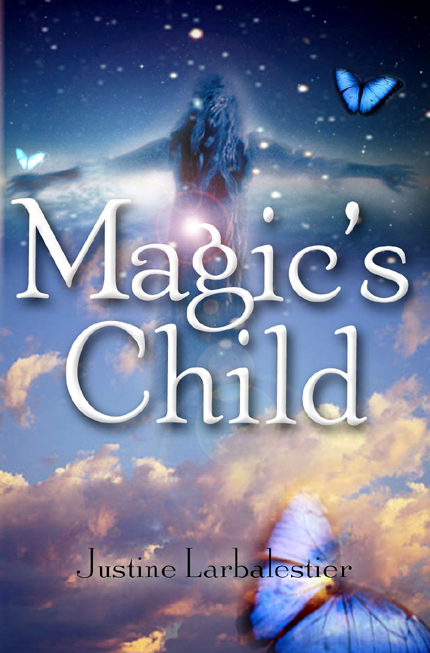
As I wrote the first draft of Magic’s Child I thought about fan/reviewer/award judge/foreign publisher responses to Magic or Madness and Magic Lessons. I imagined their responses to Magic’s Child, and worse, started figuring out how to circumvent these wholly imaginary criticisms. In other words I panicked all over the page.
Magic’s Child is the first book I’ve written knowing who the audience is. (Fortunately, Magic Lessons was already written before Magic or Madness came out.) I have had letters from readers, comments about the books on my blog. Teachers, librarians and booksellers have also passed on comments. There have been reviews (in journals, magazines, newspapers, blogs and on sites like amazon.com and barnesandnoble.com) as well as comments and discussion on other people’s blogs.
I’ve heard from a bunch of folk how they want the trilogy to end, who it’s okay for me to kill (Esmeralda, Danny), and who it mostly definitely is not (Reason, Tom and Jay-Tee); who should be a couple (Reason and Tom) and who shouldn’t (Reason and Danny). All the praise, suggestions, and criticism echos in my head as I rewrite Magic’s Child: What if this book isn’t as good as the first two? What if I can’t wrap up everything in a way that pleases my existing readers? What if there are no readers by the time the third book comes out?
These are not thoughts that are conducive to happy writing. For me the only way to cope has been to stop reading any of it. Sadly I’m not very strong, so the only way I can do that is to turn the internet off, which is why I’m behind with emails, and am not blogging as much as I’d like.
How do you other writers cope? How do you manage not to think about bad (and good) reviews? Do any of you not read them? Is this just a sign of my newbieness? Will this phase pass as I write and publish more books? Or is this just part of being a writer?
Or is it that writing the third book of a trilogy is ridiculously difficult? I’m leaning that way on account of writing the Great Australian Elvis Mangosteen Cricket Fairy YA Novel has been (relatively) dead easy. Sigh.
Or am I merely learning that one of the central tenets of post-structuralist theory is dead on: a writer has no control over how their text is received. A reader may love your book for the moving romance even though you delibarately wrote it to be romance free; another reader may hate it because it is romance free.
There’s nothing you can do about it except be grateful that you are being read at all.


.jpg)