Category Archives: Ranting

Schoolgirl days

Maureen Johnson’s latest post is about her Catholic schoolgirl days, which inspired her latest book, Devilish. (Out now! Run don’t walk to get your copy!) Like all her posts (and books for that matter) it’s dead funny and includes the following line, which’ll have me giggling for days:

“Maureen’s my freshman now. Get a new one.”

The post got me thinking about my (not Catholic) school girl days. And, well, gah! I do not get teary when I think about them. Quite frankly, I think anyone who tells folks under eighteen that their school days will be the best days of their lives should be shot, or at least told to shut up.

I remember adults saying that to me when I was a teenager. Every single time I heard those words it plunged me into the kind of deep dark depression that only a fourteen year old can experience. Really? I thought, if this is as good as it gets then what on earth is the point?

Fortunately, I have sane parents who assured me that it’s total lies. They were right. Primary school was not the best time of my life, nor was high school. A quick survey of every one I know confirms that they weren’t the best days of their lives either.

There were occasional worthwhile moments in my education. A handful of my teachers were awesome and some of my fellow inmates classmates remain friends to this day: Hello George! Hello Jeannie!

But mostly it was completely foul. Yes, you’ll learn a lot (I learned how to put a whole box of lit matches in my mouth without any first-degree burns—don’t try this one at home—I did recently, and, um apparently I have forgotten the trick—Ow!) and you’ll really, really, really earn that high school certificate or diploma (or whatever it’s called where you come from), but, trust me, things will start looking up the minute you graduate.

Or at least by your twenties. Definitely by your thirties . . .

So how about you lot? Any school tales of horror to share? What did youse lot learn? Was anyone else adopted by an older crazy student or do things like that only happen to the Maureen Johnsons of the world?

Publishing is not a zero-sum game

Okay, fellow writers, I know you know this, but bugger it, I’ll say it again:

Publishing is not a competitive sport. If another writer is unbelievably successful that does not take away your chance of success. If it has any effect on you at all it’s a positive one. Super sccessful writers create more readers. J. K. Rowling has single-handedly made young adult publishing more profitable and better paying. Every YA writer should fall down on their knees in gratitude. (I have my own J. K. Rowling shrine that I worship at every day. Bless, J. K., bless!)

If we’re defining success as making loads of dosh, then most writers are not super successful, or even mildly successful. I’m certainly not. The majority of published writers cannot make a living from their writing. Does that mean their writing is not as good as those who can? No, it does not. I know fabulous writers who are still unpublished (and, yes, Jeannie, I mean you). Writing good books (however you define “good”) and making money from books are two different things. Sometimes they co-incide—sometimes not.

There are lots of ways to measure success as a writer: good reviews, respect of your peers, winning prizes, or best of all—knowing that you’ve written a book that you’re really proud of. The last one is best of all because all the others will do your head in. What happens if you stop getting good reviews or winning prizes? Does that mean you’re no longer a good writer? That path leads to madness.

In my genre lots of books I don’t like sell better than mine, and lots I adore sell worse. Neither state of things has anything to do with how my books sell. If you start thinking that other books published are stealing sales from your books, and that other writers are “the competition”, you will become bitter and twisted. I’m hear to tell you that bitter & twisted clashes with every single thing you’ve got in your wardrobe.

Trust me on this.

Thus endeth the rant.

Flowers in the Attic

There’s a very popular book1 out there that’s badly written and has a dumb plot and a central character without a particle of gumption. Almost eveyone I know has read it and they either adore it or feel the same way I feel about it.

I admit that the people who love this book have kind of been driving me crazy. How could they think it’s well-written when it’s riddled with cliches and purple prose? How could they relate to the most passive protag of all time? How could they reread this godawful book over and over again? Have they all gone mad?

Then I cast my mind back to my first year of high school2 and the book me and all my mates were obsessed with: Flowers in the Attic by the prolific-even-when-dead V. C. Andrews.

Let’s see:

  • Riddled with cliche? Check.
  • Purple prose i.e. why use one adjective when you could use many? “Long, grim, dreary, nightmarish days”? Check.
  • Passive protag? They do remain in the attic an awfully long time without making a break for it . . .
  • Stupid plot? Do I even need to type check?

And yet I loved that book and read it over and over again and talked about it with all my friends. At the time I thought V. C. Andrews was one of the best writers ever. I knew many adults didn’t think so, but what would they know?

Flowers in the Attic has coloured how I think about plot, characterisation and story for many years now. I don’t think it would be overstating it to say that without Flowers I would not be the writer I am today. (Yeah, I know, for better and for worse.)

I often say that you can learn as much—if not more—from bad writing than from good. It’s much easier to see what’s going on when something is badly written, and to figure out how not to do that. Bad writing pulls you out of the text over and over again.

But when I was compulsively reading Flowers I thought it was a work of genius. Nothing short of being shaken would’ve pulled me out of that book. I wasn’t learning the what-not-to-do lessons; I was learning about how to use melodrama, suspense and betrayal. Lessons that have come in mucho handy while writing the Magic or Madness trilogy.

If I could go back in time I would not tell the twelve-year-old me to put Flowers in the Attic down and back away from the table. So why do I feel compelled to tell people how bad this other book is every time it comes up? Who’s to say they aren’t learning a whole bunch of cool things about story telling from it? Or seeing other stuff that I’m completely blind to?

On the other hand, I haven’t reread Flowers since I was fifteen maybe it’s not as bad as I suspect it is . . .

  1. Do not try to guess the name of the book. I will not tell you. The point of this post is not to trash a fellow writer. []
  2. In Australia high school starts in year 7 so I was twelve when afflicted with V. C. Andrews love. []

No Control

A recent post on Miss Snark reveals the horrible truth that often writers have no control over what their books are called. That’s right, folks, your publisher can change the title to something they deem more commercial.

There was much debate over the title of the first book in my trilogy. I’d always imagined Magic or Madness as the series title with the actual books being called Reason and the Two Cities, Reason and Margarita, and Reason defeats the Evil Monster Marauding Zombies from Hell. Marketing intervened and the series title became the title of the first book, leaving me and my editors to come up with new titles for books two and three and thus the whole working title thing of Magic! Magic! Magic! Oi! Oi! Oi!.

In addition to not having final say about the title. Writers also usually have no control over the following:

  • The cover
  • The jacket copy
  • What font it’s typeset in
  • Whether there’s an author photo or not
  • When the book is published
  • What format the book is published in (that’s right, Scott did not decide that the third book of his paperback trilogy, Uglies, should be printed in hardcover)
  • Whether there’s a signing in your town or not (when I do a signing it’s usually because a bookshop has requested that I do one or because my publicist at Penguin has arranged one or because I’ve set it up myself—though I’m getting too jaded to do that anymore)
  • The cost of the book
  • Whether it’s available in your country
  • Whether it’s available as an audio book

Am I missing any? Feel free to add more in the comments.

What writers (mostly) have control over is the words within the covers of the book. (You know, excepting the copyright page etc.) That’s pretty much it.

P.S. I was so cheered up by the good news comments that I’d like to invite you to all to keep sharing your good news. I’m contemplating renaming my blog the Pollyanna blog. Or the Gladblog. The glad game rocks!

P.P.S. Congratulations to all of you for your good days and publishing triumphs and award nominations and absence of cancer and every other thing. So wonderful!

P.P.P.S. And do keep us all posted on the outcomes of all that good news. Orangedragonfly, that means you have to let us know when your husband gets home. (If you’re allowed to, I mean.)

P.P.P.P.S. Sadly Ellen Kushner jumped the gun in the good news comments: Magic’s Child is not yet finished. But as soon as it is I’ll be announcing it right here. (That is when I recover from the over-the-top celebrations!). In the meantime, good luck with your books. May they all be reprinted often and wind up on bestseller lists! May your days be beautiful, your health excellent, and your loved ones close by! (That’s right, I am Pollyanna the Glad Girl. Just got my hair bleached blonde yesterday.)

P.P.P.P.P.S If none of this makes any sense it’s because I’m working too hard and as an Australian I find that I’m deeply allergic to it.

P.P.P.P.P.P.S. Don’t forget to add more stuff writers have no control over to the comments.

P.P.P.P.P.P.P.S. I go sleep now . . .

Names & titles

Over at Miss Snark’s some folks get all snooty when agents address them by first name. I find their crankiness weird and am wondering if it’s a generational thing or because (as another commenter says) I’m Australian and we’re less uptight more relaxed than USians.

Personally, I’m more squicked when people insist on using a title with my name. My name is Justine Larbalestier, it’s not Ms Justine Larbalestier, certainly not Miss or Mrs Justine Larbalestier and you’re risking life and limb if you ever use Mrs Scott Westerfeld, though FYI Scott adores being called Mr Justine Larbalestier.

If you must use a title the correct one’s actually Dr, which I’m not wild about either, but at least I earned that one after almost four years of blood, sweat and tears (oh, yes, tears, lots and lots and lots of tears).

But how to negotiate this web of correct name/title useage? Even though I think it’s fusty and weird to want to be addressed by a title I also don’t want to offend anyone (not unintentionally anyways). So what are you supposed to do when some folks will spit the dummy if you don’t use a title, and others if you do?!

Here’s my cunning solution: echo how they sign off. If they sign off Dr Massively Stuckup, then you respond thus:

    Dear Dr Massively Stuckup

And sign off how you would prefer to be addressed:

    Cheers,

    Notuptightatall

Simple, eh?

But what to do if you’re the one writing the first letter? If you have a mutual acquaintance ask them. Otherwise play it safe. In the US of A I would use title plus full name (unless I can’t figure out whether they’re a sheila or a bloke or whether they have a phd or not in which case I’d use full name). In Australia I use full name sans title. Then I wait for the reply and adjust my salutation accordingly.

Aren’t you lucky to have me here to solve all etiquette problems?

Fun! Fun! Fun!

Something not to do while you’re exhausted and have a head cold:

Atttempt to buy tickets for the 06/07 Ashes series
.

The article does not exaggarate. I logged on just before 9AM (Sydney time) when the tickets were to go on sale. The server was busy and busy and busy and busy and busy and busy and aaargghh!!

It took me half an hour to get through to actually buying the tickets. At which point all the tickets I was interested in for days 2 & 3 were gone. I then went to buy tickets for the fourth day but just as I selected them a pop up box announced that my session had timed out.

Cue screaming and swearing.

I logged back in again. The cricket board’s server was busy and busy and busy. Finally it wasn’t I got through to the ticket sales part. Then the ticket seller’s server rejected my password despite the fact it was the exact same password I used to get in for my first session. How do I know? Because my browser bloody remembered it, didn’t it?

Cue more screaming and swearing.

Then it rejected it again and again. Fourth time lucky and I was in and able to—at last—buy the tickets I wanted. Time taken: over an hour.

So, yes, I will be at the Sydney test on the fourth day. If there is no fourth day, or if it is all over before lunch, I swear to you that I will kill the entire English cricket team or whoever else I hold responsible for said early finish.

That is all except to say that as of 12 noon Sydney time the first four days of the Sydney test were completely sold out.

Aaargh!!! (updated)

Sometimes I read an article so relentlessly stupid that the only thing I can do is rant.

Today Cassandra Clare sent me a link to such an article. Let me quote the most enraging part:

    What this unfortunately driven young woman’s rather sad little story suggests is that one of the major reasons other young people don’t read books is that most of the stuff published for children and adolescents is abysmal, self-regarding trash. Part of the fault rests with the packagers such as Alloy and in the way they do business. A larger part of the problem stems from publishers’ misguided belief that kids want to read about people just like themselves, living lives just like their lives. Dead wrong.

    If these publishers looked to their own childhood memories rather than a spreadsheet, they’d recall that young readers, more than any others, want to be transported and shown not just other lives but whole worlds utterly different from their own. Witness the wild popularity of fantasy and science fiction among the very same kids who display the very same sensibility in their choice of video games. What could be more dispiriting than going into your room in search of escape, solace or pleasure, opening a book and reading a story about someone just like you hemmed in by the same four walls?

    The conditions that have alienated so many young people from reading are hardly unique to publishing. They’re common to other forms of entertainment and news media, where the creativity and idealism of the founding personalities have been subsumed by corporate ownership. It happened long ago in the film industry, and the tormented director or abused screenwriter is now virtually a cultural archetype. It has happened to all but a handful of the country’s broadcasters and newspapers.

I call bullshit. Lots of teenagers want to read about people like them, lots don’t, and some of them want to be transported as well as read about teenagers like them. It”s not an either/or. Very few things are. Some of those transporting books also happen to be about teenagers like them. And for your information, Mr LA Times know-nothing-about-YA reporter man, many of the bestselling books (and manga and graphic novels) for teens are fantasy or science fiction. The very genres whose reason for existing is to impart that good ole sense of wonder.

There are many, many, many wonderful books of all sorts being published for, and read by, teenagers. Cassandra, who sent me the article, writes some of it, so does Margaret Mahy, Ursula K. Le Guin,, Diana Wynne Jones, Holly Black, Scott Westerfeld, Elizabeth Knox, John Green, Libba Bray, Cecil Castellucci, Jonathan Stroud, Sonya Hartnett, E. Lockhart, Audrey Couloumbis, Laura Whitcomb and too many more to name. I cannot keep up with all the amazing YA being published each year.

And this may surprise you, Mr LA Times reporter man, but some of the books published through packaging houses are really good. Scott Westerfeld’s Midnighters series is a good example, as is pretty much anything written by Maureen Johnson, not to mention the very amusing Raisin Rodriquez books by Judy Goldschmidt.

When I compare the quality of the adult bestselling fiction to the kids and teen bestselling fiction it’s the adult fiction that loses out. I feel sorry for the adults who are still reading some of the dreck on that list when they could be reading bestselling books by Libba Bray or Jonathan Stroud.

Okay, I’m going to go read a Jaclyn Moriarty book to remove the stain on my eyeballs from that stupid article.

P.S. Yes, I have conflated YA and children’s, but so did Mr Smelly Reporter Man.

Update: Of course, Cassandra said it all more succinctly and way more wittily here. If only I’d noticed that first I coulda just directed you there. And somehow I managed to miss Cecil’s post as well. Gah.

Stupid Smelly Brain

Magic! Magic! Magic! Oi! Oi! Oi! must be rewritten and the send button pressed by midnight Friday week. The writing is going just fine and dandy. However, my brain will not stop coming up with other ideas for the bestest, most brilliantest, most amazingest novels eva!

It’s driving me mad. There I am finally nailing a scene that has been allluding me for months and brain starts whispering sweet nothings about snowboarding werewolves, zombie cowboys, Australian ex-ballerina underwater police. If you don’t write them now, brain tells me, they will run away, never to return. They will die of starvation! In a gutter! It will be all your fault!

Aaaarrrggghhhhh!!!!!

What do you lot do when this happens? How do you make the brain shut up and focus on the urgent urgent urgent task at hand? Do I have to threaten it with the withdrawal of gold koala bear stamps? Make it stand in the corner on the naughty mat?

Help!

Self Promotion

How’s about that for a post title to put everyone off?

I’ve been hearing some complaints about writers who are too self promotery, who go on panels at cons waving their book around, saying,”Look at me! Look at me! I’m a published writer! Buy my book!” There are also complaints about certain writers’ blogs which only talk about their books and their latest publishing news with links that only lead to places that sell their books. As well as whinges about the folks who relentlessly campaign for awards.

Accusations of being too self promotery make me a bit jittery. Promoting your books is part of a writer’s job. If no one knows the book exists how is it going to sell? A writer should be out there lining up bookshop appearances, sending out postcards/business cards/tshoshkas of some kind. You should be attending cons/trade shows/schools/libraries or whatever will help get the word out about your work. It may not have that much effect (no one really knows how to get word of mouth going1), but it might, and besides, for your own peace of mind it helps to know that you’re doing something. No one cares how well your book does as much you what wrote it. Not your agent, your editor or your publicist. It seems mighty unfair to complain about a writer doing what they can to secure their livelihood.

I’m sensitive about such accusations because I was accused of it. My promotion of my first book (a non-fiction tome) at WisCon some years back got up some people’s noses. But it was WisCon: the feminist science fiction convention, the only place in the world where my book on, yes, feminist science fiction had a real shot at selling lots of copies. So I kind of overdid the whole “look at me! I have a book” thing. Yes, I did wave around my book on panels and trumpet its availability in the dealers’ room. I’m still sort of embarrassed, but also defensive about it. It was my first book! I was excited! And you know what? Every copy of the book sold out and my publisher was pleased with me. I was doing my job. I’m pretty sure if I hadn’t done what I could to promote the book not as many copies would have sold.

On the other hand, I have seen writers relentlessly promoting themselves at various gatherings. (Hence my embarrassment when I think back on that WisCon.) Drowning out everyone else on their panels, continually using their own work as an example when it’s only tangentally relevant. On one occasion I was accosted by a writer at a party who interrupted my conversation with someone else to tell me all about his book, ply me with postcards of it, and information on how I could buy it. Not a good look.

Obviously a balance needs to be struck. Pissing people off is not actually very self promotery. Neither is being rude. (And really being polite should be the ground rule for all interactions.) But I wish the folks who complain about over-the-top self promotion would cut some slack to first- or second-time authors. You know, the way most of us make allowances for our friends with their brand new baby, who can’t shut up about it, and endlessly show you photos. Yes, it’s boring, but in most cases it will pass.

My third book is about to come out, but I’m too busy working on the fourth to put as much energy into promoting it as I did my first and second books. I’m no longer an enthusiastic first-time author. I’m dead proud of it and I’ll be doing signings and readings to promote it. But I will not be bouncing up and down, thrusting postcards into everyone’s hands, and talking it up at every opportunity. Been there, done that.

Do I not think this book is as good as my others? Magic Lessons is the best book I’ve published thus far. But I’m older and wiser and less energetic. I guess I’m well on my way to being a hardened old pro.

NYC, 12:12PM, 12 March 2006

  1. I’m convinced that the most useful thing you can do to promote your work is get copies into the hands of the opinion makers in your genre. The people who write the most read and discussed blogs, the librarians and booksellers who love to push their favourite titles. How to do that is a whole other question, but, obviously, writing the very best books you can is essential! Getting out and meeting said opinion makers comes in second. []

Ideas, like butterflies, are free

I was out doing errands t’other day (including a visit to the Tax Office to get my German contracts stamped—thank you, Niki). At one of my stops the fact of my being a writer came up and the bloke behind the counter said, “Really? You know, I have this great idea. If I give it to you, and you write the book, you can keep half the profits.”

My mouth opened. My mouth closed. See, I’ve heard other writers talk about non-writers making that offer, but I’ve never actually had it made to me so I didn’t have an answered prepared. I stammered something about being grateful for the offer, but that I have a tonne of ideas of my own, thanks all the same.

Ideas are no big deal. I have a gazillion ideas every day. Oodles of the little buggers. But without labour an idea is nothing. Unless I sit down and type for several months and turn a bunch of ideas into a book, those ideas are worthless. Their only value is in what’s done with them. Lots of people have ideas for books; not that many write them.

Scott and me were talking about the inflated value many people give ideas. And Scott wondered if that was partly behind the ever-growing insane obsession with copyright (like the Canadian Red Cross trying to copyright the Red Cross symbol). And the notion so many people have that ideas can be stolen. That rewriting an earlier story is somehow plagiarism (that’s right, Shakespeare was a plaigarist, and James Joyce, Jean Rhys, and just about any other writer you care to name).

Some are unable to make a distinction between riffing on something and stealing. If someone were to write a book about a girl who a finds a door that leads from Sydney and New York City and has adventures. I would not be bothered. Not unless the characters bore an uncanny resemblance to Magic or Madness and large chunks of the book were word-for-word the same as mine. Plagiarising means to take some one else’s work and pass it off as your own. Taking credit for someone else’s labour is wrong; riffing on someone else’s ideas is what writers/comedians/artists/musicians etc. etc. do. That’s their job.

Which leads me to Cory Doctorow’s fabulous post on BoingBoing about the publishing industries ludicrous efforts to stop Google’s fabulous Book Search which would make said riffing so much easier. What he said.

The Value of Our Labour (updated)

I’m on a discussion list for people who write novels for young adults. Right now we’re talking about total strangers who ask authors to critique their unpublished novel without any sense that this is a big ask. One writer was asked to critique 25 short stories yet the person sending the stories admitted she’d never even read this writer’s work. Ah, excuse me? Another said they were “the future of young adult literature” and would you crit the novel attached? Again without a hint that they’d even read the author’s work. “You have published book, therefore you must want to read my unpublished book and make it published book, too.”

Ah, in a word, no.

Every year my writer friends (pub’d and unpub’d) send me about five early draft novels to read and critique. Not very many, is it? Just five a year. And yet, I’ve never managed to read all of them. Not once. And these are novels by dear friends whose writing I adore.

Just last week I critiqued a friend’s novel. It was only 55 thousand words long. Very short for a novel. It took me about fourteen hours. And that was a very clean, beautifully written novel. When they’re less clean it takes much, much longer.

Critiquing a novel is not at all the same thing as curling up in a comfy chair to read a book. You have to concentrate, make notes, and re-read many sections several times to figure out what the problems are. It’s hard work. Most of the people I critique for also do the same hard work for me.

Most writers don’t write full time. Their time for writing is precious to them and eked out in between their day job and looking after their families. Critiquing a stranger’s work eats into writing time. Hell, critquing your friends’ work eats into writing time. It’s a big commitment and not one that most of us are prepared to make for a stranger emailing out of the blue who doesn’t know our work and can’t spell our name right.

I’m lucky, writing is my full-time job but even so I struggle to make the time to read and crit my friends’ work. I have my own writing to do, and rewriting, and checking copyedits, proofs and the ARC. There’s all the subsidiary publicity work like doing interviews, keeping your website up to date, not to mention all the admin of contracts1 and the vast ocean of email. If I were to say yes to everyone who asked me to critique their work I would have no life.

I’m not saying you can’t ask your favourite author to critique your work. I’m saying that you have to understand exactly what it is you’re asking for, and why, nine times out of ten they will say no. I have writer friends who almost always tell me no when I ask. Or say yes and never get around to it. That’s cool. I do the exact same thing.

Put it this way: would you ask your friend the mechanic to fix your car for free? Maybe you would—I admire your chutzpa—but would you ask a total stranger mechanic the same thing? I didn’t think so.

Update: Following on from the comments on this post, Mely wants to know how you get better at taking criticism.

  1. I have German contracts mouldering away because they need to be stamped by the Australian Tax Office and I haven’t figured out how to find the address of the nearest ATO office. Maybe my inability to find this straight forward info is because the whole thing reminds me that I haven’t done my taxes yet . . . []

No More Change, Please.

I went to drop off my dry cleaning at the really excellent dry cleaner on Pitt St that has been there since before I was born, long before, and it was closed, windows boarded up, with a little notice telling you to pick up your clothes at the shop next door. Not long after I went into town to buy a button—just one little button—I went to Lincraft which had a really crappy range and then I remembered Home yardage. Good old Home Yardage what’s been in the city since the dawn of time. Home Yardage had no buttons. They had no nothing hardly because Saturday is their last day of trading. And just round the corner Gowings is about to close, too. Nooooo!!!

I don’t mind restaurants closing. That is their nature. One of the fun things to do whenever I come home is check out which of my fave places to eat survived my five or so months away. Of late a surprising number have and yay for them.

But Home Yardage? Gowings? The good dry cleaners? Next I’ll be finding my favourite pubs are closing and pubs never close.

Anyways, I don’t like it. No more change, please.

That is all.

Hating Cities

I will never understand all the Melbournites who despise Sydney, some of them folks who’ve never even been here. Seriously, I’ve met Melbournites who sneer with disdain at the mere thought of stepping foot in Sydney. The horror they say!

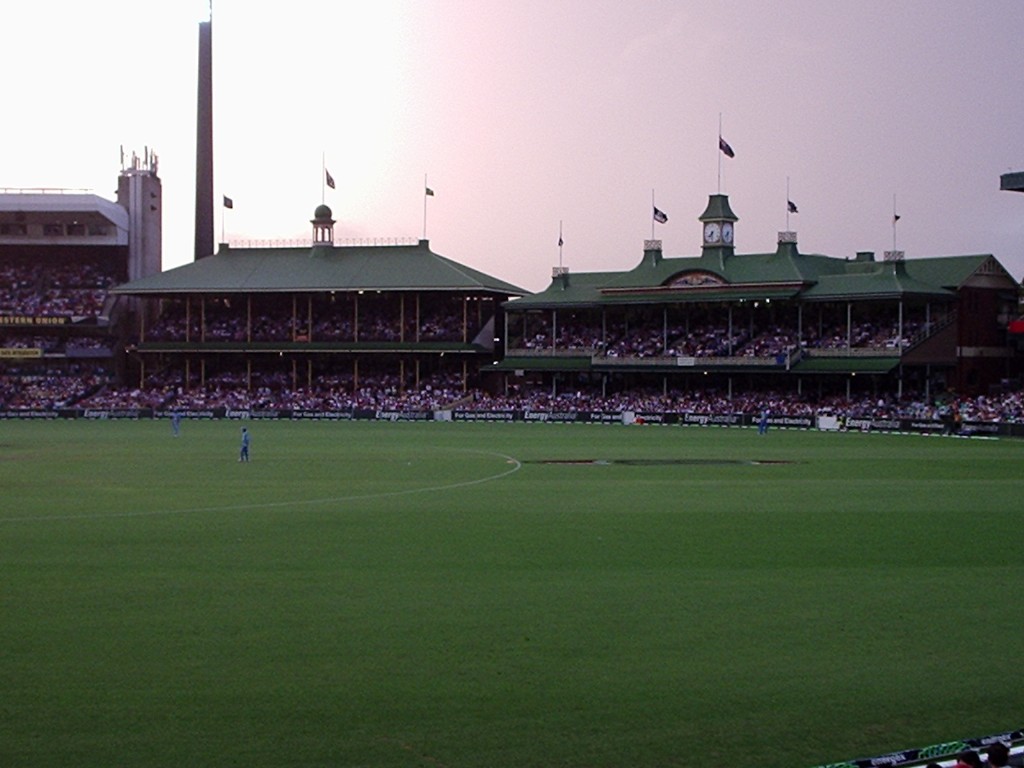
Me, I’m from Sydney. I love it, but I also have a whole lot of time for Melbourne. Melbourne has better licensing laws and thus better bars than Sydney, a better art and live music scene, and (mostly) better clothes shopping. Melbourne has trams. And what is not to love about trams? But Melbourne has little of Sydney’s breath-taking physical beauty, doesn’t have her beaches, or national parks, or fairies, er, I mean ferries, actually I mean both. It doesn’t have the wonderful bike path all the way from Newtown to the beach. Melbourne is, well, kind of dreary looking and its winter is unendurable. Nor does it have many of my favourite restaurants in the world the way Sydney does but, hey, the food is plenty fine in Melbourne too. And, please, do not give me the sacred MCG thing. There’s only one truly beautiful test-hosting cricket oval in Australia and it’s in Adelaide. And anyways my heart belongs to the SCG.

But who am I kidding? I was born here. I’ve spent the majority of my life here. I am completely biased about Sydney.

I’m not asking Melbournites to start loving Sydney. I’m just asking them to be a little reasonable about their over-the-top hatred. There are other cities out there that are actually worth hating (like, you know, um, another Oz city that I will not name because I have friends who live there what will be offended). Sydney ain’t one of them. And while I’m at it, Adelaiders, quit hating Melbourne, okay? You’re just being silly and why hate them when their MCG is ugly and your Adelaide Oval beautimous? You should pity them.

For me to work up a real forth of city hating, it has to be either a) a city I spent a miserable few years of my childhood in, or b) a city where you can’t get around if you don’t drive. Where the public transport and pedestrian access sucks. For this reason I perfectly understand why so many folks in the US of A loathe Los Angeles. Without a car in L.A. you are totally buggered. You have to beg rides from all your friends and are reduced to the status of a helpless child. But you know what? That’s true of almost every city in the USA, which is one of the reason I love NYC and San Francisco so much, they’re perfectly navigable by public transport and in Manhattan you can go wherever you want by shank’s pony. Plus, you know, there are so many places in both cities you’d want to go.

I used to hate London, because every time I’d visited the food was vile and expensive, it was gray, cold and raining (even in “summer”), and the people were obnoxious and rude. On my most recent trip the food was still expensive but it was excellent, the weather was endurable, and I only had one rude encounter, so now London’s in my good books. It certainly passes with flying colours the good public transport and pedestrian getaroundability rule. (Thanks to Niki, Lauren and Andrew for showing me the non-sucky London.)

Cities are who you know. The people who take you in and show you their town. I’ve had wonderful times in Dallas and Austin, Texas neither of them pedestrian friendly. I adore Toronto and it sure ain’t pretty. I’ve enjoyed Brisbane, Rome, Madrid, Bangkok, Jakarta, Dunedin, San Miguel de Allende, Davis and Lisbon—all of them because the people there were amazing and went out of their way to show their town to me. I imagine that even L.A. with the right people in the right light could be kind of okay. And now that my sister‘s moved there I guess I’m going to find out.

Or maybe not. There’s still that bloody car thing.

Best Quote Ever

Fossicking through my many, many, many boxes of books I found this quote marked:

I once asked a young dissertation writer whether her suddenly grayed hair was due to ill health or personal tragedy; she answered: “It was the footnotes”.

—Joanna Russ, How to Suppress Women’s Writing

Those words bring back my years of PhD thesis research, writing, turning it into a book, and the postdoctoral fellowship that followed it. Not to mention the mighty labours on Daughters of Earth. Footnotes, bloody, buggery footnotes! A pleasure to read and chase amongst; a total pain in the arse to get right. And don’t get me started on bibliographies and indexing. Aaarggh!

So very, very glad I never have to do any of that stuff ever again!

And, yes, I did go prematurely grey.

Fashion = good, complex, interesting

Lauren McLaughlin in praise of fashion. Sing it, Lauren!

Regarding fashion being shallow. This is a prejudice I find maddeningly overrepresented in the spec fic community. Fashion is an art form and the wearing of fashion is something everyone does every day (unless you’re a nudist). Even people who think they don’t care about fashion make choices about what they wear. Fashionistas (a term often used derogatorily) are merely people who take pleasure in the clothing choices that others skim over, much as foodies take a greater interest in what they eat.

This reminds me of a friend of mine being (verbally) attacked by an earnest young man (e.y.m.) at a party. She was (and is) gorgeous and has always enjoyed playing with fashion, is always well attired, with fabulous make-up and hair. He accused her of dressing to please men. How long, he wanted to know did she spend on such a high-maintenance look? Shouldn’t she be doing better things with her time? Why was it so important to her to have men admire her? Weren’t there more important things in life?

Reader, my friend demolished him. She smiled and pointed out to the e.y.m. that his look wasn’t exactly low maintenance. How long did it take him to shave his head? He opened his mouth, goggled, closed it again. If he cared so little about fashion, she continued, why was he wearing fashionable jeans and a black T-shirt? And trendy workman’s boots? Clearly he was dressing to pick up inner-city chicks. He stammered some more, claimed he chose them because they were comfortable. She countered that if he truly gave no thought to clothes or his appearance he would simply buy whatever was closest and cheapest. She happened to know the jeans he was wearing were only availlable at two different shops and were not exactly cheap. Why not wear no-name brand jeans?

As Lauren says most everyone thinks about clothes and what they’re wearing and what other people will think of them because of their choices. Fashion is a very big deal. Often people can tell how rich or poor you are from what you wear, they form an opinion of your education and politics (though they can be very very wrong), they can decide not to let you into a club, or talk to you, or give you a job because of what you’re wearing. Fashion is a deadly serious (and excellently entertaining) and far-reaching part of all our lives. It is definitely not a trivial matter to write or think about.

Nothing Changes

Meghan McCarron has just written eloquently about sexism in publishing. Why do so many anthologies and short stories magazines have way more stories by men than by women? Why do men get more awards and reviewed more widely? The ensuing discussion is very cool, too.

I confess that I get very tired when I consider all of this. I spent years researching gender, sexuality, men, women and hermaphrodites in science fiction. Hell, I even wrote a book about it. Sometimes I wonder if anything has changed at all.

Fortunately, I’m now in a genre—Young Adult fiction—that’s overwhelmingly written by women. And its awards reflect that. The Prinz has only been awarded six times thus far and so far it’s 50% women. The US National Book Award has had a Young People’s Literature award since 1996 and women have won six times to the bloke’s three. The Australian Children’s Book Council Awards for Best Book of the Year (Older Readers) was first awarded in 1987: women eleven; blokes eight. (My counts may be out because I’m innumerate and jetlagged.)

Looks good to me.

Oh my! Oh no! (updated)

I swore to myself that I wouldn’t do it, that I would resist, that to give in and look at the trailer for the latest version of Pride and Prejudice would just make me ropeable at worst, sad at best. Keira Knightley as Elizabeth Bennett? Ack! Yeah, I know there are worse actors out there, who’d be even more ludicrously miscast, but it doesn’t make her any less of a crap choice.

I’m not a Knightley fan. I know it’s not her fault, but I’ve never forgiven her for becoming the famous one after Bend it Like Beckham, when it was the luminous Parminder Nagra who stole that movie, not Knightley. Now Nagra’s on ER and Knightley’s everywhere. Where’s the justice?

And let’s just say I didn’t have high hopes that the folks what made Love, Actually were going to do right by Miss Austen. But watch the trailer I did, only to discover that it’s more shockingly awful than the one for the 1940 Greer Garson Pride and Prejudice. At least that one (and the film) can be excused because of its camp value. This one, well. Is the film a satire of bad historical adaptations? I really hope so. Throughout Darcy looks incapable of keeping his shirt on, Elizabeth Bennett is shrill, and in two of the scenes it looks like the two are about to go the tongue! Bloody hell! Did the film makers even read the book?

And you know what? Elizabeth Bennett was not a woman ahead of her time. She was very much of it, shocked by sex before marriage, with no ambitions for herself other than becoming the wife of a good man. I could go on but it’s been said much better here.

Still, seeing the trailer was a very good thing—my loins are now well girded against seeing the actual movie. The thought of it goes well beyond shudder territory.

Update: Just to make it clear—I am no Jane Austen purist. My favourite adaptions of her work are Amy Hackerling’s Clueless (1995), Patricia Rozema’s Mansfield Park (1999), and Gurinder Chadha’s Bride and Prejudice (2004). Hah, all directed by women. I never noticed that before.

I’m so miserable

I can’t do this. I can’t do freezing cold weather. I can’t. We just walked four blocks through icy wind and some sleet and it makes we want to curl up in a ball and cry and cry. I’m never ever ever staying this late in the Northern hemsphere. From now on at the very very most it’ll be June to September.

As Elvis is my witness I will never be cold again!

Writers are the Best Whingers

Just read and giggled all over this post by Diana Peterfreund in which she wittily whinges about all the work she has to do (and skewers Star Wars). It struck a chord cause I was just about to whinge about the pageproofs of Daughters of Earth which just landed in my life with a very heavy thunk.

Aaaaaaaaaaaarrrrrrrrrggggggggghhhhhhhhhhhhh!!!!!!!!!

Diana (I’m taking liberties referring to her by first name, I don’t actually know her, but I read her fabbie blog, so I feel like I know her) starts by referring to a harder working writer who has family on top of it all, whereas Diana just has her sailor boy and a full-time job. I’m going to lower the bar still further: I have neither children nor pets nor a job (other than writing).

And yet I feel my case is worse than either of theirs because I am suffering (horribly) from post-paradise-adjustment syndrome (or ppas). Just days ago I was in Mexico living an admin-free existence: no shopping, no housecleaning, no dishwashing, no cooking, no laundry, no paying bills, no nothing—except writing. Luz Barron did all that for me, not to mention telling me excellent stories, mending my clothes (!), and taking me out to all the best fun bars in San Miguel. Luz made me food like this:


Mushroom-stuffed chillies on tomatoes & onions served with plantain & pomegranate & garlic rice.

Now I’m back in reality, but where is the counselling and social services team to help me through my ppas? No where! How am I supposed to cope without Luz? How am I supposed to live in the real world where I have to finish Magic! Magic! Magic! Oi! Oi! Oi, the third Magic or Madness book, go through the staggeringly long Daughters proofs, finish the great Australian mangosteen cricket Elvis fairy book, write the proposal for this jaw-droppingly brilliant idea I just had and do all that adminy stuff!? How is that possible?!

You know I used to have no sympathy for rich folk like Paris Hilton et al, what with their silver spoons wedged firmly down their throats. Rich bastards, I used to think, but now I know the truth: without their staff they’re helpless. Look what happens when someone like Paris takes dressing into her own hands. Not pretty, is it? Imagine her trying to get it together to make her own coffee. Or figure out how a washing machine works. Wow. Her life is really, really hard. Not quite as hard as mine given that she’s still in paradise and not in the land of ppas. But how much worse will it be for poor old Paris when her fall comes? How hideous will her ppas be?

Makes ya think, don’t it?

Atlantic City? No, thanks. (updated)

I don’t want to rubbish a whole city, especially when I was only there for a few hours, but Atlantic City is an erky perky bleah of a place. Friends warned me it was a shithole—I had no idea they were being kind. It’s ugly, full of the most hideous buildings ever built and populated by zombie gamblers, who are served by an army of twelve-year-old incompetent staff. Once you’re inside one of the casinos it’s almost impossible to get out again. All signs lead to more gambling areas. I’m convinced that hell will be nothing but Atlantic City casinos.

This is heresy for an Australian, but, I hate gambling. I love cards and I’ll bet on them, but not with money. Never for money. Betting with money turns people into glassy-eyed zombies, and call me old-fasthioned, but I prefer my zombies in Romero films, thank you very much.

So why were we in Atlantic City? To attend the New Atlantic Independent Booksellers book fair, which other than its location in a hellspawn casino, was a lot of fun. We met the fabulous Penguin reps, Holly and Todd, who looked after us excellently well and told great publishing stories; we hung out with fellow YA writers, Maureen Johnson and Melissa Kantor; we both signed a bunch of our books, Peeps and Magic or Madness, and we snaffled up many free books. The gems of my pile—other than Maureen’s and Melissa’s books—were:

Small Steps by Louis Sachar, which is the sequel to Holes! Woo hoo! I have the sequel to Holes and you don’t! Ha! Ha! Ha!

The Weather Makers by Tim Flannery. I adore Flannery. He’s frequently interviewed back home about science and enviromental issues and is the smartest, most interesting, and clearest explainers of such issues I’ve ever heard. He also writes really, really well. I can’t wait to read this one, not least because I know it’s going to help me understand what happened with hurricane Katrina.

Today, we go back to New Jersey:

7:00-8:30PM
Elizabeth Main Library
11 S. Broad St., Elizabeth
New Jersey

We’ll probably read and we’ll definitely chat and generally be our entertaining selves. We’ve only done one library event before but it was fabulous, so I’m really looking forward to this.

Oh, and if you’re from Atlantic City? My condolences.

Update: I am very stupid. I wrote a blog entry about casinos, but my spam filter is set to nuke any comments that contain the word “casino”. I apologise to anyone who had their comment nuked. You can post now. Though given the vast tide of casino spam I get your comment will go through to moderation, which I truly rooly honestly will check. Rooly soon.

Tipping

The 5 September issue of the New Yorker has an informative piece by James Surowiecki on tipping. Apparently it didn’t become widespread in the US of A until after the Civil War and some states were so appalled by it they even banned the practice. Who knew?

There’s just one problem with the piece, he claims that Australia and Japan are countries where they don’t have tipping. Now, I don’t know about Japan, but it ain’t true about Australia. Tipping isn’t as widespread back home as it is here (thank God!), but tipping wait staff in restaurants is standard. Though unlike the USA, you don’t have to tip if the service sucks; and unlike New York City, 20 per cent is an epic tip, not de rigeur.

I hate tipping. I never know how much I’m supposed to give or to who. Taxidrivers? Yes. The lovely woman who delivers the mail? No. Huh? It’s so random! I hate the stress of going to the hairdresser and not knowing how much it’s really supposed to cost. I just wish people would charge me up front and leave out the guessing game. I hate the moment of handing over the tip. I feel like I’m trying to bribe someone. The whole thing is too bloody stressful. I wish people were simply paid decently and weren’t dependent on customers to make a living.

Thus endeth the rant.

This an’ that

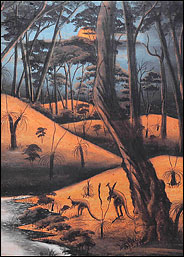
Read this article in the New York Times about art by the stolen generation. Gorgeous, gorgeous work produced under the most appalling circumstances.


The Picker Art Gallery
“Down to Drink,” by Parnell Dempster.

Australian young adult writers are conquering the entire universe. I was dead proud that Magic or Madness had already sold in five countries (USA, Australia, Taiwan, France, and Thailand), now I see that I’m underachieving. This article by Rosemary Neill is also startling because it’s so well-researched. It’s refreshing to read something in a mainstream news source about publishing and actually learn something. Via Yoof Literature (thanks, Lili!).

Speaking of research . . . Did anyone else watch the NBC so-called “news” report on the shocking new content of teen novels which aired Monday night? I watched it because R. A. Nelson who wrote Teach Me was interviewed. He spoke for about six seconds. The report consisted of people saying, “Look at the cover of this YA book!” Cut to cover of Gossip Girl or the like. “This book has shocking content! Should we let our children read books with shocking content?” Cut to a parent. “I’m shocked that my children are reading books with shocking content!” Cut to some random other person who is also “Shocked! Shocked by teen books with shocking content!” The 2 minute report ended with an admonition to parents to be wary of the shocking, shocking, shocking content of teen books.

I hadn’t watched “news” on television for ages and I gotta tell you I was shocked, shocked, shocked by the “content” of that report too!

Too Young to Publish

Recently I’ve had a number of letters from teenagers wanting advice on how to get their novel published and wondering whether their age will make it harder for them to get it into print. Specifically, would they be discriminated against because they were only thirteen/fourteen/fifteen/sixteen or whatever?

The simple answer is no. When you submit a query letter to a publisher or agent you don’t have to tell them how old you are. You’ll be rejected or accepted on the quality of your submission.

Being young can be an advantage in getting published. I was first published when I was nine. A short poem in The Newcastle Morning Herald (now The Herald). My mother sent it in and it was published with my age listed. While the poem was clearly a work of genius, odds are that if I hadn’t been nine, it wouldn’t have been published. As it happens I was more embarassed by the publication than I was proud. The kids at school teased me non-stop for the rest of the year. Happy days.

Up to the age of 15, I had a number of other poems and stories published. Without motherly intervention even. Every one of them with my age beside my name. After that, nothing of mine was published until I was in my thirties.

What happened?

Another simple answer: I started competing with adults. I stopped listing my age and started sending to more grown up venues. My work was not as good as that of the grown ups. I didn’t find my way into print again until I was way past my child prodigy days.

The teenage me was cast into deep, dark despair by this. On my seventeenth birthday I had a midlife crisis. There I was seventeen years old and still no novel published! I was a complete and utter failure! What was wrong with me?

Another easy answer: I wasn’t good enough yet and I wouldn’t be good enough until I’d learned to write and rewrite and rewrite again. Until I got past thinking my first drafts were perfect and that rewriting involves a wee bit of chipping at the surface of a story. It’s much, much harder than that. And, I’m belatedly learning, more fun too.

If you’d have told me back then I wasn’t good enough and had a lot more to learn about writing I would not have believed you. Actually come to think of it, people did tell me back then. But they were polite about it saying that I had a "great deal of promise" and a "bright future ahead". Blah, blah, blahdy blah. I didn’t want to hear it. I wanted to be published immediately! Before I hit twenty-one or, worse, thirty and was too decrepitly old to enjoy it.

Now, of course, I’m incredibly grateful that no one did me the disservice of publishing me back then. I’ve kept a lot of my juvenilia and, well . . . it shows promise.

I have a couple of friends who were not so fortunate. They were first published in adult venues when they were still teenagers. Both of them are horrified that their learning and growing as a writer has been done so publicly and that there’s nothing they can do to make all that evidence of early missteps go away. They both wish they’d spent more time honing their craft and less time desperately trying to get into print.

But how do you hone your craft?

Read a lot. Write a lot. In that order. There are very very few good writers who aren’t also good readers.

Never send off a first draft for publication. Even though the temptation to do so is enormous. I mean you wrote a complete draft! A whole poem/story/novel! It has a beginning, a middle and end! The sense of accomplishment is enormous you can’t wait to show your work of genius to the rest of the world.

Resist that feeling.

Wait a few weeks after writing something, then reread it, rewrite it (and I don’t mean just fixing typoes), then give it to some people you trust for comments. (Not your parents. Most’ll just tell you it’s wonderful no matter what.) If you have friends who read a lot give it to them. Or to a teacher you trust. Give it to as many people as you can think of. Trust me, most of them will not get back to you with comments.

Ask the ones who read it to tell you when they got bored. Ask them to tell you the plot. This is a great way to figure out if your readers are reading what you think you wrote. It’s amazing how often they aren’t.

When they get back to you with all their comments, rewrite it again. Many of the comments will be intensely annoying and boneheaded and will make you want to end the friendship with the idiot who said them. Resist your urge to do so. Resist the urge to tell them how moronic they are. Also resist the urge to cry (I still haven’t quite mastered this one). Instead look for parts of your story/poem/novel that all readers had problems with. Figure out how to fix it. Most likely the solution you find won’t be the one they suggested. (Later on when you’re published you’ll find this also applies to your editors.)

Learning to take criticism is one of the major prerequisites of being a professional writer. Once your work is accepted for publication, your editor will criticise what you have written and ask you to rewrite it. Usually many, many times. And after it’s gone through all those rewrites she will often forget to tell you good it is. There will be few gold koala bear stamps. Your editor’s primary concern is to get rid of that which sucks. It should be yours too.

Just as important: don’t get too caught up in the praise your readers offer you. If your readers only have good things to say about your manuscript, enjoy it, but then be suspicious. Very few pieces of writing are perfect first go. (I rewrote this essay several times and then gave it to Scott to read and it could still stand a bit more rewriting.)

Once you’ve made your manuscript as good as you can possibly make it—if it’s a novel that should take months, maybe even years—then and only then do you send it out for publication.

But how do you get a novel published?

With great difficulty. Getting published is very, very hard no matter how old you are. Most novels never find their way into print. Even really good ones.

Ian Irvine outlines the whole process in his essay, The Truth About Publishing (the link’s in the menu on the left). I strongly advise reading the whole document through to the end. It’s depressing, but it’s also very very useful. I wish I’d read it back when I was fifteen.

Good luck. Do not despair when you are rejected. Welcome to the club. There isn’t a writer in the world who hasn’t been rejected. Many, many times.

New York City, 13 August 2005

The Hebrew translation is here.

For those young writers who are angered by this please read my clarification.

non sequitur

Just reading the 8 & 15 August issue of the New Yorker which includes Louis Menaud making the following assertion about Edmund Wilson:

When it came to most physical activities, he was inept. He did not, for instance, know how to drive a car.

Excuse me?

Many people do not drive cars. Some of them are highly ept at a whole range of physical activities. They have simply chosen not to learn how to operate the greatest killing machine of this century and the last. Any fool, ept or not, can drive a car. Takes a wise person to choose not to.

More on Why I’m Against Romantic Love

Apparently more words have to be written on this subject. I appear to have been less than clear in my recent anti-romantic love musing. At least that’s the impression I get from the rather, er, heated responses I’ve received. The Being Dumped musing generated the biggest response of any thus far. And the least positive one. Sigh.

First up: the unhappy long-term relationships I was referring to? None of them was your relationship, okay? I didn’t mean any of my friends in Australia, Canada, Hong Kong, Mexico, the Netherlands, New Zealand, Spain, South Africa, the United Kingdom or the United States (or any other places I’ve momentarily forgotten). I meant other friends who live elsewhere. And I wasn’t referring to your breakup, either. Hence the careful non-specificness of the whole musing. None of my friends have ever had anything but beautiful, peaceful break ups and all their relationships are perfect and will last forever.

Yes, there were some logical disconects in my arguments. I did say incoherent rant, didn’t I?

No, I’m not against love. Just romantic delusional love (which of course none of my friends suffer from).

No, Scott and I are not breaking up. We, just like all our friends, share a perfect relationship that will last forever. Blah blah blah.

One annoymous correspondent wanted to know what the "insane amounts of propaganda [for romantic love] every single day of our lives" was exactly, because they—bless their innocence—have never encountered such in the course of their existence. To which I can only respond: Are you only a day old? Are you insane? Are you blind, deaf and dumb, as well as illiterate? Well, no, not illiterate, are they? Else how would they have been able to write their idiot email to me in the first place?

Where is this propoganda? Romantic love is just about the most common narrative in human culture: boy meets girl. Check out almost any book: I don’t just mean Mills & Boons, have a look at a few textbooks on human reproduction and marvel at the romance of the damsel-in-distress egg and knight-in-shining-armour sperm (thank you, Emily Martin); or any TV program: Where do you start? From "Queer Eye on the Straight Guy", which has to be the most aggressively conservative defense-of-het-romance show I’ve ever seen, to the news (full of crap about celebrity couples, or cute old couples celebrating 175 years of wedded bliss), to any sitcom or drama or cop show ever aired.

This garbage is everywhere you look: video clips, movies, advertising: have shiny, pretty hair/ new car/ new laundry detergent: get girl/boy. Romance propoganda is in almost every song you hear, is the narrative drive of virtually every opera. It comes out of the mouths of your friends and family. Every time you’re asked if you’re seeing someone, every time someone commiserates when you confess your tragic state of singleness, every time someone asks if you think this time it’s the real thing.

All of it is romantic love propoganda. Does that answer your question?

No, I really wasn’t mocking the pain of anyone who’s been dumped. Especially not your pain, honest. I’ve felt that pain. It’s agony. Horrible. I pray never to be dumped again, by friends or lovers. I was just saying as how that pain is made worse by the unrealistic expectations we’re all trained to have about romantic love. How we’re taught to expect romantic relationships to last and last and last. Why can’t we be happy when a relationship lasts, say, five years and most of that time it was pretty good? Why can’t that be considered a success? Why is only forever (or until one of you karks it) a successful relationship?

Someone else asked if I really believe that friendship is as important as a "love relationship". Yeah, I really, really do. In fact, I think the law should be changed everywhere so that it’s possible to enter into a civil union with your best friend, leave all your wordly goods to them, have them make the pulling-the-plug decision. We should all be able to sponsor close friends (thanks, niece Renee, for the suggestion) who want to come live in the same country and vice versa. It should be subject to the same stringent tests that sponsoring a spouse or close relation are currently subject to.

I don’t understand why these things aren’t possible everywhere in the world right now. I don’t understand why we overvalue our "love" relationships and undervalue our friendships.

Stop it, already!

San Miguel de Allende, 27 January 2004

Being Dumped is Much Much Worse

I have a friend who for a very long time contended that dumping someone was awful, truly awful, perhaps even worse than being dumped. She argued that she, having been forced to dump several lovers, had never gotten the amount of sympathy she deserved for the pain she had to endure putting her hapless exes out of their misery.

At the time I had never been dumped (neither had she) and was entirely persuaded by her reasoning. I, too, had never gotten sufficient sympathy. Ending a relationship hurts. True, it was a relationship you were tired of, that was driving you nuts, that you were relieved was over, but you still had fond memories. Worse still, you had to return all the cool stuff you’d borrowed (most of which was a present from you in the first place), mutual friends weren’t speaking to you, you’d had to find a new hairdresser, a new favourite café, and worst of all: not one person felt remotely sympathetic about your suffering just because you weren’t walking around swollen eyed, beating your chest and moaning. Dreadfully unfair.

Then I was dumped.

What a load of cobblers the above is. There is no comparison between being dumped and dumping someone. It’s the difference between stabbing someone and being stabbed. Even if your fingers were cramped from gripping the knife too tight, or worse case scenario, you were dumb enough to let your fingers slip on to the blade, you’re still not the one with the sucking chest wound, vital organs falling out willy-nilly. At worst you have a couple of sliced fingers. Boo-bloody-hoo.

Nothing makes it better. You were just about to dump them. Nope, you feel even worse. You never loved them anyway. Nope, not feeling less pain. You’re better off without them. Nope, bastard didn’t give you the chance to figure that out for yourself. They are now going out with the biggest whore/bastard in the known universe. Nope, cause what does that make you? Did they upgrade or downgrade?

I blame romance.

I lay the blame for the ridiculous amount of pain on the idea—reinforced by insane amounts of propaganda every single day of our lives—that without a life-partner (let’s all take turns to shudder at that neologism) you are nothing. If you’re not in a couple you’re nobody.

Life, we are taught, is about growing up. A grown up does not live with their parents, or flat with friends. A grown up has a means of support (most often a job) and a partner. But for some reason it’s the partner that’s the main bit: a person with a job who lives alone is somehow pathetic, not quite grown up—even if they’re getting laid when they want to, have thousands of friends, are world leaders in their field—they’re not complete and won’t be until they find The One.

Being a grown up is all about romantic love, but a very narrowly defined version. Romantic love is exclusive, sexual, between two (and only two) individuals. To be a true grown up you have to find your soul mate, move in together, and then reproduce. Find The One, have babies, die: that’s life.

So how come so few of the couples I know (married and unmarried) stay together longer than a year or two? How come so many of the ones that do are miserable? How come so many single people I know are happy, at least that is until they’re reminded that they’re single: "Oops, sorry, forgot, mate. Yup, you’re right. I’m miserable. Life alone is like a fish without a bicycle. A prison without walls. Sorry, miserable. Yep, that’s me, totally miserable."

How come the majority of the longest relationsionships in my circles are between good friends? That’s right "just" good friends. People who have known each other for years and years and years, have loaned each other money, helped rear each other’s children, read each other’s books, shared houses, shared jobs, but who aren’t in a sexual relationship with each other. How come the myths of our potential lives are centered around romantic love instead of friendship?

Who is this One that we’re all supposed to be waiting for? In the very few cases when The One comes along, doesn’t The One turn out to be your best friend who you just happen to find sexually attractive and enjoy living with? All the happy sexual relationships that I’ve seen last were built around close abiding friendships.

I see friends in relationships with people they don’t much like, because somehow that’s more grown up than being single. I see friendships destroyed when friends become lovers and it doesn’t work out and somehow the friendship dies in the process. I see single friends, otherwise perfectly happy, beating themselves up because they haven’t found the mythical One yet.

And "single"? What does that mean? How can someone with thousands of friends whose whole life is dominated by their relationships to their family, friends, colleagues. How can they be described as single?

I know people in couples for whom the term "single" is better suited. Totally focussed on each other, erradicating virtually every other connection they have in the world. They work together, eat together, finish each other sentences. Until finally one of them goes barking mad, the relationship ends, and then, suddenly, they each remember about friendships, communities, the existence of other people.

Why do we live in a world where one model of happiness is set up as the ideal for every one? What if one day it were decreed that we must all love chocolate? After all, the majority of people love chocolate, why shouldn’t everyone? And if you didn’t spend your whole life consuming vast amounts of the stuff your life would be viewed as a waste and a failure.

Absurd. But no more absurd than expecting everyone to want True Love with The One.

To return to my point of departure: Why is being dumped worse than dumping someone? Why do so many worlds crumble when the person you’ve talked yourself into believing is The One leaves?

Because so many of us have bought the romantic lie that all our happiness—that our very claim to a fulfilled adult life—is predicated on our success in romantic love. If it’s you ending it, you’re in control, you have hope of better things (or, if you’re crafty, you already have the next One lined up). You’re ready for what’s going to happen next.

The dumpee has made no contingency plans, is still wrapped in the warm glow of the delusions they’ve fed themselves about the relationship. Now they have to divest themselves of those delusions, find someone new who’ll be The One, not another Wrong One. A whole new bunch of delusions to weave. Or scariest of all—they must face the possibility that they may never find The One.

The truly delusional dumpee may not have any friends to turn to—not even a cat or dog—wrapped as they were in the ludicrous idea that you only need one person in your life.

That’s why being dumped is so much worse.

There is one compensation: the dumped always get sympathy. Another of the perks of a world dominated by the myth of romantic love is that people know you’re in mourning and will treat you nice.

Not so if a friendship ends. No matter how devastating, once you’re out of high school you’re supposed to be grown up enough to deal with that sort of thing on your own time. But as we all know the end of a friendship can be every bit as dreadful and destructive as the end of a romantic relationship.

Console yourself with the knowledge that it was only your lover of the last six months who dumped you, not your best friend of the last fifteen years.

Sydney, New York City & San Miguel de Allende, 10 Oct-31 Dec 2003

Ten Things Folks in the USA Don’t Know About Australia

1. Errol Flynn is Australian (yes, I know he’s dead). How do you guys all manage not to know that? The debauchery, rabble rousing and general larrikinism were all learned in Australia; the Nazism and other vile habits he picked up later. Most likely in London, though Hollywood will have helped. Mel Gibson was born in New York (state not city, thanks Josh) and Russell Crowe in New Zealand. Neither of them are our fault.

2. We don’t have the death penalty and we do have free universal health care. Just like every other first-world country, except the USA.

3. Australia is not nearly as religious as the USA and thank God for that (sorry, couldn’t resist). If you mention that you are an atheist there’s little risk of anyone keeling over in shock. We’ve had prime ministers who were completely open about not believing in god. Weirdo fundamentalist lunatics have no political power or influence in Australia. Unless you include this Queensland sect whose name I can’t remember who claimed they control the prime minister with their powerful mind rays. Maybe they do. It would explain a lot.

4. New Zealand is our Canada and Indonesia our Mexico. And Australia is the same size as mainland USA.

5. Sport is the main religion, and a very well-funded one too. Every medal we won at the Sydney Olympics cost several squillion gazillion Australian dollars. And why not? Who needs better hospitals? Or no child living in poverty? Cricket is the main religion and soap opera in the country. Thank you, Shane Warne. I’m not sure how a country can claim to be civilized without cricket. Or for that matter, without Shane Warne.

6. Australia is as racist/homophobic/sexist/ageist/jingoistic etc. as the USA.

7. How is it that the one thing you all think you know about us is our film actors? All those famous Australian movie stars and directors you’ve heard of—New Zealanders—every last one of them (except Errol Flynn).

8. 99.94% of us live in cities, not in the bush. (Or is that Don Bradman’s career batting average? Whatever.) Australia is the most urbanised country in the world. Forget about the Crocodile Hunter already.

9. Miles Franklin, Tracy Moffat and Howard Florey are Australians. Not that you lot would care. You haven’t heard of them, have you?

10. We do not have cute accents. You are confused. That would be the Irish and Jamaicans, not us.

New York City, 26 August 2003

Sydney versus New York City

Okay, people endlessly ask me about the differences between these two cities and which one I like best. Up front I have to say, hello? Born and bred in Sydney! What do you think I’m going to say? But I’m a reasonable person, I can give an actual opinion unswayed by the fact that me, my mother, my father, and my sister were all born in the one hospital (which no longer exists, alas) in inner-city Sydney. I can forget the fact that my whole family and many of my friends are there, that I tasted good whisky for the first time there, read the majority of my favourite books, my favourite movies, did the majority of my schooling there, including high school, my undergraduate and graduate degrees, and that there is no city in the world that I know as well as I know Sydney, I can overlook all of that, and give a fair assessment of the differences between the two cities.

The Weather

In Sydney the weather is pretty much perfect. I am a total wimp. Can’t stand the cold. One time I looked up the cities around the world that rarely drop below 10C (55F) in winter and rarely get above 35C (95F) in summer. And guess what? Sydney was bang on. The winters are mild and gorgeous with a tonne of sunlight. The summers are deliciously hot with a fabulous fresh southerly wind to cool you down at the end of the day. There really isn’t an autumn or a spring in Sydney (cause why bother?). The flowers are in bloom all year round.

In NYC the weather is almost total crap. Winters are foul and involve snow (uggh). It NEVER snows in Sydney. Summers are vile. Intense heat with no relief at all (except for when the winter just keeps going, until one day it is suddenly replaced by vile hot humid summer). NYC has no cooling winds. Spring is damp and chilly. Autumn on the other hand is the only reliably excellent season. It’s cool, but by September everyone’s dying for things to get cool. And it’s crisp cool not freeze-your-tits-off cool. The farmer’s market is full of the most amazing apples and tomatoes you ever tasted. The trees all change colour. Spectacular. Beautiful. Compensates for the vilely cold days and the stinky hot ones. A NYC autumn is great for wearing (Sydney) winter coats.

The Food

Sydney’s food is superb. (Except for Mexican, NEVER eat Mexican in Sydney.) Tetsuya’s, Rockpool, Boathouse. I could go on and on. But the fabulous thing about Sydney is that it’s not just the over-the-top high end places that are amazing. There’s places like Singapore Gourmet too. Where two of you can stuff your face for less than AU$15 (US$10). There are noodle joints in chinatown where you can stuff yourselves for less than AU$10 (US$7). (And you don’t have to tip.) The Thai food is so good it will make you weep and I’m not just talking about Sailor’s Thai. The fruits. Oh my God! In summer there’s rambutans and mangosteens and pineapples and mangoes and longans and lychees and everything that makes a person smile. In winter there’s custard apples. All year round you can get sugar bananas. The fruit and veg in Sydney is just amazing. I could go on and on and on.

NYC food is also superb. (Except for Thai, NEVER eat Thai in NYC.) I’m just a block from Frank’s, and Supper, Prune, and The Tasting Room are pretty damn close too. There are more excellent vegetarian restaurants than anywhere else on the planet (my current favourite is Counter). Had my first raw food restaurant experience here, way richer than I expected. Then there’s the joys of cheap Mexican. Cheap Ukrainian. There’s fabulous Ethiopian, Venezuelan, Indian and Korean. There’s organic produce everywhere you look. A wonderful farmers’ market at Union Square five times a week. You can get almost anything you want (if you’ve got the money for it) from caviar to arugula to Belgian fries (something you can’t easily find in Sydney). There’s even a peanut butter restaurant.

The Bars

Sydney has more of a pub culture than a bar one. There are lots of fab pubs that I like a lot, but none of them makes me as happy as my favourite bars in NYC. I know, I know, I’m a hideous traitor. Would it make things better if I say that James Squire Amber Ale is way way way better than any American beer? Comparisons are so invidious. Okay, how about: There’s no NYC equivalent of the humble RSL or Lawn Bowls Club where you can buy four drinks with a ten dollar (Aussie) note and be given change that you’re not expected to hand straight back as a tip (and you have the added pleasure, if you’re a bloke, of having the old codgers hiss at you to take your hat off, Show some respect, son!). Plus you get to play lawn bowls. There’s no where to play lawn bowls in NYC.

I can admit it when NYC is way ahead. And when it comes to bars NYC wins hands down. Not really a contest. Though it makes me sad to say it, the bars in NYC piss all over those in Sydney. The majority of bartenders know how to make every cocktail under the sun. There are bars with superb food. There is no Sydney equivalent to Veloce (great Italian wine and fabulous panini), to Decibel (an unbelievable number of different sakes, not to mention great dumplings, edamame and any other Japanese snack food you can think of), to any of the hundreds of other bars I could name.

Wildlife

Sydney wins. Our birds are more beautiful: rainbow lorikeets, sulphur-crested cockatoos, the unbelievably beautiful black cockatoos. Hell, even pesky myena birds are better looking than any NYC bird. Flying foxes, possums, penguins, lizards, skinks, foxes (okay they’re evil and bad, but they don’t have them in NYC). Sharks. Tropical fish. We win! We win!

The birds of NYC: seagulls, sparrows, pigeons, starlings, robins and the occasional raptor which invariably dies horribly. That’s right, NYC only has the crap beige or grey birds. There are squirrels, but who cares? They’re just rats in drag. They have rats out of drag too. But we’ve got those in Sydney too. Tougher and bigger. NYC is very animally deprived. Their cockroaches are small and can’t even fly.

Regionalism

I could crap on about how foul certain areas of Sydney are, S such as the Eastern Suburbs, the North Shore, Sutherland Shire, but it would be sheer prejudice. I’m a firm believer you have to live in a place for a while before you have the right to say it sucks. I don’t always follow that precept, but, hey, this is written down, not bitching with my mates. I’ve only ever lived in the inner-city. Places like Annandale, Camperdown, Chippendale, Newtown, Stanmore. There are differences between them but they’re not huge. What would I know about Chatswood or Vaucluse or Sylvania Waters? I’m sure they’re all lovely.

I’ve covered a much bigger area of New York City. Two boroughs: Manhattan and Brooklyn. Six different neighbourhoods: Hell’s Kitchen, Upper West Side, Cobble Hill, Lower East Side, East Village and Washington Heights. In Manhattan I’ve lived all the way down on Houston and as far up as 188th Street. The only one I didn’t enjoy was Hell’s Kitchen and with such an excellent name I really tried to like it.

Parochialism

Sydney might well be the most parochial city in Australia. She’s definitely the most hated. There’s way more to Australia than just Sydney. But neither is it the seat of all corruption, vice, crassness and self-infatuation. It is true though that Sydneysiders frequently forget there are other cities in Australia.

NYC might well be the most parochial city in the USA. She’s definitely the most hated. There’s way more to the USA than just New York City. But neither is it the seat of all corruption, vice, crassness and self-infatuation. (I’ve many friends in the USA who live outside NYC, I’m sure they would agree that the big apple totally forgets the rest of the country exists.)

Roof tops

When I was twelve or thirteen, me and my friend Michal climbed up onto the roof of my parents’ house in Annandale. I think we had recently seen To Catch a Thief and had visions of fleet-footed running from roof top to roof top. We ran and leapt, all the time talking a million miles an hour, gossiping about school, exclaiming about the view, and how cool it was to be running around like Cary Grant’s body doubles. We didn’t come across anyone else up there. Just birds. Later that day while Michal and I were at the movies, my parents answered the door many times to complaining neighbours who had not only had to deal with elephant thuds on their roof but could relate loud snatches of twelve-year-olds scintillating conversation which my parents gleefully quoted back at me when I got home. Apparently in the south of France (or on that Hollywood backlot) the noise doesn’t carry quite as much as it does in Sydney.

I had a lot more success up on the roof of various buildings at the University of Sydney (sadly, the access to almost all of them has now been blocked). Up on those roofs the only other people you’d see would be workers toiling endlessly to stop the Main Quad from falling to pieces. There’d always be signs that other non-workers had been there before you: empty beer bottles, cigarette butts, grafitti, yet we never ran into them. The views up there! 360 degrees. The city, Glebe Point Island Bridge, the Harbour Bridge, the harbour. On one of those crystalline, perfect days when the air is so clear everything stands out in sharp relief you could see all the way to the Blue Mountains. So beautiful. I miss home. Sometimes October seems a very long way away.

New York rooftops are a whole other world. You can live in an apartment block right smack dab in the middle of town and find escape by climbing the stairs and going out onto the roof. This year we watched the Fourth of July fireworks from a friend’s rooftop in Brooklyn (I love Brooklyn). We sat up there drinking champagne, oohing and ahing the fireworks from the four barges in the East River with their Manhattan skyline backdrop, the Empire State Building, the Chrsyler. There was a crescent moon. It was spectacular. Though confusing: I kept wanting to yell Happy New Year! I mean, hot weather, champagne, fireworks, what else could it mean? (Though, naturally, Sydney New Year’s Eve fireworks are better.)

Up on the roof of our eight-story building you can see the Brooklyn, Manhattan and Williamsburg bridges, the Chrysler and Empire State Buildings (My verdict? Chrysler prettier by day, Empire State by night). We’re taller than most of the buildings close by. So we can look down at all the other people on the surrounding roofs, sunbaking, escaping the heat, reading, hanging out with their mates, drinking a beer or two at the end of the day. You can see water towers, and rooftop gardens stretching in all directions. Some looking like minature rain forests, elaborate and expensive, and clearly employing several gardeners, others simply a matter of a few plants in pots. The light, the breeze, everything is different up there. There’s so much sky. Down on the ground in Manhattan you can be forgiven for forgetting there’s a sky at all. For having no idea about the spectacular sunsets. Up on the roof everything’s glorious.

Anti-Intellectualism

I was lucky enough to receive a government-funded Australian Research Council (ARC) Postdoctoral Fellowship which meant that for three years (think of it!) I had funding to research and write full-time about science fiction in New York City in the forties and fifties. When that fellowship ended the University of Sydney stepped in and continued my funding for another nine months. Both institutions thought my work was important enough to support it. Without that funding I would not have published my first book or have a contract for my second or be very nearly finished a third. It transformed my life and turned me into a real scholar and writer. I could not be more grateful. There are very few countries in the world that have such long-term research fellowships available.

However, when in Sydney, whenever I was at a party or in a situation where the what-do-you-do question came up I would tell the person and once they had grasped the concept of a research fellowship I would get the following response: “Geeze, nice work if you can get it! So you’re telling me the Australian government pays you to sit around and read science fiction novels? Must be nice. I’m so glad my tax money’s being well spent.” I’ve never encountered this response anywhere else in the world.

When I first went to university I was so jazzed at the prospect of finally getting to sit in a room full of my peers who were all excited about ideas and writing. At last! I thought. The shock of that first English tutorial. There they were the same people I’d been in high school with. They still couldn’t be arsed doing the readings, they still rolled their eyes when anyone ventured an opinion. There was still only one or, at most, two students in the room (other than me) who’d not only done the reading, but were itching to talk about it. It was pretty much the same throughout my undergraduate degree.

Sydney is full of smart women and men pretending to be dumb, affecting to be more interested in sports than in anything intellectual (as if the two are somehow antithetical. Where did that ridiculous idea come from?) I’ve never heard anyone in Sydney describe themselves as an intellectual without then apologising for it. Sometimes I don’t miss Sydney at all.

I know very few people in New York City who are full-time researchers working on their own projects. The PhD students are mostly funded from year to year (though I know some who are funded for only a semester at a time) and that year’s funding does not include the summer months. Australia has a postgraduate allowance that is an untaxed stipend that runs for three years with the option, if you need it, of a six month extension (in Australia PhD programs are thesis only, no course work, so it doesn’t take ten years. The [to my ears] ludicrous notion of All But Dissertation does not exist). You never have to line up summer work. Once you finish your PhD at an American university, there are fellowships available (the majority of them privately endowed). As far as I can tell very very few of them run for more than a year. Let alone the three years of a postdoc, or the five years of the senior ARC fellowships.

However, when in New York City, whenever I was at a party or in a situation where the what-do-you-do question came up I would tell the person and once they had grasped the concept of a research fellowship I would get the following response: “Wow. The Australian government is fully funding your research here? That’s amazing. You must be a hell of a scholar. What an incredible opportunity for you. Can you tell me more about it?”

My friends who went to NYU, Columbia, the New School, Vassar, and other New York universities I’ve forgotten the name of tell tales of all-night phisophical and literary debates amongst ten or twenty of their peers. They talk like these were a regular thing. I have friends in NYC who never went to (or didn’t finish) uni who tell tales of similar evenings. I’ve never met so many interesting and interested autodidacts as I have here. People who’ve read (and understood) Gramsci and Foucault and Judith Butler and Donna Haraway without having been made to. How incredible is that?

I’ve never met anyone in NYC who tried to hide their intelligence. Though I’ve met a tonne who are under the delusion that they’re way, way, way smarter than they actually are. There are lots of intellectuals here who enjoy sports but they don’t feel they have to make a big deal out of it to somehow make up for their being an intellectual.

Swimming Pools

In Sydney there are more swimming pools than there are people. Every person has their own Olympic fifty metre pool. Okay, not really, but everywhere I’ve lived in the city I’ve been an easy walk from at least one swimming pool and often two or three. All of them fifty metre. Proper swimming pools.

We also have a tonne of beachside salt water pools. They’re not chlorinated and the water is from the sea: flowing in at high tide and flowing out at low. (Though never so much that you can’t swim.) They’re completely excellent.

Everyone in Sydney can swim.

There are no Olympic swimming pools in New York City. Or those that exist are well hidden on the top of the Trump Tower or underground and only really rich people can go to them. The public swimming pools are crap. You start your lap and after two strokes you’re at the end of the pool, that is if you can get past the thousands of other people, and actually swim a lap.

I’ve met lots of people my own age in New York City who have never learned how to swim. How is that possible? How do they cope? What kind of a no-diving-in-at-the-deep-end, no-middle-of-the-pool-tickle-fights, no-contests-to-see-who-can-dive-the-deepest-longest-bestest, pathetic, miserable life is that?

Pedestrian Traffic Lights

In Sydney the little green man signalling that you can walk is on for approximately 10.4 seconds. If you are less than hale and hearty you will not make it across before the little red man appears and starts flashing. If you are hale and hearty the flashing red light means sprint for your life: the cars are about to mow you down.

I have seen the less than hale and hearty stuck at the lights for hours cause 10.4 seconds isn’t even enough time for them to step off the curb. Many of the them stick to driving or simply walk round and round the one block, gazing wistfully across at the other side of the road, so near, yet so so far.

In NYC the signal for walk means that you have time to buy a bagel and pick up a copy of The Village Voice before you begin your leisurely crossing. The flashing light means that perhaps you should skip the bagel, but you can still grab The Voice before crossing. In New York City, well, okay, mostly in Manhattan, the pedestrian is ruler of them all.

Except for the insane bastards car drivers who seem to think they can turn a corner mowing down any pedestrians who happen to be legally crossing on account of that four-hour long walk signal. In Sydney there are arrow signals to prevent such a manoeuvere during the 10.4 seconds pedestrians can legally cross the road. If only there could be some kind of trade-off between the two systems . . .

Sexual Harassment on the Street

This is always a difficult one to talk about. There’s still this weird idea that if you mention guys calling out to you in the street, you’re somehow boasting about it. “Hey, I am so damn hot, that this paralytically drunk guy with no teeth lurched across the street, vomited in front of me, and said: ‘Show us your tits, love’.” Boy, was I thrilled. Someone out there finds little old me attractive. My day, no, my life, is now complete.

So let’s just skip that crap, eh? You know and I know that most of the time men you’ve never met before in your life feeling free to comment on your appearance (negatively or positively: I’ve had several blokes in Sydney feel moved to tell me how ugly I am) is a pain in the arse. You’ve just lost your favourite jacket, your job, your best friend, and some charming bloke thinks it’s his duty to say, Give us a smile, darls. Now there’s a killing offence. And even when they don’t say anything there’s that horrible prickling feeling along your skin that you are being looked at, and at any moment someone may be moved to demand you show off your mammaries or perform sexual favours for them.

I hate to say this about my beloved home city but the harassment there is world class. I and my friends have heard more choice misogynist nastinessess in the glowing Emerald City than we’ve ever heard anywhere else in the world. Gross, scary things. Now it could be that that’s because we couldn’t understand what was being yelled in Tel Aviv or Bangkok, or because we lived in Sydney during the peak period of a girl’s life for copping this crap. It’s possible. Let’s just say that none of us, despite being told that one day we would miss the catcalls and invitations to suck a total stranger’s bed flute, are experiencing said sadness as we get older and hear fewer and fewer of those oh-so-flattering invitations.

In the parts of Brooklyn and Manhattan I and my friends live the harassment is much less nasty than Sydney. Like I said this could be because me and my peer group are longer in the tooth than we once were. Maybe the seventeen year olds are copping it every bit as bad as me and my mates did at that age. I hope not. Or maybe we’re more sure of ourselves and less intimidated. I hope so.

That said, there’s a lot more of it. A woman on her own walking down those beautiful New York City footpaths is hit with dazzling smiles, lots of hellos, how’re you doings (yeah, yeah, I know, that’s just friendly), and hears a lot of the kinds of noises people make to attract the attention of their cat. If she responds in any way, the guy will elaborate further with comments on her hair, skin and clothing. (Including the dreaded, Show us a smile, sweetheart.) Or possibly a suggestion that they indulge in some form of love making together.

New Yorkers altogether seem more inclined to talk to people they don’t know. Especially on the subway, at Madison Square Garden, on the street, in lines for the toilet anywhere at all, and in bars. Women in NYC often comment on the clothing of strangers. Always positively, sometimes a little too positively. One woman on the subway, after telling me that she loved my coat, offered to buy it from me. “Er, no,” said I. “Thanks though, quite happy with coat.” I have even been so bold as to tell the occasional resplendent stranger in this fine and well-dressed city how fab their coat/hair/tattoo is, though I always keep walking to make it clear it’s a strings-free compliment.

I’ve got nothing against compliments, me. Just, you know, as long as a fella doesn’t think it entitles them to anything. Begad! Did I write that? Could have leapt from the pages of a Georgette Heyer novel. (Not that that would be a bad thing, given that she was one of the twentieth century’s most talented humorists. And invented a whole new genre. I’d love to invent a new genre. Who wouldn’t?)

List subject to growth. Stay tuned.

New York City, 22, 28 June and 6, 24, 25 July 2003

A Reading at KGB

I have ambivalent feelings about attending readings. Don’t get me wrong, I love being read to. Particularly when I’m feeling miserable (say, with the flu, or women’s troubles, or the state of the nation). Listening to someone I care about’s voice transporting me away from my runny nose, my cramps, and little Johnnie Howard, is one of life’s great pleasures. Friends and lovers and, in the olden days, my parents, have indulged me on many occasions and read till their throats went hoarse (a heartfelt thanks to you all).

But readings as public performance, as sales pitch for a writer’s published work, are a different matter. I’ve been to many, many excellent, fabulous, life-changing readings but, still, the thought of attending a reading fills my heart with dread.

Public readings do not involve a comfy bed or sofa, and rarely include pillows or blankets. You cannot call for toilet breaks, or more wine, and you can’t ask for a reread because you really liked that bit, or were (momentarily) distracted. You cannot ask for an ending to be changed if it upset you (to this day I’m happy in the knowledge that Ivanhoe and Rebecca rode off into the sunset together).

Public readings also have the uncomfortable habit of revealing that a writer you have worshipped all your life has an unpleasant voice, or one that sounds just like that jerk Richard, who beat you up every day for a year in fourth grade, or worst of all has a perfectly pleasant voice, but can’t read out loud to save themselves.

They rush past the tragic moments, laugh at their own jokes, pause for applause that isn’t ever going to come, and mispronounce all the words with more than two syllables. They put on different accents for each character, all of them cringingly bad, particularly the Australian accent (note to all North Americans: don’t do it, don’t even try. Meryl Streep couldn’t do an Aussie accent, and neither can you).

No matter how brilliant a writer, you know you will never open one of their books, or hunt down one of their stories again for fear of having their dread voice in your head as you read. They kill their writing stone-cold dead.

That is what fills my heart with horror at the prospect of attending a reading. And there is no reading series I dread more than the KGB Science Fiction Reading Series.

KGB is not a large bar. More than twenty people and you start to find breathing an issue. The seats, if you can get one, are uncomfortable. There is a theatre upstairs that seems to specialise in loud thumping, yelling, running-up-and-down-the-stairs plays on Wednesday nights. Fortunately, the amplification has improved a lot since my first KGB in 2000.

Prior to April 2003 (and halelujah for April 2003!) KGB had smoke from floor to ceiling, even if it was just one person smoking a practically no-tar, no-nicotine menthol cigarette. Even now someone coming in from smoking outside is liable to smoke up the place just by exhaling.

An astute peruser of my website might have noted that I attend every KGB reading I can. Too true. Well spotted. Why attend, you might ask, if it’s so dreadful?

Because the bartender’s a sweetie who’s as quiet as a mouse during the readings, it’s just round the corner from where I live, and, well, okay, I’ve yet to go to a bad reading there.

Last night’s reading was no exception. I arrived fifteen minutes early to find the place packed way beyond capacity and no hope of a seat (perhaps because in their listing of the KGB reading, The Village Voice claims that Kelly Link has written the two best sentences of the last 10 years). There were lots of non-usual suspects which is always heartening.

I made the mistake of slipping out to the loo just before it began, thus ensuring that I spent the first reading in the hallway, sitting on the steps, scrunching out of the way for mad thespians running up and down the stairs, and catching the occasional snippet of reading from inside the bar.

Apparently Holly Black read a fairy tale set in the Phillipines about a girl who was trying to avoid getting rabies from some elves at a night market. Everyone I talked to who actually heard her story, said it was fabulous.

I timed my loo break better for Kelly Link‘s reading, and was able to sit at her feet, gazing up adoringly as she read a fabulously funny story about a girl trying to avoid getting rabies from nasty tattooed dog-owners in a small town located near a zombie city not far from the Canadian border. Much fun was had at the expense of Canadians (fine by me as long as she stays away from dissing my people). There were also lots of pyjamas. I love pyjamas. It was wonderful.

New York City, 19 June 2003

A Buffy Confession

I am a Buffy tragic. I have been an avid follower and, of late, scholar of Buffy the Vampire Slayer since the first season. It’s the first television show I’ve ever been obsessed with, the first time I’ve found myself in the role of a fan. A particularly strange shift for me because I’ve spent a large part of my scholarly career writing about fans without actually being one. Now I am. I watch the show. A lot. I read and write about it online, in magazines, fanzines, journals, books. I’ve lectured about it. I’ve been interviewed about it for Australian TV, radio and print media.

There’s a long list of reasons why so many people love Buffy. Reasons that have been given by fans and scholars and reviewers and others consuming vast tracks of the internet and print in the form of articles and reviews, poems and stories. Buffy the Vampire Slayer captured me in the first place because it was a genre TV show that took the rules of the genre seriously, understood them, was metaphorically resonate, cared about continuity and consistency, engaged in fabulous world-building, was intelligently written and acted and had a sassy self-awareness that was not sly or annoying. It is both funny and sad, often at the same time.

My obsession involves watching the show repeatedly, devouring DVD and other commentary by the writers, particularly Joss Whedon, and thinking long and hard about the show. This intense engagement with a set of interlocked texts as complex and as well-executed as Buffy is extraordinarily pleasurable.

My increasing obsession and professional engagement with Buffy has found me frequently called upon to defend the show. Not to the large unwashed hordes out there who will never watch or understand the show (and frankly, who cares about them?) but to other Buffy fans. Ever since the fourth season, when Buffy and the Scoobies left Sunnydale High behind, there has been a vehement rain of Buffy fan backlash.

Like relationships with other human beings, fan relationships with TV shows sometimes thrive on a mix of love and hatred, none more so than Buffy. For the past few seasons, my role of defender has meant I haven’t always admitted to my own dissatisfactions with Buffy. I love Buffy the Vampire Slayer more than I’ve ever loved a TV show (hell, more than quite a few people in my life) but there are times when I hate it too.

Defending Buffy The Vampire Slayer

. . . . I read occasionally that people haven’t been as happy with this year (actually, I hear that every year), show’s not the same… (Posted by: Joss Whedon May 22, 2002, 2:15 AM UPN.com linear board)

I loathe defending Buffy to other fans. I feel like I’m defending a close relative. I want to tell them, "If you can’t say anything nice, then shut up." I am not rational about it. While defending the show I will say anything, no matter how illogical. I will frequently contradict myself. I don’t care. If a particular writer is attacked I will dredge the record for good episodes or lines they’ve written. I will airily wave aside complaints about plot holes as a clever play with the tropes of the genre. I’ll make stuff up: "That was not a crap line. It was a direct reference to Cansino’s last film, The Widow in the Shadows made for RKO just before he was blacklisted. Had a limited release in 1962. Nope, not available on DVD. Though apparently there’s a French bootleg video."

I cannot stand fans being so narkily and pickily critical of the show. Don’t they understand how tight the TV-land budget of time and money is? Don’t they understand that certain actors aren’t always available? Don’t they want to enjoy the show? Anyway, why does everything have to be about whether each episode or season was good or not? Don’t they realise that you can’t possibly decide that until you’ve watched it at least five or more (often way more) times? I wish they would embrace proper criticism, that mystical process whereby you can write thousands of words about the object you dissect without once revealing whether you like it or not.

Of course, I also can’t stand fans who (like myself) defend Buffy against all criticism no matter how just. Or who like it for the wrong reasons. The show is not perfect. There have been bad episodes. I know that. I just can’t stand to hear others say it.

The first murmurs of "They’ve lost it" and "Buffy‘s going down the toilet" began with Angel’s return at the beginning of Season Three. He was dead. How could they bring him back? What a cheap gimmick. Like some trashy afternoon soap opera. When a character’s dead they should stay dead. (Hmmm, I pointed out, you mean like Buffy’s death in "Prophecy Girl"?) His return from hell, the critics muttered, undermines the tragic arc of the second season. Of course, by the end there was far less murmuring about bringing Angel back, and many fans now believe Season Three is the best ever.

Buffy had been criticised by fans before, but only for less-than-great episodes. "Out of Mind, Out of Sight" 1.11, "Bad Eggs" 2.12 and "Beauty and the Beasts" 3.4 had all been slammed, but Season Four was the first time a sizeable number were trashing a whole season. What was it about Season Four? I have friends who say it was Angel’s departure. These same people prefer Angel to Buffy. As they are clearly insane, I’ll discount them. (They also think "Once More, With Feeling" 6.7 is the worst Buffy episode ever, so you can rest easy with my dismissal of their opinions.)

Most of the criticism boiled down to unhappiness with the Scoobies leaving high school. The show, many said, just doesn’t work once the central literalised metaphor—high school is hell—is lost. When the Scoobies are in college or working various odd jobs or unemployed, there’s no easy overarching metaphor that binds the show together. Being a young adult, trying to find yourself; life after high school is more complex. But it does resonate. The Scoobies’ search for adult lives and adult identities is certainly more emotionally real than any number of so-called realist shows about everyday life such as thirtysomething.

Another criticism aimed at Season Four is its preponderance of arc episodes. I have a friend who is convinced that more arc episodes than standalones means that a show is "decadent." Buffy, he says, has been irretrievably decadent since that dreaded fourth season. The references to previous incidents, once clever and witty, now overwhelm the show, making it an indulgent exercise playing to the in-crowd. Buffy is so dependent on internal references, this friend maintains, that it is now a soap opera.

I disagree. Strongly. Or maybe I don’t. Maybe it is a soap opera, but one screened in prime time with brilliant writing, fabulous acting and far less than sixty pages of script filmed a day.

Some other criticisms of the show I’ve had to deal with:
None of Buffy’s lovers since Angel have been worthy of her. He was her one true love. My response is to try not to roll my eyes. Angel is, in fact, my least favourite of Buffy’s partners. Even Riley is better (despite the writers apparently not knowing how dodgy it is for a T. A. to sleep with one of his freshman students). Their relationship was particularly interesting towards the end when Riley’s doing the whole vampire drug/sex thing. Ah, sweet tragedy. Buffy mooning after the wooden Angel was tedious, overdone (a big uggh to their theme music) and lasted way too long. It only became interesting after he became Angelus. The more compelling (with way better dialogue) Season Two relationships were between Spike & Drusilla and Cordelia & Xander.

They’ve neutered Spike. He hasn’t been a decent character since Season Two. Oh, how many ways can I disagree with this one? I love Spike with a chip. I love Spike with a soul. I adore him tragically in love with Buffy. "Fool For Love" 5.7 gives every Spike episode an extra layer—oh the fun of looking for William (I-may-be-a-bad-poet-but-I’m-a-good-man) in badass Spike.

All the villains have sucked ever since the Mayor was toasted. Why does no-one remember how lame the Master was? Worst villain ever. (And unfortunately he had the same name as the villain in Doctor Who who was way less lame.) The Initiative was a great idea. Glory is underrated. The Trio was mostly silly but had many interesting moments.

The writing has just gotten worse and worse (also known as the why-can’t-Joss-write-every-episode complaint). There are just as many shithouse, badly written episodes in the early seasons. "Out of Sight, Out of Mind" anyone? Or "Inca Mummy Girl" 2.4? (Can’t help with the Joss complaint. I wish Joss wrote and directed every episode too, although with the proviso that I don’t think every episode he writes on his own is pure gold. "Lie To Me" 2.7, "Anne" 3.1 and "Family" 5.6 are nowhere near the level of "Prophecy Girl" 1.12 or "The Body" 5.16. One episode Whedon co-wrote is amongst the worst Buffy episodes ever: the aforementioned "Out of Mind, Out of Sight.")

Season Four was going to be hated even before it first aired. Buffy tragics (like me) sat down to watch the first broadcast of "The Freshman" 4.1 with a great deal of fear in their hearts. Would the show be as good as it used to be? Is it all over? That fan fear has remained. Can the best TV show of all time stay good after so many seasons? Every episode is watched with an eye for evidence of decline. And every Buffy fan I know has turned to me to prove to them that the end isn’t pretty seriously nigh.

The fear is in my heart too. In my position as defender of Buffy to the once faithful, I watch each new episode with mounting terror. Is it a crap episode? Is it a crap season? Should I be heckling along with everybody else? Is Buffy’s inability to kill Spike a sign of decadence? Is Willow’s evil turn amateurishly handled, and her recovery even more so? Are they lamely recycling villains? Am I ever going to be able to watch a new episode of the show and simply enjoy it?

Buffy Mini-Festivals, or, How DVDs Saved My Life

No, I will never again enjoy an episode the first time through. I’m too nervous, too absorbed with anticipating criticisms and how to respond to them. I’m not capable of enjoying an episode until I’ve watched it several times. And it doesn’t become pure pleasure until the DVD set comes out and I’ve watched said episode in the context of the whole season (including all the writer/director commentaries) in the space of two or three Buffy-packed days.

Oh the glories of DVDs. Episodes that I hated when I first saw them are transformed. "Ted" 2.11 turns out to be a chillingly good episode, not the dreaded movie-of-the-week number I remembered. Even less-than-great episodes like "Some Assembly Required" 2.2 with its spectacularly lame plot—boy reanimates dead sports-hero brother (with his high school science know-how) and then builds him a mate out of spare dead-girl parts—turns out to have wonderful arc development and priceless exchanges between the Scoobies. It’s a rare episode that doesn’t have at least a moment of fabulous dialogue or a gorgeous set up for events a season or more later.

Listening to Joss Whedon’s commentary over "The Body" confirms every worshipful thought you have ever indulged about the guy’s writing and his attitude to making the show. The creators think about what they’re doing:

Joss Whedon: "Buffy" is made by a bunch of writers who think very, very hard about what they are doing in terms of psychology and methodology. We take the show very seriously. We are perhaps the most pompous geeks of them all. When somebody says there is a philosophy behind "Buffy" that is the truth. When they say there is symbolism and meaning in what we’re doing, that’s true too.
(Joss Whedon AOL Chat, 10 November 2002 http://www.geocities.com/soporjoe77/josschat.html)

Although watching a whole season back to back is excellent, there are stomach-tightening moments when horrible suspicions about a given episode or story arc are confirmed. Yep, it is as bad as I feared. But there is a solution—a beautiful one which has salved the wounds suffered while watching and defending Buffy. I create my own Buffy mini-festivals! I recommend it as the very best way to ensure your Buffy viewing is stress- and anxiety-free.

All that’s required is some judicious episode selection. Start with the obvious, say a series of relationship festivals: Spike & Buffy (first "School Hard" 2.3, next "Halloween" 2.6 and so forth), or Cordelia & Xander ("What’s My Line Part 2" 2.10, "Ted" 2.11, "Bad Eggs" 2.12 and "Innocence" 2.14 etc.). Or you could have a Jonathan festival ("Inca Mummy Girl," "Reptile Boy" 2.5 etc.) Or a Ripper retrospective ("Halloween," "Band Candy" 3.6 etc). Then you can graduate to the less obvious: the Anya’s-afraid-of-bunny-rabbits festival, the conveniently-located-axe festival, and the slutty clothes festival.

Here are some of my favourites:

The Perfect Buffy Festival
There’s at least one perfect episode of Buffy every season. Watching them together gives me a happy. The following are my current choice of most perfect from Seasons One to Six:

" Prophecy Girl" 1.12: What is so fabulous about "Prophecy Girl" is not that Buffy beats the tedious arch-villain, but that she does it with the aid of the entire ensemble cast. The episode is the distilled essence of everything that had been keeping me watching the show up to that point: the fabulous sharp dialogue between the characters ("You’re looking at my neck," says Xander to Angel on the way to rescue Buffy), the rip-roaring plot that barely lets up, the beautifully drawn friendship between Buffy, Willow and Xander, the tragedy of sixteen-year old Buffy walking knowingly to her death. All the promise of the season comes to fruition. Before "Prophecy Girl" I thought Buffy was a pretty cool show with some great moments, way better than anything else on the box. In its wake I was an obsessive Buffyholic.

" Innocence" 2.14: the episode when the Buffy & Angel romance finally got interesting. I adore the moment when you really know Angel is bad: not simply because he bites into the woman’s neck, but because he blows out a plume of her cigarette smoke. Angel’s smoking. He’s a villain now. This is a perfect arc episode because it turns the action up to eleven.

"The Zeppo" 3.13: By Season Three the fans were completely familiar with the standard Buffy plot, so clearly it was past time for the creators to mess things up a bit. They did so delightfully. Buffy deconstructs itself by making the A plot into the B plot. Angel and Buffy snatch a moment alone together, the music swells up, Xander walks in, the music goes away. It’s the first time the writers really played around with the structure of a Buffy episode, and it’s, well, perfect.

The perfect episodes of Seasons Four through Six are, of course, a no-brainer: "Hush" 4.22, "The Body" 5.16 and "Once More, With Feeling" 6.7. Not just perfect Buffy but perfect television.

Willow & Tara Festival

Okay, this is a pretty obvious festival, but I adore these two, and their relationship illustrates one of the many things I love about Buffy the Vampire Slayer: it endlessly builds on itself. Casual dialogue from early seasons start to become more resonant in the light of later events. "Willow’s not looking to date you," Xander says to Buffy, "or if she is she’s playing it pretty close to her chest" ("Prophecy Girl" 1.12). Then two seasons later in "Dopplegangland" 3.16, Vamp Willow comes onto Willow with the traditional face-licking method. "I think I’m kinda gay," says Willow, somewhat perturbed by the whole experience.

Seeds are planted and then they grow. It’s glorious to watch. Especially when they grow into Tara & Willow having the best metaphoric sex ever shown on television. When these two women do spells together then whoosh. From the hand-holding vending-machine propelling of "Hush" 4.10 to the unbelievably sexy spell of "Who Are You?" 4.16: Tara’s thumb to Willow’s forehead, lips and sternum, they begin to chant, they start to breath heavily, their hands touch, their breathing becomes even heavier, they glisten with sweat, their eyes half-close, a magical circle rises around them, they stare into each others’ eyes, Willow falls back gasping. Oh my. But there’s more to come: the superlative "You Make Me Complete" scene from "Once More, With Feeling." Sigh.

All-Charming-Pretty-Boys-Who-Aren’t-Vampires-Are-Bad Festival

I always knew that, but thanks to Buffy for proving it over and over again. Watch Tom in "Reptile Boy" 2.5, Ford in "Lie to Me" 2.7 and Parker Abrams in "Living Conditions" 4.2, "Harsh Light of Day" 4.3 and "Beer Bad" 4.5. They’re all variations of the same guy and they’re all bastards. But cute bastards.

Dreaming Buffy Festival

I love the way the show uses dreams. Instead of the gorgeous though not especially informative Twin Peaks’ dream sequences (nicely referenced with the red curtains in "Restless" 4.22) Buffy’s dreams are not merely beautifully done, but provide acres of plot and character exposition. In fact, the very first time we see Buffy, she’s in bed dreaming about the season’s villain, the Master ("Welcome to the Hellmouth" 1.1). Turns out Buffy dreams a lot, and those dream sequences just get better and better. The moment when Giles suddenly turns to strangle Buffy while Willow and Xander sit by obliviously ("When She Was Bad" 2.1) startles the viewer and instantly conveys just how much Buffy has not recovered from her ordeal with the Master. The predictive dream sequences of "Surprise" 2.13 and "Graduation Day Part 2" 3.22, with its references to Dawn’s arrival in Sunnydale two seasons later, are the beautiful seeds that grows into the all-dream episode of "Restless" 4.22. How much do I love "Restless"? My love is bigger than the ocean. I cap off this festival with the mostly-delusional "Normal Again" 6.15. Delusions, dreams. Same thing.

Tragic Buffy Festival
I love the sheer heart-wrenching pleasure of tragedy, and Buffy is the most tragic show on television. Hours of joyous pain and many damp tissues. A single line of dialogue can set me off, from Buffy’s plaintive, "Giles, I’m sixteen years old. I don’t want to die" ("Prophecy Girl" 1.12) to Jonathan’s speech when he presents Buffy’s Class Protector Award, "Most of the people here have been saved by you" ("The Prom" 3.20). "The Prom" makes me tear up no matter how many times I see it. So does "Innocence," "I Only Have Eyes For You" 2.19, with its haunting use of an already creepily haunting song, and "Seeing Red" 6.19 with Tara’s death. Of course "The Body" and "The Gift" 5.22 ("Don’t do it Buffy, let the brat jump!") make me howl.

Buffy’s life (like those of Hamlet and Odysseus) is one continuing train wreck that affects everyone around her. At the end of Season Six, there’s not a cast member who is not in some way a tragic figure. I love it.

But as I’ve mentioned several times there are times when I hate Buffy. Here are two festivals that show why:

Actually, They’re All Stupid Festival

Unfortunately there are a handful of episodes where the Scoobies seem to have collectively or individually lost all claim to even the intelligence of a gnat. Most don’t involve some spell that explains the idiocy away. Buffy spends most of "Triangle" 5.11 crying in an unconvincing, vaudevillian, over-the-top way. What the hell was that about? I bought that kind of acting in "Something Blue" 4.9 cause, well, there was a spell.

Worse still are the episodes when the entire cast, director and writing team are rendered moronic. "The Inca Mummy Girl" 2.4 has an even lamer plot than "Some Assembly Required," with no cool Scooby dialogue or arc plotting to save it. It’s ineptly written, directed and, sad to say, acted. The story could have been lifted from a Goosebumps book. Kids go to museum, scary mummy comes to life. The plot holes are large enough to drive an eighteen-wheeler through. The South American exchange student is staying for two weeks with the hugest trunk you ever saw—conveniently big enough to stash a body in. Everyone keeps doing things purely for plot reasons. There’s dead time. When Xander picks up the Incan Mummy girl from Buffy’s place there’s an endless, pointless filler conversation between them and Joyce and Buffy. It’s like watching As the World Turns. The dialogue between the Scoobies is awful: "Do we have to speak Spanish?" asks Xander. "Cause I don’t know much besides ‘Doritos’ and ‘chihuahua’."

"A Very Special Buffy"

This is the worst of all possible festivals, suitable for viewing only by the very brave. I hate with a fiery burning passion when an episode of Buffy turns into "a very special Buffy," something Whedon has explicitly promised would never happen. In these episodes some kind of heart- (or rather stomach-) wrenching problem comes up and is dealt with and we learn a lesson. You know what kids? Domestic violence is wrong ("Beauty and the Beasts" 3.4). Sick kids are sweet ("Killed By Death" 2.18). Death is sad ("Help" 7.4) These episodes are vile. I have to pinch myself. Am I watching some horrible cross between Charmed and Seventh Heaven?

"Help" does appallingly badly everything that "The Body" did brilliantly. We’re supposed to care about some kid we’ve never seen before who talks in breathless meant-to-be-wise-beyond-her-years psychobabble. Die, already. The penultimate scene consists of the Scoobies sitting around discussing their tragic loss as heart-tugging music swells around them. (Whedon specifically didn’t use music in "The Body" because it’s too easy; he didn’t want to let the audience off the hook.) Buffy says she wished she’d saved the kid, "She was special." Yeah the kid’s horrendous teenage angst poetry sure was special. In the last scene Buffy is back in her counsellor’s office. Gee, kids, looks like even our superhero Buffy can’t save everyone. Though, hang on—isn’t that the lesson learnt from Joyce’s death? The last two scenes of "Help" are just like the wrap of some sitcom or Touched by an Angel. It was all I could do not to throw up.

But even worse is the "very special Buffy" arc of Season Six: Willow’s magic addiction. Or, gee, could it be a metaphor for drug addiction? Just in case you haven’t caught on, there’s a poster-boy drug dealer with hippy clothes and long hair called Rack who talks slow, and lots of scenes of Willow being all spaced and, ooh, kind of stoned-looking. The sight of Willow in "Wrecked" 6.10 (which gets my vote for worst Buffy episode ever) in the junkie waiting room causes me physical pain. Drugs are bad, man. Just say no. I wished I’d been stoned watching it, which would at least have eased my pain. Man, the Buffy metaphors used to be a tad more clever and emotionally resonant. As in, you sleep with your boyfriend and overnight he turns into a monster.

I hate Willow’s becoming Dark Magic Queen all the more because the writers blew it. The set up for Willow’s descent goes all the way back to her first tentative steps with magic in season one. They did not need to belabour the drug addiction metaphor with Rack and Amy, and Willow’s AA (or is that MA?) total abstinence. (Especially as Giles’ approach at the beginning of Season Seven seems far more sensible.) I have rewritten that arc in my head a hundred times. First I put together a mini-festival of Willow’s use of magic, which includes Giles’ angry remonstration with Willow after she brings Buffy back ("Flooded" 6.4), and Willow’s chilling speech to Dawn ("Two to Go" 6.21). In the versions in my head, Willow’s complete descent into blind grief, rage and madness does not turn her into an after-school special villain mouthing ludicrous lines like, "There’s no-one in the world who has the power to stop me now!"

Way More Love than Hate
Ultimately the brilliance of Buffy makes the occasional falls from grace that much harder to stand. Knowing that every episode of Buffy could be a work of genius of the level of "Who Are You?" 4.16 or "Restless" or "Once More, With Feeling" makes the occasional sub-Charmed-level hour a stab to the heart. Why can’t Buffy be produced like The Sopranos, with time and money to burn?

Buffy is both good and bad; wonderful and excremental. Even the very worst episodes have moments of gold (well, okay, almost all do). And, even a few good episodes have a cringe-worthy moment or two. A great deal of criticism and other writing about Buffy has gotten caught up in dichotomous thinking: it’s good or it’s bad, it’s feminist or it’s misogynist; it’s racist or it isn’t. Buffy is all of these.

Buffy is certainly obsession-inspiring. That’s why I fervently hope that Season Seven is the last season of Buffy. Frankly, I can’t take any more. I pray that the show will end. I want to watch television without a stomach full of knots. Seven seasons is plenty. More than enough to keep me happy with endless reprogramming of my Buffy festivals. If it all stops at the end of this season then I can rule out the possibility that there will ever be an entire bad season that is nothing but episodes like "Killed By Death" and "Wrecked" and "Help." I want a finished, no-longer-unfolding text. I don’t want there ever to be a set of Buffy DVDs that I can’t do anything with.


Coda: Way More Hate than Love

The balanced, temperate words above were written only a short way into Season Seven, before I realised how horrifically Buffy the Vampire Slayer had gone off the rails. It’s many months now since I have made any attempt to defend the show. Instead I have taken to bitterly muttering about how much better it would have been if they’d finished in the Sixth Season, making "Normal Again" the final episode. I’m now one of those people I used to defend the show against. There is no one more bitter than an ex-true believer. Color me narky and picky.

I’m writing this coda a week after the season finale and to be honest I’m still in shock. On the one hand, I’ve gotten my wish: Season Seven is the last season of Buffy. On the other hand, I’ve also gottten what I most feared: a set of Buffy DVDs I can’t do anything with.

Everything I write in this coda is flying in the face of my assertion that you really can’t have a coherent opinion about a Buffy season until it’s come out on DVD and you’ve seen it at least five times. I’m not saying I won’t change my mind, but right now I’m looking forward to watching Season Seven on DVD about as much as I look forward to a 24 hour plane ride in cattle class.

Season Seven was a nightmare. Only three episodes I would describe as good (forget about looking for any works of genius—a "Once More, With Feeling", a "Hush"—there weren’t any): "Selfless" 7.5, "Conversations With Dead People" 7.7 and "Chosen" 7.22. Each of these episodes had problems. "Selfless" added all sorts of resonances to Anya’s character, setting up exciting possibilities for future development. None of them went anywhere. The rest of the season trundled along as if "Selfless" had never happened. The rationale for Tara’s not appearing to Willow was lame in the extreme. Why would Willow be persuaded, even for a second, by the annoying ditz from "Help"? "Chosen" felt exactly like what it was: an episode butchered to fit its hour time slot. Everything except the tedious Spike & Buffy love story was short-changed (I sure wish Faith and Robin Wood had gotten a bit more of that screen time). Anya’s death, which should have been tragic (especially in light of the groundwork laid down in "Selfless"), managed to elicit little more than a "bummer, man" expression from Xander. Hardly anyone else even noticed.

No episode of Season Seven made me cry. Well, okay, except for tears of disbelief that the show could possibly have become so bad. The worst failing of Season Seven has been the writing. Overall it’s been shocking. The humor was forced, and the characters all developed multiple personalities, none of them believable. The Buffy and Spike relationship become as wet and annoying as that of Buffy and Angel. Since when was Buffy a humourless bitch? Had the Scoobies learned nothing that they would so easily turn against her yet again? Since when did these people speak in a series of tedious speeches:

Buffy to Faith: Don’t be afraid to lead them. Whether you wanted it or not, their lives are yours. It’s only gonna get harder. Protect them, but lead them ("Empty Places" 7.19).

And yet, after all, it is Buffy. This is the nasty divorce, but we may in a year or two become friends again. There’s always a chance that those DVDs will work their magic and I’ll be able to come up with a whole new set of Buffy mini-festivals. (I can’t help noticing that "Selfless" is the perfect end to the Anya’s-afraid-of-bunny-rabbits festival.) Right now, though, I’m just so relieved it’s over.

Acknowledgements:

Thanks to Scott Westerfeld, L. Timmel Duchamp and Glenn Yeffeth for all their useful comments on this essay, which was first published in Seven Seasons of Buffy: Science Fiction and Fantasy Authors Discuss Their Favorite Television Show (Smart Pop series) edited by Glenn Yeffeth.

New York City, 30 May 2003