Category Archives: New York City/USA

Magic or Madness in Texas

This just in: the very first piece of documentary evidence of the existence of my book in the real world. Woo hoo! This is a photo by Stephanie Leary taken with her phone (I love the world we live in, don’t you?) of the new teen fiction shelf at Barnes & Noble in College Station, Texas.

Not bad placement, eh? I’m very happy about the eccentric alphabetisation which has me next to one of the hugely-selling Sisterhood of the Travelling Pants books and Boy 2 Girl which is all the buzz right now. (Me being suseptible to such buzz I can’t wait to read it.) And what book should be on the shelf below? It’s Scott’s second Midnighters book, Touching Darkness, which he wrote while I was writing Magic or Madness on our fantabulous San Miguel de Allende writing holiday.

Just looking at our two books together makes me teary remembering the wonderful time we had, the excellent tequila, the hibiscus quesadillas, the sopa azteca and Silvia and Luz and Alejandra. Sigh. I wish we could write all our books there.

Stephanie also snapped the rest of new teen fiction, revealing many copies of not just Touching Darkness, but also of Scott’s other new book, Uglies.

How about that? Larbalestier and Westerfeld conquer the universe! Or at least the new teen fiction section of Barnes & Noble at College Station in Texas. It’s a start.

Sydney, 24 March 2005

Average First Novel Advances

Skads of random people come to my website expecting reams of knowledge (and pictures) on topics that I do not, in fact, cover. The most common of these (after "my sister naked") is "first novel average advance" or some variant thereof. Every day four or more people come here hoping for guidance in this area. I imagine that they are people who are thinking idly about a career as a novelist and just want to make sure before they start typing that such a career is as lucrative as they imagine. Or perhaps some are first-time novelists who’ve just sent their babies out into the world and are wondering what they can hope for in return. Or maybe that wise and esteemed sage Google has been asked the question by some lass who’s just been made an offer and is in shock. "Surely, such a paltry amount of money can’t be normal? Surely this publisher thinks I’m a naive fool whose work can be bought for cowrie shells?"

I decided it was time I provided these questing souls with the answers that they seek, so I did a (very) little research. I emailed a bunch of people I know who have sold a novel and asked them what they got, half-expecting them to instead tell me where to go. Every single one answered—some within nanoseconds. Writers very much want to tell you what they got, no matter how little. I also emailed a few editors with the same question and heard back from none of them. (In their defence it is Christmas time and they may be on holidays and possibly haven’t seen said email yet. Still, interesting, eh?)

However, before I begin, I suspect some of you are only hazy on what exactly an advance is. An advance is a sum of money that is paid (or advanced) to a writer by a publisher against the future earnings of a book. I sold my first book (not a novel) to Wesleyan University Press for US$1,000. I got to keep that money no matter what happened, but I didn’t get any more cash from Wesleyan until the royalties on the book exceeded the $1,000 needed to pay Wesleyan back for this advance.

So what’s a royalty? It’s a percentage of the book’s sale price. In this case every time a copy of Battle of the Sexes sells I get 7.5% of the total, that is, about $1.50 a unit for a $20 book. Only after those $1.50 cuts added up to $1,000 did I start getting more money from Wesleyan. The royalty money comes (once or twice or four times year, depending on how the publishing company does their accounting) in the form of a royalty cheque. Given the peculiarities of the publishing industry (such as the returns system) it can take a long, long time (years) for royalty cheques to start wending their way to your home. A big fat advance up front makes a writer’s life a whole lot easier!

So to first novel advances: I asked fellow Aussies, folks from the UK, Canada and the US how much they got for their first novel. Because the majority are USian I’ve translated everything into US dollars. Here are the answers with year of sale. I have not adjusted for inflation because it kind of tells it’s own tale, doesn’t it?

1962: $1,000
1965: $3,000
1970: $10,000
1976: $700
1982: $7,500
1984: $7,500
1985: $2,500, $8,000
1989: $3,000
1990: $15,000
1995: $4,000
1996: $4,000
1997: $7,500
1999: $2,500
2002: $6,500
2003: $13,500
2004: $350, $10,000

Average advance: $5,920

Ah ha! See the pattern? No? Nah, me neither. Someone in 1970 got the exact same amount as someone in 2004. Except they didn’t, did they? According to the American Institute for Economic Research’s cost-of-living calculator, the lucky sod in 1970 received the princely sum of US$48,659.79 in today’s dollars. Ten grand went a lot further in 1970 than it does now.

The thousand-dollar advance in 1962 ($6,251.66 today) went to Samuel R. Delany for The Jewels of Aptor, the long half of an Ace Double. At the time Chip was paying "56 dollars a month, for a four-room 2nd floor apartment on the dead-end of East 5th Street on the Lower East Side." So his first novel advance paid for almost a year and a half’s rent. Scott Westerfeld’s $4,000 advance for his first novel Polymorph in 1996 was enough to pay four and a half’s months rent on his two-room apartment a mere three blocks (and thirty years) away from Chip’s old flat. (In the meantime that section of the "Lower East Side" had become "the East Village" and the rents had gone up and up). Nowadays, of course, getting a four-room flat in the East Village for less than $2,500 a month is a miracle of the first order. The larger of the two advances in my table from 2004 would cover four months’ rent for such a place, the smaller, 0.14 of a month (also known as four days).

The advances listed above were paid in four different countries and by a variety of different publishing houses. The $350 advance from 2004 was paid by a small but prestigious press, who offset their tiny advances with higher royalites, in addition to keeping none of the media or foreign-language rights. One of the authors wrote, "I’ve heard that in London at least, low advances for new signings have made a comeback in the last decade, but I don’t ask, and folks don’t usually tell. For your inquirers’ benefit, and in case they were even wondering, getting a low advance is a Very Bad Thing, and anything the publisher says to defend it, they are lying. Always ask for more money, just to see what happens. It’s counter-intuitive, but this is the only demand that never gives offence."

Another writer told me that "publishers will pay as little as they think they can get away with. I was royally screwed on my first sale and not just with the paltry sum offered: I was left with no subsidiaries either. Got myself an agent quicksmart after that."

The other thing to remember about these advances is that with one exception they were all paid for genre (fantasy, sf, YA, horror, children’s, crime) books, mostly by genre imprints. Everything I’ve read and heard tells me that mainstream novels still get more money than genre novels. And non-fiction gets more still (university presses like Wesleyan aside). One of my correspondents also writes non-fiction. Their first non-fiction advance was $20,000, considerably more than their fiction advance, indeed more than any of the advances listed here. An agent has told me that the average advance for a non-fiction book amongst the big New York publishing houses is more like $30,000.

Of the 18 people I asked, only seven are full-time writers (no, Samuel R. Delany is not one of them, he earns his dosh as a university professor) and of those only two of them are doing fine writing fiction (New York Times‘ bestseller, Shut-up! or I’m-getting-the next-round advances fine—definitely no longer worrying about where the next cheque is coming from). The rest are in their words "scraping by" or "barely comfortable" and depend overly much on their credit cards, except for Mr Scalzi who is smart enough to also make money writing non-fiction. The good news is that almost everyone got more money for their second novel than their first.

So my sage pieces of advice to someone contemplating a career as a novelist who begins by trying to find out what the average advance is? First I’d like to congratulate you—if you’re in this game for the money it’s a good idea to find out as quick as you can that there’s not a whole lot to be made writing novels. Find another way to make dosh. Personally I’d recommend plumbing.

For those who’ve just sent out their novel to the hard cruel world and are wondering how much dosh to expect. Well, gird your loins, expect rejection, not money. Because that will come first and more often. Scalzi has some choice words (scroll down to no. 7.) on the subject.

For the poor lass who just got the insultingly low offer? Well, I think the table above demonstrates that you’re in good company. My advice? Ask for more. If they offered $1,000 ask for $10,000. If $5,000 ask for $15,000. If $10,00 ask for $20,000 and so on. They won’t give you what you ask, but they most likely will give you more. But, if at all possible get yourself an agent. They know how to do all this stuff, how to make sure you don’t give away your subsidiary rights (that is, the film and TV rights, audio book rights, translation rights, graphic novel rights etc., etc.), how to protect you from selling a series of books that are joint accounted (that is, that all the books you sold have to earn out their advance before you get any royalties. This takes long enough when it’s one book at a time).

And there you have it: The life of a novelist is, financially speaking, a mug’s game. Enter at your own peril. And don’t ever give up your day job (scroll to no. 10)!

PS I plan a followup musing, if anyone wants to comment, tell me what their first novel advance was etc., email me at the address below.

Sydney, 24 December 2004

UPDATE (25 Dec): there’s a fascinating discussion of this topic to be found at metafilter.

One More Week

It’s almost summer back home in Australia and in just one week I’m going to be there. Home in Sydney where the jacaranda and flame trees and wattle will be in bloom and the cricket season already started, filling the air with the sound of leather on willow (cricket ball against cricket bat). New Zealand and Pakistan will soon be touring and I’ll get to sit in the stands at the SCG and scream my head off. Or more likely: remember not to scream my head off cause that’s more of a basketball thing than a cricket thing.

The water temperature is already rising to bearable levels and in just one week’s time I’m going to venture into the ocean at Clovelly to snorkel in search of the blue grouper. Well, okay, it’s not that much of a search given that the grouper is almost always around, but I haven’t seen him in well over two years.

In just one more week I can walk from Annandale Street to the Bicentennial Park admiring the gobsmackingly beautiful view of the city on the way. Then I can walk into the city or catch the fabulous light rail and go to the Botanical Gardens and pay homage to the flying foxes and native ibis. I can do and see and hear all the things I’ve been missing.

I’ve already said my goodbyes to New York City, stood on the roof and blown kisses to the Brooklyn Bridge, Chrysler and Empire State Buildings, the church next door, Tompkins Square Park, the East River Park, gone one last time to all my favourite restaurants and bars. Given my very first New York reading. Done the full round of farewell dinners, lunches and brunches with my friends. I am so so so ready to be out of here. It’s too cold already and everyone (including myself) is way too gloomy.

Now all that’s between me and going home is admin: getting my taxes together to file when I get home, figuring out what to take and what to leave, packing, finishing off all the work that must be done before heading to warmer, happier and homier climes. Then twenty-hour hours in two planes and I’m home. I can’t wait.

New York City, 8 November 2004

An Average Day

A few people who don’t actually know me read these musings. One of them sent me an email asking if I would write a description of an average day in my life, since I appear to write about everything but. What do I do on an average work day? Is it different depending on whether I’m in Sydney or New York City? My reader found it hard to credit that an average day for me involves sitting around contemplating the differences between Sydney and NYC after attending a Liberty game or a science fiction reading or convention or handing out voter registration cards during a blackout.

Point taken. (Except about contemplating the differences between Sydney and New York City; barely an hour goes by when I’m not thinking about that.) Problem is that I earn my living writing and an average day involves sitting in front of a computer tapping away at the keyboard. A writer’s working day just isn’t the most rivetting thing to write about.

Today I typed, yesterday I typed, tomorrow I will type. Words were written, words were deleted. Dictionaries and thesauruses and Scott (do Americans say "poxy"?) were consulted, as were various other reference books, and things were googled. Then there was more typing. And around about five or six I gave up and had a glass of wine, unless it was an alcohol-free day (curse them!) in which case I merely contemplated the glass of wine I’d be having on the next non-alcohol-free day.

You can see why Hollywood struggles so mightily to make writers’ lives look interesting. In the olden days they could show the typewriter (infinitely more photogenic than a computer screen). There was always the money shot of paper being ripped from said typewriter, crumpled and hurled in the general direction of the wastepaper basket. Mostly writers in Hollywood movies are not writing, but battling the dread writer’s block, and going crazy, and trying to kill their wife and children (Hollywood writers are almost always boys), or if they are writing it’s to pay off loan sharks (because publishers are simply legendary for always paying at the exact minute you hand in your manuscript). Give me films about musicians any day—especially fabby ones like Ray.

There you have it: a typical working day involves lots of typing and some contemplation of how terrible Hollywood depictions of writers are. (How come they’re so uniformly awful? After all they’re written by actual writers. I don’t get it!)

Does my working day differ when I’m in Sydney rather than New York City? I don’t think so. A writing day is pretty much the same no matter where I am: type, think, consult dictionary/thesaurus/Scott, google, think, type and repeat.

New York City, 7 November 2004

Different Worlds

One time Scott was taking his niece Renee for a ride through Times Square in a pedicab. They’d just seen a Broadway show. He leaned back in the rickshaw and stared at all the lights around him, the neon, huge TV screens, advertisements several stories high. Scott’s been a New Yorker a long time now, but living in the East Village he rarely does touristy things like Broadway shows or gaping at the electric splendour of Times Square, yet to his surprise he was loving it. From ground level, from the middle of the street, without having to crane his neck upwards, he could see how extraordinarily beautiful it was.

He sat in wonder staring, while Renee talked animatedly about the show and consulted her program. "Isn’t it gorgeous?" he asked her at last. She looked up, the briefest flick of her eyes, said "yeah," and continued to talk about the show. She was still caught in the wonder of the live show she’d just seen, unable to catch a glimpse of the sublime Scott had caught in the lights above them.

When I was fifteen my best friend, Emma Winley, and I would sometimes lie down in the middle of her floor to listen to music, closing our eyes, and then at the end of each song talking about what we saw. I’d lose myself in the lyrics, imagine who those people were, what was happening to them in that slice of life covered by the lyrics of the song, what happened afterwards. Emma was much more impressionistic, caught in the rhythms and melodies, hardly hearing the words at all. We never saw the same thing and it made us giggly happy.

Another friend of mine, Rebecca
Skloot
, recently had a lovely
article
in the Times about a town in West Virginia
where she often goes to write. Here’s what she says about her favourite
restaurant in town:

"To call Baristas a restaurant would be a serious understatement. It is a restaurant, but it’s also a barbershop. And a coffeehouse. And, of course, a massage parlor. . . . You can eat in the basement pub, with its low oak ceiling and stone walls. You can eat on the patio overlooking the Ohio River, in the garden next to the hibiscus plants or in the café surrounded by walls of local art. You can get a haircut or a bona fide Swedish massage while you wait, then sit at a table covered in quotes from Camus or Malcom X."

According to Rebecca the food there is wonderful, made from all
local, fresh ingredients. The Baristas’ hamburger is the best she
has ever eaten. But the most popular restaurant in town is a Bob
Evans. There are 576 Bob Evanses in 21 states across the USA and
they all look exactly the same with identical menus and identical
methods of serving the food. The meal you have at the Bob Evans
in New Martinsville, West Virginia is exactly the same meal you’d
have in "Orlando, St Louis or Baltimore."

Rebecca ate at the New Martinsville Bob Evans several times, sampling a variety of dishes and being underwhelmed by them all. She simply didn’t get it. After talking to some of the folks who loved it so, she started to get an inkling. They valued its lack of surprises, its sameness. After a few days she retreated back to Baristas wondering what made her a Baristas person and the others pure Bob Evans?

I’m all for different perspectives, different ways of living, of seeing the world. One of the glories of being in other places is seeing how varied the world is. I’m so relieved Buenos Aires isn’t exactly like Sydney. That there are places where people don’t know who Elvis is. Spending time in the US I am thrilled every time I discover pop cultural memories the yankees have that I don’t. Growing up in Australia I always thought I knew all about the USA, I could name all the states, knew a tonne about its music and movies and literature, but I didn’t, not even close. I still don’t really know this country, I probably never will. That makes me happy.

But the gulfs. All those Bob Evans people and Baristas people living in the same towns, same cities, sometimes shopping in the same stores, or going to the same churches, who can’t talk to each other, or if they do, can’t make any sense of what the other says. Whose different worlds are so completely incompatible there’s no room for each other in them. That makes me sad.

New York City, 3 November 2004

(Updated: 18 Jan 06 to correct factual errors. Thanks, JKC for pointing them out.)

Ray Charles, Democracy and the US of A

I watched Scott vote today. Went into the polling booth with him, pulled the curtain behind us, and watched him pull the big lever at the bottom from right to left, which turns on a light outside the booth to say there’s a-votin’ going on. Then he flipped little levers in a long column to indicate his choices for president, senator, and a whole raft of other stuff. When he was done and had checked it and doublechecked it and then checked it again, he pulled the big lever down the bottom all the way back to the left to make his vote good and turn the light off, clearing the way for the next voter.

It was nothing like how we vote back home. We Australians are a primitive people who rely on paper ballots and pencils; not polling booths that look like a cross between the Tardis and some kind of high-faluting time machine from the 1930s.

The polling station was doing a steady business. There wasn’t much of the crying and laughing and general high spirited this-is-the-most-important-election-of-modern-US-history vibe I’ve been hearing about from my friends in other parts of the country and reading about all over the web. I mean this is the East Village in New York City where everything is a foregone conclusion, but, hey it was still pretty nice. One of the women working there—her job was to take your voter card thingie just before you go in the booth—she couldn’t stop smiling. She asked me if I was feeling it. I said sure, but I’m foreign and not voting so I’m feeling it for you. She laughed out loud. I wished her and her country luck. She grinned and said it was going to be just fine and luck had nothing to do with it.

Out on the street, Scott yelled, and I yelled too cause his exultation was contagious. I’ve never felt exultant about voting back home where it’s compulsory and if you don’t vote you get fined. But Scott voted and we both got tears in our eyes. How about that?

Then we went home and obsessively surfed and read hundreds of fabulous voter stories from all over the country. Of people who always get to the polls early so they can be first to vote and suddenly found themselves behind a queue of fifty people. Everywhere people were turning out in record numbers and dancing when they voted, declaring that voting had never felt so good.

It wasn’t all good news: I got an email from a friend who’d had their right to vote challenged in New Jersey and had to vote provisionally (provisional votes very often get thrown out on technicalities). This makes my head spin. Like I said, back home you have to vote.

Today all anyone can talk about is voting, the unprecedented turnout, the election, what it all means. No one can sit still. I sure as hell can’t. I didn’t even try. Instead I left my diligent hard-working husband and went to the movies.

I saw Ray the new biopic about Ray Charles. Unbelieveable. I cried pretty much the whole way through. It’s extraordinary. The movie summed up everything I adore about this country. There I said it: I love the US of A. It also hit everything I hate about it too. The racism, the myopia, the—well, you all know the list. Who cares? Today I’m seeing the creativity, the music, the strength, the blind black man refusing to play in front of a segregated audience and getting banned from ever playing in Georgia again (a ban not lifted until 1979!). I just see the people getting out and voting despite all the obstacles placed in their way, despite the fact that it’s raining, or that some other folks are trying to stop them. They’re just going about their business of getting out the vote.

I love this place.

New York City, 2 November 2004

Good News from Home

I’m bouncing as I type, which, yes, makes typing tricky. I just heard the most wonderful news from back home: Penguin Australia is going to publish Magic or Madness. I’m finally going to have a book published in my own country.

The book’s set in my two favourite cities: Sydney and New York and has both Australian and US spelling, vocab and grammar (there are two Aussie point-of-view characters and one US). The thought of it being published in New York and not Sydney was hurting my head. But now balance has been restored. Big sigh of relief.

And how cool is it that my first novel’s already going to have two editions and it’s still not due out for another five months? Pardon me while I continue to bounce.

New York City, 29 October 2004

Two Weeks in Buenos Aires

In Buenos Aires almost everyone I met eventually talked about La Crisis, about waking up one morning and finding that they had two thirds less money than they had had the day before, about having to drop out of university, about losing their jobs, their apartment, their house.

One woman was in Germany in 2001 at the time of La Crisis. She rushed to the bank to get out what money she could, but from the time she joined the queue to the time she got to the bank teller, the Argentinian peso had dropped even more. Her life savings were no longer enough to pay for a ticket home.

A taxi driver told me that he was part of the largest social class in Argentina—those who once were middle class, but no longer. "I still think that way," he told me, "but what does middle class mean when you are in your forties and you and your wife and children live with your widowed mother in her one-bedroom apartment?"

He wanted to know about the cost of living in Australia. How much is a cup of coffee? What is the average wage? How concentrated is ownership of Australia’s wealth? How widespread is poverty? He was able to reel off statistics about Argentina. To my shame I could not match him. What did I think about Chavez in Venezuela? he asked me. What did Australians think about him? I didn’t want to tell him that most Australians had not heard of Chavez.

I told the story several times of how, but for a bureaucratic decision, I could have been Argentinian: In 1938 when my grandfather had to get out of Poland in a hurry, he applied to migrate to both Argentina and Australia. Argentina was his first choice, it seemed more European, less far away. The Argentinian consulate turned him down, the Australian didn’t. (Of course, if my grandfather hadn’t wound up in Australia and adopted my father, there’s every possibility I wouldn’t be the me that I am. I didn’t mention any of that. It ruins a good story.)

I had the similarities-between-Argentina-and-Australia conversation many times. Sheep, cattle, wine, immigrants, colonialism. The conversation always ended in a moment of silence as we contemplated the differences between the two countries. There has (so far) been no La Crisis in Australia. While poverty back home is disgraceful, it is not on the scale of Argentina, where more than fifty per cent of the population now lives below the poverty line. There has never been a military coup in Australia.

Back in New York City, I told an Argentinian friend how impressed I was by the book culture of Buenos Aires. How many bookstores there were, how incredibly well stocked, how beautiful. How many streets were named for writers. How everywhere I went I saw people reading. I had experienced none of the anti-intellectualism that is so common back home. When I told people I was a writer they were not bemused, they did not ask if I was published or not, they understood and appreciated what it means to be a writer. "Ah yes," he said. "Books. But that’s about all that’s left. All the major publishing houses have closed or been bought up by Spanish companies. The universities are crumbling. Twenty years ago they were the best in Latin America, now the students don’t know whether their professors will turn up or not."

He sighed. The same sigh I heard many times during my two weeks in Buenos Aires. The sigh of the waitress who told me that, "Of course, I can’t ever travel. Not to Australia or Europe or Asia or North America or Africa. Those doors are shut for us now. Airplanes are too expensive and when we arrive our money is not worth as much as the paper it is printed on. We have to do whatever we can here." She waved her arm to take in the bar, and beyond that Palermo, the rest of Buenos Aires, of Argentina. "And if I want to know what those places are like, I talk to tourists like you."

"Doing whatever we can here" is in evidence in all the trendier parts of Buenos Aires. Fabulous new restaurants and bars, gorgeous clothing and design shops are everywhere. The street markets are overflowing with really wonderful clothes, pottery, jewellery, toys, art, books—all made by the person selling them to you for embarrassingly low prices. We bought more than we could afford, because everything was so beautiful and so cheap, and because we were trying to salve some of our yanqui-dollar guilt by contributing to the fragile economy.

New York City, 4 October 2004

O Happy Day!

I have discovered the cure for homesickness: watch the New York Liberty live at Madison Square Garden come back from nowhere to beat the Detroit Shock (last year’s WNBA champions) and win the Eastern Conference Semi-Finals. Apologies to my Texas relatives, but: we BLOODY won!!!!!

I cannot tell you how badly we played in the first half. We sucked. Almost none of our shots went in, we developed a deep seated fear of going into the paint. We were beyond timid and into cowardly in defence. Nobody was hot, nobody was defending well, or making shots. They out scored us, out rebounded us, out pretty much everythinged us and the only reason they were only 13 up at the end of the half was because they also turned over the ball way more than we did. That first half was truly horrible.

And for most of the second half things weren’t looking that great. We were better than the first half, but we were still missing shots, our defence was still wobbly, but Detroit started to crumble—by the last five minutes they could not bribe their way into making free throws. Our field goal percentage started to inch its way up from an abysmal sub thirty per cent. We started to look decent, Crystal Robinson and Becky Hammon started making shots when we really, really needed them, helping to claw our way within four points of Detroit. And then in the last few minutes tie it, and then lead. And then it was tied again . . .

The final miracle, Bethany Donaphin, who had buggered up a whole series of plays for most of the game and missed ridiculously easy shots made a turnaround jumper in the last 0.5 seconds to put us two points ahead. Unbelieveable. We won!!!

Here’s what really made the difference: we, the crowd, screamed ourselves hoarse. I’ve never ever seen us go nuts like that. Everyone was leaping up, yelling, applauding, screaming, singing, stamping our feet. It was unbelievable. My ears are still ringing, my hands hurt and my heart is beating way too fast. If it hadn’t been a home game the Liberty would’ve lost, for definite. But it was and we didn’t.

We were home in time to watch the end of the LA Sparks v Sacramento Monarchs game. The Monarchs slaughtered them and are now through to the Western Conference Finals against my favourite West Coast team, the Seattle Storm, starring the divine Lauren Jackson. I am not fond of LA, not as an idea, not as a place, and definitely not as a women’s basketball team. Seeing Sacramento beat LA made a perfect night even perfecter. Here’s to a WNBA final between Seattle and New York.

Right now, I’m not feeling homesick at all, me.

New York City, 29 September 2004

Homesick

I’m homesick.

I wrote in a café today and at the table next to me, three women—none of them native New Yorkers—talked about their immigrant experience, about living far from home. A huge wave of homesickness washed over me, for a moment I could smell the jasmine and honeysuckle coming into bloom in Sydney, see the view from the bottom of my parents’ street, of the timber yard, Bicentennial Park, Rozelle Bay, the Glebe Island Bridge and the city beyond it. Glass skyscrapers reflecting the intense daylight (never mind that in Sydney it was dark and the wee hours of morning), container ships loading and unloading, the enormous Moreton Bay fig trees by the water, and maybe some pelicans floating in the bay. My longing for home was so intense that I had to bite my lip and dig my fingernails into my palms to keep from crying.

September’s hard. It’s so beautiful back home and it’s my birthday month. Birthdays have always been a very big deal in my family. It’s never quite the same being birthday girl far from home. I miss my family and my friends and my bicycle. I miss Bowen Island breads, James Squire’s Amber Ale, Coonawarra reds, Tasmanian sparklings, Victorian stickies, Hunter semillons, and the fantastic organic garlic that we found at this health food store on King Street—so fresh that they practically peel themselves. I miss the sound of flying foxes at night and rainbow lorikeets during the day. I miss the smell of the harbour.

I miss being surrounded by people with accents like mine who know what a jumper is and understand that there’s a dipthong in "no" and have heard of Paul Keating and Miles Franklin and Shane Warne and Judith Lucy. I miss no one finding my accent even slightly cute.

I miss the light and sense of space—horizons everywhere you look. I miss the tannie gardens with their ibis and flying fox infestations. I miss playing lawn bowls and drinking really cheap beer. I miss cycling everywhere. I miss hills. I really, really miss the cricket (even if the poms did just beat us at the loser pyjama version of the game).

Hell, I’m even missing the current election campaign. Surely it can’t be as bad as the one here? I miss everything and everyone, but especially all of you.

New York City, 27 September 2004

Good Weekend

I am in the middle of writing a new novel and rewriting an old one. My mornings are spent in the Magic or Madness universe; my afternoons in 12th-century Cambodia; the rest of the time I sleep. Both books must be finished scarily soon. So musings here? Not so much.

For those complaining about their lack, and my shocking tardiness in responding to emails, here’s what I did on the weekend:

I helped Scott put together this very cool site: the first three chapters of So Yesterday with New York City photos. If you like any of them, those are most likely the ones by the very talented Robin & Trish Cave. All hail Simpleviewer!

A recommendation of So Yesterday was posted on boingboing.net causing a HUGE improvement in the book’s amazon.com ranking. All hail boingboing!

I wrote a vast deal, read large chunks of it out loud to Scott for critique, and there was much praise, and much happiness.

Scott cooked me a dinner of angel hair pasta and black truffles with a salad of farmer’s market greens and heirloom tomatoes. Decadent and delicious. I do adore autumn here. I’ve never eaten better tomatoes in all my life.

I saw the New York Liberty vanquish the Washington Mystics at Madison Square Garden (so, so, so good to be back there!) and vault into second place in the Eastern conference, securing them homecourt advantage, and cementing their place in the playoffs. Shamika Christon, our incredibly promising rookie, finally got beyond promise and did, did, did. My happiness is beyond measure: Let’s Go Liberty!

New York City, 20 September 2004

So Yesterday

Scott’s latest book, So Yesterday, came out this week. Among other things, it’s a love letter to New York City. He started writing it not long after we arrived back here last summer after almost two years of living in Sydney. He was supposed to be writing the second Midnighters book, but instead So Yesterday came rushing out.

Scott had to write it. He was so happy to be back in his city to stay for awhile. He hadn’t been here for more than a couple of weeks since December 2001 and he was hurting. We had to visit all his old haunts, coffee shops, cafes, restaurants, bars, bookshops, movie theatres, and make sure they were still there, still with his favourite wait staff and bartenders. We had to mourn the closing of a favourite coffee shop across the street and a used book store around the corner, and sit in Tompkins Square Park to chuckle at the NYU students walking by.

Our first few weeks here were one long sustained sigh of relief for Scott. Writing So Yesterday was another one. He poured all his love and irritation and fears and delight in New York City onto the page, writing about a seventeen-year-old kid, Hunter Braque. The kind of kid Scott might have been at the same age if he’d been living in Manhattan, rather than Dallas, and had been a little savvier and, well, cooler. Hunter’s a cool-spotter, living in New York City, loving it, and working hard to pass as one of its hip inhabitants even though a part of him will always be convinced he’s a daggy kid from Minnesota. Which he isn’t. (I kind of have a crush on Hunter.)

So Yesterday is the first book Scott has written since we got together that I’ve seen move from conception to sitting on the shelves of a bookshop. I was with him when he was rewriting Succession (The Risen Empire + Killing of Worlds), and I was there for the first draft of Midnighters, but its outlining stage had been a long one, starting way back before we’d even met. I saw the entire gestation of So Yesterday—all ten minutes of it. Scott over the breakfast table, sipping his coffee, saying, “You know what would be fun to write? A novel about a cool-hunter in New York City.” After breakfast he started writing it. Several weeks later (told you it just poured out of him) I read an extremely polished first draft. And a year and some later there it is, prominently displayed at Books of Wonder and Barnes & Noble.

So I’m stoked, and not just because I was there from woe to go, not just because it’s fabulous, not just because my book will be published by the same imprint, Razorbill, next March, but also because it’s Scott’s first book to be published in Australia. It comes out back home next month. I can’t help feeling that being published in Australia cements his relationship with my homeland just a little bit more. First he married an Australian, then he became a permanent resident, and now he has an Australian editon of one of his books. Here’s hoping it’ll be the first of many.

New York City, 14 September 2004

Noreascon Revisited

This year’s WorldCon was wonderful and, in stark contrast to last year’s, beautifully organised. Not once did I show up to a panel only to be told it had happened three hours earlier in a completely different room. My only snafu was that word didn’t get to the other panellists on "What Should Good Fantasy Do?" that I was unable to attend. This, compounded with my non-attendance of parties that night (I was too knackered), led to a rumour that I was dead. My first such rumour!

Charles, Delia, Eliani, Eileen, Ellen, the other Ellen, Jonathan, Karen, Kelly, Lauren, Liza, Mari, Martha, Sarah, Scalzi, Suzy, Tom, Tricia and many, many others) met some fabulous new ones, such as Justina Robson and Jane and Shara Zoll, and best of all finally got beyond "Hi" status with Karen Meisner. In fact we got so far beyond it that Lauren, Karen and I started planning a ConHunks calendar. (We won’t embarrass anyone by telling you who made our final cut.) But enough name dropping—Mely says it’s boring, she only wants to hear about the panels. Be warned though, I didn’t take notes and I have a shit memory:

Thursday 12:00 noon "Archetypes in SF: First Contact"
Jim Frenkel (Moderator)
Walter H. Hunt
Ed Lerner
Karen Traviss
Justine Larbalestier
In culture clashes between aliens and humans, the humans aren’t always the good guys…..discuss the archetype, the ways it’s been used, and how to turn it upside down.
It was kind of slow. One of the first panels of the convention with the panellists (most especially me) all clearly trapped in a what-do-I-do-on-a-panel-exactly head space. But by about the midpoint we were firing on more than half a cylinder. I managed to mention both the stories I wanted to (Tiptree’s "And I Awoke on the Cold Hill’s Side" and Eleanor Arnarson’s A Woman of the Iron People) as well as getting in a plug for Gwyneth Jones’s White Queen. There was much talk about how to write convincing aliens and a wee bit on colonialism.

Thursday 4:30pm Justine reads for half an hour from her coming-out-next-March novel, Magic or Madness
Or, um, fifteen minutes. I think it went okay. Fifteen people showed up and none of them left mid-reading. Certainly it was less traumatic than my last reading. I spent the remaining fifteen minutes fielding questions and nattering about writing the novel and my insane decision to have Australian vocab, grammar and spellings for the two Aussie pov characters and US for the US one. This has led to much copy editing and proof-reading pain. If my subsequent readings are as unfoul as this one I imagine that in about thirty years I’ll start enjoying them. The best bit was this lovely New Zealand woman (whose name I didn’t catch) who told me she only came to my reading because she thinks I have a fabulous name (I hope discovering I’m Australian wasn’t too awful a shock for her). Here’s hoping the attractiveness of my name will translate into copious book sales: "Hey check out this author’s name! I am so buying this book." The second best bit was Cory Doctorow’s deep shock that I squandered fifteen—fifteen whole minutes—nattering with the audience when I could’ve been reading to them. I swear I’ll never do it again, Cory. Honest.

Thursday 7:00pm "The Seven Deadly Sins of SF and Fantasy"
Geary Gravel
Rosemary Kirstein
Justine Larbalestier (M)
Scott Westerfeld
Admit it—some SF motions just don’t make sense…and a lot of them become standard background elements in the genre. Discuss a bunch of them (well, at least 7—and invent some new ones of your own, if you want!), why they’re so terrible, and how they get established. Is it just that People Don’t Think, or are there other reasons for these lousy ideas?
This started off great. All the panellists on the same page about what pisses them off: universal translators, matter transporters (like on Star Trek) that don’t completely transform the societies they’re used in, worlds without money that seem to have no economy of any kind, fantasy novels supposedly set in other worlds that just happen to be like Disney’s version of fairy tale Europe. Then Scott made the fatal mistake of mentioning wheat. Turns out there were a whole bunch of people in the audience who are deeply attached to wheat and no matter how many times we tried to explain that the point was not to get rid of wheat per se, but that the mere fact of including wheat in a Medieval world meant to be non European kind of defeats the point. As Scalzi says: the panels "I did see were memorable, particularly the one on literary clichés, in which we learned that apparently a substantial number of readers really really really like wheat, and are prepared to defend it against all those who would seek to expunge it from the various fantasy worlds. So those writers who yearn for a gluten-free universe, beware." Someone else out there in the blogsphere (lost the link, sorry) also noticed our pain and said that all the panellists looked like we desperately wished to be anywhere but sitting up on the podium dealing with irate questions about the sanctity of wheat. Tragically for Scott the wheat meme went on to haunt him for the rest of the con. He is now considering going on the Atikin’s diet.

Friday 12:00 noon "Archetypes in Fantasy: The Princess, Alone"
Ellen Datlow
Michelle Sagara West (M)
Jo Walton
Justine Larbalestier
Despite our consensus before starting the panel that none of us had a clue what to say, this panel went well. Largely because of the utterly wonderful Jo Walton. I plan to buy all her books. She has the most wonderful deep resonant voice and fabulous Welsh accent and she said really really smart things about all manner of subjects including what she called the weight of story. How hard it is to write against traditions filled with passive sleeping women and active rescuing men. That said, the first half of the panel was concerned with pointing out that there are alternative traditions with active princesses.

Friday 1:00pm "The Two Cultures in F&SF: Science Confronts the Humanities"
Ctein (M)
Matthew Jarpe
Nancy Kress
Justine Larbalestier
Decades ago, C.P. Snow defined the "Two Cultures" of technical intellectuals and literary intellectuals. The split is still with us. How does it influence our fantasy and science fiction? What works, what authors manage to bridge the gap? What works or authors make it deeper?
For some reason I can barely remember this panel. I honestly have no idea what anyone said except that I managed to sneak in a crack about the US allergy to the theory of evolution and Nancy got in a crack about deconstruction and a lovely woman in the audience answered my plaintive pleas for popular science book recommendations.

Friday 4:00pm "Do Women Write Differently?"
Suzy McKee Charnas
Theodora Goss
Eileen Gunn
Elizabeth Anne Hull (M)
Justine Larbalestier
This was just wonderful and no surprise: look at the panellists (myself modestly excluded)! Geniuses all! We laughed, we cried. Dora Goss tellingly pointed out that perhaps a more interesting title for the panel would have been: "Do Men Write Differently?" We all pointed out that the answer very much depends on which women and which men they’re writing differently than. Eileen, Betty and Suzy all had funny yet horrifying anecdotes of being "praised" for writing like men. We had a lively discussion about James Tiptree, Jr., ably abetted by the knowledgable, engaged, and smart audience who filled the room to the point of overflowing. And I got to use Kelly Link’s line that women write differently because they tend to do it sitting down.

Saturday 4:00pm "Lyrical Language"
Fruma Klass
Kelly Link
Terry McGarry
Delia Sherman
Justine Larbalestier (M)
Is it a good idea to bounce the reader out of the story by making
her aware of how beautifully you write? Define "beautifully." And,
under any circumstances, is "style" really so necessary?
This was my second favourite panel and my toughest moderating job. Fruma Klass came armed with lots of research and some wonderful quotes she wanted to read out loud. This is not normally how these panels work. I was worried about getting the balance right between not having Fruma read for too long and lose the audience, but still giving her space to do her thing. Fortunately her quotes were wonderfully well chosen and the other panellists had fun bouncing off them. We decided that separating "style" from "story" is a fool’s errand. Kelly and Delia spoke eloquently about the untransparency of so-called transparent writing. The audience was lively and engaged and didn’t mention wheat once.

Sunday 1:00pm "The Justine and Scott Grand Literary Beer"
Justine Larbalestier and Scott Westerfeld
This too was fun. The two of us got to talk about our favourite subjects: us and writing to a table full of people who were interested in having us do so. Our audience included a few die hard Westerfeld fans, some folk who’d seen us on panels and thought we seemed interesting, including two who were at the wheat-is-sacred panel. I’d definitely do a literary beer again even though we didn’t manage to talk about truly important things such as Elvis, Buenos Aires, interface design flaws, women’s basketball, or cricket.

New York City, 8 September 2004

Eight Weeks in San Miguel de Allende

Feels like we’ve been living here for years. San Miguel is every bit as fabulous and addictive as Scott warned me. It’s cured my writer’s block, improved my Spanish, and kept throwing the most amazing people across my path, though none so wonderful as Silvia (the maid at our first rental house) and Alejandra (my Spanish teacher).

Since we arrived on the first of December I’ve written the entire first draft of my first sold novel (crikey!); read a novel in Spanish; discussed local politics (old mayor versus new mayor), Australia/USA and Mexico/USA relations (sadly the Mexico/Australia relations conversation is not a long one) and many other topics with Silvia and Alejandra; and met many writers, layabouts, journalists, cartoonists, teachers, adventurers and travellers (okay, only one cartoonist).

We’ve eaten at almost every restaurant in town: from your friendly hole in the wall to fancy pants high-end, where we’ve consumed sopa azteca, mole, guava mousse, hibisicus quesadillas, jicama, fresh fruit salads, devil eggs, mushrooms in garlic chilli sauce, dry soup, mango tacos, and guacamole and pastries until they’re coming out our ears. We’ve drunk (in order of volume) water (see, parents, we very good), the best tequilas I’ve tasted in my life, margaritas, red wine and piña coladas (yeah, yeah, whatever, but they’re yummy).

We’ve seen the insides of five San Miguel houses: from the two we’re renting here (cheap and small for the first two months; bigger for the last month when the guests arrive: Hey Gwenda! Hey Christopher! Hey Lloyd & Betty!) to a several centuries-old huge dark pile which has a plaque on the outside declaring that it was used during the Inquisition—I’m guessing not for making hibisicus quesadillas. Every one of them gorgeous with high ceilings, lots of light, gardens, patios, roof-top areas for watching the sun set, fountains, and best of all, no firm boundary between inside and outside.

What I love most about the houses here is that from street level you have absolutely no idea what you’re going to find inside. All you see is a door and occasional windows in a flat wall, not telling you a thing. In Sydney I can tell from the front of a Newtown terrace or cottage the exact layout inside, how many rooms, where the stairs will be, frequently how it will be decorated. New York City, too, you have a pretty good idea of what to expect from the outside of an apartment in each particular neighbourhood.

In San Miguel you can find almost anything behind those huge wooden doors with their beautiful brass handles. The five houses all have completely different layouts. I’ve opened the door and stepped into a huge courtyard with balconies from the surrounding rooms looking down. Or a large foyer with places to hang your coats, leave your umbrellas, tether your donkey, and then up an elegant winding staircase to the house proper with its persian carpets and grand piano. Another front door opens onto a hallway with two large guest rooms on either side. At the end of the hallway another door leads to an elaborate garden with a fountain, the rest of the house is on the other side. We peaked through the doorway of one place we pass all the time, only to discover that there’s no house there at all, just a huge garden, with what my Sydney eyes identify as Moreton Bay fig trees (could that be possible?).

We’ve started looking in real estate agent windows here, checking out the prices of houses, but failing a bigtime Hollywood movie option, they’re all out of our reach—not New York City or Sydney out of our reach, but still way too rich for our blood. Looking at houses is a sign of wondering what it would be like to live here for a year or more, not just three months. San Miguel is a sticky place. We keep meeting people who came here on a holiday five, ten, twenty years ago and somehow never quite managed to leave.

I’ve met Italians, English, French, Canadians, Australians, Moroccans and, of course, lots of USians who live here. I’ve heard that as much as ten per cent of the population is foreign born. Many of the Mexican (not to mention some of the foreign) population complain that the foreigners have made the prices of everything go through the roof, especially real estate. Many born-and-bred Sanmiguelenses can no longer afford to live in the centre (this is a sentiment I understand, harbouring similar feelings about North Shore types moving into the Inner West of Sydney). The foreigners have also, and I’m quoting Mexicans here, led to a cleaner town, better restaurants, more active charities, a much better library and the improvement of many other services from the internet to sanitation.

Other than real estate prices, the most common complaint I hear is about how many of the gringos (and it is largely the USians) arrogantly expect everyone to speak English—despite this being Mexico where English is not, in fact, one of the national languages. I have seen a USian woman at the artisan’s market trying to bargain a man down on the price of a small trinket. He was asking about AU50c and she wanted him to drop down to around AU30c (or pretty much free in USian money). She waved her jewel-encrusted hands about, hectoring the poor man in English of which he clearly understood not a word. To be fair, Silvia claims that it’s more tourists who are like that than residents.

I always speak Spanish first, but many times people respond in English and stay in English no matter how long I go on replying in Spanish. Alejandra says it’s because they’re so used to gringos demanding English and not because my Spanish sucks so much they can’t bear to hear me speak it. She is perhaps too kind; I don’t see that the two explanations are mutually exclusive.

The other unavoidable horror has been the weather. While New York City’s been tormented by snow, ice storms, and blizzards and the temperature’s dropped to 20 below zero, here in San Miguel we’ve also been suffering colder than usual weather. Several nights it’s gotten below zero (that’s below 32F for the celsius challenged) and there have been days where we had to wear more than a T-shirt and jeans. I have been very good and not entered into any bitter recriminations with Scott about keeping me away from another glorious Sydney summer (not to mention the cricket season). I haven’t even complained during the golden hour when we sit on the roof watching the sunset, with great flocks of birds flying overhead, sipping our beers doused in lime, eating jicama and sweet cheese pastries and I’m shivering despite the extra jumper (sweater, USians) and jacket.

San Miguel de Allende, 26 January 2004

The First Week of the Next Three Months

San Miguel de Allende is ankle-spraining territory. All the narrow streets and footpaths in the old part of the city are paved with cobble stones. Big, uneven cobble stones, with lots of little pebbles that work their way lose to wind up under your soles. The pot holes are sharp and ragged. Cars crawl along at less than 20 kms an hour, hardly fast enough to overtake a donkey. When the streets and footpaths are wet—and with the run-off from watering plants on roof gardens they often are—they’re slipperier than a Southern politician in a jelly-wrestling contest. If you see a woman confidently negotiating the streets in high heels you know she’s a local. Tourists like me wear sturdy shoes and hope for the best.

San Miguel is not very noisy. Before we arrived I did a little research (very little—lots of nasty deadlines before we came), and found many references to the noisiness of this town, most often to the constantly ringing church bells which ring at (to gringo ears) random intervals throughout the night and day. Our landlady left us a note warning of all the night noises: cats, dogs, horse police, birds, church bells, loud music. I’ve slept soundly every night thus far.

When we go up on to the roof to watch the sunset, I’m startled by how quiet it is. All I can hear is the occasional barking dog and passing car; the church bells; birds; wind in the trees; music that makes us want to get up and dance from somewhere nearby—the houses are all so close together it’s impossible to tell from where; squeals from the children next door playing a complicated game with the christmas decorations that results in parental intervention every fifteen minutes or so. They’re all pleasant sounds, none of them near loud enough to interrupt our conversation or make us spill our lime-soaked beers. There are no jackhammers, no deafening sirens, no violent arguments at three in the morning, no shithouse music loud enough to raise the dead. Perhaps I’ve spent too much time in New York City and have lost my sense of what’s loud and what’s not.

The smells of San Miguel are more pervasive: wood-burning fires, urine, cooking smells, dust, donkey shit, gas for heating, jasmine and other floral smells I haven’t yet identified. There’s lots of flora that’s common at home: jasmine, bougainvillea, ponsettias, jacaranda trees. And many strange ones I’ve never seen or smelled before. At night when the jasmine’s at it’s strongest, I close my eyes and feel like I’m back in Sydney.

Many of the gringos you see here are residents. Like our landlady they’re mostly over sixty and from the United States. Sometimes San Miguel feels like a retirement village for rich arty whites from north of the border. Here they can play bridge and paint and write and sculpt and afford someone to clean their houses and a nurse too if one is needed. Most of them learned Spanish at a late age and speak it loud and slow with the exact same intonation and pronunciation as their English. My own Spanish has been getting quieter and quieter. I wince at my Australian vowels.

There are galleries everywhere. Right now the Centro Cultural Ignacio Ramirez has an exhibition of a photographer I’d never heard of: Enrique Bostelmann. I’m in love. He’s incredible. Enormous pictures—a metre or more across—of small things that are incredibly sharp. Each image is a frozen moment from one of those dreams where everything is exactly how it should be but wrong and strange and wonderful at the same time. His images are crystal clear and warm and arresting: a crumpled silver oil can on a background of dappled terracotta; a detail of a typewriter, all greens and blacks and silvers and grays. Funny too: a cockroach upended on a directory open to the funeral listings. The exhibition stays open til January. I’ll be back.

Renting a house without a maid doesn’t seem to be an option here, which is kind of weird. Fortunately Silvia is a sweetheart who enjoys correcting my Spanish and answering any questions I have: Why do so many places have plastic bags of water attached to their entranceways? Sadly my Spanish may have failed me (again) because I think she said it was to keep the flies away.

Silvia comes four times a week (how clean does a house need to be?) at nine AM, which means we have to get up and out somewhat earlier than we’re used to (we work until really late, okay?). Every day she begins by banging a broom at the vines covering the walls, sending dead leaves cascading to the ground. She stands on a ladder to make sure she gets all the way to the top. I’ve never seen anyone do this before. She sweeps up the dust from the footpath and the road immediately outside the house and brushes down the outside walls then she scrubs the front steps and cobble stones clean. I’ve never seen anyone do that either. Apparently I am a wretched house cleaner.

Two days ago Silvia brought traditional christmas decorations for the hall and ground floor rooms. There wasn’t a Santa Claus or red-nosed reindeer in sight. Bright green, blue, pink and yellow crosses, circles and pinatas, all made of paper.

Silvia was amazed when I exclaimed at how big this house is. I told her I’d never lived in anything so large. Spread out over three stories with a separate study in back, it has four bathrooms, two patios and a roof deck. Silvia thinks this house is small. Told me it was much smaller than hers. Each floor would be a large one- room apartment in New York City.

The beggars I’ve seen have all been ancient women. Sitting on the narrow footpaths, wrapped in faded coloured shawls, skin brown and wrinkled like a walnut. Shrunken, shrivelled tiny dolls. Mostly they don’t say anything, just hold out their hands and wait. On Sunday they were everywhere.

December is one of San Miguel’s slowest months and on top of that the economy has been hard hit by the recession in the US: USA sneezes, Mexico gets pneumonia. We go out to eat in restaurants with superb food and we’re the only ones there. Last night we climbed to the top of the hill and came across a gorgeous hotel painted in earth colours: yellows, reds and browns. The clerk smiled at us broadly and said sure we could look around. Lights were on in all the public areas, blindingly bright chandeliers, spotlights all over the front lawn and swimming pool. The view of San Miguel was extraodinary. You could see everything. In the dining room every table was perfectly set with crystal and silver, white table cloths and napkins. A fire blazed away. We saw no guests. No one in the dining room, no one in the bar, not even a bar tender. There was the hotel clerk, a maid who smiled and agreed that the hotel was beautiful, but no one else. Everything was silent and empty and echoing. It made us both shiver. We didn’t eat there.

We’re here to write a novel each. Scott’s is due at the beginning of March, mine in August. It’s a writing holiday. Our second. We stay in a place where we know no one and thus have no social responsibilities, very little everyday admin, and just write. Scott’s been here twice before, writing the first draft of Evolution’s Darling and a large chunk of The Risen Empire. So far we’ve done a good deal of walking and talking and eating and drinking, but not vast quantities of writing.
There’s so much to exclaim over. The food is amazing. Jicama is in season, served at the beginning of a meal in place of corn chips and salsa. You squeeze lime on top and then sprinkle with chilli powder. It’s become my favourite thing in all the world. I’ve never tasted jicama so crisp and sweet before, turns out that’s because I’ve never had it fresh before. Right now it’s in season. November and December, we were told, are jicama months.

We eat breakfast in a hotel that was once a hacienda built by a silver baron two hundreds years ago, and later owned by an opera and movie star in the thirties. We sit in the courtyard with a large fountain, terracotta tiles, parrots in white cages. Looking up all I can see is blue skies and the tops of the trees in the gardens and the nearby park. The food is divine. Eggs with cheese and chillies served sizzling in the clay containers they were cooked in. Coffee and juice comes with fresh cooked bread and best of all—heavenly cinnamon rolls still warm from the oven.

We met a woman travelling with her parents over breakfast. She’s a screenwriter working out of Los Angeles but living as much as she can in Vancouver. Like us she’s here to write, like us she’s had more productive weeks. She’s Canadian, her parents are originally from England. They escaped because England’s gray drizzly damp cold week after week after week isn’t an existence fit for a dog. They’ve lived and worked in New Zealand, Australia, Canada, India, Sri Lanka, Honduras and now divide their time between Canada and Mexico; they love both places and want never to be cold again. You get older, your blood gets thinner, they explained. I’ve decided that’s my excuse too. Though the nights and mornings here are cold, the days are warm.

San Miguel is ludicrously beautiful. Up in the hills there’s a cactus preserve laid out around a rocky gorge. You stand on the cliffs and look back towards San Miguel’s church spires, and multi-coloured, crowded-together rectangular houses that flow from room to courtyard to room all with the same tiled floors, allowing no clear distinction between inside and outside. Very few of the houses are free standing, so the streetscapes are long expanses of walls of varying heights painted reds, yellows, browns, greens, maroons, whites and blues—some crisp and new, some flaking away in wabi sabi elegance—interrupted only by elaborate doors, windows and balconies of wood, wrought iron, brass. Ceiling beams pass through the walls to overhang the footpath, convenient for hanging lanterns and christmas decorations. Our bedroom has white curtains: in the early morning and afternoon sun they glow blue and terracotta from the light reflecting on the houses nearby.

Tomorrow, I imagine, we’ll write like the wind.

San Miguel de Allende, 2-8 December 2003

A Night at the Oak Room

I’ve never been in a room with so many face lifts. Terrifying. The air was heavy with perfume. They wore diamonds dangling from fingers, wrists, ears, throats, or glittering in their hair. The men wore suits, enhanced with ties, cravats, and handkerchiefs daringly sticking up from breast pockets. These were the kind of people who own more than one house, car, boat. These were not people like me and Scott.

Here we were jammed cheek by jowl into the Oak Room with people who didn’t live in the East Village or Park Slope or Harlem or Chelsea or any of the other places our friends reside. We were the youngest in the room. I was the only woman not wearing make up; Scott the only man whose shirt was not cinched with a tie. We overheard them subtly pointing out the celebs. Only one of which we’d heard of—Helen Gurly Brown—seated at a table just near us (the Oak Room ain’t big; everyone was seated at a table just near us) and we weren’t a hundred per cent sure which one was her.

What the hell were we doing there? Scott’s fault. He knows that I was brought up on the songbooks of Duke Ellington, Gershwin, Cole Porter. That my head is jammed full of the lyrics of hundreds and hundreds of standards from the twenties, thirties and forties. He was shocked to learn that I had never seen any of that music performed live, had never been to any cabaret. We were going to celebrate two years living together by doing just that.

This was opening night. Before the show even started Andrea Marcovicci, looking divine and very much the diva with her short silvery hair, high cheekbones, and black and silver shell top and skirt ensemble, was circling the room greeting people with a theatrical "Hello, darling!" and air kisses. She seemed to know almost everyone. The couple seated opposite us from Bay Ridge (Sydneysiders, think Sylvania Waters) made sure they attended all her shows, owned all her cds, and were shocked that I’d never heard of Andrea before.

By the time the show was about to start my expectations were through the roof. Scott had waxed over-the-top enthusiastic about her Gershwin show. It wasn’t just me expecting something earth-shatteringly good: even before the lights had gone down the room quieted, all you could hear were diamonds clinking. The expectations made the air almost as thick as if people were still allowed to smoke. Then the lights went down, everyone held their breaths. Andrea lit so beautifully that she glowed, strolled out smiling, blowing kisses, took up the microphone and sang.

Vibrato. Lots of vibrato. I hate vibrato. Her voice was not the jazzy contralto I’d been expecting. She’s more in the Mary Martin Broadway singer mold. I hate Mary Martin’s voice. The song ended, everyone applauded. Scott leaned forward, "What do you think?" I turned, gave him a frozen smile, and squeezed his knee. Fortunately she started singing "If I Were a Bell" almost at once, making it impossible for me to say anything.

Andrea didn’t destroy "If I Were a Bell" as Jean Simmons had in the movie version. Her diction was perfect, and there was considerably less vibrato. Better, I thought, nervously, but she’s not exactly Sarah Vaughan or Ute Lemper. I may be able to endure this evening. The song ended, Andrea started talking, started charming, she introduced her two accompanists, one on piano and the other on bass, both superb musicians. She began to tell the story of upper-class Jewish lyricist Frank Loesser who was never quite what his mother wanted. Tin Pan Alley so declasse. Andrea described mother and son and I could see them vividly.

Something magical happened. Andrea was wonderful, her voice suddenly the best voice I have ever heard. She sang and I was grinning. I looked around: everyone in the room was grinning. Every single person, from audience to waiters, had their eyes on her. Riveted. I hugged Scott, said, "Thank you."

She told more stories, mostly about Loesser and his first wife, who was known as the evil of two Loessers. His second wife, his widow, was in the audience, as were his two daughters, one of whom had just published a book about her father, to which Andrea referred often. I wanted to buy the book, I wanted to buy Andrea, or perhaps, be Andrea, or have this show never end, or something.

She was warm, witty, funny. An incredible story-teller. Her show is not a series of songs so much as a two-hour long opera, each song following naturally, almost, inevitably, from the next—those we all knew and could mouth the words to as well as the known-only-to-musicologists, not-sung-since-the-thirties ditties. Each story Andrea shared with us built on her previous stories. The more stories and songs Andrea sang, the more immersed in this world we became. Andrea asked us questions, laughed at the shouted answers, admitted her occasional ignorance and hoped the experts in the audience would forgive her.

She sang to each and every one of us: shaming us for breaking her heart, begging our permission to go out and play, exhorting us to go buy war bonds, flirting with us.

When it ended we were left dizzy, instantly pleading for encores, not because that’s what you do, but because we weren’t ready for the real world. The thought of leaving the hot, over-crowded Oak Room, full of all these people who had become our best friends in all the world. We applauded till our hands tingled, smiling at each other warmly, knowing that no one else could understand what we’d just experienced.

The last encore was, "Baby, It’s Cold Outside", sung with her brilliant pianist. Andrea tempted him to stay, his resistance was futile. It was hilarious. Funnier than I’ve ever heard that song be before. She invited everyone to sing along; we all did.

The show ended with Andrea being swamped with many gorgeous bouquets. It was her birthday, as well as the anniversary of her first appearance at the Oak Room some twenty years earlier. She thanked everyone, from Loesser’s family to her other friends and supporters and the music experts in the audience. She got teary; we got teary.

Neither Scott nor I were in any mood to go home. We sat in the Algonquin bar drinking cocktails. Me, one appropriately called an Andrea Marcovicci, Scott a Dorothy Parker. The diva herself held court at a table nearby, talking to everyone, shining as brightly as she had while performing. Looking not remotely tired.

I ran into her (literally) on the way back from the bathroom. Hot-cheeked and stammering I gushed about how much I’d enjoyed the show, how I’d never heard those songs performed live before. I babbled on about it being Scott’s present to me on our anniversary. She put her arm around me, beckoned to Scott to come over, hugged him too, told us that the second anniversary was special, and several other things I didn’t hear because I was in touched-by-a-goddess mode. Gormless fan, that’s me.

On our way out we passed another couple, in their seventies or early eighties. Both dressed up to the nines with beatific expressions on their faces.

"Wasn’t the show wonderful?" I asked.

"Oh, yes," the woman said. "You were there?" She sounded surprised.

We nodded, both grinning.

"So wonderful to see young people!" the man said, as though he’d never seen anyone below fifty before.

"She’s glorious, isn’t she?" Scott said.

They agreed that she was, delighted by our (in context) youthful presence, as if our sole purpose in attending the show had been to reassure them that the music of Frank Loesser would not be forgotten.

We walked home in the cold autumn night, past the over-the-top gaudiness of Times Square, tipsy, giggling and enchanted.

New York City, 19 November 2003

Death Under the Train

The train went over a bump. Scott shuddered. He said it felt like something had gone through the whole train. I felt nothing, too absorbed by Holly Black’s Tithe.

About a minute later the train stopped. The announcement that followed made no sense: something about a "trespass incident" and there being "no immediate danger" to the passengers. Not the most calming statement in the world.

"I think we hit someone," Scott said.

The man behind agreed, said he’d felt the train lurch. Someone else said there’d been four suicides on this stretch of track in the past month. One woman had been on the train for the last one. It had taken eight hours before they were transferred to another. Great.

This happened yesterday, on our way from Washington DC to New York City. We came to a halt in New Jersey just half an hour from home. The conductor confirmed that the train had hit someone. They didn’t know if the person was a suicide or not, but it was likely. The HazMat (Hazardous Materials) team had been called. Our train wasn’t going anywhere.

An hour later an empty New Jersey Transit train pulled up alongside our Amtrak Metroliner. It was announced that we would transfer to this train and that we must not under any circumstance touch both trains at once: "We don’t want anyone else to get hurt". The dire warning sounded kind of unnecessary, I couldn’t imagine the trains would be so close it’d be a problem.

I was wrong. I stepped down to the gravel, illuminated by the light of a green glow stick—giving the fleeting impression that we were on our way to a particularly isolated rave—and there was barely half a metre between the two trains. One inopportune sneeze and you’d’ve got yourself a nasty electric shock. I stepped up onto the less comfortable New Jersey Transit train quick and cautious as I could.

We sat with a woman who’d also been heading home from the World Fantasy Convention. Although we’d never met, we recognised each other from our orange-handled and remarkably well-made WFC canvas bags. The three of us spent the remainder of the journey gossiping about genre publishing, barely touching on what had thrown us together. The whole thing an inconvenience, a loss of an hour and a half.

Did the person who ended their life under the train think of that? They’d be a mangled corpse and the people on the train above would be bitching about their journey being delayed, not even knowing their name? The suicide’s massive egocentricity in disrupting the lives of not just their family and friends, but of a trainload of total strangers, echoed by the lesser egocentricity of those strangers who just wanted to be home.

But we did talk about what had happened. There just wasn’t much to say: Did you feel it or not? Was it a suicide or not? Would we find out what happened? I bet each and every one of us wondered who it had been.

I searched online today and found nothing.

While we were slowly making our way to Penn Station, most of the Metroliner’s crew were still there waiting for the HazMat team to be done. The two conductors at our end of the train were visibly shaken. Not wanting to be there, not wanting to be answering the same questions over and over again.

And what of the HazMat team? Does anyone ever become completely inured to clearing away human body parts? And how awful if you do become inured?

When I was a child living in the Northern Territory with my family, a man died on the railway tracks. He’d been a clown at the Mataranka Rodeo who’d gotten blind drunk after the show and fallen asleep on the tracks. The train was only used for freight and ran just once a week. The odds were in his favour, but his luck stank. He died instantly.

I used to have nightmares where me and my father found his body. The dreams were so vivid that for a long time I was confused and thought I had found his body, in three neat pieces, still wearing his clown makeup.

Last night he was in my dreams again. His first appearance in many years.

New York City, 3 November 2003

4 Nov 2003: Scott found this article which gives some details of what happened. We still don’t know whether it was an accident or suicide or who the man was.

Why I Use the Term USian

Because everytime I forget and call them “Americans”, I get in trouble from my Mexican and Canadian friends. I hate being in trouble.

The Mexicans tell me I should call them “gringos” or “yanquis”, but then it turns out that they’d also call Canadians or English people or me a gringo (okay, gringa, whatever), thus limiting the usefulness of the term. I have a Texan husband who points out that yankee does not apply to the people of the southern states of the USA. (Though from my brief sojourns in the south I noted that Southerners more commonly use the term “damnyankee” to refer to USians from the northern states.)

I’d love to call them sepos, but sadly the word derives from yankee: septic tank rhymes with yank. Apparently this was first used during World War II when there were too many sepo soldiers (overpaid and over here) polluting the streets of Sydney and Brisbane, luring away “our” women with their nylon stockings and chocolate (those bastards). The straight Aussie boys were not well pleased. (I don’t really care whether this is the true derivation. I like it and will continue to quote it no matter what convincing contrary evidence the gentle readers choose to send in my direction.)

My Canadian friends use “USian”. It’s ugly, looks foul on the page, trips awkwardly from the tongue, but perversely I kind of like it.

New York City, 22 October 2003

A Few Things I Meant to Say

You can count how many times I’ve been interviewed without moving beyond fingers. The scary thing is that this number includes job interviews. After each and every one of those interviews, my head is full of all the things I wished I’d said.

This morning from 5AM to 7AM I was interviewed by the kindly Jim Freund for his Hour of the Wolf program. It’s a two-hour show and the interview went well (it’s hard to tell when you’re the interviewee, but my unbiased husband assures me it went splendidly). Jim and I talked a lot. I had such a good time I almost forgot I was on air. And despite the TWO WHOLE HOURS, as we approached the final minutes I had to bite my tongue to avoid saying: "Stop! You can’t end now. I haven’t said this and this and this."

So bugger it. I shall say a few of them now:

Many letters to the editors of early science fiction magazines are reproduced in my book The Battle of the Sexes in Science Fiction. I read out a number of them, including a 1953 letter by Lula B. Stewart published in Thrilling Wonder Stories. In it she mentions a Big Name Fan whose last name is Bradley. I neglected to mention the full name of that well-known fifties fan: Marion Zimmer Bradley.

I talked a lot about how much fun it was reading the early letters and editorials of science fiction magazines from 1926 through to 1972, but I did not mention how touching some of those letters can be. I did not remember to read out a wonderful moving letter by Naomi Slimmer of a small town in Kansas, published in 1939. The letter wonderfully evokes how sf magazines were a lifeline for many readers in remote parts of the United States.

We left taking calls from listeners to way too late in the show and so could only take two they both asked smart, interesting questions and I didn’t have a chance to say so on air. I particularly appreciated the chance to rabbit on further about Philip Wylie’s The Disappearance (1951). I forgot to steer the interested listener to this essay where I discuss in detail how and why my book was written at all.

We didn’t discuss how researching and writing The Battle of the Sexes in Science Fiction led to my becoming a part of the science fiction community, particularly the feminist science fiction community that centres around Wiscon. In other words the thesis that I was arguing in the book–that science fiction is not just a collection of books, but a living breathing community–has been borne out in my own life. I went from someone who quite liked science fiction but read many other things and had never heard of sf magazines or conventions, to becoming an sf person married to another sf person. Gentle Reader, be careful what you research, lest this insidious process take over your life.

We mentioned that Battle of the Sexes was nominated for a Hugo Award, but I didn’t publically thank everyone who nominated and voted for me. When I first found out about the nomination I let out a little scream and fell off my chair. Literally. I’m still gobsmacked that Battle, a university press book, made it onto the ballot at all. I look at my little gold Hugo nominee’s pin with awe and wear it at every opportunity. I still have to pinch myself to check that it really happened.

I can’t believe I didn’t mention Johnny Cash, not even once. May he rest in peace.

There were many, many other things, but I shall attempt to save them for when Scott and I do our double act on Jim Freund’s Hour of the Wolf in November.

New York City, 13 September 2003

Ten Things Australians should know about the USA

1. Yes, Virginia, there are USians with a sense of irony. The streets of NYC are paved with it. A few weeks ago I saw a gorgeous caricature of a woman with lots of makeup, high heels, big hair, in tight capris, flimsy T-shirt emblazoned in sparkling gold lettering with the word "darling", walking along with her tiny pet chihuahua and her enormous body-builder boyfriend. The dog, who was slightly bigger than my hand, fell into a hole in the footpath and got stuck, taking some coaxing and tugging to set it free. "See, honey?" she said to her man. "I told you this dog was too big." Try reading the stories of Terry Bisson, Kelly Link, or Howard Waldrop, or pretty much any good writing from the South (Flannery O’Conner, Kate Chopin, Florence King, Tennessee Williams, Truman Capote). I appear to be implying that irony is a largely south-of-the-Mason-Dixon-line thing. Au contraire. Read the sex advice columns of Dan Savage, check out the Onion, the Julia/Julie project, Bellona Times, or Izzle Pfaff. And, yes, sarcasm does count. I love sarcasm.

2. Very few USians are blonde. Even in California. Hell, especially in California.

3. USians are not all the same. Come on people, the USA has a population creeping up on 300 million and every last one of them is the same? You want diversity? Come to the United States of America. In NYC just walking a block you hear more accents then I’ve ever heard in Sydney, and I’m not simply talking about the Russians and Dominicans and French and Italians and Chinese, but the folk who hail from Kentucky and Minnesota and Rhode Island and Alabama and New Jersey. Unlike Australia, the USA has three strong colonial influences: the English, the Spanish and the French. It shows. For instance, Texas has been under six different flags: the Spanish, the French, the Mexican, the Texan, the Confederate and now, of course, the US flag. Texans will never forget those glorious five seconds when it was the nation of Texas. It’s the only state where the school kids have a clearer idea of what the state flag looks like than the national one. All the cities I’ve visited are markedly different: Austin is nothing like New York City which bares no resemblance to San Francisco which could not be more different from Los Angeles which sure as hell ain’t Chicago which can’t possibly be in the same country as Miami. And I’ve never been to New Orleans, the one everyone says is a whole other world.

4. USians do not uniformally dress badly. But I may not be the person to judge. Me, I like Hawaiian shirts.

5. They’re not all ignorant. Try telling that to any number of the world-class scholars here. Or to the bartender who told me in great detail about the war with Canada. "The USA went to war with Canada?" I repeated, ignorantly. I thought he was having a lend, apparently not. There’s not a country in the world, including Australia, that isn’t full of people who know only about their immediate (and I mean immediate) local area. I’ve met Australians who don’t know who the premier of their state is or, more shockingly, the prime minister (oh, okay, it was a five-year-old kid, but still!) Many non-Sydney-siders seem to be under the impression that every suburb of that fair city is on the beach, and that all the cops are corrupt. Such sad ignorance.

6. USians only rarely have names like Gidget or Rock. Disappointingly that turns out to have been a fifties thing. I have, however, met several Randys, a Sue-Ellen and a Cory (but he’s Canadian).

7. It may comes as a shock to some, but there are many USians who dislike the current adminstration. I’ve met many people here who do not suffer from the delusion that Iraq had anything to do with the attacks of 11 September, or that giving incredibly rich people massive tax breaks will help the poor. Not just people from predominantly liberal cities like Austin, NYC, Seattle, Madison, or San Francisco, but from Crawford, Texas (supposedly Bush country) and Lexington, Kentucky, from Maine, New Hampshire, Missouri, Alaska and Nebraska, from all over the USA. Yes, this is the country that produced Ronald Reagan and Ann Coulter, but it also produced Woody Guthrie and Paul Robeson.

8. Some of the most annoying USians are actually Canadian: William Shatner, Jim Carrey and Celine Dion are not their fault.

9. Yes, you really do have to tip everyone for everything: you should tip waiters; everyone at a petrol station; tattooists (though possibly not if they’ve botched it by etching "LIGHTING" on your forearm when you asked for "LIGHTNING"); maids and bellboys; the hairdresser, hairwasher and receptionist; your friends; anyone who smiles at you in any service situation ever (or snarls for that matter). The amount varies radically, not just from state to state, and city to city, but from neighbourhood to neighbourhood. The richer the area, the bigger the tip. Try to relax about it. Tipping only becomes an issue if you don’t tip or you tip too little. When that happens they will sure as hell let you know by threatening violence to your person (cab drivers are particularly touchy about tips) to avert disaster thrust $20 in their hands and run. Fortunately, unlike in socialist countries, tipping too much seems not to bother them.

10. Anything you can say about the USA is most likely true. It’s a big place; there are bound to be aliens landing in flying saucers somewhere.

In answer to the query: I use the term "USian" because all my Canadian and Mexican friends get cranky when I use the term "American" if I don’t mean them as well. Canadians are very scary.

New York City, 7 September 2003

Ten Things Folks in the USA Don’t Know About Australia

1. Errol Flynn is Australian (yes, I know he’s dead). How do you guys all manage not to know that? The debauchery, rabble rousing and general larrikinism were all learned in Australia; the Nazism and other vile habits he picked up later. Most likely in London, though Hollywood will have helped. Mel Gibson was born in New York (state not city, thanks Josh) and Russell Crowe in New Zealand. Neither of them are our fault.

2. We don’t have the death penalty and we do have free universal health care. Just like every other first-world country, except the USA.

3. Australia is not nearly as religious as the USA and thank God for that (sorry, couldn’t resist). If you mention that you are an atheist there’s little risk of anyone keeling over in shock. We’ve had prime ministers who were completely open about not believing in god. Weirdo fundamentalist lunatics have no political power or influence in Australia. Unless you include this Queensland sect whose name I can’t remember who claimed they control the prime minister with their powerful mind rays. Maybe they do. It would explain a lot.

4. New Zealand is our Canada and Indonesia our Mexico. And Australia is the same size as mainland USA.

5. Sport is the main religion, and a very well-funded one too. Every medal we won at the Sydney Olympics cost several squillion gazillion Australian dollars. And why not? Who needs better hospitals? Or no child living in poverty? Cricket is the main religion and soap opera in the country. Thank you, Shane Warne. I’m not sure how a country can claim to be civilized without cricket. Or for that matter, without Shane Warne.

6. Australia is as racist/homophobic/sexist/ageist/jingoistic etc. as the USA.

7. How is it that the one thing you all think you know about us is our film actors? All those famous Australian movie stars and directors you’ve heard of—New Zealanders—every last one of them (except Errol Flynn).

8. 99.94% of us live in cities, not in the bush. (Or is that Don Bradman’s career batting average? Whatever.) Australia is the most urbanised country in the world. Forget about the Crocodile Hunter already.

9. Miles Franklin, Tracy Moffat and Howard Florey are Australians. Not that you lot would care. You haven’t heard of them, have you?

10. We do not have cute accents. You are confused. That would be the Irish and Jamaicans, not us.

New York City, 26 August 2003

Blackout in New York City

Thursday 14 August 2003: Scott was not having the best day and he was beginning to feel conspired against. We got home just after 4pm feeling hot and tired. Scott turned the fan on. It sputtered pathetically into action, slow and half-arsed.

"Great, now the fan’s broken too."

In the bathroom the lights were so dim the filaments were visible.

"Brown out," said Scott.

I was sitting with my laptop watching every mail browser spin looking for a signal. At the same time we both had the genius idea of looking out the window. No traffic lights. No power on anywhere. People were starting to leave the restaurants and stores nearby. Sirens blared (though, this being NYC, not noticeably more than usual).

The revelation that it wasn’t just us transformed Scott’s mood instantly. He went into action, finding his battery-operated short-wave radio:

WNYC reports that the power’s out in all five boroughs and parts of New Jersey and Westchester county. A million people—foot traffic—are on the Brooklyn Bridge. I try to imagine this. Apparently if everyone leaves all the buildings in Midtown and downtown during the day, there isn’t enough room for them all on the streets. It doesn’t look very busy here in the East Village.

4:40PM: I have enough battery for an hour on my computer. Enough time to start this musing, but not really enough to do any of my paid writing work.

Scott says we have to go get supplies in case the blackout lasts for a while. I think that’s silly, but don’t say so. It’s true that there’s very little food in the house. We just got back from a week in Dallas. The day before we left our fridge died. So it stands unplugged and completely empty in our kitchen.

On the way down we check the (tiny as a matchbox, built in 1912) lift. No-one is trapped in it. I very rarely ride in it myself on account of it being tiny as a matchbox and built in 1912.

The girls who were moving in on the 3rd floor are grateful to be told what’s going on.

"Does this happen a lot?" they ask. They are sweet and southern and brand new to the city.

"No," we assure them.

"Last one was 1977," says Scott. This is news to me. Though by the end of the day I know all about the great blackouts of 1965 and 1977.

They don’t look very convinced.

There isn’t an unusual amount of people on the streets. The supermarket across the way is dark and shut up. But most of the small shops have stayed open. The organic food store on our block is open. There’s only one other customer. It’s incredible how dark it is, even in broad daylight. We stumble around, wishing we’d brought a torch, and eventually find water and food.

By the time we get to the counter, there’s a line and more people are coming in. The woman behind the counter has to add up the totals by hand. It takes time. We learn that the power is out in Detroit and parts of Canada too.

Everyone who comes in asks about water, matches, candles, torches, batteries. Being a health food store they have no matches, torches, batteries.

On the way back up the stairs the woman from the floor above tells us that the Niagara power grid went out and that they’re sure it wasn’t terrorists. She seems very relieved. Terrorism hadn’t occurred to me. Probably because I wasn’t here for 11 September 2001 (though my mother later suggests that maybe it’s because I’ve been through blackouts in Sydney and elsewhere, but then who the hell hasn’t?).

5:15pm: After an hour of blackout the traffic is backed up along Second Avenue. There’s music playing and more people out on the street than on a Saturday night. Civilian volunteers have declared themselves traffic conductors and stand at most of the big intersections, trying to keep the box clear, and the traffic moving as much as it can. Scott realises we don’t have C batteries for our Maglite torch and runs out to get them while I fill every container in the house, which sadly is not many, with water. It occurs to me that the Liberty game against Houston might not be on. (Later I discover it had been cancelled at 5pm.)

Scott returns with apples and batteries. There are now queues out on to the footpath. Scott got the last C batteries in the store. When he asked for matches or a lighter the guy behind the counter shook his head, then simply gave Scott his own lighter. A woman came in asking for matches or a lighter just after this transaction. She had an unlit cigarette in her hand and looked quite desperate. Scott played gentleman and lit it for her.

There’s gridlock on Second Ave as far as I can see from the roof. Some of the vehicles are overflowing with passengers, the back of pickup trucks are full. It looks like the end of the world with people fleeing the city however they can. A very slow exodus: it takes about forty minutes for a vehicle to get from Sixth Street to Houston. Normally this would take no longer than forty seconds.

Every two blocks or so you can see the glitter of lights from emergency vehicles. Up above dozens of helicopters hover like dragonflies over Manhattan.

The stream of pedestrian traffic is so swollen that people are walking on the street as well as the footpath. Many are walking in suits, their ties pulled loose, jackets draped over arms. Several of the women hobble along in high heels.

The people who work at Global 33, one of the bars on Second, have put out a table and are handing out free water in plastic cups to passersby. They seem to be letting people use their bathroom too. They do this for several hours.

7:30PM: (when the Liberty versus Houston game would’ve started) we’re still up on the roof watching and talking to neighbours who work up in Midtown. They tell us about the incredible crush on the street once they’d made it down the stairs of their tall office buildings.

Now I’m thinking about all the people trapped in the subway system, and in elevators. I hope all the hospitals have generators.

We’ve been able to phone Sydney and Dallas to leave messages and talk to our families, letting them know we’re fine and all stocked up and ready for the duration. I narrowly stopped myself from putting on a Winston Churchill voice as I said this. When we try again later, we can’t phone anyone outside the city.

We go out on to the streets to check out three regular haunts: Counter, Veloce and Ike’s. First Avenue is much much quieter than Second. Hardly any cars. The people all seem to be locals. No-one looks frazzled or desperate to get home. At Counter they let us in, but only because they know us. They’re operating by candlelight, trying to close before dark. The place looks eerily beautiful.

The bartender points out that his Maglight is bigger than mine. I am plunged into a soul-crushing sadness for about .0004 of a second. We wish them luck closing before the sun sets completely (at this point they have maybe twenty minutes) and reject their offer of a free drink. They look exhausted.

All the cross streets are full of locals who, like us, are finding this more of an adventure than a trial. Getting across Second Ave, despite the crush of pedestrians, is not too bad. The vehicle traffic is not moving at all.

Veloce has burst out onto the street. People have dragged their stools onto the footpath and are chatting with the weary passsersby struggling to get home, many of whom momentarily give up the struggle and join the Veloce crowd, drinking the still-cold drinks while they last.

Veloce is long and narrow. Stools on one side face the bar and on the other side face a ledge wide enough for drinks and plates. There are mirrors on both walls that somehow manage to make the place look bigger than it is.

Without fans or aircon it’s hot, so most people are drinking on the street. Like Counter the place is transformed by candle light into something almost magical. Everyone looks young and happy. Though I don’t think the normally calm, cool bartender appreciates the magic. He has stripped down from his usual attire of natty Italian suit and is without jacket or tie. He looks hot and frazzled and as more and more people come in his frazzlement grows. I wish there was something I could do to help.

We pull up two stools at the bar, not too far from the entrance and the bartender gives us the coldest drinks he has. It’s the best beer I’ve ever tasted although normally I only like much heavier beers. It’s SO icy cold that momentarily my mouth is numb but happy. Very happy.

I thank the owner for staying open and he grins. "What else are you going to do?"

He tells us that they’d just gotten their supplies for the weekend. Thursday is the typical supply day for restaurants. The sushi places are doing it bad, he says. All that fish. They’re coping by staying open and slashing their prices, desperately trying to get rid of as much seafood as they can. The only fish Veloce serves is preserved anchovies. They do have a lot of meat and cheese. The cheese he’s not too worried about, but the meat . . . "This better not last more than a day or two."

Even better than the cold cold beer: Veloce is serving food. We’re starving. We devour two eggplant tramezini in seconds. Superb. (At least I think they are—there’s only momentary contact with my tastebuds.)

A woman next to us looks lonely and annoyed. Scott asks her what her story is. She’s been trying to contact her friend who lives round the corner, but her mobile isn’t working, and the buzzer to his apartment uses electricity. Scott’s mobile still has a signal, so she uses that, and her friend joins us at Veloce. Another happy story in the dark city.

Second Ave is still ridiculously packed, so instead of heading south to Ike’s we head east.

Tompkin Square Park is overflowing with people. The party is in full swing. The park is so unbelievably dark we can’t see each other. We hold hands to avoid being separated. About 10 metres from us Scott recognises an Aussie accent.

"Are you Australian?" I call out.

"Too right," comes the reply.

"Aussie! Aussie! Aussie!" I start the chant.

"Oi! Oi! Oi!" They complete it. We all laugh. Sounds like there are at least six of them.

Further into the park a bonfire blazes in a metal trash can, surrounded by a big crowd. We move closer to see what’s going on. Tompkin Square Park Olympics: the trash-can-with-bonfire leaping event. One boy sails over with half a metre to spare. His shirt flies up revealing a very cut stomach. Everyone screams and claps and stomps.

Elsewhere in the park there’s a percussion band. I’m pretty sure I hear glockenspeils. Lots of people are sitting on blankets, laughing, talking and only occasionally making out. In the distance you can hear fireworks. New York City in a blackout is fabulous. (But then I wasn’t stuck at the top of a ferris wheel in Toys R Us, or in a lift, or down in the subway.)

People are promenading with glow sticks, kerosene lamps, high-tech glowing lamps and torches. I start saying, "Happy Black-out" to people we pass. They all laugh.

Most of the bars in the area are open and candle lit. At Vazak’s we get carded. The lighting is pretty bad. We don’t have ID so the bouncer won’t let us in. We point out that in addition to us being a million years older than twenty-one, they’re unlikely to be busted on a blackout night. After all, people everywhere are flouting the no-smoking-in-bars law. He points to the cop car parked outside. The cops are standing around having friendly chats with people holding beer bottles. Drinking alcohol on the streets of NYC is illegal. These cops do not look like they’re going to bust the law-breakers or come into Vazak’s demanding to see everyone’s ID. But the bouncer at Vazak’s remains adamant.

On the way to Ike’s we come across people sitting on their stoop dripping glow sticks from every limb. The sticks are left over from a huge party. They immediately hand us each a glow stick of our very own. We wear them on our wrists. We wish them a happy blackout too.

The glow sticks are excellently bright and we feel less vulnerable to being hit by a car. Not that it’s that likely, everyone is driving amazingly slow and cautious.

Ike’s is full. One of the owners treats us to beers and vodka shots. They’re not serving food. When the blackout hit they packed all the meats with lots of ice into the freezers and then locked them. "Should keep them for a few days," he says. "I can’t imagine we’ll have power out for longer than that."

Back home those glow sticks continue to earn their way. We only have the one torch, but we can see well enough by the glow sticks for most things. Still can’t phone anyone outside New York City. Nor can we contact any of our friends in NYC. Phones ring out (answering machines not working) and we’ve lost mobile phone coverage.

We go back up on to the roof. Mars is up and glowing orange. It’s just as bright as when we saw it outside Dallas a few days ago. Quite a few of our neighbours are up there too. Some with friends staying the night who’ve given up the fight to get back to Brooklyn or New Jersey or where ever. Nobody believes the blackout will last much longer. At the very least we expect the power to be back on in the morning.

In two different places fireworks go off. Apparently there are firework caches all over the city. And a good thing too. What a waste of a blackout night if there’d been no fireworks.

Seeing only dark silhouettes of the Empire and Chrysler buildings is so bizarre, though the scene is not as end-of-civilization-as-we-know-it as I had expected. There’s a glow to the west, clearly New Jersey is back on and there’s a sprinkling of buildings in Manhattan with some lights on. Mostly down in the Financial District, but hospitals as well. There are more stars than usual but not so many that we can’t count them. This is disappointing and blows Scott’s theory that the whole blackout was a scheme of amateur astronomers determined to see the full glory of Mars while it’s at its closest to the Earth for the next zillion years.

Friday 15 August 2003, 8:30AM: I had expected the power to be on. It’s not. Still can’t phone anywhere other than New York City. The traffic outside is like on a slow Sunday. Almost everything’s closed.

When Scott wakes we’ll go for a wander, hoping to get breakfast somewhere. Last night most restaurants were doing good business. I guess we’re not the only ones with not a lot of food at home. Surely some cafes and restaurants will take pity on us poorly-stocked Manhattanites and provide us with breakfast too?

Right now I’m annoyed neither of us is a survivalist. What were we thinking not having a pantry bursting with enormous supplies of water and plenty of bottled, tinned and dried food?

While Scott sleeps I do an inventory:

Dried lentils, brown & jasmine rice, a head of garlic, raw peanuts, pecans, almonds, cashews, soy sauce, fish sauce, salted duck egggs, tin of pineapple, Carr’s Water Biscuits, Vegemite, apples, dried pasta, jar of pasta sauce.

There’s enough for the two of us for a couple of days. I guess I could also make a pineapple and garlic stir fry. I feel very resourceful and virtuous just planning the meals that I may not cook.

WNYC says there’s power above 52nd street. It’s slowly coming on all over the city. They say it will all be on by Monday morning. Hmmmm. It’ll be in the 30s today. This is going to be less fun, I suspect, than last night. At least we’re not in Cleveland where they don’t have water.

I have maybe twenty minutes battery left on my computer, which I use up with the crucially important task of writing this musing. I contemplate continuing with paper and pen. Shudder! Let’s hope it doesn’t come to that.

Scott wakes up and we go foraging for the drug to which Scott is shakingly addicted: coffee. He asks a girl clutching a disposable coffee cup where she got it. Place up the street has a generator. The queue goes out the front door. An MTV camera crew interviews the manager; a print media journalist interviews the customers. I think about all the places around the world that never have a regular supply of electricity. Scott says the coffee is terrible.

We run into a couple of people we know, neither of whom has water in their building. Not just Cleveland then. Other than that they seem to be doing fine. Everyone’s Thursday was a blast, but today is getting wearing.

The farmers’ market at Union Square is up and running. The crowds are much bigger than usual. I get everything I need for several stir-frys. When we get home we feast on a tinned pineapple, onion, green & yellow capsicum, yellow wax beans and peanut stir-fry, accompanied by rice and steamed salted duck egg. It’s better than it sounds.

Walking around the East Village there are open fire hydrants on almost every cross streeet. Dozens of kids run in and out of the water getting drenched and spraying their less-anxious-to-get-wet friends. They cack themselves as cars drive past and get an unexpected wash.

The parks are full of people reading, hanging out, being very chill. One woman gives us her copy of The New York Times which was sold out everywhere we tried. It’s full of stories of how people survived (or in two cases, didn’t) the blackout. All about how well NYC has behaved, particularly compared to 1977. I wonder if other blackout cities are congratulating themselves on not being populated by arseholes.

Our friend Mike, we found out later, spent the day roller-blading around the city. Deb went in to help at the hospital where she normally works, though she had time off to study for her boards next week. For twenty minutes the hospital lost their generator and had to do everything by hand. There were no casualties. Kathleen saw people emerging from subway grates looking utterly miserable. Other friends cheated and went to stay with friends and relatives with power in Connecticut and Pennsylvania.

I finally get through on the phone to friends, but they are all above 52nd Street and have power. Have a lovely long conversation with Chip, catching up and generally killing time. He observes several times that other than having no email access it isn’t too bad. "At least the fans are working now."

"Mine aren’t!"

"Oh, right," says Chip. "I forgot."

6PM: The lights come on above 14th Street. Gazing up First Avenue we see the green, red, and yellow of traffic lights, the distinctly different yellow glow of the mercury vapour street lights. At 14th Street the south side is dark, the north brilliantly lit, with garish advertising. It is an assault to the eyes. Very glary and scary.

We cross back to the dark zone, not wanting to eat a meal in electric land. We buy a slice of pizza from Stromboli’s and eat it walking along the unlit glory of Seventh Street. We decide to go back up on the roof and see the spectacle of the East Village in the dark while the rest of the city shines.

9PM: While we are still in our apartment, Scott says, "What the hell is that?"

Our cable modem is flickering. Outside people start screaming. Cars honk their horns. It’s like New Year’s Eve. Scott and I whoop, though moments before we’d been rabbiting on about how much we enjoyed the darkness and how everything above 14th Street was vile.

The mobile has a signal again. We meet Mike and Kathleen at Ike’s and talk about our 29 hours without power. Mostly good experiences, even those without water, but we wouldn’t have been thrilled had it gone on too much longer.

"What would this have been like," Kathleen wonders, "if it had happened before September 11?"

New York City, 17 August 2003

People in NYC are Very Polite

As a non-resident, non-Usian, it felt very weird to be standing on the corner of Second Ave and 10th Street handing out voter registration cards. One of the first people I asked, "Are you registered to vote in New York City?" answered in a strong London accent, "Nope, I’m disenfranchised here."

"Me too," I said. (Not that I think I should have the vote, given my non-resident status.)

He cracked up.

It was a breezy warm Sunday afternoon. Breezy is probably an understatement, there were gusts big enough to send all the flyers, voter rego cards and the rocks holding them down, soaring off our table. Every time it happened people helped the four of us—Daniel, Elena, Scott and me—on our brief scavenger hunts, handing them back, or if they wanted to register, keeping them.

No-one was rude to any of us. Not one person. The worst I got was a few folk walking past without responding (and since I’ve marched past people handing out bits of paper it was hard to be offended).

I’ve never done anything like this before. I confess I did have several moments of feeling like the heroine of Jeanette Winterson’s Oranges are Not the Only Fruit handing out religious tracts and saying, "Excuse me, but can I interest you in the love of Jesus?" But I got over it pretty quickly because people were so darn polite and enthusiastic about what I was doing.

Mostly people proudly declared that they were registered to vote, or that they were foreigners and couldn’t, or smiled and said no thanks before they’d even heard the question.

One woman I asked, dressed expensively (lots of gold jewellery and crisp white linen) with a deep tan, leading two beautifully groomed german shepherds, gave me a broad smile and said, "Nope, I’m not registered."

"Would you like to be?" I said, smiling winningly and proffering a registration card.

"Nope," she said with an even bigger smile. "I wouldn’t."

There were quite a few people who wanted to talk. One young man expressed interest in my Freddie Baer James Tiptree Jr. 12th Annual Award T-shirt. Claiming it was the best T-shirt he’d ever seen and that he really had to have one. He made me spell Freddie’s name several times, clearly determined to commit it to memory. I didn’t have the heart to tell him that they were all sold out this year—as they are every year—had been within hours of becoming available at this year’s WisCon.

One woman from the Dominican Republic told me proudly that the first thing she’d done when she got her US citizenship was register to vote. She’d voted in every single election, always Democrat. She would never, ever, ever vote Republican because they were bad people and George W. Bush was the baddest of them all. She took two cards from me for her sister’s children and told me that I was a very good person.

Two old men were very keen on having the "George W. Bush is a very bad man" conversation. One of them patted me on the shoulder and gave me a big thumbs up. "Good job, girl, good job." They both walked off, turning back once to smile and wave.

One man walking by, wheeling his beat-up bicycle, looked me up and down and declaimed: "I’d eat dolphin if I could. I love sushi." And kept right on going. Talk about your single-issue voters.

Elena got a very middle-of-the-road looking guy dressed in a going-to-work-middle-management kind of a suit (on a Sunday?) who talked to her for ten minutes, earnestly explaining how the government is controlling everyone electronically and that it all starts with the electronic voting booths. Neither Scott nor Daniel attracted any nutters.

Another woman (proudly registered) was looking for her friend who she described as tall, thin, dark and beautiful who was the choir mistress for St Mark’s Church (the church I was standing in front of). It was also a pretty good description of the woman herself (except for the tall bit). Though saying, "You mean, like you?" seemed somehow sleazy so I refrained. I did say I’d keep an eye out on account of I was already doing that. The woman ended up walking around the block several times, each time stopping to chat and commend us on our efforts, searching for her friend or an entrance to the church, and finding neither.

I learned pretty quickly that I would be a shithouse profiler. As people approached I’d check out what they were wearing, how they were dressed, how old they were, and have a little bet with myself about whether they’d talk to me or not. I was mostly wrong. I figured well-dressed young nightclubber types would just zip past. Wrong. They took more voter regos than any other group. Almost all of them saying, "Oh yeah, just moved here. I’ve been meaning to do that. Thanks." They also seemed to be the group most excited by the postage-paid aspect of the card. "You mean I just fill it out and pop it in the mail box? Cool."

The only groups that consistently ignored me were headphone wearers and those heavily burdened with shopping bags. Though one man weighed down with several bags and walking very tentatively, said that yes he was registered and he’d like to pick up a couple of cards for some friends of his but he couldn’t take them now cause he was on the way to the hospital where his niece had been born (Maria Lilly) and that he had a big boil on his you-know-where but he’d be back to collect the cards after he’d made the visit. He also said that I was doing a fabulous thing. "Everyone should be registered to vote."

By the end of the three hours I was feeling very saintly. I got many thumbs ups and "well-dones". I’d been told by lots of registered voters to keep up the good work, and that people like me were what made America great (okay, only one person said that—didn’t have the heart to tell him I wasn’t actually a US citizen).

I was saddest when I asked a young man dressed in a Jason Kidd jersey with an anchor tattoo on his forearm if he was registered. "I’ve got three felony convictions," he told me. "I’m not allowed to vote."

I was proudest of the cards I handed to two people who said they’d never voted before but had decided they really had to in the next election. One of them, a young woman, said that my being there to give her the card was a sign.

I enjoyed handing out the cards far more than I had imagined and walked home in an excellent mood, feeling like I had achieved something important. Even if we end up with the same people in power for the next four years, at least I’d done something.

New York City, 27 July 2003

Sydney versus New York City

Okay, people endlessly ask me about the differences between these two cities and which one I like best. Up front I have to say, hello? Born and bred in Sydney! What do you think I’m going to say? But I’m a reasonable person, I can give an actual opinion unswayed by the fact that me, my mother, my father, and my sister were all born in the one hospital (which no longer exists, alas) in inner-city Sydney. I can forget the fact that my whole family and many of my friends are there, that I tasted good whisky for the first time there, read the majority of my favourite books, my favourite movies, did the majority of my schooling there, including high school, my undergraduate and graduate degrees, and that there is no city in the world that I know as well as I know Sydney, I can overlook all of that, and give a fair assessment of the differences between the two cities.

The Weather

In Sydney the weather is pretty much perfect. I am a total wimp. Can’t stand the cold. One time I looked up the cities around the world that rarely drop below 10C (55F) in winter and rarely get above 35C (95F) in summer. And guess what? Sydney was bang on. The winters are mild and gorgeous with a tonne of sunlight. The summers are deliciously hot with a fabulous fresh southerly wind to cool you down at the end of the day. There really isn’t an autumn or a spring in Sydney (cause why bother?). The flowers are in bloom all year round.

In NYC the weather is almost total crap. Winters are foul and involve snow (uggh). It NEVER snows in Sydney. Summers are vile. Intense heat with no relief at all (except for when the winter just keeps going, until one day it is suddenly replaced by vile hot humid summer). NYC has no cooling winds. Spring is damp and chilly. Autumn on the other hand is the only reliably excellent season. It’s cool, but by September everyone’s dying for things to get cool. And it’s crisp cool not freeze-your-tits-off cool. The farmer’s market is full of the most amazing apples and tomatoes you ever tasted. The trees all change colour. Spectacular. Beautiful. Compensates for the vilely cold days and the stinky hot ones. A NYC autumn is great for wearing (Sydney) winter coats.

The Food

Sydney’s food is superb. (Except for Mexican, NEVER eat Mexican in Sydney.) Tetsuya’s, Rockpool, Boathouse. I could go on and on. But the fabulous thing about Sydney is that it’s not just the over-the-top high end places that are amazing. There’s places like Singapore Gourmet too. Where two of you can stuff your face for less than AU$15 (US$10). There are noodle joints in chinatown where you can stuff yourselves for less than AU$10 (US$7). (And you don’t have to tip.) The Thai food is so good it will make you weep and I’m not just talking about Sailor’s Thai. The fruits. Oh my God! In summer there’s rambutans and mangosteens and pineapples and mangoes and longans and lychees and everything that makes a person smile. In winter there’s custard apples. All year round you can get sugar bananas. The fruit and veg in Sydney is just amazing. I could go on and on and on.

NYC food is also superb. (Except for Thai, NEVER eat Thai in NYC.) I’m just a block from Frank’s, and Supper, Prune, and The Tasting Room are pretty damn close too. There are more excellent vegetarian restaurants than anywhere else on the planet (my current favourite is Counter). Had my first raw food restaurant experience here, way richer than I expected. Then there’s the joys of cheap Mexican. Cheap Ukrainian. There’s fabulous Ethiopian, Venezuelan, Indian and Korean. There’s organic produce everywhere you look. A wonderful farmers’ market at Union Square five times a week. You can get almost anything you want (if you’ve got the money for it) from caviar to arugula to Belgian fries (something you can’t easily find in Sydney). There’s even a peanut butter restaurant.

The Bars

Sydney has more of a pub culture than a bar one. There are lots of fab pubs that I like a lot, but none of them makes me as happy as my favourite bars in NYC. I know, I know, I’m a hideous traitor. Would it make things better if I say that James Squire Amber Ale is way way way better than any American beer? Comparisons are so invidious. Okay, how about: There’s no NYC equivalent of the humble RSL or Lawn Bowls Club where you can buy four drinks with a ten dollar (Aussie) note and be given change that you’re not expected to hand straight back as a tip (and you have the added pleasure, if you’re a bloke, of having the old codgers hiss at you to take your hat off, Show some respect, son!). Plus you get to play lawn bowls. There’s no where to play lawn bowls in NYC.

I can admit it when NYC is way ahead. And when it comes to bars NYC wins hands down. Not really a contest. Though it makes me sad to say it, the bars in NYC piss all over those in Sydney. The majority of bartenders know how to make every cocktail under the sun. There are bars with superb food. There is no Sydney equivalent to Veloce (great Italian wine and fabulous panini), to Decibel (an unbelievable number of different sakes, not to mention great dumplings, edamame and any other Japanese snack food you can think of), to any of the hundreds of other bars I could name.

Wildlife

Sydney wins. Our birds are more beautiful: rainbow lorikeets, sulphur-crested cockatoos, the unbelievably beautiful black cockatoos. Hell, even pesky myena birds are better looking than any NYC bird. Flying foxes, possums, penguins, lizards, skinks, foxes (okay they’re evil and bad, but they don’t have them in NYC). Sharks. Tropical fish. We win! We win!

The birds of NYC: seagulls, sparrows, pigeons, starlings, robins and the occasional raptor which invariably dies horribly. That’s right, NYC only has the crap beige or grey birds. There are squirrels, but who cares? They’re just rats in drag. They have rats out of drag too. But we’ve got those in Sydney too. Tougher and bigger. NYC is very animally deprived. Their cockroaches are small and can’t even fly.

Regionalism

I could crap on about how foul certain areas of Sydney are, S such as the Eastern Suburbs, the North Shore, Sutherland Shire, but it would be sheer prejudice. I’m a firm believer you have to live in a place for a while before you have the right to say it sucks. I don’t always follow that precept, but, hey, this is written down, not bitching with my mates. I’ve only ever lived in the inner-city. Places like Annandale, Camperdown, Chippendale, Newtown, Stanmore. There are differences between them but they’re not huge. What would I know about Chatswood or Vaucluse or Sylvania Waters? I’m sure they’re all lovely.

I’ve covered a much bigger area of New York City. Two boroughs: Manhattan and Brooklyn. Six different neighbourhoods: Hell’s Kitchen, Upper West Side, Cobble Hill, Lower East Side, East Village and Washington Heights. In Manhattan I’ve lived all the way down on Houston and as far up as 188th Street. The only one I didn’t enjoy was Hell’s Kitchen and with such an excellent name I really tried to like it.

Parochialism

Sydney might well be the most parochial city in Australia. She’s definitely the most hated. There’s way more to Australia than just Sydney. But neither is it the seat of all corruption, vice, crassness and self-infatuation. It is true though that Sydneysiders frequently forget there are other cities in Australia.

NYC might well be the most parochial city in the USA. She’s definitely the most hated. There’s way more to the USA than just New York City. But neither is it the seat of all corruption, vice, crassness and self-infatuation. (I’ve many friends in the USA who live outside NYC, I’m sure they would agree that the big apple totally forgets the rest of the country exists.)

Roof tops

When I was twelve or thirteen, me and my friend Michal climbed up onto the roof of my parents’ house in Annandale. I think we had recently seen To Catch a Thief and had visions of fleet-footed running from roof top to roof top. We ran and leapt, all the time talking a million miles an hour, gossiping about school, exclaiming about the view, and how cool it was to be running around like Cary Grant’s body doubles. We didn’t come across anyone else up there. Just birds. Later that day while Michal and I were at the movies, my parents answered the door many times to complaining neighbours who had not only had to deal with elephant thuds on their roof but could relate loud snatches of twelve-year-olds scintillating conversation which my parents gleefully quoted back at me when I got home. Apparently in the south of France (or on that Hollywood backlot) the noise doesn’t carry quite as much as it does in Sydney.

I had a lot more success up on the roof of various buildings at the University of Sydney (sadly, the access to almost all of them has now been blocked). Up on those roofs the only other people you’d see would be workers toiling endlessly to stop the Main Quad from falling to pieces. There’d always be signs that other non-workers had been there before you: empty beer bottles, cigarette butts, grafitti, yet we never ran into them. The views up there! 360 degrees. The city, Glebe Point Island Bridge, the Harbour Bridge, the harbour. On one of those crystalline, perfect days when the air is so clear everything stands out in sharp relief you could see all the way to the Blue Mountains. So beautiful. I miss home. Sometimes October seems a very long way away.

New York rooftops are a whole other world. You can live in an apartment block right smack dab in the middle of town and find escape by climbing the stairs and going out onto the roof. This year we watched the Fourth of July fireworks from a friend’s rooftop in Brooklyn (I love Brooklyn). We sat up there drinking champagne, oohing and ahing the fireworks from the four barges in the East River with their Manhattan skyline backdrop, the Empire State Building, the Chrsyler. There was a crescent moon. It was spectacular. Though confusing: I kept wanting to yell Happy New Year! I mean, hot weather, champagne, fireworks, what else could it mean? (Though, naturally, Sydney New Year’s Eve fireworks are better.)

Up on the roof of our eight-story building you can see the Brooklyn, Manhattan and Williamsburg bridges, the Chrysler and Empire State Buildings (My verdict? Chrysler prettier by day, Empire State by night). We’re taller than most of the buildings close by. So we can look down at all the other people on the surrounding roofs, sunbaking, escaping the heat, reading, hanging out with their mates, drinking a beer or two at the end of the day. You can see water towers, and rooftop gardens stretching in all directions. Some looking like minature rain forests, elaborate and expensive, and clearly employing several gardeners, others simply a matter of a few plants in pots. The light, the breeze, everything is different up there. There’s so much sky. Down on the ground in Manhattan you can be forgiven for forgetting there’s a sky at all. For having no idea about the spectacular sunsets. Up on the roof everything’s glorious.

Anti-Intellectualism

I was lucky enough to receive a government-funded Australian Research Council (ARC) Postdoctoral Fellowship which meant that for three years (think of it!) I had funding to research and write full-time about science fiction in New York City in the forties and fifties. When that fellowship ended the University of Sydney stepped in and continued my funding for another nine months. Both institutions thought my work was important enough to support it. Without that funding I would not have published my first book or have a contract for my second or be very nearly finished a third. It transformed my life and turned me into a real scholar and writer. I could not be more grateful. There are very few countries in the world that have such long-term research fellowships available.

However, when in Sydney, whenever I was at a party or in a situation where the what-do-you-do question came up I would tell the person and once they had grasped the concept of a research fellowship I would get the following response: “Geeze, nice work if you can get it! So you’re telling me the Australian government pays you to sit around and read science fiction novels? Must be nice. I’m so glad my tax money’s being well spent.” I’ve never encountered this response anywhere else in the world.

When I first went to university I was so jazzed at the prospect of finally getting to sit in a room full of my peers who were all excited about ideas and writing. At last! I thought. The shock of that first English tutorial. There they were the same people I’d been in high school with. They still couldn’t be arsed doing the readings, they still rolled their eyes when anyone ventured an opinion. There was still only one or, at most, two students in the room (other than me) who’d not only done the reading, but were itching to talk about it. It was pretty much the same throughout my undergraduate degree.

Sydney is full of smart women and men pretending to be dumb, affecting to be more interested in sports than in anything intellectual (as if the two are somehow antithetical. Where did that ridiculous idea come from?) I’ve never heard anyone in Sydney describe themselves as an intellectual without then apologising for it. Sometimes I don’t miss Sydney at all.

I know very few people in New York City who are full-time researchers working on their own projects. The PhD students are mostly funded from year to year (though I know some who are funded for only a semester at a time) and that year’s funding does not include the summer months. Australia has a postgraduate allowance that is an untaxed stipend that runs for three years with the option, if you need it, of a six month extension (in Australia PhD programs are thesis only, no course work, so it doesn’t take ten years. The [to my ears] ludicrous notion of All But Dissertation does not exist). You never have to line up summer work. Once you finish your PhD at an American university, there are fellowships available (the majority of them privately endowed). As far as I can tell very very few of them run for more than a year. Let alone the three years of a postdoc, or the five years of the senior ARC fellowships.

However, when in New York City, whenever I was at a party or in a situation where the what-do-you-do question came up I would tell the person and once they had grasped the concept of a research fellowship I would get the following response: “Wow. The Australian government is fully funding your research here? That’s amazing. You must be a hell of a scholar. What an incredible opportunity for you. Can you tell me more about it?”

My friends who went to NYU, Columbia, the New School, Vassar, and other New York universities I’ve forgotten the name of tell tales of all-night phisophical and literary debates amongst ten or twenty of their peers. They talk like these were a regular thing. I have friends in NYC who never went to (or didn’t finish) uni who tell tales of similar evenings. I’ve never met so many interesting and interested autodidacts as I have here. People who’ve read (and understood) Gramsci and Foucault and Judith Butler and Donna Haraway without having been made to. How incredible is that?

I’ve never met anyone in NYC who tried to hide their intelligence. Though I’ve met a tonne who are under the delusion that they’re way, way, way smarter than they actually are. There are lots of intellectuals here who enjoy sports but they don’t feel they have to make a big deal out of it to somehow make up for their being an intellectual.

Swimming Pools

In Sydney there are more swimming pools than there are people. Every person has their own Olympic fifty metre pool. Okay, not really, but everywhere I’ve lived in the city I’ve been an easy walk from at least one swimming pool and often two or three. All of them fifty metre. Proper swimming pools.

We also have a tonne of beachside salt water pools. They’re not chlorinated and the water is from the sea: flowing in at high tide and flowing out at low. (Though never so much that you can’t swim.) They’re completely excellent.

Everyone in Sydney can swim.

There are no Olympic swimming pools in New York City. Or those that exist are well hidden on the top of the Trump Tower or underground and only really rich people can go to them. The public swimming pools are crap. You start your lap and after two strokes you’re at the end of the pool, that is if you can get past the thousands of other people, and actually swim a lap.

I’ve met lots of people my own age in New York City who have never learned how to swim. How is that possible? How do they cope? What kind of a no-diving-in-at-the-deep-end, no-middle-of-the-pool-tickle-fights, no-contests-to-see-who-can-dive-the-deepest-longest-bestest, pathetic, miserable life is that?

Pedestrian Traffic Lights

In Sydney the little green man signalling that you can walk is on for approximately 10.4 seconds. If you are less than hale and hearty you will not make it across before the little red man appears and starts flashing. If you are hale and hearty the flashing red light means sprint for your life: the cars are about to mow you down.

I have seen the less than hale and hearty stuck at the lights for hours cause 10.4 seconds isn’t even enough time for them to step off the curb. Many of the them stick to driving or simply walk round and round the one block, gazing wistfully across at the other side of the road, so near, yet so so far.

In NYC the signal for walk means that you have time to buy a bagel and pick up a copy of The Village Voice before you begin your leisurely crossing. The flashing light means that perhaps you should skip the bagel, but you can still grab The Voice before crossing. In New York City, well, okay, mostly in Manhattan, the pedestrian is ruler of them all.

Except for the insane bastards car drivers who seem to think they can turn a corner mowing down any pedestrians who happen to be legally crossing on account of that four-hour long walk signal. In Sydney there are arrow signals to prevent such a manoeuvere during the 10.4 seconds pedestrians can legally cross the road. If only there could be some kind of trade-off between the two systems . . .

Sexual Harassment on the Street

This is always a difficult one to talk about. There’s still this weird idea that if you mention guys calling out to you in the street, you’re somehow boasting about it. “Hey, I am so damn hot, that this paralytically drunk guy with no teeth lurched across the street, vomited in front of me, and said: ‘Show us your tits, love’.” Boy, was I thrilled. Someone out there finds little old me attractive. My day, no, my life, is now complete.

So let’s just skip that crap, eh? You know and I know that most of the time men you’ve never met before in your life feeling free to comment on your appearance (negatively or positively: I’ve had several blokes in Sydney feel moved to tell me how ugly I am) is a pain in the arse. You’ve just lost your favourite jacket, your job, your best friend, and some charming bloke thinks it’s his duty to say, Give us a smile, darls. Now there’s a killing offence. And even when they don’t say anything there’s that horrible prickling feeling along your skin that you are being looked at, and at any moment someone may be moved to demand you show off your mammaries or perform sexual favours for them.

I hate to say this about my beloved home city but the harassment there is world class. I and my friends have heard more choice misogynist nastinessess in the glowing Emerald City than we’ve ever heard anywhere else in the world. Gross, scary things. Now it could be that that’s because we couldn’t understand what was being yelled in Tel Aviv or Bangkok, or because we lived in Sydney during the peak period of a girl’s life for copping this crap. It’s possible. Let’s just say that none of us, despite being told that one day we would miss the catcalls and invitations to suck a total stranger’s bed flute, are experiencing said sadness as we get older and hear fewer and fewer of those oh-so-flattering invitations.

In the parts of Brooklyn and Manhattan I and my friends live the harassment is much less nasty than Sydney. Like I said this could be because me and my peer group are longer in the tooth than we once were. Maybe the seventeen year olds are copping it every bit as bad as me and my mates did at that age. I hope not. Or maybe we’re more sure of ourselves and less intimidated. I hope so.

That said, there’s a lot more of it. A woman on her own walking down those beautiful New York City footpaths is hit with dazzling smiles, lots of hellos, how’re you doings (yeah, yeah, I know, that’s just friendly), and hears a lot of the kinds of noises people make to attract the attention of their cat. If she responds in any way, the guy will elaborate further with comments on her hair, skin and clothing. (Including the dreaded, Show us a smile, sweetheart.) Or possibly a suggestion that they indulge in some form of love making together.

New Yorkers altogether seem more inclined to talk to people they don’t know. Especially on the subway, at Madison Square Garden, on the street, in lines for the toilet anywhere at all, and in bars. Women in NYC often comment on the clothing of strangers. Always positively, sometimes a little too positively. One woman on the subway, after telling me that she loved my coat, offered to buy it from me. “Er, no,” said I. “Thanks though, quite happy with coat.” I have even been so bold as to tell the occasional resplendent stranger in this fine and well-dressed city how fab their coat/hair/tattoo is, though I always keep walking to make it clear it’s a strings-free compliment.

I’ve got nothing against compliments, me. Just, you know, as long as a fella doesn’t think it entitles them to anything. Begad! Did I write that? Could have leapt from the pages of a Georgette Heyer novel. (Not that that would be a bad thing, given that she was one of the twentieth century’s most talented humorists. And invented a whole new genre. I’d love to invent a new genre. Who wouldn’t?)

List subject to growth. Stay tuned.

New York City, 22, 28 June and 6, 24, 25 July 2003

Season Tickets to the New York Liberty

Since 18 May 2003 I’ve been to nine basketball games, which is about as many professional sporting events as I’ve been to in my entire life. Back home on the rare occasions I’d go it was mostly to see the cricket: test cricket.

Going to Madison Square Garden up to three times a week to see the New York Liberty play is a very strange cultural experience for this non-USian. All sport everywhere in the world is about rituals, but I’ve never encountered a sporting event with quite this many.

There’s the orchestrated chants. The most complicated of which goes: "Let’s Go Liberty!" (Might be worth it to employ the Barmy Army to come up with some better ones. Those boys know their chants.)

Then there’s Maddie the Liberty mascot (who I discovered only recently is meant to be a dog). Everyone wants to dance with Maddie (he’s not a bad dancer) or at the very least get a hug or shake hands. So far I’ve not had the honour. Though at the Connecticut game (1 July 2003: the Liberty destroyed them 90 to 64) we brought along a friend, and while I was in the bathroom, Maddie came up, hugged and practically sat in the lap of Scott and George and left just as I returned. No fair.

I’m thinking of writing the ACB to suggest the adoption of a mascot. On second thoughts the 2000 Olympic mascots were pretty dire. Maybe not. Be cool if they could have a Keith Miller cool-dude fifties-guy mascot. (Would love to have a link to show you all how gorgeous Miller was in his day, but couldn’t find one good photo of him online. Not one. Nor could I find a link to the excellent-anecdotes-about-Miller-the-archetypal-larrikin site. What’s the point of the WWW, people? Why do these sites not exist?)

The Liberty have not one, but two, cheerleading squads. The grown-up Torch Patrol who do all sorts of dance routines adorned in fabulous you-must-rush-to-buy-it-for-yourself Liberty gear. On the weekends there’s the Li’l Torches who are really really wee. One is so very tiny you could easily hold her in the palm of your hand. Very cute. Very disturbing.

I like to get to the Garden early to make sure I get my free giveaway (best one so far: a New York Liberty oven mitt. Worst one: a crappy promotional poster for Charlie’s Angels: Full Throttle—uggh) and so I can start screaming when the Liberty come running out of the tunnel. I love to scream (happy screams). But, hey, who doesn’t? I bet there are heaps of people at sporting events who go solely cause it gives them an excuse to scream their lungs out.

The next highlight is the singing of the "Star Spangled Banner". Singing the national anthem is not de rigeur at sporting events in Australia. Practically the only time you hear it is during medal presentations at the Commonwealth (where you hear it a lot) and the Olympic Games (not so much). I can’t say as how I’ve ever looked forward to hearing "Advance Australia Fair" sung. It’s a funeral dirge with less-than-captivating lyrics that I and most of my fellow Australians seem incapable of remembering beyond the second line. Many have tried to arrange "Advance Australia Fair" to make it more appealing. All attempts have failed.

We Australians made a grave error with our choice of anthem (and, no, "Waltzing Matilda" wouldn’t’ve cut it either). We should have chosen a song that’s full of unbelievably tricky bits only a trained professional can sing without breaking their vocal chords.

It turns out that the performance of the "Star Spangled Banner" is not just about patriotism. There’s way more to it than that. Singing the US national anthem is a sometimes uncomfortable spectacle (like watching a tight-rope walker). Will the soloist reach the high notes? Will they reach those notes without sounding like crap?

American crowds whistle and stomp for those who hit the scary notes with clarity (often while they’re hitting those notes—just like at a jazz concert). They even applaud those who don’t quite hit them but make a decent effort. Encouragement applause. Failure is indicated by embarrassed silence. No-one says a word. It’s like the audience has decided to forget the whole thing instantly.

After the singing contest the baddies are introduced. And they really are the baddies. There’s hardly ever any polite applause for the visiting team. None of that humbug for your New York crowd. Nope, they boo. Particularly if it’s Lisa Leslie or, even worse, Debbie Black (awesome players both of them). I have to confess that I booed Lisa Leslie too, but in a mellow I-don’t-really-mean-it kind of way. She’s the US Olympic basketballer who was mean to our Lauren Jackson in 2000. All because nice Lauren accidentally pulled one of Lisa’s hair pieces out during a game. An innocent mistake! And, honestly, what’s with wearing hair pieces during a pro basketball match?

Not only do they boo the opposing players but they don’t applaud the good plays they make. This sits oddly with me. I’m used to cricket. If an opposing player does something cool you clap. Maybe not as loud as you would if it were one of your guys, but you still clap because, well, it was a cool shot and coolness must always be applauded. Not in New York City you don’t. Not unless you’re actually supporting the baddies in which case it’s okay. You can expect to be joshed about it, but gently (unless, of course, your side has the audacity to win, then the kidding gets a little less gentle).

My compromise is that I applaud all the Australian players (sadly there aren’t any on the Liberty). I’ve cleared this with the other season ticket holders nearby, who’ve agreed that as long as I’m not busted applauding non-Australian baddies that’s okay. This is a bit tricky when Janeth Arcain is playing. She’s a fabulous Brazilian player who I can’t help but applaud. So I lied. I told them that she used to play in Australia, making her practically Australian, and they’ve agreed I can cheer her too.

Then they introduce the goodies: the NEW YORK LIBERTY!!! (The announcer has an all-caps, many exclamation marks, kind of announcing style.) Lots of screaming at this point and by now almost all of the crowd has filed in, which could be 12,000 or more. That’s a lot of noise. The crowd is very mixed. Black, white, brown. Predominately female, though in a 60/40, not 90/10 kind of a way. Many dykes, and handfuls of old blokes who can’t afford Knicks tickets. There’s lots of dyke and straight families, so you get to see wee little boys and girls running around in Teresa Weatherspoon and Becky Hammon jerseys. A few too many celebrities: Joan Jett, Rosie O’Donnell, Judge Hackett, Matthew Modine, famous retired Liberty (yay Kym Hampton! Sue Wicks!) and Knicks players (nice to see the boys supporting the girls).

We scream ourselves hoarse for the starting line up: Vickie Johnson (shooting guard), Tari Phillips (centre), Crystal Robinson (forward), Teresa Weatherspoon (point guard), and Tamika Whitmore (forward). I scream loudest for my favourite, Tamika Whitmore. She’s kind of a heart-breaking player to love cause she’s so hot and cold. But when she’s good, damn, but she’s good. Plus she looks unbelievably great in her civvies. When other team members are injured they show up resplendent in pastels. Uggh. Tamika’s all black and olive and cool as hell. I love that she always looks serious. If some jerk-off bloke on the street told her to, "Smile, sweetie", I like to think she’d deck him. The rareness of Tamika’s smiles makes them even more excellent.

Everyone cheers Theresa Weatherspoon cause, well, she’s T-Spoon and everyone (who isn’t insane) loves her. Crafty as a fox, leads the league in assists, sets up plays like you wouldn’t believe, and when you least expect it—scores! A legend. (I also like that she’s older than I am.)

After the introductions, all eleven players on the roster throw free T-shirts into the crowd. Including my other favourite, Elena Baranova. Elena is superb and has a very complete game. She’s 196cm (6ft 5in) so naturally she blocks and rebounds, but she can shoot jump shots, even threes! Elena’s been a pro since she was sixteen and has been on the Russian (or Soviet or whatever it was called in any given year) National Team like a gazillion times.

Cause she’s so fab I started wearing my Russian T-shirt (it’s actually a Nom D T-shirt from Dunedin, NZ) with the word RED (KRASNY) printed on it in Russian (pardon the no cyrillic alphabet). One of my Russian friends, Valeria, taught me how to say Elena so I sound Russian. Every game I’d wave my arms and yell "Elena!" and generally try to attract her attention in hopes of scoring a T-shirt from her.

Sadly, the first few times she didn’t hear me and was intent on setting some kind of distance record with her throws. Then, and this is another very cool thing about Madison Square Garden, on the one hand, it’s vast and you’re sitting there as part of a crowd of 15,000, and on the other hand, there’s a strange kind of intimacy. One glorious day Elena heard me, she saw my Russian/NZ T-shirt, and threw a Liberty T in my direction. It arced through the air, headed straight for me. I reached for it, felt it brush my hands, thought I had it, then watched in despair as it sailed through my stupid traitor hands to the people several rows behind. Oh the agony! Oh the unco-ness of me.

Two days later, at the next home game, I tried again. I yelled, I hollered. Elena smiled and threw the T-shirt. A little softer this time. Too soft. It was snagged by a bratty boy two rows in front of me. Elena shrugged and kind of half-smiled.

I had to wait five days for our next attempt. This time Elena came straight up to my end of the court. She gave me a broad smile and made no mistake about throwing it directly to me. At last! I didn’t flub it and no brat leapt up to snatch it from me. Elena grinned and gave me the thumbs up. Third time’s a charm. My new mission (gotta have a mission) is to get her to sign my brand-new courtesy-of-her-fine-throwing-arm fetching green Liberty T-shirt. Then my life will be complete.

Then of course there’s the actual game. Liberty are a heartbreak team. They win most of their games at home (so far this season they’re 6-2). But individually they’re erratic and injury-prone. You never know who (if anyone) is going to be on song. By far the worst moment this year was in the game against Detroit on 27 June 2003. They were on a winning streak; we were not. Becky Hammon, our top scorer this season, came on a few minutes into the first half. She’d barely been in the game a minute, when she made a routine pass that went shockingly wild. I turned to look and she was clutching her right knee and then she was on the ground. It looked really bad. (Tamika helped carry her off.) And, naturally, it was her ACL, so no more Hammon for the rest of the season. I’d love to say we rallied and took that game, but Detroit won by five. It was agonising.

I am less destroyed by our losses than Scott. I guess it’s because I’m still revelling in seeing so many unbelievably strong and amazing women week after week. I know it smacks of hokey seventies feminism (I’m sure you can hear Helen Reddy’s "I am Woman" swelling up in the background) but seeing all those players (the baddies as well as the Liberty), who come in a vast array of sizes: tall, short, really really tall, skinny, strong, big, and even bigger, with their tiny tits, big tits, huge arses, no arses, it really gets to me. It’s so wonderful.

Their ball skills are incredible. Not just on the court, but when they’re standing around during timeouts, twirling the ball idly in their hands, behind their backs, bouncing it off their knees. They walk like women who’ve never been hamstrung by high heels. They stride, they don’t mince. They make me so happy.

When I was growing up my relatives (never my parents) were always telling me that there were operations available to slow my growth. If I was too tall I’d never get a husband (uggh, who the hell would want one?). I was 172.5cm (just under 5ft 8in) when I was twelve. Sadly I’m still 172.5cm. Tamika Whitmore is 188cm (6ft 2in). The tallest woman in the WNBA is Margo Dydek at 218cm (7ft 2in). One of the shortest is Debbie Black at 160cm (5ft 3in). They’re all fabulous players.

I spent most of high school avoiding PE, particularly organised sports. We girls were not much encouraged in sporting pursuits. I didn’t find out until much later that there are quite a few sports that are fun (fencing, climbing, tennis) and that I’m not too foul at them.

I love being part of a huge crowd that loudly and overwhelmingly values these women, that thinks they’re beyond-words awesome, and worth supporting, worth paying money to watch, worth getting obsessed about (in a non-stalkery way).

It’s sublime when the Liberty actually get their shit together like they did against Connecticut on 1 July 2003. For the first time all season, everyone played great, from the lowliest rookie who’s barely had ten minutes all year, through to the stars like Tari Phillips and Crystal Robinson (who, still nursing an ankle sprain, was only allowed to play cause she begged and begged the coach, and ended up being most valuable player). We won by 26. It were poetry, I tell you.

Scott and me, we’ve developed our own Liberty viewing rituals. We’ve gotten to know the other season ticket holders near us. Before each game the folks in our row all discuss how the away games went (mostly badly, the Liberty don’t thrive away from the Garden), who’s injured, who’s back from injury, and who the danger players are on the other side. When the game starts, if there are free seats in our row, we shift across so that we can sit closer to the centre line, and then we all grin sheepishly, and shift back, when people actually show up for those seats.

Even if it’s raining Scott and I walk to and from the game. Full of anticipation on the way there: what will our lucky surprise be? Another bottle jersey? Will the Liberty explode or implode? And on the way back we relive the entire game (though Scott never dwells enough on my T-shirt saga with Elena).

The last ritual of the night is dinner at Counter. Not only does it have fab food and wine and the most comfortable, inviting bar in Manhattan, but the owners, Donna and Deborah, are Liberty fans always eager to be told about the game.

New York City, 8 July 2003

The Hour of the Wolf

I am a dutiful wife and so I agreed to wake up at 3:30AM to accompany Scott to Jim Freund’s crack-of-dawn sf radio show on WBAI.

Here’s Scott’s account:

Because we just haven’t had enough jet lag this year, I agreed to go on Jim Freund’s radio show. It’s called "Hour of the Wolf," and has been going for 32 years, and everyone in sf who comes through NY must do it by tribal law. (Joanna Russ and Samuel Delany used to run it.) It’s on a very cool radio station called WBAI, which is all hip and listener-supported, with neither ads nor government funding. What’s the catch? The show’s on Saturday morning from 5AM-7AM.

Now, because there’s millions of people in range, there is an audience at that time. According to Arbitron (which to me sounds like a bad name for a company in the business of providing data), 30,000 people are listening at 5AM, and about 120,000 are listening at 7AM. The error range is 50,000 plus or minus (Arbitron, indeed), so at the beginning you can be pretty loose, ’cause like 6 people could be listening.

Me and Justine had only about five hours sleep on Thursday night, because of mad drinking and early breakfast date. We figured exhausting ourselves and going to bed early would work. It didn’t. We became hysterical and giggled until about 1AM, and the wakeup call came at 3:30AM, the car at 4:15AM.

But coffee is coffee, and Jim and I had a good time talking about cricket and bisummerality while 0 to 80,000 people were listening, Then I read "Non-Disclosure Agreement" from 5:45AM to 6:30AM, which means most people tuned in in the middle and were like "huh?" Then I pushed Risen Empire and finally read the funny and short "Cat Years" for the last 10 minutes.

But here’s what’s interesting. We got back to the East Village (WBAI is on Wall Street) and went to the local 24-hour diner to eat good Ukranian food and languish in bad Ukranian service. (So painful on no sleep, until we started giggling.) On the way out I saw this skinny black guy with a hat pulled down over his head, his feet all tangled together, alone at 8AM on a Saturday morning scribbling in a notebook. And, of course, it was Tricky, either getting up early or coming down hard. But looking very much the tortured artist, not unlike I was feeling by that point. So although it is vanishingly unlikely, I fantasize now that he was up early to listen to WBAI, and his next album will have an anthropomorphic cat rap on it.

—Scott Westerfeld

I have to confess that I knew almost nothing about "Hour of the Wolf" before this morning’s outing. I’d seen Jim Freund at various readings with large headphones on his head, wincing when people tapped the microphone. Apparently he was recording proceedings for some science fiction radio show but I knew little beyond that.

Turns out "Hour of the Wolf" was founded in 1972 by Margot Adler who now works at NPR on such shows as "All Things Considered". Jim Freund was part of the show right from the beginning. They’ve interviewed almost every writer you can think of in science fiction and fantasy and have produced many sf and fantasy radio plays, including an adaptation of a scene from Lord of the Rings which involved close consultation with J. R. R. Tolkien. Sf scholars should know that they have the majority of the tapes from the show’s history and Jim seemed quite keen to make them available to scholars.

I thought that the whole thing would be utter, utter hell. I’m not an early morning person, don’t like waking up until I have to. But I had a really good time. The two hours zoomed past. What with Jim’s, um, idiosynchratic choice of music, the entertaining conversation between he and Scott and the fact that I kept falling into hallucinatory little micro-sleeps. Jim Freund has a surprisingly excellent radio voice and got Scott talking about many things Australian (always a good thing). Though they both kept mentioning Scott’s newest book The Risen Empire without actually saying what it was about until I prodded (off-air).

I think the six people listening would have really enjoyed themselves.

"Cat Years" is indeed very funny. So too is "Non Disclosure Agreement".

Sadly, I wouldn’t have recognised Tricky. You know, not unless he was performing and there was a sign up that said "Tricky".

I seem to have rashly agreed to be the one behind the mike some time in the future. If that happens maybe we’ll see P. J. Harvey or Me’Shell NdegéOcello at Veselka next time (them I would recognise).

New York City, 21 June 2003

A Reading at KGB

I have ambivalent feelings about attending readings. Don’t get me wrong, I love being read to. Particularly when I’m feeling miserable (say, with the flu, or women’s troubles, or the state of the nation). Listening to someone I care about’s voice transporting me away from my runny nose, my cramps, and little Johnnie Howard, is one of life’s great pleasures. Friends and lovers and, in the olden days, my parents, have indulged me on many occasions and read till their throats went hoarse (a heartfelt thanks to you all).

But readings as public performance, as sales pitch for a writer’s published work, are a different matter. I’ve been to many, many excellent, fabulous, life-changing readings but, still, the thought of attending a reading fills my heart with dread.

Public readings do not involve a comfy bed or sofa, and rarely include pillows or blankets. You cannot call for toilet breaks, or more wine, and you can’t ask for a reread because you really liked that bit, or were (momentarily) distracted. You cannot ask for an ending to be changed if it upset you (to this day I’m happy in the knowledge that Ivanhoe and Rebecca rode off into the sunset together).

Public readings also have the uncomfortable habit of revealing that a writer you have worshipped all your life has an unpleasant voice, or one that sounds just like that jerk Richard, who beat you up every day for a year in fourth grade, or worst of all has a perfectly pleasant voice, but can’t read out loud to save themselves.

They rush past the tragic moments, laugh at their own jokes, pause for applause that isn’t ever going to come, and mispronounce all the words with more than two syllables. They put on different accents for each character, all of them cringingly bad, particularly the Australian accent (note to all North Americans: don’t do it, don’t even try. Meryl Streep couldn’t do an Aussie accent, and neither can you).

No matter how brilliant a writer, you know you will never open one of their books, or hunt down one of their stories again for fear of having their dread voice in your head as you read. They kill their writing stone-cold dead.

That is what fills my heart with horror at the prospect of attending a reading. And there is no reading series I dread more than the KGB Science Fiction Reading Series.

KGB is not a large bar. More than twenty people and you start to find breathing an issue. The seats, if you can get one, are uncomfortable. There is a theatre upstairs that seems to specialise in loud thumping, yelling, running-up-and-down-the-stairs plays on Wednesday nights. Fortunately, the amplification has improved a lot since my first KGB in 2000.

Prior to April 2003 (and halelujah for April 2003!) KGB had smoke from floor to ceiling, even if it was just one person smoking a practically no-tar, no-nicotine menthol cigarette. Even now someone coming in from smoking outside is liable to smoke up the place just by exhaling.

An astute peruser of my website might have noted that I attend every KGB reading I can. Too true. Well spotted. Why attend, you might ask, if it’s so dreadful?

Because the bartender’s a sweetie who’s as quiet as a mouse during the readings, it’s just round the corner from where I live, and, well, okay, I’ve yet to go to a bad reading there.

Last night’s reading was no exception. I arrived fifteen minutes early to find the place packed way beyond capacity and no hope of a seat (perhaps because in their listing of the KGB reading, The Village Voice claims that Kelly Link has written the two best sentences of the last 10 years). There were lots of non-usual suspects which is always heartening.

I made the mistake of slipping out to the loo just before it began, thus ensuring that I spent the first reading in the hallway, sitting on the steps, scrunching out of the way for mad thespians running up and down the stairs, and catching the occasional snippet of reading from inside the bar.

Apparently Holly Black read a fairy tale set in the Phillipines about a girl who was trying to avoid getting rabies from some elves at a night market. Everyone I talked to who actually heard her story, said it was fabulous.

I timed my loo break better for Kelly Link‘s reading, and was able to sit at her feet, gazing up adoringly as she read a fabulously funny story about a girl trying to avoid getting rabies from nasty tattooed dog-owners in a small town located near a zombie city not far from the Canadian border. Much fun was had at the expense of Canadians (fine by me as long as she stays away from dissing my people). There were also lots of pyjamas. I love pyjamas. It was wonderful.

New York City, 19 June 2003

A Buffy Confession

I am a Buffy tragic. I have been an avid follower and, of late, scholar of Buffy the Vampire Slayer since the first season. It’s the first television show I’ve ever been obsessed with, the first time I’ve found myself in the role of a fan. A particularly strange shift for me because I’ve spent a large part of my scholarly career writing about fans without actually being one. Now I am. I watch the show. A lot. I read and write about it online, in magazines, fanzines, journals, books. I’ve lectured about it. I’ve been interviewed about it for Australian TV, radio and print media.

There’s a long list of reasons why so many people love Buffy. Reasons that have been given by fans and scholars and reviewers and others consuming vast tracks of the internet and print in the form of articles and reviews, poems and stories. Buffy the Vampire Slayer captured me in the first place because it was a genre TV show that took the rules of the genre seriously, understood them, was metaphorically resonate, cared about continuity and consistency, engaged in fabulous world-building, was intelligently written and acted and had a sassy self-awareness that was not sly or annoying. It is both funny and sad, often at the same time.

My obsession involves watching the show repeatedly, devouring DVD and other commentary by the writers, particularly Joss Whedon, and thinking long and hard about the show. This intense engagement with a set of interlocked texts as complex and as well-executed as Buffy is extraordinarily pleasurable.

My increasing obsession and professional engagement with Buffy has found me frequently called upon to defend the show. Not to the large unwashed hordes out there who will never watch or understand the show (and frankly, who cares about them?) but to other Buffy fans. Ever since the fourth season, when Buffy and the Scoobies left Sunnydale High behind, there has been a vehement rain of Buffy fan backlash.

Like relationships with other human beings, fan relationships with TV shows sometimes thrive on a mix of love and hatred, none more so than Buffy. For the past few seasons, my role of defender has meant I haven’t always admitted to my own dissatisfactions with Buffy. I love Buffy the Vampire Slayer more than I’ve ever loved a TV show (hell, more than quite a few people in my life) but there are times when I hate it too.

Defending Buffy The Vampire Slayer

. . . . I read occasionally that people haven’t been as happy with this year (actually, I hear that every year), show’s not the same… (Posted by: Joss Whedon May 22, 2002, 2:15 AM UPN.com linear board)

I loathe defending Buffy to other fans. I feel like I’m defending a close relative. I want to tell them, "If you can’t say anything nice, then shut up." I am not rational about it. While defending the show I will say anything, no matter how illogical. I will frequently contradict myself. I don’t care. If a particular writer is attacked I will dredge the record for good episodes or lines they’ve written. I will airily wave aside complaints about plot holes as a clever play with the tropes of the genre. I’ll make stuff up: "That was not a crap line. It was a direct reference to Cansino’s last film, The Widow in the Shadows made for RKO just before he was blacklisted. Had a limited release in 1962. Nope, not available on DVD. Though apparently there’s a French bootleg video."

I cannot stand fans being so narkily and pickily critical of the show. Don’t they understand how tight the TV-land budget of time and money is? Don’t they understand that certain actors aren’t always available? Don’t they want to enjoy the show? Anyway, why does everything have to be about whether each episode or season was good or not? Don’t they realise that you can’t possibly decide that until you’ve watched it at least five or more (often way more) times? I wish they would embrace proper criticism, that mystical process whereby you can write thousands of words about the object you dissect without once revealing whether you like it or not.

Of course, I also can’t stand fans who (like myself) defend Buffy against all criticism no matter how just. Or who like it for the wrong reasons. The show is not perfect. There have been bad episodes. I know that. I just can’t stand to hear others say it.

The first murmurs of "They’ve lost it" and "Buffy‘s going down the toilet" began with Angel’s return at the beginning of Season Three. He was dead. How could they bring him back? What a cheap gimmick. Like some trashy afternoon soap opera. When a character’s dead they should stay dead. (Hmmm, I pointed out, you mean like Buffy’s death in "Prophecy Girl"?) His return from hell, the critics muttered, undermines the tragic arc of the second season. Of course, by the end there was far less murmuring about bringing Angel back, and many fans now believe Season Three is the best ever.

Buffy had been criticised by fans before, but only for less-than-great episodes. "Out of Mind, Out of Sight" 1.11, "Bad Eggs" 2.12 and "Beauty and the Beasts" 3.4 had all been slammed, but Season Four was the first time a sizeable number were trashing a whole season. What was it about Season Four? I have friends who say it was Angel’s departure. These same people prefer Angel to Buffy. As they are clearly insane, I’ll discount them. (They also think "Once More, With Feeling" 6.7 is the worst Buffy episode ever, so you can rest easy with my dismissal of their opinions.)

Most of the criticism boiled down to unhappiness with the Scoobies leaving high school. The show, many said, just doesn’t work once the central literalised metaphor—high school is hell—is lost. When the Scoobies are in college or working various odd jobs or unemployed, there’s no easy overarching metaphor that binds the show together. Being a young adult, trying to find yourself; life after high school is more complex. But it does resonate. The Scoobies’ search for adult lives and adult identities is certainly more emotionally real than any number of so-called realist shows about everyday life such as thirtysomething.

Another criticism aimed at Season Four is its preponderance of arc episodes. I have a friend who is convinced that more arc episodes than standalones means that a show is "decadent." Buffy, he says, has been irretrievably decadent since that dreaded fourth season. The references to previous incidents, once clever and witty, now overwhelm the show, making it an indulgent exercise playing to the in-crowd. Buffy is so dependent on internal references, this friend maintains, that it is now a soap opera.

I disagree. Strongly. Or maybe I don’t. Maybe it is a soap opera, but one screened in prime time with brilliant writing, fabulous acting and far less than sixty pages of script filmed a day.

Some other criticisms of the show I’ve had to deal with:
None of Buffy’s lovers since Angel have been worthy of her. He was her one true love. My response is to try not to roll my eyes. Angel is, in fact, my least favourite of Buffy’s partners. Even Riley is better (despite the writers apparently not knowing how dodgy it is for a T. A. to sleep with one of his freshman students). Their relationship was particularly interesting towards the end when Riley’s doing the whole vampire drug/sex thing. Ah, sweet tragedy. Buffy mooning after the wooden Angel was tedious, overdone (a big uggh to their theme music) and lasted way too long. It only became interesting after he became Angelus. The more compelling (with way better dialogue) Season Two relationships were between Spike & Drusilla and Cordelia & Xander.

They’ve neutered Spike. He hasn’t been a decent character since Season Two. Oh, how many ways can I disagree with this one? I love Spike with a chip. I love Spike with a soul. I adore him tragically in love with Buffy. "Fool For Love" 5.7 gives every Spike episode an extra layer—oh the fun of looking for William (I-may-be-a-bad-poet-but-I’m-a-good-man) in badass Spike.

All the villains have sucked ever since the Mayor was toasted. Why does no-one remember how lame the Master was? Worst villain ever. (And unfortunately he had the same name as the villain in Doctor Who who was way less lame.) The Initiative was a great idea. Glory is underrated. The Trio was mostly silly but had many interesting moments.

The writing has just gotten worse and worse (also known as the why-can’t-Joss-write-every-episode complaint). There are just as many shithouse, badly written episodes in the early seasons. "Out of Sight, Out of Mind" anyone? Or "Inca Mummy Girl" 2.4? (Can’t help with the Joss complaint. I wish Joss wrote and directed every episode too, although with the proviso that I don’t think every episode he writes on his own is pure gold. "Lie To Me" 2.7, "Anne" 3.1 and "Family" 5.6 are nowhere near the level of "Prophecy Girl" 1.12 or "The Body" 5.16. One episode Whedon co-wrote is amongst the worst Buffy episodes ever: the aforementioned "Out of Mind, Out of Sight.")

Season Four was going to be hated even before it first aired. Buffy tragics (like me) sat down to watch the first broadcast of "The Freshman" 4.1 with a great deal of fear in their hearts. Would the show be as good as it used to be? Is it all over? That fan fear has remained. Can the best TV show of all time stay good after so many seasons? Every episode is watched with an eye for evidence of decline. And every Buffy fan I know has turned to me to prove to them that the end isn’t pretty seriously nigh.

The fear is in my heart too. In my position as defender of Buffy to the once faithful, I watch each new episode with mounting terror. Is it a crap episode? Is it a crap season? Should I be heckling along with everybody else? Is Buffy’s inability to kill Spike a sign of decadence? Is Willow’s evil turn amateurishly handled, and her recovery even more so? Are they lamely recycling villains? Am I ever going to be able to watch a new episode of the show and simply enjoy it?

Buffy Mini-Festivals, or, How DVDs Saved My Life

No, I will never again enjoy an episode the first time through. I’m too nervous, too absorbed with anticipating criticisms and how to respond to them. I’m not capable of enjoying an episode until I’ve watched it several times. And it doesn’t become pure pleasure until the DVD set comes out and I’ve watched said episode in the context of the whole season (including all the writer/director commentaries) in the space of two or three Buffy-packed days.

Oh the glories of DVDs. Episodes that I hated when I first saw them are transformed. "Ted" 2.11 turns out to be a chillingly good episode, not the dreaded movie-of-the-week number I remembered. Even less-than-great episodes like "Some Assembly Required" 2.2 with its spectacularly lame plot—boy reanimates dead sports-hero brother (with his high school science know-how) and then builds him a mate out of spare dead-girl parts—turns out to have wonderful arc development and priceless exchanges between the Scoobies. It’s a rare episode that doesn’t have at least a moment of fabulous dialogue or a gorgeous set up for events a season or more later.

Listening to Joss Whedon’s commentary over "The Body" confirms every worshipful thought you have ever indulged about the guy’s writing and his attitude to making the show. The creators think about what they’re doing:

Joss Whedon: "Buffy" is made by a bunch of writers who think very, very hard about what they are doing in terms of psychology and methodology. We take the show very seriously. We are perhaps the most pompous geeks of them all. When somebody says there is a philosophy behind "Buffy" that is the truth. When they say there is symbolism and meaning in what we’re doing, that’s true too.
(Joss Whedon AOL Chat, 10 November 2002 http://www.geocities.com/soporjoe77/josschat.html)

Although watching a whole season back to back is excellent, there are stomach-tightening moments when horrible suspicions about a given episode or story arc are confirmed. Yep, it is as bad as I feared. But there is a solution—a beautiful one which has salved the wounds suffered while watching and defending Buffy. I create my own Buffy mini-festivals! I recommend it as the very best way to ensure your Buffy viewing is stress- and anxiety-free.

All that’s required is some judicious episode selection. Start with the obvious, say a series of relationship festivals: Spike & Buffy (first "School Hard" 2.3, next "Halloween" 2.6 and so forth), or Cordelia & Xander ("What’s My Line Part 2" 2.10, "Ted" 2.11, "Bad Eggs" 2.12 and "Innocence" 2.14 etc.). Or you could have a Jonathan festival ("Inca Mummy Girl," "Reptile Boy" 2.5 etc.) Or a Ripper retrospective ("Halloween," "Band Candy" 3.6 etc). Then you can graduate to the less obvious: the Anya’s-afraid-of-bunny-rabbits festival, the conveniently-located-axe festival, and the slutty clothes festival.

Here are some of my favourites:

The Perfect Buffy Festival
There’s at least one perfect episode of Buffy every season. Watching them together gives me a happy. The following are my current choice of most perfect from Seasons One to Six:

" Prophecy Girl" 1.12: What is so fabulous about "Prophecy Girl" is not that Buffy beats the tedious arch-villain, but that she does it with the aid of the entire ensemble cast. The episode is the distilled essence of everything that had been keeping me watching the show up to that point: the fabulous sharp dialogue between the characters ("You’re looking at my neck," says Xander to Angel on the way to rescue Buffy), the rip-roaring plot that barely lets up, the beautifully drawn friendship between Buffy, Willow and Xander, the tragedy of sixteen-year old Buffy walking knowingly to her death. All the promise of the season comes to fruition. Before "Prophecy Girl" I thought Buffy was a pretty cool show with some great moments, way better than anything else on the box. In its wake I was an obsessive Buffyholic.

" Innocence" 2.14: the episode when the Buffy & Angel romance finally got interesting. I adore the moment when you really know Angel is bad: not simply because he bites into the woman’s neck, but because he blows out a plume of her cigarette smoke. Angel’s smoking. He’s a villain now. This is a perfect arc episode because it turns the action up to eleven.

"The Zeppo" 3.13: By Season Three the fans were completely familiar with the standard Buffy plot, so clearly it was past time for the creators to mess things up a bit. They did so delightfully. Buffy deconstructs itself by making the A plot into the B plot. Angel and Buffy snatch a moment alone together, the music swells up, Xander walks in, the music goes away. It’s the first time the writers really played around with the structure of a Buffy episode, and it’s, well, perfect.

The perfect episodes of Seasons Four through Six are, of course, a no-brainer: "Hush" 4.22, "The Body" 5.16 and "Once More, With Feeling" 6.7. Not just perfect Buffy but perfect television.

Willow & Tara Festival

Okay, this is a pretty obvious festival, but I adore these two, and their relationship illustrates one of the many things I love about Buffy the Vampire Slayer: it endlessly builds on itself. Casual dialogue from early seasons start to become more resonant in the light of later events. "Willow’s not looking to date you," Xander says to Buffy, "or if she is she’s playing it pretty close to her chest" ("Prophecy Girl" 1.12). Then two seasons later in "Dopplegangland" 3.16, Vamp Willow comes onto Willow with the traditional face-licking method. "I think I’m kinda gay," says Willow, somewhat perturbed by the whole experience.

Seeds are planted and then they grow. It’s glorious to watch. Especially when they grow into Tara & Willow having the best metaphoric sex ever shown on television. When these two women do spells together then whoosh. From the hand-holding vending-machine propelling of "Hush" 4.10 to the unbelievably sexy spell of "Who Are You?" 4.16: Tara’s thumb to Willow’s forehead, lips and sternum, they begin to chant, they start to breath heavily, their hands touch, their breathing becomes even heavier, they glisten with sweat, their eyes half-close, a magical circle rises around them, they stare into each others’ eyes, Willow falls back gasping. Oh my. But there’s more to come: the superlative "You Make Me Complete" scene from "Once More, With Feeling." Sigh.

All-Charming-Pretty-Boys-Who-Aren’t-Vampires-Are-Bad Festival

I always knew that, but thanks to Buffy for proving it over and over again. Watch Tom in "Reptile Boy" 2.5, Ford in "Lie to Me" 2.7 and Parker Abrams in "Living Conditions" 4.2, "Harsh Light of Day" 4.3 and "Beer Bad" 4.5. They’re all variations of the same guy and they’re all bastards. But cute bastards.

Dreaming Buffy Festival

I love the way the show uses dreams. Instead of the gorgeous though not especially informative Twin Peaks’ dream sequences (nicely referenced with the red curtains in "Restless" 4.22) Buffy’s dreams are not merely beautifully done, but provide acres of plot and character exposition. In fact, the very first time we see Buffy, she’s in bed dreaming about the season’s villain, the Master ("Welcome to the Hellmouth" 1.1). Turns out Buffy dreams a lot, and those dream sequences just get better and better. The moment when Giles suddenly turns to strangle Buffy while Willow and Xander sit by obliviously ("When She Was Bad" 2.1) startles the viewer and instantly conveys just how much Buffy has not recovered from her ordeal with the Master. The predictive dream sequences of "Surprise" 2.13 and "Graduation Day Part 2" 3.22, with its references to Dawn’s arrival in Sunnydale two seasons later, are the beautiful seeds that grows into the all-dream episode of "Restless" 4.22. How much do I love "Restless"? My love is bigger than the ocean. I cap off this festival with the mostly-delusional "Normal Again" 6.15. Delusions, dreams. Same thing.

Tragic Buffy Festival
I love the sheer heart-wrenching pleasure of tragedy, and Buffy is the most tragic show on television. Hours of joyous pain and many damp tissues. A single line of dialogue can set me off, from Buffy’s plaintive, "Giles, I’m sixteen years old. I don’t want to die" ("Prophecy Girl" 1.12) to Jonathan’s speech when he presents Buffy’s Class Protector Award, "Most of the people here have been saved by you" ("The Prom" 3.20). "The Prom" makes me tear up no matter how many times I see it. So does "Innocence," "I Only Have Eyes For You" 2.19, with its haunting use of an already creepily haunting song, and "Seeing Red" 6.19 with Tara’s death. Of course "The Body" and "The Gift" 5.22 ("Don’t do it Buffy, let the brat jump!") make me howl.

Buffy’s life (like those of Hamlet and Odysseus) is one continuing train wreck that affects everyone around her. At the end of Season Six, there’s not a cast member who is not in some way a tragic figure. I love it.

But as I’ve mentioned several times there are times when I hate Buffy. Here are two festivals that show why:

Actually, They’re All Stupid Festival

Unfortunately there are a handful of episodes where the Scoobies seem to have collectively or individually lost all claim to even the intelligence of a gnat. Most don’t involve some spell that explains the idiocy away. Buffy spends most of "Triangle" 5.11 crying in an unconvincing, vaudevillian, over-the-top way. What the hell was that about? I bought that kind of acting in "Something Blue" 4.9 cause, well, there was a spell.

Worse still are the episodes when the entire cast, director and writing team are rendered moronic. "The Inca Mummy Girl" 2.4 has an even lamer plot than "Some Assembly Required," with no cool Scooby dialogue or arc plotting to save it. It’s ineptly written, directed and, sad to say, acted. The story could have been lifted from a Goosebumps book. Kids go to museum, scary mummy comes to life. The plot holes are large enough to drive an eighteen-wheeler through. The South American exchange student is staying for two weeks with the hugest trunk you ever saw—conveniently big enough to stash a body in. Everyone keeps doing things purely for plot reasons. There’s dead time. When Xander picks up the Incan Mummy girl from Buffy’s place there’s an endless, pointless filler conversation between them and Joyce and Buffy. It’s like watching As the World Turns. The dialogue between the Scoobies is awful: "Do we have to speak Spanish?" asks Xander. "Cause I don’t know much besides ‘Doritos’ and ‘chihuahua’."

"A Very Special Buffy"

This is the worst of all possible festivals, suitable for viewing only by the very brave. I hate with a fiery burning passion when an episode of Buffy turns into "a very special Buffy," something Whedon has explicitly promised would never happen. In these episodes some kind of heart- (or rather stomach-) wrenching problem comes up and is dealt with and we learn a lesson. You know what kids? Domestic violence is wrong ("Beauty and the Beasts" 3.4). Sick kids are sweet ("Killed By Death" 2.18). Death is sad ("Help" 7.4) These episodes are vile. I have to pinch myself. Am I watching some horrible cross between Charmed and Seventh Heaven?

"Help" does appallingly badly everything that "The Body" did brilliantly. We’re supposed to care about some kid we’ve never seen before who talks in breathless meant-to-be-wise-beyond-her-years psychobabble. Die, already. The penultimate scene consists of the Scoobies sitting around discussing their tragic loss as heart-tugging music swells around them. (Whedon specifically didn’t use music in "The Body" because it’s too easy; he didn’t want to let the audience off the hook.) Buffy says she wished she’d saved the kid, "She was special." Yeah the kid’s horrendous teenage angst poetry sure was special. In the last scene Buffy is back in her counsellor’s office. Gee, kids, looks like even our superhero Buffy can’t save everyone. Though, hang on—isn’t that the lesson learnt from Joyce’s death? The last two scenes of "Help" are just like the wrap of some sitcom or Touched by an Angel. It was all I could do not to throw up.

But even worse is the "very special Buffy" arc of Season Six: Willow’s magic addiction. Or, gee, could it be a metaphor for drug addiction? Just in case you haven’t caught on, there’s a poster-boy drug dealer with hippy clothes and long hair called Rack who talks slow, and lots of scenes of Willow being all spaced and, ooh, kind of stoned-looking. The sight of Willow in "Wrecked" 6.10 (which gets my vote for worst Buffy episode ever) in the junkie waiting room causes me physical pain. Drugs are bad, man. Just say no. I wished I’d been stoned watching it, which would at least have eased my pain. Man, the Buffy metaphors used to be a tad more clever and emotionally resonant. As in, you sleep with your boyfriend and overnight he turns into a monster.

I hate Willow’s becoming Dark Magic Queen all the more because the writers blew it. The set up for Willow’s descent goes all the way back to her first tentative steps with magic in season one. They did not need to belabour the drug addiction metaphor with Rack and Amy, and Willow’s AA (or is that MA?) total abstinence. (Especially as Giles’ approach at the beginning of Season Seven seems far more sensible.) I have rewritten that arc in my head a hundred times. First I put together a mini-festival of Willow’s use of magic, which includes Giles’ angry remonstration with Willow after she brings Buffy back ("Flooded" 6.4), and Willow’s chilling speech to Dawn ("Two to Go" 6.21). In the versions in my head, Willow’s complete descent into blind grief, rage and madness does not turn her into an after-school special villain mouthing ludicrous lines like, "There’s no-one in the world who has the power to stop me now!"

Way More Love than Hate
Ultimately the brilliance of Buffy makes the occasional falls from grace that much harder to stand. Knowing that every episode of Buffy could be a work of genius of the level of "Who Are You?" 4.16 or "Restless" or "Once More, With Feeling" makes the occasional sub-Charmed-level hour a stab to the heart. Why can’t Buffy be produced like The Sopranos, with time and money to burn?

Buffy is both good and bad; wonderful and excremental. Even the very worst episodes have moments of gold (well, okay, almost all do). And, even a few good episodes have a cringe-worthy moment or two. A great deal of criticism and other writing about Buffy has gotten caught up in dichotomous thinking: it’s good or it’s bad, it’s feminist or it’s misogynist; it’s racist or it isn’t. Buffy is all of these.

Buffy is certainly obsession-inspiring. That’s why I fervently hope that Season Seven is the last season of Buffy. Frankly, I can’t take any more. I pray that the show will end. I want to watch television without a stomach full of knots. Seven seasons is plenty. More than enough to keep me happy with endless reprogramming of my Buffy festivals. If it all stops at the end of this season then I can rule out the possibility that there will ever be an entire bad season that is nothing but episodes like "Killed By Death" and "Wrecked" and "Help." I want a finished, no-longer-unfolding text. I don’t want there ever to be a set of Buffy DVDs that I can’t do anything with.


Coda: Way More Hate than Love

The balanced, temperate words above were written only a short way into Season Seven, before I realised how horrifically Buffy the Vampire Slayer had gone off the rails. It’s many months now since I have made any attempt to defend the show. Instead I have taken to bitterly muttering about how much better it would have been if they’d finished in the Sixth Season, making "Normal Again" the final episode. I’m now one of those people I used to defend the show against. There is no one more bitter than an ex-true believer. Color me narky and picky.

I’m writing this coda a week after the season finale and to be honest I’m still in shock. On the one hand, I’ve gotten my wish: Season Seven is the last season of Buffy. On the other hand, I’ve also gottten what I most feared: a set of Buffy DVDs I can’t do anything with.

Everything I write in this coda is flying in the face of my assertion that you really can’t have a coherent opinion about a Buffy season until it’s come out on DVD and you’ve seen it at least five times. I’m not saying I won’t change my mind, but right now I’m looking forward to watching Season Seven on DVD about as much as I look forward to a 24 hour plane ride in cattle class.

Season Seven was a nightmare. Only three episodes I would describe as good (forget about looking for any works of genius—a "Once More, With Feeling", a "Hush"—there weren’t any): "Selfless" 7.5, "Conversations With Dead People" 7.7 and "Chosen" 7.22. Each of these episodes had problems. "Selfless" added all sorts of resonances to Anya’s character, setting up exciting possibilities for future development. None of them went anywhere. The rest of the season trundled along as if "Selfless" had never happened. The rationale for Tara’s not appearing to Willow was lame in the extreme. Why would Willow be persuaded, even for a second, by the annoying ditz from "Help"? "Chosen" felt exactly like what it was: an episode butchered to fit its hour time slot. Everything except the tedious Spike & Buffy love story was short-changed (I sure wish Faith and Robin Wood had gotten a bit more of that screen time). Anya’s death, which should have been tragic (especially in light of the groundwork laid down in "Selfless"), managed to elicit little more than a "bummer, man" expression from Xander. Hardly anyone else even noticed.

No episode of Season Seven made me cry. Well, okay, except for tears of disbelief that the show could possibly have become so bad. The worst failing of Season Seven has been the writing. Overall it’s been shocking. The humor was forced, and the characters all developed multiple personalities, none of them believable. The Buffy and Spike relationship become as wet and annoying as that of Buffy and Angel. Since when was Buffy a humourless bitch? Had the Scoobies learned nothing that they would so easily turn against her yet again? Since when did these people speak in a series of tedious speeches:

Buffy to Faith: Don’t be afraid to lead them. Whether you wanted it or not, their lives are yours. It’s only gonna get harder. Protect them, but lead them ("Empty Places" 7.19).

And yet, after all, it is Buffy. This is the nasty divorce, but we may in a year or two become friends again. There’s always a chance that those DVDs will work their magic and I’ll be able to come up with a whole new set of Buffy mini-festivals. (I can’t help noticing that "Selfless" is the perfect end to the Anya’s-afraid-of-bunny-rabbits festival.) Right now, though, I’m just so relieved it’s over.

Acknowledgements:

Thanks to Scott Westerfeld, L. Timmel Duchamp and Glenn Yeffeth for all their useful comments on this essay, which was first published in Seven Seasons of Buffy: Science Fiction and Fantasy Authors Discuss Their Favorite Television Show (Smart Pop series) edited by Glenn Yeffeth.

New York City, 30 May 2003

Brave Rabbits: the Carol Emshwiller and Ursula Le Guin Show

Saturday’s conversation between Carol Emshwiller and Ursula Le Guin was fabulous and moving and for me the highlight of the 2003 WisCon. Eileen Gunn fed them the occasional question, but mostly they chatted amongst themselves, covering writing about the recent war (Ursula needs to stew on things for a while, so hasn’t yet; for Carol the process is more immediate—she’s already sold a number of stories on the subject, at least one of which is in print), teaching the craft of writing (Ursula loves to steer her students towards contemplating the fine art of comma placement), raising childen while trying to write (apparently the trick is to get them to go to bed by 7:30pm) and a great deal more about the road they’ve had to hoe as writers. It was glorious wittnessing such a warm and easy friendship between two very different women. Ursula’s path has been for the most part golden (does anyone truly have an easy path?) with supportive parents and spouse, while Carol came to writing later, with little support and a certain amount of hinderance from her spouse. Her discussion of the difficulties of stealing time to write whle raising her children ("I felt like I couldn’t breathe," she said at one point, smiling) elicited hisses for her late husband from the audience, and yet there was no condemnation in her words nor even the faintest whiff of bitterness. Ursula claimed to be a rabbit in comparison to Carol’s bravery. Carol claimed that she too was a rabbit. John Kessel dryly pointed out from the audience that, if so, she was a very brave rabbit. The audience laughed a great deal, and I know that I was not the only one whose eyes filled with tears.

Carol is in her eighties and Ursula in her seventies. The average life expectancy of a woman in the USA is 79, so they’re doing well, but have hardly reached Guiness Book of World Records ages. So why the big deal? Carol and Ursula—at any age—are extraordinary people. Warm, witty, compassionate brilliant writers. Part of the big deal is that they are doing some of the best writing of their careers right now. They show that the life of a writer can just keep on going. If you’re healthy and still sparking on all cylinders—though both Carol and Ursula seem to have way more cylinders than most of us—you can write, and more importantly, you can keep getting better. Who doesn’t want to hear that message?

But what filled my eyes with tears as I listened to those two white-haired, sharp-witted, funny, funny women was that not only are they ubelievably cool folk that anyone would give their eyeteeth to hang out with but they run counter to the predominate images of old women we get in the west. Most of us under fifty have never seen anyone remotely like them on television, or on film. We were given no expectations as we grew up that old age for a woman is anything other than a time of horror, ugliness and stupidity. You’ll lose your looks (someone must’ve forgotten to tell Carol and Ursula about that one), your mind (ditto) and will either turn into a mean, screeching witch who eats children or a gentle, silver-haired Stepford grandma with an endless supply of home-baked cookies and homilies and little interest in anything other than her grandchildren.

Most of us in the west are afraid of old age. On Saturday, watching Carol and Ursula talk and laugh about their writing lives, for the first time in my life, I wasn’t remotely afraid.

Madison, Wisconsin, 25 May 2003

The New York Nexus

In 1999 Elizabeth Cummins published an article in Extrapolation, "American SF, 1940s-1950s: Where’s the book? The New York Nexus." This article is a response to Cummins. The short answer to her question, "Where’s the book?" is that I’m writing it. The long answer goes something like this:

In 1996, Judith Merril told me that I should write a book about the Futurians and the Hydra Club (that is, the people she hung out with in NYC in the 1940s and 1950s) because "we were amazing."2 Powerful though an injunction from Judy Merril was, it was not the only reason I decided to undertake such a project. The idea of writing about the postwar period had been growing during my previous research project on the battle of the sexes in sf. It had become increasingly clear to me that the postwar period was pivotal to the development of American science fiction. This importance had also struck Elizabeth Cummins as she worked with Judith Merril’s letters in the National Archive of Canada in Ottawa. Cummins was working on a complete Judy Merril bibliography, but what she found in those letters went far beyond bibliographical research. She worked with "numerous cardboard boxes of material that had been cursorily catalogued and filed" and describes the stimulating experience of "being immersed in the New York science fiction world of the 1940s and 1950s . . . I came away convinced that someone needs to write a literary history of that science fiction nexus" (314).

Judith Merril never had any doubts about the importance of the period or her role in it. She began her memoirs because:

some of my (male) friends and compeers began publishing politely laundered Autobiographies of their successes and I was snowblinded by the bleach in the detergent. Here were lists of stories sold, banquets attended, speeches given, editors lunched, even wives married and divorced, with never a shriek or tear or tremor or orgasm, and hardly a belly laugh anywhere. My memory (notoriously bad for facts and figures, but usually good for character and dialogue) insists that in those down and dirty days of ghetto science fiction most of us were young, passionate, frail, tough, loving, quarreling, horny human beings, testing ourselves against each other and the world. Somebody, I thought, should tell it like it was. (425)3

She was also clear that scholars needed to do work on the period:

the science fiction community I entered in New York in the early forties; that literary ghetto of the 1930s-1950s, with its brilliant and intricately interactive population and its clear/mad insights into both human and technological evolution (before the possibilities of wealth and mundane prestige brought in less intense practitioners), constituted a ‘movement’ (literary and sociological, as in ‘Bloomsbury’) of serious potential scholarly interest. (425)

In 1999, the year Elizabeth Cummins’s article was published, I was granted a three-year fellowship to write a book about the Futurians, the Hydra Club, and science fiction in New York City from 1938 to 1959. I immersed myself in the primary materials available at the University of Sydney’s Fisher Library (an extraordinarily rich resource which includes Donald Wollheim’s collection of Futurian fanzines). Then in September 1999, I made NYC my base and began my fieldwork. I decided to make talking to those who had been around during the period my first priority, and getting to archives—which aren’t going anywhere, right?—second. As a result I did not get to Judy’s letters in Ottawa, which had so inspired Elizabeth Cummins, until April 2001.4

I did not, in actual fact, read Cummins’s article until earlier that year. When I came across it I found myself smiling. How often do you read an article that tells you to write the book that you are in the middle of researching and writing? It’s a wonderful feeling. I too had been struck by the obviousness of it: anyone who has read the primary source material from that period would also recognize the need for such a book. Cummins’s article made Judith Merril’s letters sound fabulous. Judy had told me several times in e-mail, insisted really, that I needed to go to Ottawa. Now I wish I had gone as soon as I arrived in North America. Instead I interviewed and worked through other primary sources, something else that Cummins has called for:

If the secondary material continues to perpetuate factual errors such as that Judith Merril was responsible for calling the new 1960s science fiction "New Wave," or that one of her given names was Juliet, what other errors abound? As evidence of the new insights that occur when one goes back to the primary sources, we have the 1992 Foundation essays by Gary Westfahl in which he re-assessed John W. Campbell’s contribution to science fiction. (315)5

In 1985 and 1989 Judy Merril gave her papers, mostly correspondence, to the National Archive of Canada in Ottawa. During her lifetime they could not be quoted, and a proportion of them could not be consulted, without her permission. (Both Cummins and I had Judy’s permission.)

The Judith Merril fonds (archives) are approximately 15 metres in extent, contained in over 75 boxes. Some contain drafts of stories, cut-outs of early pulp publications, or newspaper cuttings but most are full of letters. Judy corresponded with almost everybody in the science fiction scene. Many of the Futurians are represented: Isaac Asimov, James Blish, Virginia Kidd, Damon Knight, Cyril Kornbluth, Frederik Pohl, Donald Wollheim; science fiction editors: Tony Boucher, John W. Campbell, Ed Ferman, Horace Gold, Mick McComas; sf writers: Robert Heinlein, Ray Bradbury, Algis Budrys, Arthur C. Clarke, Mildred Clingerman, Avram Davidson, Philip K. Dick, Carol Emshwiller, Philip Klass (William Tenn), Fritz Leiber, Katherine MacLean, Walter M. Miller, Mack Reynolds, Robert Silverberg, Theodore Sturgeon. They range from passionate love letters to brief discussions of editorial matters.

In April 2001 I arrived in Ottawa and spent several days working around the clock, trying to get through all the letters in the few days I had. It was an impossible task but I had to make it manageable somehow. At first I decided I would only read through her correspondence with other well-known figures from the period, but a day’s work barely made a dent on the Fritz Leiber files and the Walter M. Miller ones are even more extensive. At the same time I kept coming across detailed correspondences with people I’d never heard of. Merril’s letters to her fans and readers reveal just as much about her and science fiction during the time as do her correspondences with other writers and editors. For example, in this response to a reader claiming not to understand "That Only a Mother," she sets out a great deal of the thinking behind the genesis and writing of arguably her most famous story:

October 5, 1948
Dear Mr. Swartz:
I seem to have left your letter at my office, where it was forwarded to me from the offices of ASF. I’ll do my best to answer it from memory.
So many people have told me they don’t understand the story, and almost always (as in your case), it finally turns out that they do, but just don’t believe it. What you choose to believe possible, of course is your own affair. But yes, I did mean that the mother refused to admit to herself that there was anything wrong with her child. And yes, according to at least four psychiatrists I know who have read the story, and an uncounted number of mothers who ditto ditto, the reaction is not only a possible, but even a plausible one.
Margaret, in the story, had been unable to have a child. She had been almost convinced that her husband’s work with atoms had sterilized him. When she found she was going to have one, knowing as much as she did about it, she was terrified that it might be a mutation. She had wanted a child too long to be able to admit that possibility to herself, and other people—the doctor—the newspapers—all did their best to help her sell herself on the fact that her baby would be normal. Day after day, for nine months, or a large part of that time, she told herself her baby would be normal. So it is not impossible that she developed a mental block which made it impossible for her to admit that there was anything wrong with the child.
I may add that the story was written because I saw an article in the paper (mentioned in the story) about infanticides in Japan, and I wondered what the reaction of a mother to a mutated baby would really be. Then, as it happened, an incident occurred which forcibly brought to my attention the fact that my own little girl had a perpetually objectionable drippy nose—which I had never noticed. That gave me a clue to a possible reaction, and I based the story on it. As I said above, later, a number of psychiatrists who read it bore me out completely in my extrapolation.
OK?
But you did understand it, you see.
Sincerely,
Judy Merril
6

There are a series of letters between her and Cyril Kornbluth (most from Merril to Kornbluth) as they laboured to get Mars Child written for serialization in the May, June, and July 1951 issues of Galaxy.7 At the time Kornbluth was living in Chicago. The writing always seemed to go a lot better when they were both in the same place. The following letter covers a number of Merril’s perennial worries: money, writer’s block, love.8

March 5, 1951
Dear Cyril,
So you’re wondering by now why you haven’t got Part III back yet?
I’m a sap. I should have come to Chi when I was thinking of it, mostly for the reason that I didn’t come. The same reason, I mean.
I was having troubles, and was discouraged, yes.
Then came this stuff, about which Fred says he told you, of Galaxy possibly folding. For which reason I decided I shouldn’t come and spend dough that might not come back so certainly after all. I was wrong; I should have come, and not stuck around here to get daily reports on the fluctuating health of World Editions.
Monday, finally, as you know, they paid off on Part I—then I began getting more rumors that seemed to add up to Part I being paid for and in print, and no magazine after the May issue. I took time out to do an article for Marvel and just yesterday got back to Mars Child.

Here, too, are market worries. It’s easy to forget that magazines with such long runs as Galaxy sometimes looked like they would not be able to keep publishing. Indeed, World Editions, the publisher of Galaxy, ceased publishing it in September 1951 when the Galaxy Publishing Corporation took over. Merril continues:

Pardon me I should blow off steam in your direction, when apologies it’s I should be making, but these gripes will out, and somebody ought to give my old man a course in Merril-psychology. After studiously avoiding discussing the story per se with him, because I know what he can do to my morale, I didn’t think to protect my rear guard, and discussed Galaxy and sale possibilities with him. Better I should have been in Chicago, fighting plot with you.

Her old man was Frederik Pohl. Things between them did not get better, and by the end of 1951 they were divorced:

Anyhow, time is getting away from us. The moving finger has not writ, and if it hasn’t writ enough to send you all I have been promising by Friday, then I shall make the earliest reservation and come too late with too little. No hotel rooms either.

She is, as ever, struggling to get work written on time. Writer’s block was a problem for Merril throughout her career.

I see what you mean about Part II being over-cut. Am restoring some; Fred did not go over it; he decided under the circumstances at World Editions, to sell it to Horace overlength as if it were 20,000, at 3c per, for fear that they would cut the rate on anything longer. So I might as well (since there is time; they’re holding out on going to press too) put back stuff that should be back. You did a beautiful job, though—some really tricky verbiage pruning.
One way or ‘tother, by Monday, the 12th, you will have either Part III, with ideas and suggestions in typescript, to come with, or me to ditto.
Who me? Depressed? What a silly thought!
The fact remains that the sooner it gets finished, a) the sooner we can submit to book publishers, b) the more chance there is of getting some money out of Galaxy, and c) the sooner we can start something else. Also, as of Saturday, Horace says whatever happens afterwards, the May-June-July issues have been made definite. (F. Pohl, my very own everloving husband, only looked wise and shrugged when I repeated same to him. But I’m working on believing what Horace says.)
Depressed, did you say? Bah!
So I shouldn’t be hitting you with this probably. One of us on the skids is enough. Only I do owe you some kind of explanation, and that happens to be it and I’m not in the mood to think up any cheerful lies.
All will doubtless be for the best, and I feel better already.
It sez here.
By the way—did we tell you—we found a house. Near Red Bank, New Jersey. Great big thing. Negotiations now going on for bank loan and such. Will move in mid–May if all goes well. Got to finish this damn novel and make some money.
Cheers and felicitations.
J. Merril Pohl
9

Money, or rather the lack of it, comes up over and over again. I was never under the illusion that science fiction writers in the 1950s lived in the lap of luxury, still, it was startling to this naive researcher to read of Frederik Pohl selling a story "overlength as if it were 20,000" in order to get a higher word rate. Almost all the other writers Merril corresponded with suffered from the same lack of ready cash.

The experience of reading those letters, of getting into Judy Merril’s head, demonstrated my faulty thinking—if only I had read those letters before I interviewed so many 1940s and 1950s figures (some of whom I would not be able to interview again) I would have an entirely different set of questions. And, more importantly, I would have understood their answers differently, having a much better sense of who people were, what their relationships with each other were, how they felt about each other.

Cummins was right: reading those letters—again, there are boxes and boxes of them—makes that period come alive. As I read, I began to get a much better sense of the lives of these science fiction writers, editors, fans in the 1940s and 1950s, something that numerous interviews and second-hand accounts had not conveyed so vividly. For example, a letter from Les Cole made clear what some of my interviewees had implied—Judith Merril had not been universally popular. In the letter Cole explains that:

An anti-Merril fan is one who does not care for the Merril personality. "I like her stories, mind you, but the times I’ve seen her I’ve had the definite impression she thinks her shit doesn’t stink; you might say I resent being patronized." This is not a direct quote; as I remember he didn’t use the word "patronize", but that was what he meant.10

Why are Judith Merril and her letters important to the history of science fiction? Because they throw light on a hitherto neglected area of science fiction scholarship. Neither Elizabeth Cummins nor myself are the first to draw attention to the importance of this period for the development of science fiction. Samuel R. Delany has several times called for more work on postwar science fiction that takes into account not just the stories and novels written and published but also the conditions under which they were published and their reception—that is, the culture of science fiction during that period (Delany 85).11

As Elizabeth Cummins points out, there is work on postwar sf. There are a "number of scholars [who] have written about the 1940s and 1950s New York science fiction scene. In histories, genre overviews, critical essays, and bibliographies" (314). However, no full-length work putting all of these previous efforts into context exists, and it should. A close examination of the period demonstrates that certain notions about science fiction’s reception by the mainstream do not hold up. For example, the conviction that mainstream accounts of science fiction, and of science fiction fans in particular, have always been dismissive—"science fiction fans are written off as unsocialized, media-obsessed weirdos" (Gomoll 5)—has long been held. Researching the 1940s and 1950s, I found many positive (or at least not negative) accounts of science fiction and fandom in mainstream magazines. As early as 1939, an article appeared in Harper’s Magazine that compared science fiction favourably to other genres in terms remarkably similar to those of Kingsley Amis’s 1960 New Maps of Hell:

A cowboy story could not possibly interrupt a stage robbery with a page of rhetoric about sunrise in Raton Pass, but the writer of science fiction can hold his audience enraptured with pages of talk about the FitzGerald Contraction, quanta, the temperature of distant stars, the molecular structure of minerals, and other matters which one would suppose to be far over the heads of the people addressed in the advertisements.
(DeVoto 446)

What he is praising in particular is the readers, the fans, who are "enraptured" by such high-falutin’ concepts and are obviously smarter than the readers of westerns.

During the postwar boom in publishing, many important writers and editors and magazines, such as the Magazine of Fantasy and Science Fiction and Galaxy, made their first appearances. Science fiction criticism was taking its first fledgling steps, and science fiction was having its first major impact on the mainstream. All this is reported in a September 1946 article in Harper’s Magazine on postwar science fiction:

Never in America had there been such general interest in scientific fantasies—television, radar, atomic power, super microscopes and telescopes, jet- and rocket-propelled planes, helicopters, robot-like electronic calculators—these and dozen of other marvels-turned-realities had all been forecast and their political, economic, and cultural consequences explored with startling fidelity by science fiction writers months and even years before. Suddenly more and more Americans bewildered by the seven league strides science had taken during World War II, were turning to science fiction for a hint of what the future might have in store. (Baring-Gould 283)

Searching for articles on science fiction in the Reader’s Guide to Periodical Literature for the years from 1926 (the first appearance of an all science-fiction magazine in English, Gernsback’s Amazing Stories) up to 1950 is instructive. There are no articles until 1939, very few during the war years, and then from 1946 on there are several articles every year. In the 1920s and through most of the 1930s the Reader’s Guide to Periodical Literature did not have a term for the genre; by 1939 it was using "pseudoscientific stories" and then "science in literature." In 1953, the Reader’s Guide began solely using the term "science fiction."12 These articles appeared in such places as Harper’s Magazine, Atlantic, The New Yorker, Life, Saturday Review of Literature, The American Scholar, Collier’s and Publisher’s Weekly. Science fiction stories were published in Collier’s, Madmoiselle, and Saturday Evening Post. Some of these articles were written by science fiction professionals like Asimov, Campbell, and Heinlein.

A 1949 article from the Saturday Review of Literature, "The S-F Phenomenon in Literature" by Claire Holcomb, gives a history of the field and then finishes:

Today’s s-f dreamer of utopia generally avoids the error committed by some of his literary ancestors, that of banning progress. Today we know that there must be change. Will that change be life-giving or life-destroying? Science fiction cannot give the answer. It can, however, be a tonic to the imagination and thus prepare hearts and minds to find—and accept—whatever answers there may be
. (37)

Holcomb’s article emphasizes the great interest the genre holds for scientists. She writes that "near our big wartime weapons research centers" at places like "Oak Ridge, Los Alamos, Columbia University, Harvard Square, Berkeley" sales of science fiction magazines (Astounding in particular) were "exceptionally large" (9). She knew what she was talking about: the blurb following the article reveals that Holcomb "worked for a time on the Manhattan Project and later as New York field secretary for the Association of Scientists for Atomic Education."

Sf was taken seriously enough by the Saturday Review of Literature that it had a yearly round-up of sf. These round-ups by Fletcher Prattt are well written and researched and portray sf as a field of limitless commercial potential. For example, in his 1949 account of the field he writes:

They are the people of space, refugees from the pulps. The books that chronicle their adventures are published by houses of unfamiliar names from such places as Providence, Sauk City, Wis, and Reading, Pa. Few of these books reached the regular bookstores at first and fewer still were noticed by the reviews. But old-line publishers who were moved to investigate this phenomenon discovered that these books were selling in quite unprecedented quantities to a public which had seldom or never bought books before but whose devotion to this form literally knew no bounds…. One of the regular publishers, desirous of experimenting inexpensively with this form of literature, offered to take some of a specialist publisher’s remainders for reissue under the name of the larger house. "Remainders?" was the reply, "Listen, when one of our books gets down to where it would be a remainder it becomes a rare book and we charge double for it."
The big publisher was presently issuing a couple of science-fiction volumes on his own account. So have others; by 1949 at least seven of the familiar houses have science-fiction titles on their lists and more are in prospect. The prediction that the form would replace the detective story as the dominant type of escape literature has moved measurably toward realization.
(7)

These round-ups were written by a science fiction insider. Fletcher Pratt was a member of the Hydra Club who wrote science fiction and fantasy.13 (He corresponded with Merril from 1951 until his death in 1956.) But their publication in the Saturday Review of Literature proves that not only were the 1940s and 1950s important to sf, but that sf was important to the 1940s and 1950s mainstream.

Elizabeth Cummins ends her article by outlining her hopes that:

the writer of this literary history would come to the project without allegiance to concepts such as "the golden age of science fiction" and without a belief that it must be defined and defended in order to ensure that it really did occur or in order to ensure its mythological continuance. Equally challenging would be the need to maintain critical distance from the writers, publishers, fans, agents, editors, reviewers who would be a major source of information – in their surviving papers, manuscripts, and publications or in current interviews that the writer of this book would conduct. (317)

I have now spent years reading through their "surviving papers, manuscripts, and publications" in private and public collections across North America and in Sydney, Australia. I have interviewed and corresponded with Harry Harrison, Virginia Kidd, Damon Knight, David Kyle, Judith Merril, Sam Moskowitz, Frederik Pohl, Julius Schwartz, Robert Silverberg, William Tenn (Philip Klass), and others. This project began with Judith Merril. If I had not met her and received her injunction I’m not sure I would have undertaken it. I am aware of her failings, of the erraticness of her memory, her temper, her attention span. But she is one of the most compelling and wonderful people I have ever met. And reading her letters—so prolific and detailed that I now feel like I can account for almost every day of her life from 1944 to 1959—was like meeting her and being seduced by her charisma all over again. I’m not sure that I have the kind of critical distance that Cummins hopes for. I’m also not sure if it’s necessary or even desirable. But I am sure that any history focussed through the lens of Judith Merril’s personality and keen observations will bring this vital period to life.

Works Cited

Amis, Kingsley. New Maps of Hell. New York: Ballantine Books, 1960.
Baring-Gould, William S. "Little Superman, What Now?" Harper’s Magazine September 1946: 283-88.
Cummins, Elizabeth. "American SF, 1940s-1950s: Where’s the book? The New York Nexus." Extrapolation 40.4 (Winter 1999): 314-319.
Delany, Samuel R. Starboard Wine: More Notes on the Language of Science Fiction. Pleasantville, N.Y.: Dragon Press, 1984.
DeVoto, Bernard. "Doom Beyond Jupiter." Harper’s Magazine September 1939: 445-8.
Gomoll, Jeanne. "Introduction: Visualizing the future." Women of Other Worlds: Excursions through Science Fiction and Feminism. Eds. Helen Merrick and Tess Williams. Nedlands, Western Australia: University of Western Australia Press, 1999. 1-11.
Holcomb, Claire. "The S-F Phenomenon in Literature." Saturday Review of Literature 28 May 1949: 9-10, 36-37.
Merril, Judith. "Better to Have Loved: Excerpts from a Life." Women of Other Worlds: Excursions through Science fiction and Feminism. Eds. Helen Merrick and Tess Williams. Nedlands, Western Australia: University of Western Australian Press, 1999. 422-42.
Merril, Judith and Pohl-Weary, Emily. Better to Have Loved. Toronto: Between the Lines, 2002.
Pratt, Fletcher. "Science Fiction & Fantasy—1949." Saturday Review of Literature 24 December 1949: 7-9, 23.

Notes
1 I would like to thank Scott Westerfeld for his invaluable comments on the various drafts of this article. Also thanks to Emily Pohl-Weary for permission to quote from the Judith Merril fonds at the National Archive of Canada and to Anne Goddard of the Archive for all her assistance.
2 For details of my meeting with Judy Merril, see my article, "Researching the New York Futurians," Foundation: The International Review of Science Fiction, No. 82 Summer 2001, pp. 45-52.
3 Judith Merril’s memoirs, Better to have Loved, have been completed by her granddaughter, Emily Pohl-Weary.
4 My (lame) excuse for coming to Cummins’s article so late is that at the time I was so obsessively researching the 1940s and 1950s in New York City, reading only books written or published during that time period, particularly sf, listening only to music from the time, starting to dress in styles from the 40s and 50s—I do mean obsessive—that I was not managing to keep up with recent sf criticism.
5 It is a call I am very receptive to. My book, The Battle of the Sexes in Science Fiction, details the debates about sex, men, women and feminism in letters and editorials in science fiction magazines.
6 National Archives of Canada, Judith Merril fonds, Accession MG 30 D 326, vol. 10, Astounding Science Fiction folder, letter to Mr. Swartz, October 5, 1948.
7 The book version appeared as Outpost Mars in 1952.
8 Let’s face it, they’re the perennial worries of almost every writer.
9 National Archives of Canada, Judith Merril fonds, Accession MG 30 D 326, vol. 10, Mars Child folder, letter to Cyril Kornbluth, March 5, 1951.
10 National Archives of Canada, Judith Merril fonds, MG 30 D326 Vol. 37, Les Cole folder 2-2, letter to Judith Merril, March 3, 1952.
11 Joshua B. Lukin and he have edited an issue of Paradoxa solely devoted to the 1950s.
12 Elizabeth Cummins also draws attention to this shift in terminology and the explosion of primary mainstream sources on science fiction in the 1940s and 1950s (Cummins 315).
13 His best known work was in collaboration with L. Sprague de Camp.

©2002 Justine Larbalestier
First published in Extrapolation, Vol. 43, No. 3, pp. 277-287.
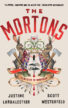
Romantic Jetlag

The phone rings. Before it rings again I have it in my hands pressed to my ear. "Hello," I say sleepily. "Whatcha do today?"

That’s me in Sydney, waking at 7AM to Scott in New York City recounting his day. He’s finished the rewrites on his new novel, is about to go drinking to celebrate at Veloce—do I remember Veloce with the cheap but good Italian sparkling wine and wonderful panini? Sure I do. We both smile. Or at least I imagine he’s smiling because I am. I ask. He is.

In NYC it’s 5PM, but Scott’s kind of sleepy so he’s calling me lying in bed, phone cradled, whispering into it. I’m lying in bed at the beginning of my day listening to his whispers. As his voice gets sleepier so do I. Just before we both fall asleep we hang up. Later, we say.

I wake up 3 hours later feeling groggy and confused. It’s 11AM and the phone’s ringing, Scott again. He fell asleep and missed his drink date; I fell asleep and missed a meeting.

Welcome to the land of romantic jetlag.

Scott and I met while I was living in New York City. I was there for two years researching a book about the city. He’s a writer too. I’d see him at readings and other writerly places. I thought he was kind of cute; he thought I was kind of cute. We have some mutual friends so eventually we were introduced. We never got to know each other very well, but when we ran into each other we’d have amusing conversations, make each other laugh.

It never went any further than that. That is, until my last weekend in NYC. On Monday I was to fly back to Sydney. He came to my Friday night farewell party. We spent all weekend together.

It was wonderful, my NYC fling: neither of us looking any further ahead than the minute we were in, just concentrating on the fun we were having. We didn’t think anything would come of it. How could it? Him in NYC, me in Sydney.

He called me four hours after I got off the plane in Sydney. It was 11am; 9PM in New York. He’d never phoned anyone in Australia before.

"You said it’s a fourteen-hour time difference, right?"

"That’s right. At least it is when you’re in summer and I’m in winter."

"Is it cold there?"

"Let me see." I walked outside with the phone nestled between chin and shoulder. "Yep. It’s like 60F."

"Eww. Must be a shock after NYC. It was 95F when you left."

"Yesterday," I said.

"I guess that’s right. It was yesterday for you. Two days ago for me."

The street was quiet. Rainbow lorikeets flew by in their greens, reds and blues. Some wattle trees were in bloom. I described the scene. Told him I’d heard a kookaburra not long after I’d gotten home that morning. He couldn’t quite believe all that flora and fauna so close to Sydney’s downtown. "Sydney’s very green," I explained feebly.

We talked for over an hour, about how I felt to be home after two years away, about writing, the projects we were working on, New York City—had it changed in the more than 24 hours since I’d last seen it? I arranged to call him in a week’s time.

"Is 8AM okay?" I asked.

"My time or your time?"

"My time. It’ll be 6PM your time. I’ll call on Thursday."

"You mean Wednesday?"

"Er, yeah. Your Wednesday; my Thursday."

In the first few weeks, when we still didn’t know each other that well, there were many emails and a phone call only once a week. We’re writers. It seemed natural to get to know each other better through the written word.

As the weeks wore on, we started to call each other more and more, living our lives in a kind of hybrid NewYorkSydneyCity time. Confusing time. Can’t tell day from night. Or tomorrow from today from yesterday. Winter from summer. "Is that your tomorrow or my tomorrow?" I always know what time it is New York but am hardly ever sure what time it is here, in Sydney, the city where I was born and bred.

I’m tired most of the time, out of sync with where I am. My friends snap their fingers in front of my eyes and ask if I’m here or back in NYC. It’s expensive too, eating up time even more than money: mornings and evenings on the phone, hours and hours of sleepy conversations.

During those few moments when we’re not awake at the same time we write emails. If I’m not near a computer I write them in my head. Describing things that are happening to me as they happen. Everything except talking to Scott is at second hand. Like living in a dream. In our first month apart we exchanged 250 emails. More than eight a day.

At any hour of my waking day I’m wondering where he is, what he’s doing. I can imagine it clearly. I’ve been to Veloce, Veselka and alt.coffee. I’ve walked through Little Italy, Chinatown, over the Brooklyn Bridge. I know what Second Avenue looks like on a Saturday morning in July as you walk home from a night out, with your friends slowly peeling off as they disperse to their apartments, till I get to my place on the corner of 2nd and 6th . . .

Except that I never lived in the East Village. That’s Scott’s place.

Me, I’m back home in Sydney living with something that tugs at me throughout the day. A fine cord that extends across the Pacific, across the US, into NYC, to the East Village, to the apartment on 2nd and 6th, to the chair overlooking his view downtown where he’s sitting drinking a beer and just about to call me.

The phone rings. It’s 2AM in NYC. Four PM in Sydney.

"Hey."

"Hey."

"Whatcha doin?"

When he starts to drift off to sleep I put the phone down, fall asleep and wake up hungry at 6PM. Shit. I was supposed to be having dinner with Catherine at 8PM. I haven’t done any work. I phone her, full of apologies.

I get to work, able to focus now that Scott’s asleep. I’m on Sydney time for a few hours. When I look at the clock it’s six hours later. Midnight. I still haven’t eaten. I have some granola, yoghurt and an apple. I feel weird, like something’s missing. The dark outside the window is strange. It’s 10AM in New York City: time to call Scott.

"Hello," he says sleepily.

We talk for hours about my work, his dreams, getting tireder as we talk. He’s sleepy; I’m sleepy.

"It’s late," he says. "I gotta go to sleep."

"No, it isn’t." I remind him. "It’s morning for you."

"Oh, yeah."

It’s 2AM in Sydney, noon in New York City and we’re both falling asleep. Unable to shake free of romantic jetlag.

Scott has decided to move to Australia. I begin to imagine him here in Sydney, rather than me there in New York. I think of all the places I want to take him: the sea cliff walk from Bondi to Clovelly, I imagine how amazed he’ll be by such gorgeous beaches so close to the city; the Botanical Gardens where I can show him the flying foxes in near-plague proportions. I wonder if he’s ever seen a flying fox before. I can’t wait to introduce him to the noble game of cricket. I think especially of all the food I want him to taste. He’s never eaten mangosteens or rambutan or custard apples or longans before. He’s never had proper Thai food.

While Scott is on the plane, flying to me, the fine cord, the tug that has been pulling me back to New York, begins to lessen. For the first time since I came home I feel like I am home, all the way home. It feels good. It feels strange. I’m starting to wake up.

And then Scott is here in Sydney too. He gets to see the wattle trees and rainbow lorikeets for himself, hear kookaburras, meet my family, my friends, eat fruits he’s never seen before. We’re on the same time and in the same place. We wake up together and go to bed together. I don’t have to imagine touching him, brushing his eyebrows straight, kissing him. I can. We do.

We’ve never been happier, together and in synch, but sometimes I have just the faintest twinge of nostalgia for those soft confusing waves of romantic jetlag. For that short-lived life inside a dream where time and place were blurred and there was only his voice and mine, pressed close to our ears, whispering our ideas, aspirations and longings. Then I reach out and touch him, warm and there, all nostalgia gone.

Researching The Battle of the Sexes in Science Fiction

(Talk given to the Friends of the University of Sydney Library on 19 August 2002)

I’m here to talk about the genesis of my new book, The Battle of the Sexes in Science Fiction. The book literally would not exist without Rare Books’s Science Fiction collection. And neither would the book I’m currently working on. In fact, neither would my career. Or at least my career would certainly have gone along a very different path.

The science fiction collection is built around Ronald Graham’s 1978 bequest of his extraordinary sf collection. He was an obsessive spending a vast deal of his fortune attempting to acquire every copy of every sf magazine or book ever printed. He came pretty close. Knowing that his family had zero interest in sf he bequeathed his collection to Rare Books. The existence of that collection is why I’ve been working on early sf for the last ten years. It’s a science fiction scholar’s dream. It’s all down there: the fiction; the criticism; the discussions; both amateur and professional. Reading through the pages of magazines and fanzines in the early days of sf I saw the sf community emerging.

I was first shown around Rare Books in, I think, 1991. I was in the final year of my honours degree and I had been toying with the idea of doing my Ph.D. thesis on fantasy or science fiction. What my Ph.D. was going to be about occupied my mind a lot as I procrastinated about writing the essays that would get me the marks that would allow me to actually do said Ph.D. Depending on the time of day or what I had just read my thesis was going to be about the reception of Elvis Presley amongst indigenous communities in Australia; the short stories of Isak Dinesen or Angela Carter or Tanith Lee or Kate Chopin or maybe Flannery O’Conner; or possibly on the use of nightmares in horror films.

Somehow, I really can’t remember how this happened, who it was that told me the collection existed, or who to see about it, but I went and saw Pauline Dickinson (the creator and then manager of the collection). I must have been really incoherent describing why I wanted to look at the collection because somehow she assumed that I wanted to look at the fanzine collection. I had no idea what a fanzine was. For those of you who don’t know a fanzine is an amateur magazines produced by science fiction fans which covered many topics, sometimes even science fiction.

Pauline pulled various fanzines out, talking about the Futurians and the Moonrakers, as though I should know who they were, mentioning names like Isaac Asimov and Arthur C. Clarke (at least I’d heard of them) as well as lots of many names that were completely new to me. She mentioned something called a staple war and other other puzzling things.

Pauline than showed me the science fiction magazines. I had only the vaguest notions about the history of science fiction. For me it was a genre made up of books. I had no idea that short story magazines had been crucial to its development. I had no idea that until the paperback boom of the 1950s, short story magazines had been crucial to almost all genres of writing, particularly in the USA. Here was Pauline, holding up the very first issue of the very first English-language science fiction magazine, Amazing Stories dated April 1926. I was, well, amazed. I knew then and there that my thesis was going to be about science fiction, and was going to be shaped by that collection.

1n 1992 as soon as I enrolled, I went to work. I was absolutely thrilled to discover that it was deemed more practical to give me a desk down in the collection, than for me to sit in the reading room filling in request forms for particular volumes. The majority of the collection is not catalogued, making it pretty difficult to specify what volume I wanted.

So there I was alone in a huge room with no windows, full of row after row of the various special collections–Victorian triples; a complete run of Playboy magazine, rare eighteenth- and nineteenth-century scientific texts; detective fiction; and then right at the end the many, many shelves of the science fiction collection: books and magazines and fanzines and my little desk and chair. I felt like a child let loose in a lolly shop.

At first I had no system because beyond the general area of science fiction I had no idea what my thesis was going to be about. I read through early issues of Amazing and fanzines from the 1930s because they were what I had seen first. Then I read issues of magazines with titles like Planet Stories, Weird Tales and Thrilling Wonder Stories because they had the best covers.

I realised fairly quickly that I was far more fascinated by the letters and editorials than I was by the stories. Many of which are pretty unreadable by contemporary standards. The letters by contrast were often lively and engaging. They range from short letters which merely rate the stories, to discussions of scientific problems in the stories, to debates about the state of science fiction and the world, or perhaps just the state of the particular magazine. This letter from a 1947 Astounding Science Fiction is a good example:

The whole magazine is really something that science fiction can be proud of, something that you can show to the scoffers and say, "Since when is science-fiction tripe!" The recent atom-bomb stories are wonderful, frightening things, really not "astounding" at all, since they very likely could happen in another war….

BUT, Brass Tacks is the worst letter column published. It’s too short and doesn’t have half enough editorial comment on individual letters. Either you leave out Brass Tacks entirely, or you publish three or four long, highly technical letters from people who write in and dispute the accuracy of the meteorology, astronomical mathematics, electronics, or gunnery trajectory computation of the articles. Not always, of course, but more and more Brass Tacks is inclining towards the old Science Discussions. There’s nothing wrong with Science Discussions but it gives fans like me, who are majoring in history and English literature, a rather futile, behind-the-times feeling, as if our humble opinion is not wanted, aside from maybe a card rating the stories.

Reading the letters becomes addictive because there were often sequels. A controversial letter in one month would be followed up by many replies in later issues. Or sometimes a seemingly innocuous letter would set the letter writers off. Certain names would turn up over and over again. I found myself beginning to skip letters from some writers because they annoyed me (I know bad historian, bad) and impatiently looking for the letters of other regulars (known in the fan community as letterhacks).

It all began in Amazing Stories. The first science fiction magazine, with the first editorials and letter columns. This is where science fiction fandom was born. Those letterhacks started to write letters directly to one another. Easy to do as their full address was printed in the magazine. From writing each other letters they went on to forming clubs and printing fanzines and by 1936 putting on the first science fiction conventions.

Reading through the early issues of Amazing I saw the first appearance, in the editorials and the letters, of the notion that science fiction is not like other popular genres, that it is a literature of ideas. A literature about science, technology, progress. A literature that is good for you rather than being merely escapist.

Gernsback frequently points to the magazine’s educational mission declaring in the first issue that his magazine is not "the love story" or "the sex-appeal type of magazine [or] the adventure type”. The emphasis was strongly on the ‘science’ in science fiction: "[W]e live in an entirely new world. Two hundred years ago, stories of this kind were not possible.” Gernsback writes:

Not only do these amazing tales make tremendously interesting reading—they are also always instructive. They supply knowledge that we might not otherwise obtain—and they supply it in a very palatable form. For the best of these modern writers of scientifiction have the knack of imparting knowledge, and even inspiration, without once making us aware that we are being taught (First editorial, April 1926: 3).

Gernsback particularly loved to publish letters from readers who were led to study science by reading science fiction: One of his readers writes that the "science in most of the stories is an inspiration to me in my studies in electrical engineering” (Science Wonder Stories [October 1929]: 467).

I was utterly fascinated by this wealth of primary material. I was also out of my depth. I realised I was going to have to read some secondary material to help make sense of it all. In the midst of doing that I came across Joanna Russ’ 1980 article "Amor Vincit Foeminam: The Battle of the Sexes in Science Fiction” and suddenly my thesis, now book, was born.

In the article, Russ uses the term "the battle of the sexes" to refer to sf texts which are explicitly about the ‘Sex War’ between men and women. She discusses ten stories published in the USA between 1926 and 1973. Stories in which women have turned on men—literally battled against them—and taken over the world. Worlds in which women have been eliminated because they are no longer necessary in a male scientific utopia. In most of the worlds where women have taken there will be one brave man left who will find the one feminine woman left and together they will lead the world back to how it should be. The stories sounded bizarre.

Before I read the Russ article I had no idea there were such stories in science fiction. Yet because I was sitting reading this article down in Rare Books surrounded by the majority of the science fiction published in English between those dates 1926 and 1973, I was able to get up and find the original of each story on the shelves. The majority of the stories Russ refers to come from Sam Moskowitz’s anthology When Women Rule (1972) I was able to read the stories in their original context, with the editorial descriptions of them, blurbs about their authors, and readers’ responses.

It was clear that the sf community recognised it as a subgenre of science fiction and could name many other examples. Often berating a particular story for merely copying an earlier and not doing it nearly so well. Having read the stories in situ it was easy to find those other examples and I could read debates about the relationship of men and women taking place not just in the stories but in the letter columns and editorials of the science fiction magazines and in the fanzines. All of which gives a very different picture, a more complex one, than that set forth by Russ in her article. As I said access to this kind of material is historian heaven.

In one day I had read Joanna Russ’ article, most of the stories she refers to, as well as some letters in response to those stories. Because of my earlier random reading through other science fiction magazines I had already come across letters to the editor that dealt with the Sex War. I knew I had a wonderful topic.

One of the letters I had already seen was by the 18 year old Isaac Asimov supporting the idea that women and love (interchangeable items) have no place in science fiction. They’re interchangeable terms because according to Asimov and others, the only place for a woman in a science fiction story is as the love interest not as, God forbid, a scientist. In one letter, in support of another correspondent he writes:

Three rousing cheers for Donald G. Turnbull of Toronto for his valiant attack on those favoring mush. When we want science-fiction, we don’t want swooning dames, and that goes double. You needn’t worry about Miss Evans, Donald, us he-men are for you and if she tries to slap you down, you’ve got an able (I hope) confederate and tried auxiliary right here in the person of yours truly. Come on, men, make yourself heard in favor of less love mixed with our science! (Astounding Science Fiction [September 1938]: 161).

I read with interest the many replies of female—and male fans—who disagreed. That particular debate comes up in science fiction again and again. I had no shortage of material.

Sitting in Rare Books surrounded by thousands of sf fanzines, magazines and books I was able to follow the emergence of science fiction fandom and the science fiction community. The majority of academic work on science fiction either ignores or says very little about the importance of the science fiction magazines and of science fiction fandom. I believe the major reason for that is simply lack of access. If Rare Books did not have this collection, I doubt that I would understand science fiction in the same way that I do now. (Even if I had actually done a PhD on science fiction and not one on the reception of Elvis Presley amongst indigenous communities of Australia.) The majority of my information would have come from secondary not primary sources.

Rare Books is also where I first discovered the New York Futurians who are the subject of the book I am working on now. I discovered them one day when I had reached my limits of reading battle of the sexes stories. This happened every so often.

Here’s a plot synopsis of a typical sex battle story: "The Priestess Who Rebelled,” published in 1939 by Nelson S. Bond is the first in three stories about Meg, a priestess in a postapocalyptic matriarchal world. She meets a man, Daiv, who is unlike the soft, weak men who serve her people as breeding stock. He comes from the one unmatriarchal people left on Earth. Meg is on her way to see the Gods, this being the last rite before she becomes the Mother, head priestess of her people. The man, Daiv, tells her that her Gods are men and implores her to be his mate as she is very beautiful—though his first words to her are: "You . . . talk too much. Sit down, Woman!” (208).

Before Meg goes to see her Gods, Daiv kisses her, "the touching of mouths,” and she is swept off her feet but still determined to do her duty. She arrives at Mount Rushmore, which turns out to be the Place of the Gods, and sees that her Gods are in fact men: Jaarg, Taamuz, Ibrim, and Tedhi. Meg realizes that her sterile, unnatural, virgin existence need not continue: she can become Daiv’s mate and live happily ever after. She tells the priestess of her people:

It is no Man-thing, Mother. It is a Man; a real Man such as were the Gods! Not a scrimping parody like our breeders, nor a foul brute like the Wild Ones – but a Man. He is Daiv, my mate! (Bond 1940: 46).

As you can imagine reading stories like that everyday for several years can become a bit much. So every so often I would get up, prowl around the shelves, until something would catch my eye. Very early on two beaten up cardboard boxes did. They turned out to contain early Futurian fanzines, a few letters and some photographs. I’m pretty sure Pauline had pointed them out to me during that initial tour.

Although I recognised some of their names, Isaac Asimov, Frederik Pohl, and knew the Futurians were a fan group I still had only a vague idea of what science fiction fandom was. Reading their fanzines from the late 1930s/early 1940s was a lot of fun. They were funny, lively and engaging. I learned about the first ‘world’ science fiction convention held in New York City in 1939 in conjunction with the World’s Fair and about their feud with some of the members of the rival sf fan group, the Queens Science Fiction League, which led to four of the Futurians being barred from attending the convention.

I became obsessed and spent several days reading Futurian material. Their fanzines varied from one- or-two page notices which were circulated in their share households to full scale productions with artwork, stories, poetry and articles. I did not know as I read them that the Futurians were the most famous of all sf fan groups. Famous because almost everyone of them went on to a distinguished career within the field. Isaac Asimov, Frederik Pohl, Damon Knight, Judith Merril and James Blish were all Futurians.

The Futurians formed in the late 30s when a cadre of left-wing science fiction enthusiasts got together in New York City. They were aged between 14 and 21. They adopted the Gernsbackesque motto, "Save humanity with science and sanity”. Though unlike Gernsback there was a certain amount of tongue in cheek. Though not always, in 1939 Frederik Pohl had the following letter published in "Under the Lens,” the letter column of Marvel Science Stories:

Readers of your magazine will be interested in the new Futurian Federation of the World, an organization which will make strong attempts to enroll every science fiction reader in its ranks. It is not necessary to be one of the ten most popular fans to join The Futurians or to enjoy its organ; it is merely required that one have an active and alive interest in science fiction and in the future.

The official organ of the Federation, The Futurian Review, furnishes the most adequate and interesting coverage of what is going on in science fiction and allied fields of any fan magazine. Subscriptions to this paper are given free to all members of The Federation and can be obtained in no other way, but a sample copy, plus information on the club itself, may be had for 10c in coin of any country of the world sent to Frederik Pohl, Provisional President 280 St John’s Place, Brooklyn, New York (Marvel Science Stories August 1939: 108).

The drive to gather lots of other Futurians did not last very long. The group never exceeded twenty and by the early forties the desire to conquer the world and turn it into a Futurian Federation had vanished. They were happy just hanging together reading, writing, arguing.

Reading their fanzines as I did–with precious little context–raised more questions than answers. What I wondered was Ghod and Ghu? Who were the evil Quadrumvirate? What on earth were they raging a battle against?

Some of the answers to these questions I found in a fabulous amateur publication, The Fancyclopedia, published in 1944 by one Jack Speer which I found underneath one of the boxes of Futurian material next to the run of Wonder Stories. There was an entry on the Futurians:

Futurians – A group of New York fans, of whom Wollheim, Lowndes, Pohl and Michel have been the central figures. Others thot [sic] of as belonging to the group are Cyril Kornbluth, Harry Dockweiler, Chet Cohen, Dan Burford, Jack Rubinson, David A. Kyle, Dick Wilson, Isaac Asimov, Herman Leventman, Walter Kubilius and leslie perri.

The Futurians present a peculiar differentness in whatever sphere of fan activity they engage in, being, with some exceptions in each case, Bohemian in social practices Marxistic in politics, anti-Sykora in fan feuds, Michelistic in fanish whiterings, inclined fanarchistically with regard to general fan organization, given to vers libre in poetry, eroticism in literature, and decadence in all forms of art, and having taken part as a bloc in Progressive and Constitutional parties of the FAPA.

They emerged upon the breakup of the ISAA, and were the dominant faction in the Second Fandom, when they were called Wollheimists. When the GNYSFL broke up, they formed the FSNY in September 1938. With Pohl’s Futurian Federation of the World, the term "Futurian” became a common word for that type of stefnist. After the Quadrumvirs resigned from FAPA office, they became less active, but lived in various science fiction houses, and many graduated in time from author’s agents to editorships of some of the new pros, where they put quite a lot of their personalities into their magazines, and were noted for the number of Futurian authors appearing in Futurian-edited magazines (41).

This raised a whole lot more questions. Who’s Sykora? What’s the ISAA? I spent a lot of time flipping from entry to entry in the book before realising that I really needed to get back to reading about real Men and real Women and the battle of the sexes.

I did not forget the Futurians or their fanzines. I realised that this was a very interesting and weird group of people who had an enormous effect on shaping science fiction. I became even more determined to go back to them when I discovered how rare the fanzines were–a large part of the collection of Futurian papers in the Rare Book no longer exist anywhere else in the world.

So that’s how this book and the one I’m writing came about and how I’ve found myself transformed into a science fiction expert. I’d like to take this opportunity to thank the staff of Rare Books who since 1991 have been absolutely amazing. Thank you.